Drama's the genre everyone thinks they could pull off, since it doesn't need explosions or jump scares to work. That's exactly why so many dramas end up boring or preachy instead of actually moving anyone, it's harder than it looks to make someone sit in silence or actually reconsider their own life without just cranking up sad music to fake it.
I've walked out of a theater not ready to talk to anyone after watching a few of these, and it usually only happens when a movie gets you there through the actual craft. These six never fake it. Every single one gets you without using any manipulative techniques propping it up underneath.
6
'Moonlight' (2016)
Image via A24
Three different actors play the same character at three different ages in this movie, a scared kid, a quietteenager, a guarded adult, and none of them look much alike, but you never once doubt it's the same person. Barry Jenkins based the whole thing on an unproduced play by Tarell Alvin McCraney, and the story follows Chiron growing up poor and gay in Miami, mostly raised by a drug dealer named Juan (Mahershala Ali) who ends up being kinder to him than his own mother.
It famously won Best Picture the same night the wrong envelope got read out loud on stage for La La Land, which ended up overshadowing the film itself for a solid few days afterward. The score slows down and warps classical instruments the same way a certain style of hip-hop remix does, and that specific sound sits underneath basically every quiet moment in the movie.
Image via Sony Pictures Releasing
Nearly this entire movie is told through two separate lawsuit depositions, lawyers grilling Mark Zuckerberg (Jesse Eisenberg) about how Facebook actually got built, and the story keeps cutting back and forth between the room where he's getting sued and the actual events everyone's arguing about.
The real Zuckerberg apparently hated how the movie portrayed him, and pointed out a bunch of small details that got factually wrong, but none of that really matters once you're watching it, since the film was never really claiming to be a documentary anyway. It ends on him just refreshing a Facebook page over and over, waiting to see if an ex-girlfriend accepts his friend request, which is a strangely small, sad way to close out a movie about someone who became a billionaire.
4
'Whiplash' (2014)
Image via Sony Pictures Classics
Andrew (Miles Teller) wants to become one of the greatest jazz drummers alive, and Fletcher (J.K. Simmons), his instructor, seems to genuinely believe the only way to get there is through humiliation, thrown chairs, and outright verbal abuse. Damien Chazelle shot the whole thing in nineteen days on almost no money, partly based on his own experience getting screamed at in a high school jazz program.
Teller actually played the drums himself for most of the movie, and the blood you see on his hands during some of the harder scenes was real, from actual blisters breaking open during filming. The ending drum solo runs for ten straight minutes without a single line of dialogue, and it's still one of the most purely stressful scenes in any movie from that decade.
Collider Exclusive · Oscar Best Picture QuizWhich Oscar Best Picture Is Your Perfect Movie?Parasite · Everything Everywhere · Oppenheimer · Birdman · No Country
Five Oscar Best Picture winners. Five completely different visions of what cinema can be — and what it can do to you. One of them is the film that was made for the way your mind works. Ten questions will figure out which one.
🪜Parasite
🌀Everything Everywhere
☢️Oppenheimer
🐦Birdman
🪙No Country for Old Men
FIND YOUR FILM →
01
What kind of film experience do you actually want?The best movies don't just entertain — they leave something behind.
ASomething that pulls the rug out — that makes me think I'm watching one kind of film and then reveals I'm watching another entirely.
BSomething overwhelming — funny, sad, absurd, and genuinely moving, all at once.
CSomething grand and weighty — a film that makes me feel the full scale of what I'm watching.
DSomething formally daring — a film that pushes what cinema can even do.
ESomething lean and relentless — pure tension with no wasted frame.
NEXT QUESTION →
02
Which idea grabs you most in a film?Great films are driven by a central obsession. What's yours?
AClass, inequality, and what people are willing to do when desperation meets opportunity.
BIdentity, family, and the chaos of trying to hold your life together when everything is falling apart.
CGenius, moral responsibility, and the catastrophic weight of a decision you can never take back.
DEgo, legacy, and the terror of becoming irrelevant while you're still alive to watch it happen.
EEvil, chance, and whether moral order actually exists or if we just tell ourselves it does.
NEXT QUESTION →
03
How do you like your story told?Form is content. The way a story is shaped changes what it means.
AGenre-twisting — I want it to start in one lane and migrate into something completely different.
BMaximalist and genre-blending — comedy, action, drama, sci-fi, all in one ride.
CEpic and non-linear — cutting between timelines, building a mosaic of cause and consequence.
DA single unbroken flow — I want to feel like I'm living it in real time, no cuts to safety.
ESpare and precise — every scene doing exactly what it needs to do and nothing more.
NEXT QUESTION →
04
What makes a truly great antagonist?The opposition defines the protagonist. What kind of opposition fascinates you?
AA system — invisible, structural, and almost impossible to fight because it has no single face.
BThe self — the ways we sabotage, abandon, and fail the people we love most.
CHistory — the unstoppable momentum of events that no single person can stop or redirect.
DThe industry — the machinery of culture that chews up talent and spits out irrelevance.
EPure, implacable evil — a force so certain of itself it becomes almost philosophical.
NEXT QUESTION →
05
What do you want from a film's ending?The final note is the one that lingers. What do you want it to sound like?
AShock and inevitability — a conclusion that recontextualises everything that came before it.
BEarned emotion — I want to cry, laugh, and feel genuinely hopeful, even if the world is a mess.
CDevastation and grandeur — an ending that makes me sit in silence for a few minutes after.
DAmbiguity — something that leaves enough open that I'm still thinking about it days later.
EBleakness — an honest refusal to pretend the world is tidier than it actually is.
NEXT QUESTION →
06
Which setting pulls you in most?Where a film takes place shapes everything — mood, stakes, what's even possible.
AA gleaming modern city with a hidden underside — beauty masking rot, wealth masking desperation.
BA collapsing suburban life that opens onto something infinite — the multiverse of a single ordinary person.
CThe corridors of power and science at a world-historical turning point — where decisions echo for decades.
DThe grimy, alive chaos of New York and Hollywood — fame as both destination and trap.
EVast, indifferent landscape — desert and highway where violence arrives without warning or reason.
NEXT QUESTION →
07
What cinematic craft impresses you most?Every great film has a signature — a technical or artistic element that makes it unmistakable.
AProduction design and mise-en-scène — every frame composed to carry meaning beneath the surface.
BEditing and tonal control — the ability to move between registers without losing the audience.
CScore and sound design — music that becomes inseparable from the dread and awe of what you're watching.
DCinematography as performance — the camera not recording events but participating in them.
ESilence and restraint — what's left unsaid and unshown doing more work than any dialogue could.
NEXT QUESTION →
08
What kind of main character do you root for?The protagonist is the lens. Who you choose to follow says something about you.
ASomeone smart and resourceful who makes increasingly dangerous decisions under pressure.
BSomeone overwhelmed and ordinary who turns out to be capable of something extraordinary.
CA brilliant, tortured figure whose gifts and flaws are inseparable from each other.
DA self-destructive artist whose ego is both their superpower and their undoing.
EA quiet, principled person trying to make sense of a world that has stopped making sense.
NEXT QUESTION →
09
How do you feel about a film that takes its time?Pace is a choice. Some films sprint; others let tension accumulate slowly, deliberately.
AI love a slow build when I know the payoff is going to be seismic — patience for a devastating reveal.
BGive me relentless momentum — I want to feel breathless and emotionally spent by the end.
CEpic runtime doesn't scare me — if the material demands three hours, give me three hours.
DI want it to feel propulsive even when nothing is technically happening — restless energy throughout.
EDeliberate and unhurried — I want dread to accumulate in the spaces between the action.
NEXT QUESTION →
10
What do you want to feel walking out of the cinema?The best films leave a mark. What kind of mark do you want?
AUnsettled — like I've just seen something I can't fully explain but can't stop thinking about.
BMoved and energised — like the film reminded me what actually matters and gave me something to hold onto.
CHumbled — like I've been in the presence of something genuinely important and overwhelming.
DExhilarated — like I've just seen cinema doing something it's never quite done before.
EHaunted — like a cold, quiet dread that stays with me for days.
REVEAL MY FILM →
The Academy Has DecidedYour Perfect Film Is…
Your answers have pointed to one Oscar Best Picture winner above all others. This is the film that was made for the way your mind works.
Parasite
You are drawn to films that operate on multiple levels simultaneously — that begin in one genre and quietly, brilliantly migrate into another. Bong Joon-ho's Parasite is a film about class, desire, and the architecture of inequality that manages to be darkly funny, deeply suspenseful, and genuinely shocking across a single extraordinary running time. Your instinct is for cinema that hides its true intentions until the moment it's ready to reveal them. Parasite is exactly that — a film that rewards close attention and punishes assumptions, right up to its devastating final image.
Everything Everywhere All at Once
You want it all — and this film gives you all of it. The Daniels' Everything Everywhere All at Once is one of the most maximalist films ever made: action comedy, multiverse sci-fi, family drama, existential crisis, and a genuinely earned emotional core that sneaks up on you amid the chaos. You are someone who responds to ambition, who doesn't want cinema to choose between being entertaining and being meaningful. This film refuses that choice entirely. It is overwhelming by design, and its overwhelming nature is precisely the point — because the feeling of being crushed by infinite possibility is exactly what it's about.
Oppenheimer
You are drawn to cinema on a grand scale — films that understand history not as a backdrop but as a force, and that place their characters inside that force and watch what happens. Christopher Nolan's Oppenheimer is a film about the terrifying gap between what we can do and what we should do, told with the full weight of one of the most consequential moments in human history behind it. You want your films to feel important without feeling self-important — to earn their ambition through sheer craft and the gravity of their subject. Oppenheimer does exactly that. It is enormous, complicated, and refuses easy comfort.
Birdman
You are drawn to films that foreground their own construction — that make the how of the filmmaking part of the what it's about. Alejandro González Iñárritu's Birdman, shot to appear as a single continuous take, is cinema examining itself through the cracked mirror of a fading actor's ego. You respond to formal daring, to the feeling that a film is doing something that probably shouldn't be possible. Michael Keaton's performance and Emmanuel Lubezki's restless camera create something genuinely unlike anything else — a film that is simultaneously about creativity, relevance, self-destruction, and the impossibility of ever truly knowing if your work means anything at all.
No Country for Old Men
You are drawn to cinema that trusts silence, that refuses to explain itself, and that treats dread as a form of meaning. The Coen Brothers' No Country for Old Men is a film about the arrival of a new kind of evil — implacable, arbitrary, and utterly indifferent to the moral frameworks we use to make sense of the world. It is one of the most formally controlled films ever made, and its controlled restraint is what makes it so terrifying. You want your films to haunt you, not comfort you. You are not interested in resolution if resolution would be dishonest. No Country for Old Men is honest in a way that most cinema never dares to be.
↻ RETAKE THE QUIZ
3
'12 Years a Slave' (2013)
Image via Searchlight Pictures
This is based on an actual memoir from 1853, written by Solomon Northup (Chiwetel Ejiofor), a free Black man from New York who gets kidnapped and sold into slavery in the South, and the movie follows his real, documented account instead of a fictionalized version of the story. Steve McQueen directs it with long, unbroken shots that refuse to look away, including one scene where Northup is left hanging by the neck on his tiptoes for an uncomfortably long stretch of screen time.
Patsey (Lupita Nyong'o), enslaved on the same plantation and targeted constantly by the owner, Edwin Epps (Michael Fassbender), won Nyong'o an Oscar in what was actually her very first film role. It became the first movie directed by a Black filmmaker to win Best Picture, and it deserves that history by refusing to soften a single part of what actually happened to people like Northup.
2
'Parasite' (2019)
Image via NEON
The title of this movie doesn't just point at one family, it's genuinely unclear by the end who's actually the parasite here, the poor family sneaking their way into a rich household, or the rich family who can't function without people quietly doing everything for them. Song Kang-ho, who's worked with Bong Joon-ho across several of his movies now, plays the father of the family living in a cramped semi-basement apartment, half underground, half above, which pretty much sums up their whole situation in the story.
There's a scene where their apartment floods completely during a storm while the wealthy family they work for sleeps soundly through the same storm in their giant house up the hill. Like that, the movie displays class gaps vividly. A decorative stone, given early on as a gift meant to bring good fortune, keeps reappearing throughout the story in strange ways.
1
'Portrait of a Lady on Fire' (2019)
Image via Pyramide Films
Marianne (Noémie Merlant) gets hired to secretly paint a portrait of Héloïse (Adèle Haenel), a woman being pushed into an arranged marriage. She refuses to sit for any painter, so Marianne has to pose as her walking companion and paint her entirely frommemory at night instead. Céline Sciamma directs almost the entire film without a single significant male character on screen, which changes the whole texture of how the two women look at each other.
There's a bonfire scene set to a group of women singing together that's become one of the most talked-about moments in the movie, mostly because nothing about it feels staged the way similar scenes usually do in period dramas. The ending, set years later in a concert hall with Vivaldi playing, shows how much these two still feel for each other without either of them speaking a single word.

 Image via A24
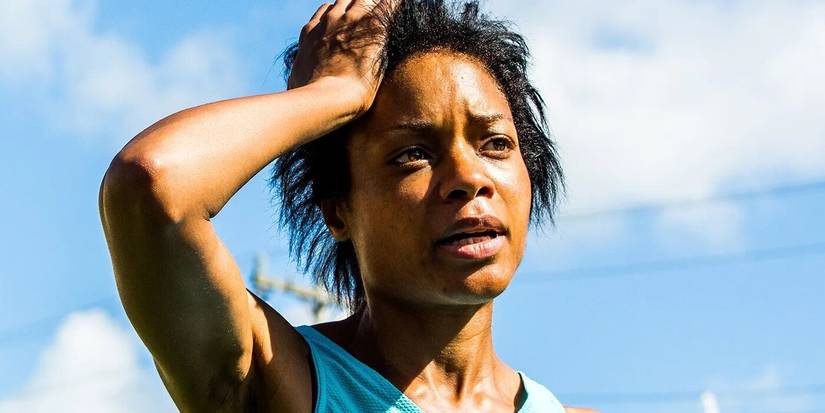 Image via A24
 Image via Sony Pictures Releasing
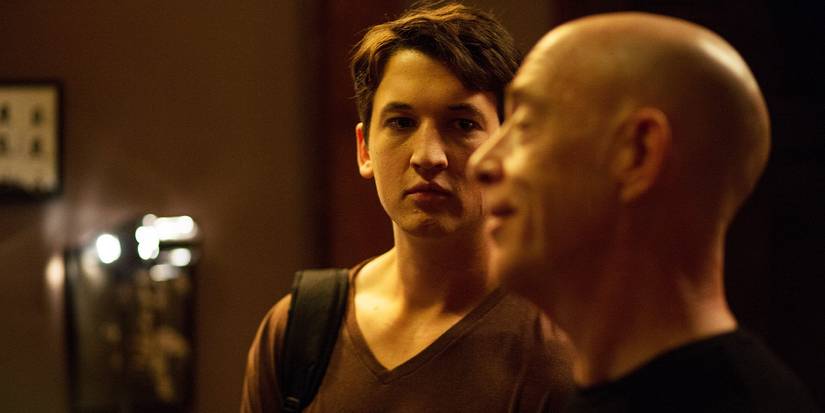 Image via Sony Pictures Classics
 Image via Searchlight Pictures
 Image via NEON
 Image via Pyramide Films



 English (US) ·