
 Image via Sony Pictures Classics
Published Aug 23, 2026, 5:55 PM EDT
Michael Block is a 14 time GLAM Award nominated writer, producer, and host of the podcast Block Talk. Throughout his time in the entertainment industry, he has worked on and off Broadway as a stage manager, written several produced plays, critiqued hundreds of theatrical performances, drag and cabaret shows, and has produced events randing from drag competitoons to variety concerts!
On Block Talk, he interviews nightlife personalities, covers the wide world of entertainment through features, ranking episodes, and recaps ALL of Drag Race, as well as Dragula and Survivor. He has interviewed hundreds of RuGirls that span the globe at DragCon NYC, DragCon LA, and DragCon UK.
In his free time, he makes one-of-a-kind jewelry and gift baskets with his mom. He is a proud member of the LGBTQ+ community.
Sign in to your Collider account
When we seek out science fiction stories, we tend to think of sensational space operas, tantalizing time travel, and amazing depictions of artificial intelligence. Often, they go beyond reality, but sometimes they are so deeply rooted in hard science fiction that it makes the story seem far too plausible. In turn, they can become quite intense. These are films that rely on real rules of physics, chemistry, and biology.
When danger strikes, there’s no reliance on magical escapes or fantasy gadgets to save the day. The fear feels real and close to home. From dystopian futures where fertility becomes threatened to space thrillers where making it out alive is far from guaranteed, these six sensational films push your minds to terrifying places as you ponder science fiction what-ifs. These six movies are not only some of the genre’s best, but they are at the top of the list of cinema’s greatest. These films are so intense, it may require a palate cleanser after.
6 'Gattaca' (1997)
 Image via Sony Pictures Releasing
Imagine a future in which your DNA is predetermined. Sounds perfectly great, right? Wrong. At least according to Gattaca! Written and directed by Andrew Niccol, the dystopian sci-fi thriller is set in a society driven by eugenics where a person's social class and potential are entirely predetermined by their DNA. Society divides people into "valids,” or genetically engineered and perfected, and "in-valids,” or born naturally with predicted flaws and short lifespans. Vincent Freeman (Ethan Hawke), a "natural-born" man deemed genetically inferior, illegally assumes the identity of a genetically superior "valid" to chase his dream of traveling into space. Jerome (Jude Law), a paralyzed former athletic star, uses Jerome's blood, hair, and urine samples to pass daily DNA screenings at the elite Gattaca Aerospace Corporation. Gattaca centers its core themes around human spirit and free will, questioning whether a person's true potential can be completely measured or planned.
A lost gem of the ‘90s, Gattaca is a highly intelligent thriller that utilizes a stylish retro-future look as the initial hook before diving deep into a strong human story about defying the odds. Gattaca masterfully examines the ethics of science and birth choices long before modern tech made it a daily debate. The film grounds itself in plausible biotechnology, focusing on genetic determinism, eugenics, and real-world molecular biology concepts such as DNA sequencing. Through the intense surveillance where a single stray eyelash or dead skin cell can expose identity fraud, the stakes are astronomically high. Vincent must meticulously scrub his skin, shed hair, and hide his natural DNA just to survive a workday. The threat of detection is constant because the system reads biology as truth. Gattaca’s core story of the ideological war over human potential versus biological fatalism is terrifying even by today’s standards.
5 'The Andromeda Strain' (1971)
 Image via Universal Pictures
One of the very first pioneering hard-sci-fi films to scare you silly was The Andromeda Strain. In the 1971 film directed by Robert Wise, a team of elite scientists race against time in a top-secret underground lab. They must analyze and stop a deadly extraterrestrial microorganism brought to Earth by a fallen military satellite after it wipes out a small desert town. As the team struggles with the alien organism mutating in the lab, a threat looms: it may break containment and destroy humanity. Focusing on meticulous scientific research, quarantine protocols, and realistic lab technology, The Andromeda Strain takes science seriously as it hits home much harder now than ever. While the extraterrestrial threat is a potentially foreign conceit, the terror of a humanity-wiping disease is something we’ve now lived through, making the film quite intense to modern eyes.
It’s more than a film about a space germ. The Andromeda Strain shows the step-by-step action of a dedicated team racing against the clock before it’s too late. The stakes are brilliantly high, allowing the tension to be maintained. Wise used lesser-profile actors and a clinical, documentary-style approach to make the top-secret Wildfire underground lab feel completely tangible. Thanks to Douglas Trumbull’s mesmerizing visual effects, the alien microorganism and high-tech computer displays are authentic to the era. The rigorous protocol approach may not be what writers and directors strive for in modern Hollywood, but The Andromeda Strain proves that a methodical, strict approach can yield a deeply terrifying premise. Suspense builds through hypothesis, testing, failure, and data revision instead of manufactured emotional manipulation. The 2008 miniseries paled in comparison.
4 'Gravity' (2013)
 Image via Warner Bros.
In 1979, we learned that in space, no one can hear you scream. Three decades later, the terror of space was amplified. This time, sans aliens. Directed and co-written by Alfonso Cuarón, Gravity is a sci-fi thriller that tells the harrowing story of medical engineer Dr. Ryan Stone (Sandra Bullock) on her first flight and veteran astronaut Matt Kowalski (George Clooney) on his final flight, who are stranded in space after orbiting debris from a satellite destroys their shuttle. They must fight against dwindling oxygen and impossible odds to navigate back to Earth. A high-octane, tension-building thriller that depicts the nightmare of space as we know it, Gravity blends a simple, high-stakes survival plot with groundbreaking visual effects, intense sensory design, and an emotional core about overcoming deep personal grief. Gravity is the type of film that is not made for those who fear space.
Cuarón’s hard-core, practical approach is phenomenally raw. He opens the film with an incredible, uninterrupted 13-minute sequence that immediately places the viewer right inside the cold, vast expanse of space. With the atmosphere established, he makes you feel as though you are floating and spinning right alongside Stone and Kowalski. The camera movements, lighting, and digital effects combine to simulate zero-gravity with rare realism. The sound, and lack thereof, provide a brilliant added element that makes Gravity boldly real. You are placed inside the spacesuit. Because sound waves need a medium to travel, explosions and external chaos are muted or channeled through vibrations, heightening the claustrophobic panic. The film tells the story of rebirth through the eyes of Stone. Her physical journey from the edge of the cosmos back down to solid ground serves as a powerful metaphor for psychological recovery and choosing to live again. With real tech, genuine threats, and the practicality of space, Gravity is a hard science masterpiece.
Collider Exclusive · Sci-Fi Survival Quiz Which Sci-Fi World Would You Survive? The Matrix · Mad Max · Blade Runner · Dune · Star Wars
Five universes. Five completely different ways the future went wrong — or sideways, or up in flames. Only one of them is the world your instincts were built for. Eight questions will figure out which dystopia, galaxy, or desert wasteland you'd actually make it out of alive.
💊The Matrix
🔥Mad Max
🌧️Blade Runner
🏜️Dune
🚀Star Wars
TEST YOUR SURVIVAL →
01
You sense something is deeply wrong with the world around you. What do you do? The first instinct is often the truest one.
APull on every thread until I understand the system — then figure out how to break it. BStop asking questions and start stockpiling — food, fuel, weapons. Questions don't keep you alive. CKeep my head down, observe carefully, and trust no one until I know who's pulling the strings. DStudy the patterns. Every system has a rhythm — learn it, and you learn how to survive it. EFind the people fighting back and join them. You can't fix a broken galaxy alone.
NEXT QUESTION →
02
In a world of scarcity, what resource do you guard most fiercely? What we protect reveals what we believe survival actually requires.
AKnowledge. If you understand the system, you don't need resources — you can generate them. BFuel. Everything else — movement, power, escape — runs on it. CTrust. In a world of fakes and informants, a truly reliable ally is rarer than any commodity. DWater. And after water, information — the two things empires are truly built on. EShips and credits. The galaxy is big — you survive it by being able to move through it freely.
NEXT QUESTION →
03
What kind of threat keeps you up at night? Fear is useful data — if you're honest about what you're actually afraid of.
AThat reality itself is a lie — that everything I experience has been constructed to keep me compliant. BA raid. No warning, no mercy — just the roar of engines and then nothing left. CBeing identified. Once someone with power decides you're a problem, you're already out of time. DBeing outmanoeuvred — losing a political game I didn't even know I was playing. EThe Empire tightening its grip until there's nowhere left to run.
NEXT QUESTION →
04
How do you deal with authority you don't trust? Every dystopia has a power structure. Your approach to it determines everything.
ASubvert it from the inside — learn its rules well enough to weaponise them against it. BIgnore it and stay out of its reach. The further from any power structure, the better. CAppear to comply while doing exactly what I need to do. Visibility is the enemy. DManoeuvre within it carefully. You can't beat a system you refuse to understand. EResist openly when I have to. Some things are worth the risk of being seen.
NEXT QUESTION →
05
Which environment could you actually endure long-term? Survival isn't just tactical — it's physical, psychological, and very much about where you are.
AUnderground bunkers and server rooms — cramped, artificial, but with access to everything that matters. BOpen wasteland — brutal sun, no shelter, constant movement. At least the threat is honest. CA dense, rain-soaked city where you can disappear into the crowd and nobody asks questions. DMerciless desert — extreme heat, no water, and something enormous living beneath the sand. EThe fringe — backwater planets and busy spaceports where the Empire's attention rarely reaches.
NEXT QUESTION →
06
Who do you want in your corner when things fall apart? The company you keep is the clearest signal of who you actually are.
AA tight crew of believers who've seen behind the curtain and have nothing left to lose. BOne or two people I'd trust with my life. Any more than that and someone talks. CNobody, ideally. Alliances are liabilities. I work alone unless I have no choice. DA community bound by shared hardship and mutual survival — people who need each other to last. EA ragtag team with wildly different skills and total commitment when it counts.
NEXT QUESTION →
07
Where do you draw the line — if you draw one at all? Every survivor eventually faces a moment that tests what they're actually made of.
AI won't harm the innocent — even the ones who'd report me without hesitation. BI do what I have to to protect the people I've chosen. Everything else is negotiable. CThe line shifts depending on who's asking and what's at stake. DI draw a long-term line — nothing that compromises my people's future, even if it'd help now. ESome lines, once crossed, can't be uncrossed. I know which ones they are.
NEXT QUESTION →
08
What would actually make survival worth it? Staying alive is one thing. Having a reason to is another.
AWaking others up — dismantling the illusion so no one else has to live inside it. BFinding somewhere — or someone — worth protecting. A reason to keep moving. CAnswers. Understanding what I am, what any of this means, before time runs out. DLegacy — shaping the future in a way that outlasts me by generations. EFreedom — for myself, for others, for every world still living under someone else's boot.
REVEAL MY WORLD →
Your Fate Has Been Calculated You'd Survive In…
Your answers point to the world your instincts were built for. This is the universe your temperament, your survival instincts, and your particular brand of stubbornness were made for.
The Matrix
You took the red pill a long time ago — probably before anyone offered it to you. You're a systems thinker who can't help but notice the seams in things.
- You're drawn to understanding how the system works before figuring out how to break it.
- You'd find the Resistance, or it would find you — your instinct for spotting constructed realities is the machines' worst nightmare.
- You function best when you have access to information and the freedom to act on it.
- The Matrix built an airtight prison. You'd be the one probing the walls for the door.
Mad Max
The wasteland doesn't reward the clever or the well-connected — it rewards those who are hard to kill and harder to break. That's you.
- You don't need comfort, community, or a cause larger than the next horizon.
- You need a vehicle, a clear threat, and enough fuel to outrun it — and you're good at all three.
- You are unsentimental enough to survive that world, and decent enough — just barely — to be something more than another raider.
- In the wasteland, that distinction is everything.
Blade Runner
You'd survive here because you know how to exist in moral grey areas without losing yourself completely.
- You read people accurately, keep your circle small, and ask the questions others prefer not to answer.
- In a city where humanity is a legal designation rather than a feeling, you hold onto something that keeps you functional.
- You're not a hero. But you're not lost, either.
- In Blade Runner's world, that distinction is everything.
Dune
Arrakis is the most hostile environment in the known universe — and you are precisely the kind of person it rewards.
- Patience, discipline, and political awareness are your core strengths — and on Arrakis, they're survival tools.
- You understand that the long game matters more than any single victory.
- Others come to Dune and are consumed by it. You'd learn its logic and earn its respect.
- In time, you wouldn't just survive Arrakis — you'd begin to reshape it.
Star Wars
The galaxy far, far away is vast, loud, and in a constant state of violent political upheaval — and you wouldn't have it any other way.
- You find meaning in being part of something larger than yourself — a cause, a crew, a rebellion.
- You'd gravitate toward the Rebellion, or the fringes, or whatever pocket of the galaxy still believes the Empire's grip can be broken.
- You fight — not because you have to, but because standing aside isn't something you're capable of.
- In Star Wars, that willingness is what makes all the difference.
↻ RETAKE THE QUIZ
3 'Europa Report' (2013)
 Image via Magnolia Pictures
One of the greatest hidden gems of the 21st century is Europa Report. Directed by Sebastián Cordero, the sci-fi found footage thriller follows six astronauts on a privately funded mission to Jupiter's moon, Europa, to search for life in a subsurface ocean. During their expedition, they face a communication blackout with Earth and tragic hazards before uncovering a profound, shocking discovery. Presented as a posthumous compilation of ship logs, helmet cams, and automated data records, Europa Report masters hard science by depicting space-travel physics and allowing imagination to fill in the cosmic unknowns. Europa Report relies on believable engineering, physics, and the genuine risks of deep space travel to craft a graphically intense gem.
Europa Report’s reliance on the found-footage format evokes a sense of lonely, terrifying dread amid the vast emptiness of space. It’s as disaster strikes that the story proves how alone you truly are in the bleak darkness of the frontier beyond. This isn’t a melodrama; the astronauts act like trained professionals who stay focused on their duties, giving the documentary-style stakes intense to consume. With a genuine non-monster-hunting mission, the objective feels practical, lending it the grim tone of an actual historical tragedy. It’s all about the silent, claustrophobic terror of deep-space isolation and strict adherence to known physics that comes with tragedy. Europa Report may feel far from our future, but its presentation was pretty practically perfect.
2 'Moon' (2009)
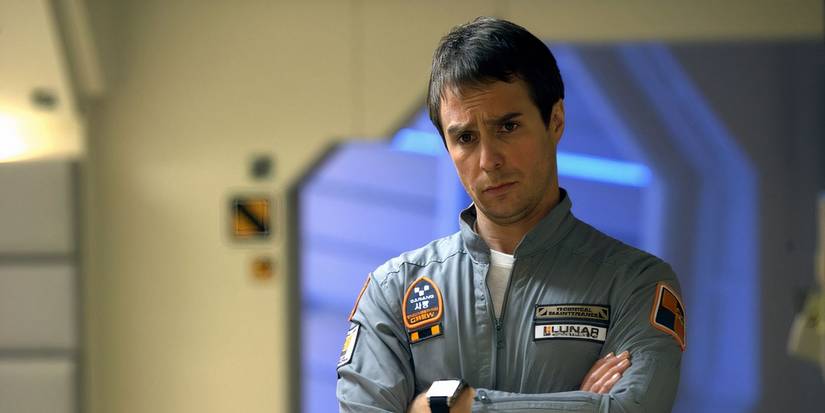 Image via Sony Pictures Classics
In his directorial debut, Duncan Jones gave the world an underrated masterpiece, Moon. The sci-fi psychological thriller follows Sam Bell (Sam Rockwell), an astronaut nearing the end of a lonely three-year shift mining clean energy on the moon, accompanied by a helpful AI named GERTY (voiced by Kevin Spacey) for company. After a rover accident, he discovers a horrifying corporate conspiracy: he is an expendable clone programmed to believe he has a family waiting on Earth. Moon centers on themes including the mental and emotional toll of total solitude and human disconnection, the treatment of human life and labor as disposable commodities, and what it means to be human and live with another’s memories. Through an intelligent and suspenseful mystery grounded in realistic physics, industrial machinery, and plausible near-future energy economics, Moon operates as an intensely claustrophobic narrative.
In deep space, deep human emotions are genuine, but Moon forces a conversation about whether clones are human. Rockwell expertly tackles variants of himself with ease, allowing the thesis of what makes a person human to be brilliantly profound. Jones uses miniature models and classic set designs to evoke 1970s and 80s sci-fi while making the story appeal to the present. Then, grounding it in hard science, Moon feels true to life. The lunar base, automated rovers, and massive surface-mining harvesters look heavy, mechanical, and utilitarian. Harvesting Helium-3 from lunar regolith to fuel clean fusion reactors on an energy-starved Earth is a practical prediction. And then the plausible bioethical roots of Moon ground it in a great moral conversation. Through a cold corporate lens in a time when corporations are taking control, it pushes Moon into forcing our own debate on humanity and identity.
1 'Children of Men' (2006)
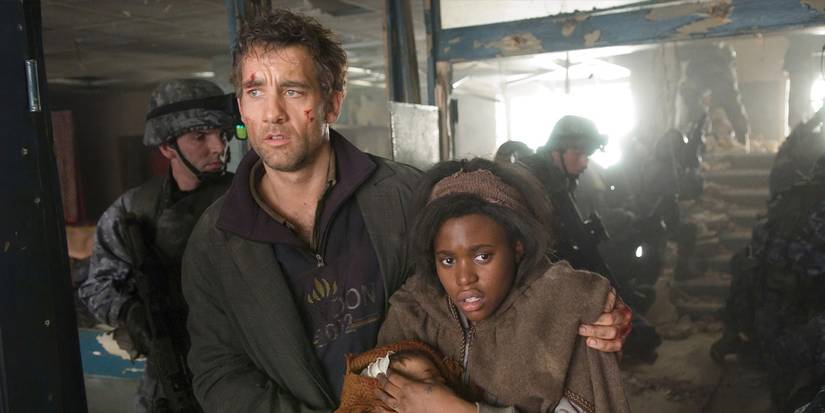 Image via Universal Pictures
Not all hard sci-fi narratives must be centered on space travel or artificial intelligence. Sometimes the most intense stories can be centered on the devastation of human fertilization. Such is the case for Alfonso Caurón’s dramatic Children of Men. The dystopian action thriller depicts a world where two decades of unexplained human infertility have brought society to the brink of collapse. British civil servant Theo Faron (Clive Owen) is recruited by his activist ex-wife, Julian Taylor (Julianne Moore), to smuggle a miraculously pregnant refugee named Kee (Claire-Hope Ashitey) to safety, with the aim of reaching a rumored scientific group called the Human Project. A harrowing story of survival in all manner of ways, Children of Men is rooted in a terrifying vision of the future, using mundane, decaying technology and recognizable geopolitical conflicts to make human extinction feel terrifyingly immediate.
Children of Men is by no means a glossy, sleek science fiction story. Instead, the entire production design showcases a worn-out version of our world. The mundane elements of society are depicted as bleak to serve as a symbol of institutional decay. By portraying the world as a dying image, it heightens the stakes of bringing Kee, the hope for a prosperous future, to safety. Watching a story where, at the time, two decades later, there would be a slow rot of quiet, agonizing demographic collapse is a mortifying concept. The refugee detention camps and military crackdowns mirror contemporary real-world war zones and immigration crises, truly making this film feel intense today. The grounded dystopian depiction of infertility comes to a screeching halt by proving the great stakes of how it can be the cause of humanity’s collapse. Children of Men is a harrowing cautionary tale.
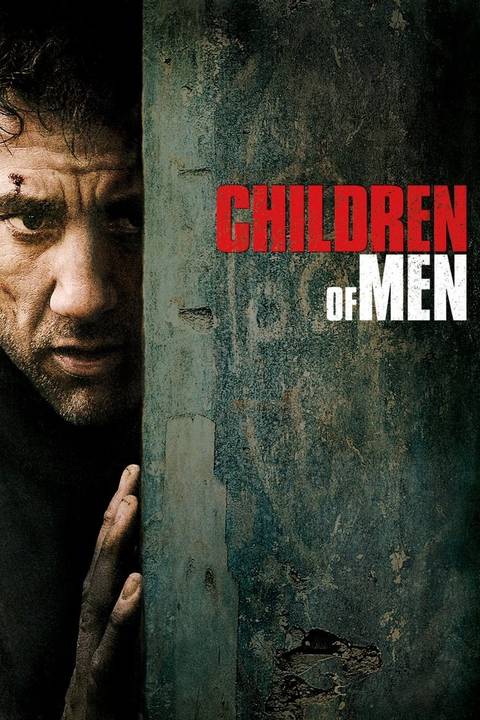
Children of Men
Release Date January 5, 2007
Runtime 109 minutes
Director Alfonso Cuarón
Writers Alfonso Cuarón, David Arata, Timothy J. Sexton, Hawk Ostby, Mark Fergus, P. D. James







 English (US) ·