
 Image via Warner Bros. Pictures

Published Apr 6, 2026, 5:11 AM EDT
Jeremy has more than 2300 published articles on Collider to his name, and has been writing for the site since February 2022. He's an omnivore when it comes to his movie-watching diet, so will gladly watch and write about almost anything, from old Godzilla films to gangster flicks to samurai movies to classic musicals to the French New Wave to the MCU... well, maybe not the Disney+ shows.
His favorite directors include Martin Scorsese, Sergio Leone, Akira Kurosawa, Quentin Tarantino, Werner Herzog, John Woo, Bob Fosse, Fritz Lang, Guillermo del Toro, and Yoji Yamada. He's also very proud of the fact that he's seen every single Nicolas Cage movie released before 2022, even though doing so often felt like a tremendous waste of time. He's plagued by the question of whether or not The Room is genuinely terrible or some kind of accidental masterpiece, and has been for more than 12 years (and a similar number of viewings).
When he's not writing lists - and the occasional feature article - for Collider, he also likes to upload film reviews to his Letterboxd profile (username: Jeremy Urquhart) and Instagram account.
He has achieved his 2025 goal of reading all 13,467 novels written by Stephen King, and plans to spend the next year or two getting through the author's 82,756 short stories and 105,433 novellas.
Sign in to your Collider account
Of all the different types of horror movies out there, those that focus on demonic possession have proven continually popular over the years. Regardless of whether one believes in the supernatural, the idea of a demonic entity or some kind of spirit entering one's body is a frightening one. This kind of horror works because losing control of oneself is inherently scary, and when it's a demon doing the possessing, chances are their reasons for taking control aren't going to help the person in question.
Demonic possession movies are also notable for being popular throughout the world, with this kind of horror being mixed with various cultures and folklore, which keeps such films interesting and from feeling stale. It also shows that the idea of being possessed is an unsettling one on a global scale, with the following best possession movies—ranked below from worst to best—demonstrating the various ways this kind of supernatural terror has been portrayed in cinema. Possession horror movies and films about exorcisms aren't going out of style anytime soon, and any time is the perfect time to dive into some of the best ones.
35 'Evil Dead' (2013)
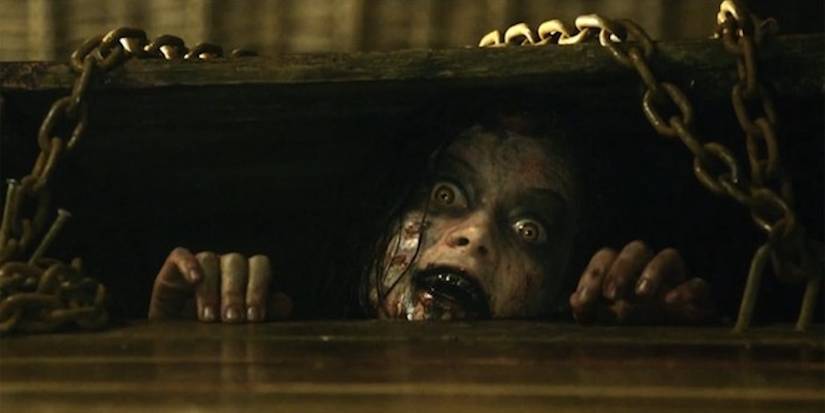 Image via Sony Pictures Releasing
If you want to read about good possession movies, you're going to have to get used to seeing the films from the Evil Dead series keep popping up. Most of these are reliably scary and gross (well, Army of the Darkness aside, given that one is pretty much just a comedy), and 2013’s Evil Dead is no exception, with the Fede Álvarez-directed remake (of sorts) being especially grimy and graphic.
The premise here involves a young woman trying to kick a drug habit, which involves spending time in an isolated cabin with friends while going cold turkey. But this is an Evil Dead movie, so the cabin has some horrific stuff inside, and then people start behaving oddly, and then violence ensues. Like, it’s the usual sort of thing, but it gets especially intense and gory here, which makes it stand out, to some extent.
34 'Alucarda' (1977)
 Image via Yuma Films
Alucarda is a deeply unstable and bizarre film, but that’s perhaps more of a feature than a bug. It’s about a young girl who goes to live in a convent following the deaths of both her parents, but then when she’s there, weird things keep happening, and the interactions she has with another girl who initially seems to be a friend grow in intensity, in more ways than one.
Eventually, Alucarda explodes into something borderline incomprehensible, but it’s a ride worth taking. It’s an odd and feverish sort of film in ways that feel unique, even among other horror movies that deal with psychological stuff and demonic possession. Even calling it just a demonic possession movie feels like underselling it, given Alucarda—despite its brief runtime—intends to be a good deal more, and arguably pulls it off, by and large.
33 'When Evil Lurks' (2023)
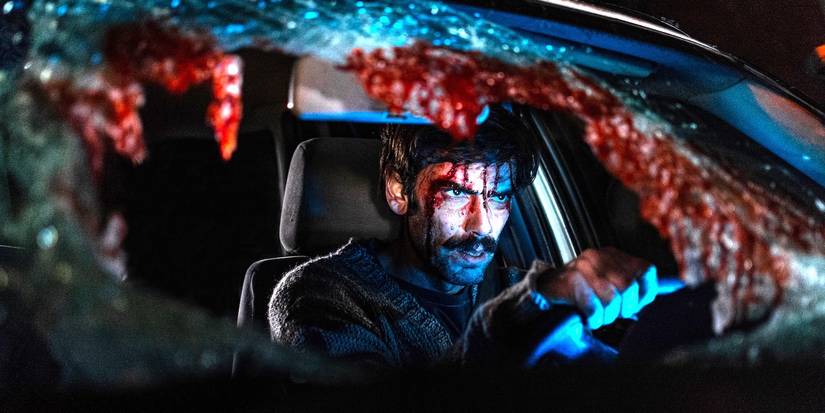 Image via IFC
Though recent, When Evil Lurks already feels like it could be some kind of (minor) modern classic, because it’s at least bold enough to make a mark alongside so many other horror films released in recent years. Mostly, the plot here involves people in a small town reacting to the revelation that there is about to be some kind of demon born in their midst.
Evil does indeed lurk and affect their behavior, with the impending disaster creating a lot of dread that stands out, and is complemented by some more in-your-face horror elements, namely, a fair bit of grisly violence. When Evil Lurks doesn’t reinvent the brand of horror it explores, but it takes on the idea of demonic possession with style and confidence that make it easy to get wrapped up in.
32 'Saint Maud' (2019)
 Image via StudioCanal
Saint Maud is a fairly slow film, but it’s slow with a purpose, working as a character study first and then a possession-related horror movie second. That might mean it’s not for everyone, but it’s still worth taking a chance on if you like supernatural horror, since if you give it the chance to get under your skin, it probably will.
Given it’s simple and also pretty short, it’s best not to go into too much depth about the plot of Saint Maud, but broadly, it centers on a young woman working as a carer for an older woman. Gradually, the younger woman unravels, and then things get gradually more horrific and surreal. It’s odd, but it is also effective, and it works well as a stripped-back and psychological sort of horror film.
31 'The Blackcoat's Daughter' (2015)
 Image Via A24
Before he directed one of 2024’s best thrillers (Longlegs), Osgood Perkins made The Blackcoat’s Daughter, which centers on young women in the same manner that so many solid demonic possession movies seem to do. Both are isolated during winter break, and this makes them extra vulnerable to some sort of dangerous spirit that preys on them and ensures that both their lives start to fall apart.
It’s another slow and offbeat sort of horror movie, too, but it’s effectively cold and desolate, using its setting and aesthetics to add immensely to the scare factor already present in such a premise. The Blackcoat’s Daughter ends up doing quite a lot, as a film, with relatively little by way of narrative and scale. It’s intimate, intense, and eerie, and also served as a promising sign of greater things to come for its director.
30 'Evil Dead Rise' (2023)
 Image Via Warner Bros.
While it’s not the best movie to carry the Evil Dead name, Evil Dead Rise is still a good deal better than you'd expect it to be, and an arguable improvement on the other non-Sam Raimi Evil Dead movie from 2013. Rather than a cabin in the woods, Evil Dead Rise mixes things up by taking place largely inside an apartment complex, which proves to be often just as claustrophobic as a cabin would.
There are people getting possessed, jump scares, and some sequences of very gnarly violence and bloodshed; all things you'd expect from an Evil Dead movie that isn't Army of Darkness. Evil Dead Rise keeps things simple but ultimately satisfies, feeling so familiar and satisfying that it’s the closest a demonic possession movie will probably ever come to being like a warm hug.
29 'Immaculate' (2024)
 Image via Neon
Plenty of movies about demonic possession also happen to be movies that deal with religious themes, and Immaculate belongs in such a camp. It’s about possession, and it also deals with religious horror pretty full-on, given it’s mostly set in a convent in Italy, with the main characters being the nuns who live there.
The central character is a newcomer to said convent, and while there, unusual things keep happening to her and around her, eventually suggesting that something fishy is going on within this isolated and seemingly peaceful countryside location. The premise of Immaculate is one that very easily gives way to horror of a particular flavor, meaning it’s hard to praise the film necessarily for being original. Then again, some conventions often get followed when it comes to movies about demonic possession, and at least Immaculate follows such conventions, perhaps not immaculately, but fairly well.
Collider Exclusive · Oscar Best Picture Quiz
Which Oscar Best Picture
Is Your Perfect Movie?
Parasite · Everything Everywhere · Oppenheimer · Birdman · No Country
Five Oscar Best Picture winners. Five completely different visions of what cinema can be — and what it can do to you. One of them is the film that was made for the way your mind works. Ten questions will figure out which one.
🪜Parasite
🌀Everything Everywhere
☢️Oppenheimer
🐦Birdman
🪙No Country for Old Men
FIND YOUR FILM →
01
What kind of film experience do you actually want? The best movies don't just entertain — they leave something behind.
ASomething that pulls the rug out — that makes me think I'm watching one kind of film and then reveals I'm watching another entirely. BSomething overwhelming — funny, sad, absurd, and genuinely moving, all at once. CSomething grand and weighty — a film that makes me feel the full scale of what I'm watching. DSomething formally daring — a film that pushes what cinema can even do. ESomething lean and relentless — pure tension with no wasted frame.
NEXT QUESTION →
02
Which idea grabs you most in a film? Great films are driven by a central obsession. What's yours?
AClass, inequality, and what people are willing to do when desperation meets opportunity. BIdentity, family, and the chaos of trying to hold your life together when everything is falling apart. CGenius, moral responsibility, and the catastrophic weight of a decision you can never take back. DEgo, legacy, and the terror of becoming irrelevant while you're still alive to watch it happen. EEvil, chance, and whether moral order actually exists or if we just tell ourselves it does.
NEXT QUESTION →
03
How do you like your story told? Form is content. The way a story is shaped changes what it means.
AGenre-twisting — I want it to start in one lane and migrate into something completely different. BMaximalist and genre-blending — comedy, action, drama, sci-fi, all in one ride. CEpic and non-linear — cutting between timelines, building a mosaic of cause and consequence. DA single unbroken flow — I want to feel like I'm living it in real time, no cuts to safety. ESpare and precise — every scene doing exactly what it needs to do and nothing more.
NEXT QUESTION →
04
What makes a truly great antagonist? The opposition defines the protagonist. What kind of opposition fascinates you?
AA system — invisible, structural, and almost impossible to fight because it has no single face. BThe self — the ways we sabotage, abandon, and fail the people we love most. CHistory — the unstoppable momentum of events that no single person can stop or redirect. DThe industry — the machinery of culture that chews up talent and spits out irrelevance. EPure, implacable evil — a force so certain of itself it becomes almost philosophical.
NEXT QUESTION →
05
What do you want from a film's ending? The final note is the one that lingers. What do you want it to sound like?
AShock and inevitability — a conclusion that recontextualises everything that came before it. BEarned emotion — I want to cry, laugh, and feel genuinely hopeful, even if the world is a mess. CDevastation and grandeur — an ending that makes me sit in silence for a few minutes after. DAmbiguity — something that leaves enough open that I'm still thinking about it days later. EBleakness — an honest refusal to pretend the world is tidier than it actually is.
NEXT QUESTION →
06
Which setting pulls you in most? Where a film takes place shapes everything — mood, stakes, what's even possible.
AA gleaming modern city with a hidden underside — beauty masking rot, wealth masking desperation. BA collapsing suburban life that opens onto something infinite — the multiverse of a single ordinary person. CThe corridors of power and science at a world-historical turning point — where decisions echo for decades. DThe grimy, alive chaos of New York and Hollywood — fame as both destination and trap. EVast, indifferent landscape — desert and highway where violence arrives without warning or reason.
NEXT QUESTION →
07
What cinematic craft impresses you most? Every great film has a signature — a technical or artistic element that makes it unmistakable.
AProduction design and mise-en-scène — every frame composed to carry meaning beneath the surface. BEditing and tonal control — the ability to move between registers without losing the audience. CScore and sound design — music that becomes inseparable from the dread and awe of what you're watching. DCinematography as performance — the camera not recording events but participating in them. ESilence and restraint — what's left unsaid and unshown doing more work than any dialogue could.
NEXT QUESTION →
08
What kind of main character do you root for? The protagonist is the lens. Who you choose to follow says something about you.
ASomeone smart and resourceful who makes increasingly dangerous decisions under pressure. BSomeone overwhelmed and ordinary who turns out to be capable of something extraordinary. CA brilliant, tortured figure whose gifts and flaws are inseparable from each other. DA self-destructive artist whose ego is both their superpower and their undoing. EA quiet, principled person trying to make sense of a world that has stopped making sense.
NEXT QUESTION →
09
How do you feel about a film that takes its time? Pace is a choice. Some films sprint; others let tension accumulate slowly, deliberately.
AI love a slow build when I know the payoff is going to be seismic — patience for a devastating reveal. BGive me relentless momentum — I want to feel breathless and emotionally spent by the end. CEpic runtime doesn't scare me — if the material demands three hours, give me three hours. DI want it to feel propulsive even when nothing is technically happening — restless energy throughout. EDeliberate and unhurried — I want dread to accumulate in the spaces between the action.
NEXT QUESTION →
10
What do you want to feel walking out of the cinema? The best films leave a mark. What kind of mark do you want?
AUnsettled — like I've just seen something I can't fully explain but can't stop thinking about. BMoved and energised — like the film reminded me what actually matters and gave me something to hold onto. CHumbled — like I've been in the presence of something genuinely important and overwhelming. DExhilarated — like I've just seen cinema doing something it's never quite done before. EHaunted — like a cold, quiet dread that stays with me for days.
REVEAL MY FILM →
The Academy Has Decided Your Perfect Film Is…
Your answers have pointed to one Oscar Best Picture winner above all others. This is the film that was made for the way your mind works.
Parasite
You are drawn to films that operate on multiple levels simultaneously — that begin in one genre and quietly, brilliantly migrate into another. Bong Joon-ho's Parasite is a film about class, desire, and the architecture of inequality that manages to be darkly funny, deeply suspenseful, and genuinely shocking across a single extraordinary running time. Your instinct is for cinema that hides its true intentions until the moment it's ready to reveal them. Parasite is exactly that — a film that rewards close attention and punishes assumptions, right up to its devastating final image.
Everything Everywhere All at Once
You want it all — and this film gives you all of it. The Daniels' Everything Everywhere All at Once is one of the most maximalist films ever made: action comedy, multiverse sci-fi, family drama, existential crisis, and a genuinely earned emotional core that sneaks up on you amid the chaos. You are someone who responds to ambition, who doesn't want cinema to choose between being entertaining and being meaningful. This film refuses that choice entirely. It is overwhelming by design, and its overwhelming nature is precisely the point — because the feeling of being crushed by infinite possibility is exactly what it's about.
Oppenheimer
You are drawn to cinema on a grand scale — films that understand history not as a backdrop but as a force, and that place their characters inside that force and watch what happens. Christopher Nolan's Oppenheimer is a film about the terrifying gap between what we can do and what we should do, told with the full weight of one of the most consequential moments in human history behind it. You want your films to feel important without feeling self-important — to earn their ambition through sheer craft and the gravity of their subject. Oppenheimer does exactly that. It is enormous, complicated, and refuses easy comfort.
Birdman
You are drawn to films that foreground their own construction — that make the how of the filmmaking part of the what it's about. Alejandro González Iñárritu's Birdman, shot to appear as a single continuous take, is cinema examining itself through the cracked mirror of a fading actor's ego. You respond to formal daring, to the feeling that a film is doing something that probably shouldn't be possible. Michael Keaton's performance and Emmanuel Lubezki's restless camera create something genuinely unlike anything else — a film that is simultaneously about creativity, relevance, self-destruction, and the impossibility of ever truly knowing if your work means anything at all.
No Country for Old Men
You are drawn to cinema that trusts silence, that refuses to explain itself, and that treats dread as a form of meaning. The Coen Brothers' No Country for Old Men is a film about the arrival of a new kind of evil — implacable, arbitrary, and utterly indifferent to the moral frameworks we use to make sense of the world. It is one of the most formally controlled films ever made, and its controlled restraint is what makes it so terrifying. You want your films to haunt you, not comfort you. You are not interested in resolution if resolution would be dishonest. No Country for Old Men is honest in a way that most cinema never dares to be.
↻ RETAKE THE QUIZ
28 'Event Horizon' (1997)
 Image via Paramount Pictures
Demonic possessions alongside religious horror? That can be fairly expected stuff. But a demonic possession movie with a sci-fi spin? That’s something more novel, and a big reason why Event Horizon – despite its flaws – proves so memorable. It’s set in the future and in space, following astronauts as they travel to a ship that went missing several years earlier.
Uncovering what made it disappear leads to some unsettling discoveries, with Event Horizon being at its best when it’s at its most brazen. Some parts are genuinely quite shocking, and there’s a certain creative spark to the whole thing; a thrill in seeing this kind of horror take place in such a setting. Other parts of Event Horizon don’t work quite as well, but it’s an ambitious movie – and a minor cult classic of sorts – where the strengths outweigh the weaknesses.
27 'Constantine' (2005)
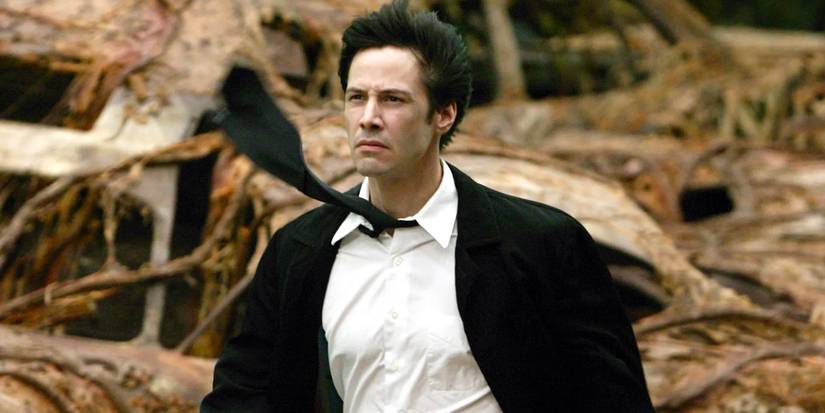 Image via Warner Bros. Pictures
Constantine, like Event Horizon, also earns some points for being a unique take on demonic possession-related horror. This Keanu Reeves-starring movie also works as a fantasy/action flick, and technically counts as a superhero movie of sorts, too, as it follows a man who’s able to travel between Hell and Earth while also having the ability to battle demons.
It’s fairly mild as far as demonic possession movies go, watering things down enough to make it broadly appealing—and only slightly scary—to not alienate those more interested in seeing a Keanu Reeves action movie. Constantine's a film that’s become a little more appreciated as time has gone on, being perhaps a little too young to be a full-on cult classic in the traditional sense, but certainly feeling as though it’s on its way to attaining such a label.
26 'Late Night with the Devil' (2023)
 Image Via IFC Films
While it wasn’t the first movie to combine a found footage format with demonic possession-related horror, Late Night with the Devil does have enough novelty to its presentation to be a distinctive viewing experience. The premise is nice and simple, being about a late-night talk show that has various guests related to paranormal activities on one night, which eventually leads to genuine terror and possible possessions.
Late Night with the Devil is one of the more exciting and interesting horror movies of the 2020s so far, not hitting it out of the park entirely but taking enough risks that pay off to make it an engaging and memorable watch. It does a great deal with a modest budget and a confined setting, and has an approach that makes it more than worthwhile for anyone who feels a bit burnt out by films about demonic possession and/or the found footage sub-genre.






 English (US) ·