
The past two decades have been rich for cinema. It's been a time of technological breakthroughs, bold new voices, and global cross-pollination against an increasingly erratic backdrop of AI, corporate mergers, and an overall sense of doom that proves the unifying and prevalent power of art. Sure, some might complain that this era hasn't been as experimental or risky as the '70s, but it's still given us more than its fair share of classics.
Choosing the best movies of a given period is never easy, but this list attempts to rank the finest film masterpieces released since 2006. The titles below, spanning genres, countries, and artistic traditions, represent the most daring, innovative, and culturally defining masterpieces of the last twenty years. They are a perfect encapsulation of the strengths and sensibilities of 21st-century filmmaking that ranks among cinema's greatest-ever achievements.
10 'Mad Max: Fury Road' (2015)
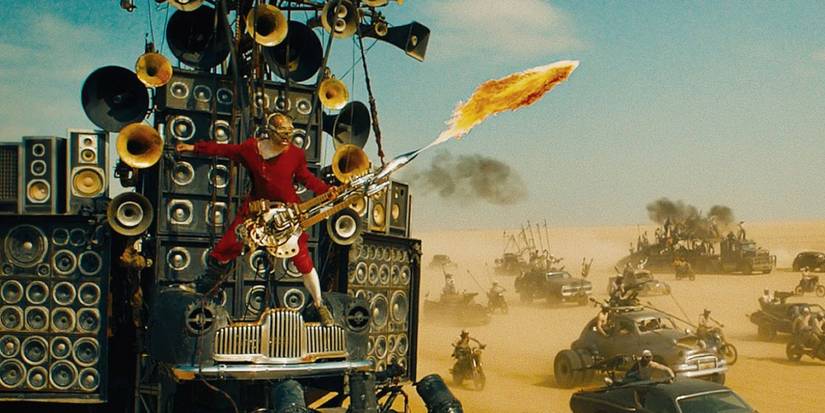 Image via Warner Bros. Pictures
"Oh, what a day! What a lovely day!" Mad Max: Fury Road is a modern action landmark, reimagining what cinematic spectacle can look and feel like. The plot is deceptively simple: in a scorched post-apocalyptic wasteland, the tyrant Immortan Joe (Hugh Keays-Byrne) controls water and life itself. Imperator Furiosa (Charlize Theron) flees his Citadel with five enslaved women, teaming up with Max Rockatansky (Tom Hardy) as they race across the desert to freedom. But the story is really a propulsive chase distilled to pure motion, balancing killer stunts with compelling characters.
Fury Road wows with its practical, throwback stunt work, kinetic editing, and painterly color palette. Yet it's not all style over substance. Furiosa’s journey toward liberation gives the film real emotional weight, setting it apart from most run-of-the-mill, empty action blockbusters. The original Max Max and its sequel were already legendary, but George Miller somehow topped them with this big, modern vision.
9 'The Act of Killing' (2012)
 Image via Dogwoof Pictures
"I’ve tried to forget all this… but I can’t." The Act of Killing is one of the most unsettling and audacious documentaries ever made. It centers on former Indonesian death-squad leaders who, decades after the 1965–66 massacres, reenact their crimes in the style of Hollywood genres: musicals, gangster films, Westerns. In the process, they reveal the fantasies, self-mythologizing, and denial underpinning their brutality. They speak casually about their acts of violence, providing a grim but fascinating glimpse into their psychology.
The movie becomes a kind of spiritual or philosophical excavation, following executioner Anwar Congo as he drifts between bravado and remorse. It becomes a mirror held up to collective memory, political impunity, and the banality of evil. Director Joshua Oppenheimer’s approach, inviting perpetrators to stage their atrocities, yields a surreal, nightmarish portrait of power, guilt, and moral collapse. It ranks among the most powerful documentaries ever made.
8 'The Tree of Life' (2011)
 Image via Searchlight Pictures
"There are two ways through life: the way of nature, and the way of grace." Terrence Malick has crafted several masterpieces over the decades, none more ambitious than The Tree of Life, his cosmic yet deeply personal meditation on grief, childhood, faith, and the origins of existence itself. The story moves between the 1950s Texas childhood of Jack O’Brien, showing us his loving mother, stern father, and the moments that shaped his moral and emotional consciousness, as well as sequences depicting the birth of the universe, the formation of planets, and the emergence of life.
We pivot between domestic conflict and the life-or-death struggles of dinosaurs. Malick’s floating camera and the orchestral score create a sensory experience that lingers long after the final shot. This approach was polarizing, but it's deeply effective if you get on its wavelength. Plus, Sean Penn's performance is strong enough that it's never overwhelmed by the grandeur around him.
7 'Get Out' (2017)
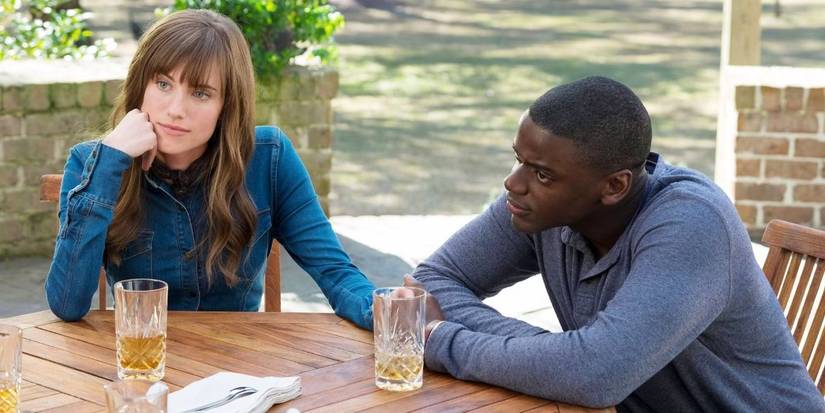 Image via Universal Pictures
"Sink into the floor." One of the most groundbreaking thrillers ever, Get Out is a combustible admixture of horror, social, satire, and social commentary. In his breakthrough role, Daniel Kaluuya leads the cast as Chris, a young Black man visiting the wealthy white family of his girlfriend Rose (Allison Williams) for the first time. Their overly polite hospitality soon reveals something sinister: missing Black residents, hypnotic manipulation, and a secret, body-swapping operation.
The premise is wild, but Jordan Peele crafts it into a story that is both genre-savvy and searingly political, using paranoia and humor to expose America’s racial anxieties. Indeed, the movie spoke perfectly to its turbulent moment in time. Through it all, Kaluuya’s Oscar-nominated performance anchors the film's emotional and psychological stakes, and the unpredictable plot keeps us hooked. Peele's subsequent movies are solid, but Get Out was lightning in a bottle.
6 'Children of Men' (2006)
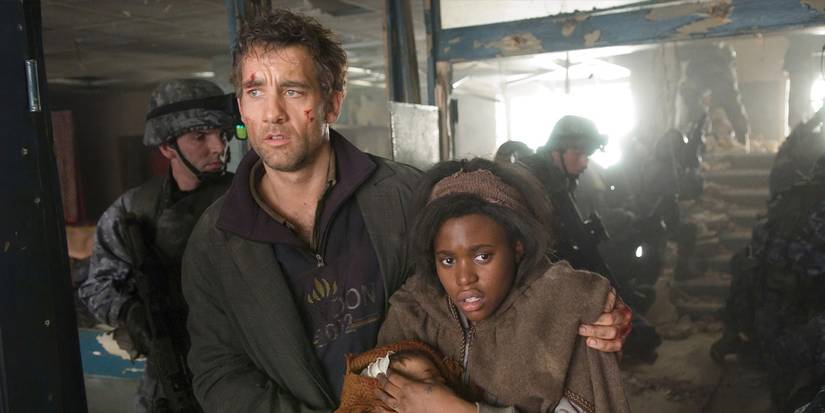 Image via Universal Pictures
"As the sound of the playgrounds faded, the despair set in." Ranking among the greatest dystopian films ever made, Alfonso Cuarón’s Children of Men is a bleak yet deeply humane vision of societal collapse. Set in 2027, the story imagines a world where human infertility has pushed civilization toward extinction. Weary bureaucrat Theo Faron (Clive Owen) is drawn into a resistance movement when he is tasked with protecting a young refugee named Kee (Clare-Hope Ashitey), the first pregnant woman in nearly two decades.
Famously, Cuarón’s fluid long takes and immersive world-building turn the film into a harrowing journey through chaos, oppression, and fragile hope. Few movies manage to be both this intelligent and this entertaining at the same time. The distinct genre elements serve to critique xenophobia, authoritarianism, and environmental ruin. These are grim themes, yet Children of Men maintains the possibility of rebirth even amid the deepest darkness.
Collider Exclusive · Oscar Best Picture Quiz
Which Oscar Best Picture
Is Your Perfect Movie?
Parasite · Everything Everywhere · Oppenheimer · Birdman · No Country
Five Oscar Best Picture winners. Five completely different visions of what cinema can be — and what it can do to you. One of them is the film that was made for the way your mind works. Ten questions will figure out which one.
🪜Parasite
🌀Everything Everywhere
☢️Oppenheimer
🐦Birdman
🪙No Country for Old Men
FIND YOUR FILM →
01
What kind of film experience do you actually want? The best movies don't just entertain — they leave something behind.
ASomething that pulls the rug out — that makes me think I'm watching one kind of film and then reveals I'm watching another entirely. BSomething overwhelming — funny, sad, absurd, and genuinely moving, all at once. CSomething grand and weighty — a film that makes me feel the full scale of what I'm watching. DSomething formally daring — a film that pushes what cinema can even do. ESomething lean and relentless — pure tension with no wasted frame.
NEXT QUESTION →
02
Which idea grabs you most in a film? Great films are driven by a central obsession. What's yours?
AClass, inequality, and what people are willing to do when desperation meets opportunity. BIdentity, family, and the chaos of trying to hold your life together when everything is falling apart. CGenius, moral responsibility, and the catastrophic weight of a decision you can never take back. DEgo, legacy, and the terror of becoming irrelevant while you're still alive to watch it happen. EEvil, chance, and whether moral order actually exists or if we just tell ourselves it does.
NEXT QUESTION →
03
How do you like your story told? Form is content. The way a story is shaped changes what it means.
AGenre-twisting — I want it to start in one lane and migrate into something completely different. BMaximalist and genre-blending — comedy, action, drama, sci-fi, all in one ride. CEpic and non-linear — cutting between timelines, building a mosaic of cause and consequence. DA single unbroken flow — I want to feel like I'm living it in real time, no cuts to safety. ESpare and precise — every scene doing exactly what it needs to do and nothing more.
NEXT QUESTION →
04
What makes a truly great antagonist? The opposition defines the protagonist. What kind of opposition fascinates you?
AA system — invisible, structural, and almost impossible to fight because it has no single face. BThe self — the ways we sabotage, abandon, and fail the people we love most. CHistory — the unstoppable momentum of events that no single person can stop or redirect. DThe industry — the machinery of culture that chews up talent and spits out irrelevance. EPure, implacable evil — a force so certain of itself it becomes almost philosophical.
NEXT QUESTION →
05
What do you want from a film's ending? The final note is the one that lingers. What do you want it to sound like?
AShock and inevitability — a conclusion that recontextualises everything that came before it. BEarned emotion — I want to cry, laugh, and feel genuinely hopeful, even if the world is a mess. CDevastation and grandeur — an ending that makes me sit in silence for a few minutes after. DAmbiguity — something that leaves enough open that I'm still thinking about it days later. EBleakness — an honest refusal to pretend the world is tidier than it actually is.
NEXT QUESTION →
06
Which setting pulls you in most? Where a film takes place shapes everything — mood, stakes, what's even possible.
AA gleaming modern city with a hidden underside — beauty masking rot, wealth masking desperation. BA collapsing suburban life that opens onto something infinite — the multiverse of a single ordinary person. CThe corridors of power and science at a world-historical turning point — where decisions echo for decades. DThe grimy, alive chaos of New York and Hollywood — fame as both destination and trap. EVast, indifferent landscape — desert and highway where violence arrives without warning or reason.
NEXT QUESTION →
07
What cinematic craft impresses you most? Every great film has a signature — a technical or artistic element that makes it unmistakable.
AProduction design and mise-en-scène — every frame composed to carry meaning beneath the surface. BEditing and tonal control — the ability to move between registers without losing the audience. CScore and sound design — music that becomes inseparable from the dread and awe of what you're watching. DCinematography as performance — the camera not recording events but participating in them. ESilence and restraint — what's left unsaid and unshown doing more work than any dialogue could.
NEXT QUESTION →
08
What kind of main character do you root for? The protagonist is the lens. Who you choose to follow says something about you.
ASomeone smart and resourceful who makes increasingly dangerous decisions under pressure. BSomeone overwhelmed and ordinary who turns out to be capable of something extraordinary. CA brilliant, tortured figure whose gifts and flaws are inseparable from each other. DA self-destructive artist whose ego is both their superpower and their undoing. EA quiet, principled person trying to make sense of a world that has stopped making sense.
NEXT QUESTION →
09
How do you feel about a film that takes its time? Pace is a choice. Some films sprint; others let tension accumulate slowly, deliberately.
AI love a slow build when I know the payoff is going to be seismic — patience for a devastating reveal. BGive me relentless momentum — I want to feel breathless and emotionally spent by the end. CEpic runtime doesn't scare me — if the material demands three hours, give me three hours. DI want it to feel propulsive even when nothing is technically happening — restless energy throughout. EDeliberate and unhurried — I want dread to accumulate in the spaces between the action.
NEXT QUESTION →
10
What do you want to feel walking out of the cinema? The best films leave a mark. What kind of mark do you want?
AUnsettled — like I've just seen something I can't fully explain but can't stop thinking about. BMoved and energised — like the film reminded me what actually matters and gave me something to hold onto. CHumbled — like I've been in the presence of something genuinely important and overwhelming. DExhilarated — like I've just seen cinema doing something it's never quite done before. EHaunted — like a cold, quiet dread that stays with me for days.
REVEAL MY FILM →
The Academy Has Decided Your Perfect Film Is…
Your answers have pointed to one Oscar Best Picture winner above all others. This is the film that was made for the way your mind works.
Parasite
You are drawn to films that operate on multiple levels simultaneously — that begin in one genre and quietly, brilliantly migrate into another. Bong Joon-ho's Parasite is a film about class, desire, and the architecture of inequality that manages to be darkly funny, deeply suspenseful, and genuinely shocking across a single extraordinary running time. Your instinct is for cinema that hides its true intentions until the moment it's ready to reveal them. Parasite is exactly that — a film that rewards close attention and punishes assumptions, right up to its devastating final image.
Everything Everywhere All at Once
You want it all — and this film gives you all of it. The Daniels' Everything Everywhere All at Once is one of the most maximalist films ever made: action comedy, multiverse sci-fi, family drama, existential crisis, and a genuinely earned emotional core that sneaks up on you amid the chaos. You are someone who responds to ambition, who doesn't want cinema to choose between being entertaining and being meaningful. This film refuses that choice entirely. It is overwhelming by design, and its overwhelming nature is precisely the point — because the feeling of being crushed by infinite possibility is exactly what it's about.
Oppenheimer
You are drawn to cinema on a grand scale — films that understand history not as a backdrop but as a force, and that place their characters inside that force and watch what happens. Christopher Nolan's Oppenheimer is a film about the terrifying gap between what we can do and what we should do, told with the full weight of one of the most consequential moments in human history behind it. You want your films to feel important without feeling self-important — to earn their ambition through sheer craft and the gravity of their subject. Oppenheimer does exactly that. It is enormous, complicated, and refuses easy comfort.
Birdman
You are drawn to films that foreground their own construction — that make the how of the filmmaking part of the what it's about. Alejandro González Iñárritu's Birdman, shot to appear as a single continuous take, is cinema examining itself through the cracked mirror of a fading actor's ego. You respond to formal daring, to the feeling that a film is doing something that probably shouldn't be possible. Michael Keaton's performance and Emmanuel Lubezki's restless camera create something genuinely unlike anything else — a film that is simultaneously about creativity, relevance, self-destruction, and the impossibility of ever truly knowing if your work means anything at all.
No Country for Old Men
You are drawn to cinema that trusts silence, that refuses to explain itself, and that treats dread as a form of meaning. The Coen Brothers' No Country for Old Men is a film about the arrival of a new kind of evil — implacable, arbitrary, and utterly indifferent to the moral frameworks we use to make sense of the world. It is one of the most formally controlled films ever made, and its controlled restraint is what makes it so terrifying. You want your films to haunt you, not comfort you. You are not interested in resolution if resolution would be dishonest. No Country for Old Men is honest in a way that most cinema never dares to be.
↻ RETAKE THE QUIZ
5 'Oppenheimer' (2023)
 Image via Universal Pictures
"I am become death, the destroyer of worlds." Oppenheimer is simultaneously a character study, an epic, and a thriller. Cillian Murphy turns in a towering performance as the titular physicist, leader of the Manhattan Project, and symbolic father of the atomic bomb. The film intercuts Oppenheimer’s rise through academia, his complex personal relationships, and the moral reckoning that followed the bombings of Hiroshima and Nagasaki, deploying Christopher Nolan's usual propulsive aesthetic but with new emotional and moral depth.
It helps that Murphy is so great in the part. He captures Oppenheimer's contradictions, fully believable as a man torn between genius, ambition, guilt, and political persecution. As a result, Oppenheimer becomes an intimate biopic as well as a sharp statement on our current world, where nuclear tensions appear to be on the rise again. The titular character becomes a stand-in for humanity as a whole, always on the brink of being overwhelmed by its deadly creation.
4 'Parasite' (2019)
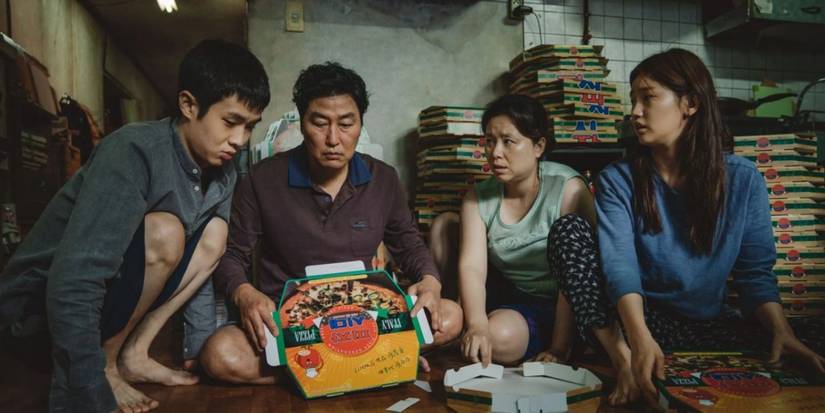 Image via NEON
"Rich people are naive. No resentments. No creases on them." Parasite is a genre-defying masterpiece, part black comedy, part thriller, part social allegory. We follow the impoverished Kim family as they infiltrate the wealthy Park household through forged credentials and cunning manipulation. Their scheme unfolds with precision until an unexpected discovery in the Parks' basement triggers a shocking spiral of violence and chaos.
Along the way, Bong Joon Ho blends class satire with finely-tuned suspense. The aesthetics are exquisitely weaponized in service of the message. Every frame reflects the invisible architecture of inequality, with the Parks' hilltop home and the Kims’ subterranean apartment symbolizing a society built on vertical divisions. These themes resonated with audiences, revealing a lot about our current moment. Not for nothing, Parasite became the first non-English-language film to win the Best Picture Oscar and arguably Bong's defining achievement.
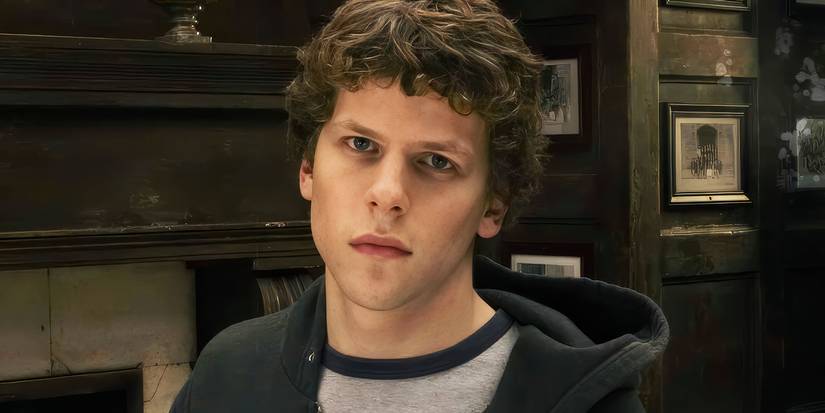 Image via Sony Pictures Releasing
"You’re not an a—hole, Mark. You’re just trying so hard to be one." We truly live in the social media age, and The Social Network is one of the most piercing movies about the dawn of that age. David Fincher and Aaron Sorkin turn the story of Facebook into a sleek, incisive drama about ambition, betrayal, and the digital revolution, charting the contentious rise of Facebook. Jesse Eisenberg shines as Mark Zuckerberg, transforming from a socially anxious Harvard undergraduate to a billionaire tech titan entangled in lawsuits from former friend Eduardo Saverin (Andrew Garfield) and the Winklevoss twins.
The dialogue crackles with wit and velocity (as one would expect from Sorkin), while Fincher’s cool, precise direction turns coding sessions and depositions into gripping cinematic sequences. Through it all, the film captures the spiritual cost of innovation; the loneliness, resentment, and fractured relationships that shadow Zuckerberg’s ascent. The Social Network is part Greek tragedy, part legal thriller, and one of the 21st century's best.
2 'The Zone of Interest' (2023)
 Image via A24
"We all have our work to do." The Zone of Interest is a chilling, formally radical Holocaust drama film that explores the banality of evil with unprecedented restraint. It focuses on Rudolf Höss (Christian Friedel), the Auschwitz commandant, and his wife Hedwig (Sandra Hüller) as they maintain an idyllic family life in a villa beside the death camp. The atrocities occur off-screen, heard through distant screams, machinery, and the faint echo of horror, a soundscape that becomes the film’s moral center.
Jonathan Glazer’s static compositions, domestic routines, and refusal to sensationalize create an atmosphere of suffocating moral vacancy. The contrast between family picnics and industrialized murder forces viewers to confront complicity, indifference, and the ordinariness of evil. This approach makes The Zone of Interest one of the most powerful movies about this dark chapter in the human story, one that avoids easy answers or neat moral framing.
1 'There Will Be Blood' (2007)
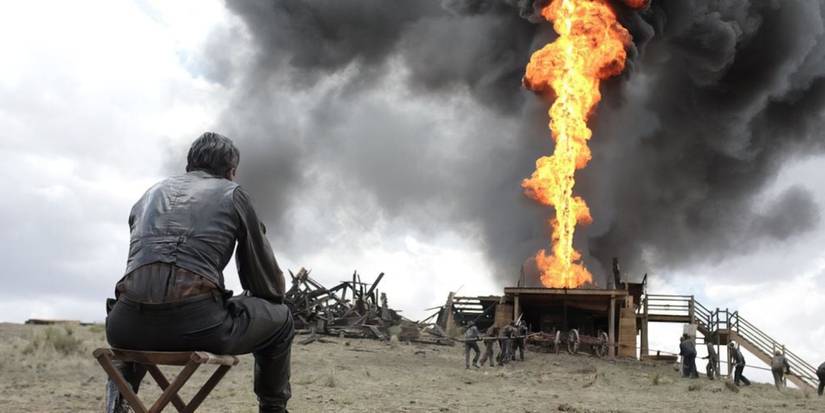 Image via Paramount Pictures
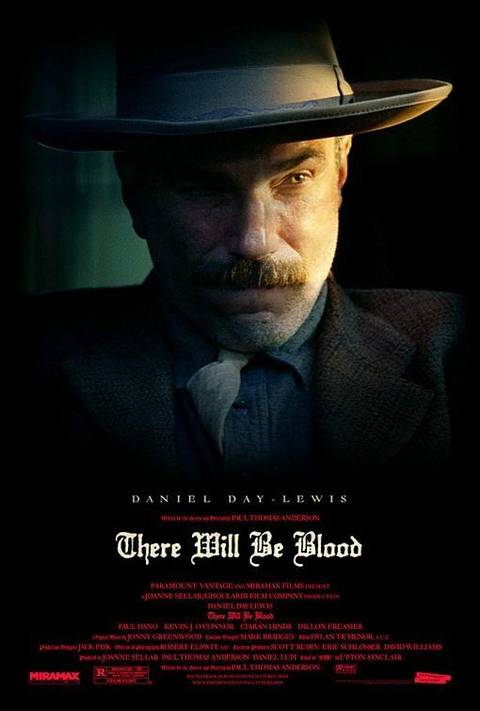
"I drink your milkshake! I drink it up!" Paul Thomas Anderson's magnum opus, There Will Be Blood is an American epic of greed, faith, ambition, and moral decay. The story tracks the rise of Daniel Plainview (Daniel Day-Lewis), a prospector-turned-oil baron whose pursuit of wealth corrodes his soul. Running parallel is his rivalry with Eli Sunday (Paul Dano), a charismatic young preacher who seeks power through religion. Their escalating conflict becomes a parable of America itself: capitalism versus evangelical zeal, ambition versus community, self-made individualism versus spiritual performance.
At the eye of the storm, Day-Lewis delivers a volcanic, era-defining performance, significantly elevating the character from what he would be simply on the page. Meanwhile, Anderson’s imagery, including oil derricks blazing, oceans of black crude, and lonely desert landscapes, gives everything a mythic feel. With its killer performances, propulsive score by Jonny Greenwood, and unforgettable final scene, There Will Be Blood is perhaps the pinnacle of 21st-century filmmaking.
There Will Be Blood
Release Date December 26, 2007
Runtime 158 minutes
Director Paul Thomas Anderson
Writers Paul Thomas Anderson







 English (US) ·