
 Image via Simon & Schuster
Published Sep 1, 2026, 11:26 PM EDT
Jeremy has more than 2700 published articles on Collider to his name, and has been writing for the site since February 2022. He's an omnivore when it comes to his movie-watching diet, so will gladly watch and write about almost anything, from old Godzilla films to gangster flicks to samurai movies to classic musicals to the French New Wave to the MCU... well, maybe not the Disney+ shows.
His favorite directors include Martin Scorsese, Sergio Leone, Akira Kurosawa, Quentin Tarantino, Werner Herzog, John Woo, Bob Fosse, Fritz Lang, Guillermo del Toro, and Yoji Yamada. He's also very proud of the fact that he's seen every single Nicolas Cage movie released before 2022, even though doing so often felt like a tremendous waste of time. He's plagued by the question of whether or not The Room is genuinely terrible or some kind of accidental masterpiece, and has been for more than 12 years (and a similar number of viewings).
When he's not writing lists - and the occasional feature article - for Collider, he also likes to upload film reviews to his Letterboxd profile (username: Jeremy Urquhart) and Instagram account.
He has achieved his 2025 goal of reading all 13,467 novels written by Stephen King, and plans to spend the next year or two getting through the author's 82,756 short stories and 105,433 novellas.
Sign in to your Collider account
Looking for movies that are more than 100 years old feels a lot harder to do than finding books that have stood the test of time for more than a century. Books go back further, because with movies, you’ve got some stuff from the 1910s and the 1920s, if you're talking feature-length films (including the likes of Intolerance and Nosferatu), but before then, all you have are short films. And not that many, honestly.
So, singling out a handful of great books that have existed for more than a century that feel especially great is kind of challenging, but that’s what the following is intended to do. These are the best books that are over 100 years old, with some only recently turning 100 (like, in 2025), while a couple of others are even older old-timers, having been around for multiple centuries.
10 'The Trial' (1925)
 Image via Knopf
Starting out with something that’s only a little over a century old, at the time of writing, The Trial was published in 1925, but written about a decade earlier. It was a posthumous publication for Franz Kafka, who died regrettably young, though what he did write has proven incredibly influential, with him being one of those creative people whose name has been reworked into an adjective: “Kafkaesque.”
The Trial is the best way to understand what Kafka was all about, or experience the best (and most Kafkaesque) thing he wrote. The novel’s about a guy on trial for a crime, and they don’t tell him what the crime is, so he slowly goes mad. And the world around him also seems like it’s gone mad, and pretty much dystopian, even if it’s not dystopian in like a science fiction way. It’s psychologically intense and timeless… that’s the important thing here.
9 'Frankenstein' (1818)
 Image via Oxford University Press USA
There’s been a whole lot done with the science fiction genre since Frankenstein, yet this one did lay quite a bit of groundwork, and feels especially impactful and influential if you're looking at sci-fi/horror books. It’s got one of those plots everyone knows, because it’s about a scientist who wants to bring the dead back to life, and he does so by creating a creature out of different dead body parts.
That’s the basic story that gets followed in various adaptations and re-imaginings, but the original text is something everyone should give time to at least once. Frankenstein (1818) goes to some truly thought-provoking and subtly uneasy places, with the novel being more nuanced than any adaptation. Mary Shelley’s original work here just has a real lingering quality that’s hard to describe, but then even harder to outright deny/ignore.
8 'Crime and Punishment' (1866)
 Image via Penguin
Was the 1860s the greatest decade for literature? Like, Crime and Punishment came out in this decade, and so too did two other immense books that’ll be mentioned a little later. Fyodor Dostoevsky was at his height here, and then The Idiot also came out in the final years of the 1860s. But it’s Crime and Punishment that should be focused on here, just because of how unbelievably effective it is as a proto-psychological thriller of sorts.
It’s also a crime novel, and then much of it digs deep enough that it works as a piece of philosophical and existential fiction, too. You’ve got a lot of things going all at once, even if the plot – about a crime or two, and maybe some punishments – technically isn't too complex. All the things Dostoevsky does with stuff that might seem simple at first? That’s where Crime and Punishment really gets elevated to the classic status it’s been able to proudly wear for decades upon decades at this point.
7 'The Great Gatsby' (1925)
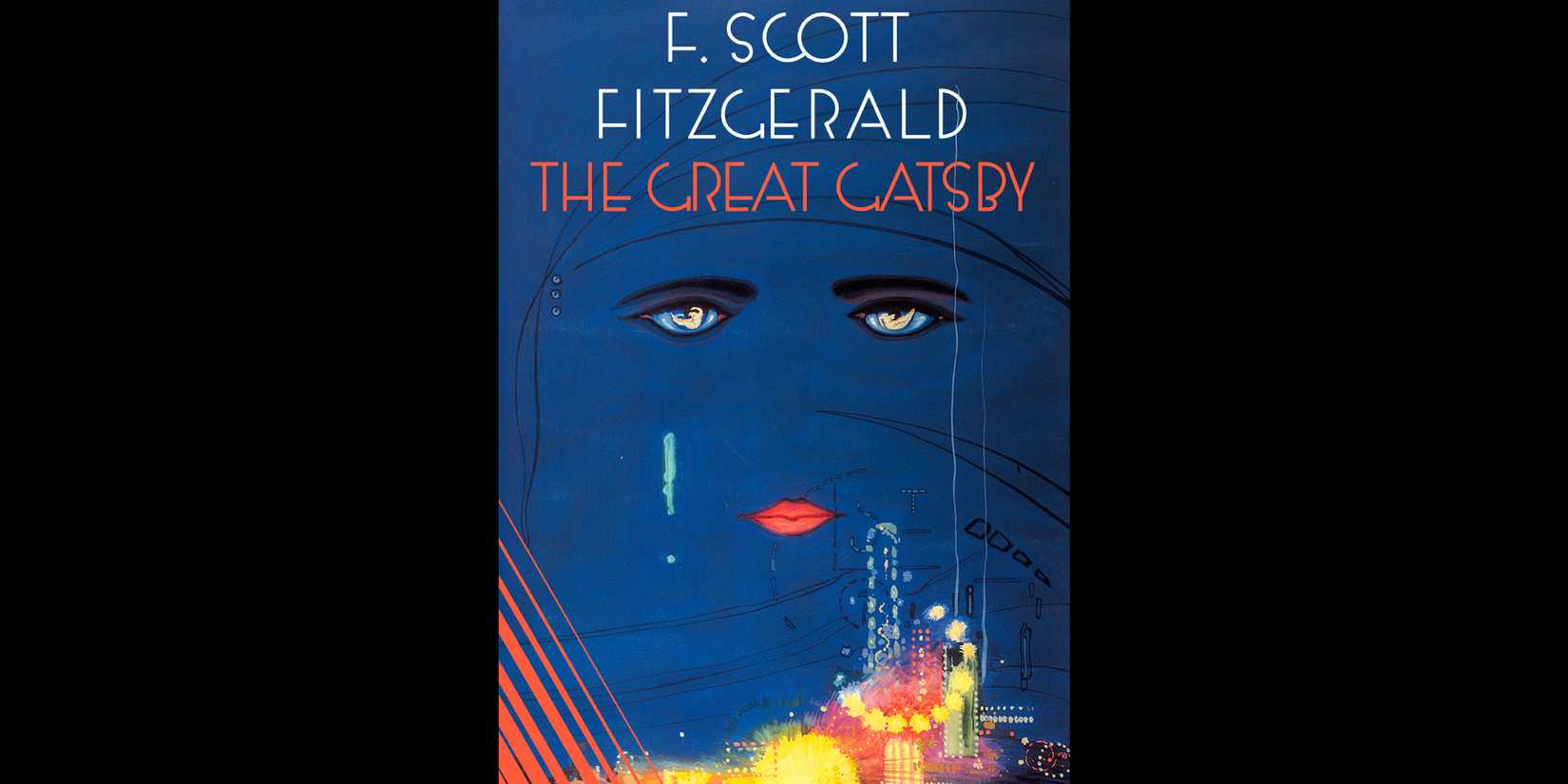 Image via Scribner
Like The Trial, The Great Gatsby hasn’t been 100 for very long, but it’s got one disadvantage when it comes to aging: it is distinctly about the decade during which it was published. The Great Gatsby is as 1920s as the Brian De Palma version of Scarface is 1980s. This is not a bad thing, though, in either case. It’s more just that there is a timelessness to something like The Trial because of how indistinct so much of it and its world prove to be.
As for The Great Gatsby, it wants to reflect a time and place, and then it wants to explore a few people caught up in that time and place. It does so expertly, obviously, and this might be another classic people call overrated or a bit whatever (some enthusiasm is lacking, at times, for books you might've been made to read at school), yet haters will hate. You don’t have to listen to them. Just focus on that blinking green light or something; the one on the water, and it seems like miles away. What’s the worst that could happen?
6 'Dracula' (1897)
 Image via Penguin Classics
Dracula is the vampire book. There are many other vampire books, but Dracula is just the one, you know? Like, if there had to be one, in a situation where there’s only room for one piece of evidence that vampires were a thing, and there was a rocket being shot into space to preserve humanity and its culture and it’s Noah’s Ark but for pieces of entertainment, there’s Dracula. There’s a spot for Dracula. Dracula has a spot.
What else can be said about Dracula? It’s genre-defining, it still feels fairly creepy, and the whole way it’s structured remains clever, engrossing, and even weirdly immersive to this day.
Sorry, Let the Right One In, Salem’s Lot, Interview with the Vampire, and Twilight. This whole tangent is being mixed with Highlander now (Highlander’s Ark? Noah’s Highlander?) and there can be only one. Also, come on… what else can be said about Dracula? It’s genre-defining, it still feels fairly creepy, and the whole way it’s structured remains clever, engrossing, and even weirdly immersive to this day, almost 130 years on from when it was first published.
5 'Wuthering Heights' (1847)
 Image via Chartwell
People have been alarmed and challenged by Wuthering Heights for almost 180 years now, and that’s kind of great. Admittedly, the most recent movie adaptation is what caused the most Wuthering Heights-related drama in living memory, but it’s easy to imagine this book causing a stir – and feeling like a shock to the system – when read back in the 1800s. Even throughout much of the 20th century, Wuthering Heights would've felt like a lot. And today… maybe still a bit, to be honest.
It’s easy to be taken off-guard if you're after some kind of sweeping romance, because the book really isn't that. There is passion, and some people who believe they're in love, but also, so many dysfunctional characters defined by traumatic pasts, and much more by way of tragedies that happen than moments of romance or passion. It’s a dark, borderline-horror novel at times, and it’s a bit like Frankenstein in that adaptations can be interesting, or even good, but there is something unable to be captured in a different medium, no matter how skilled the filmmaker might be. You just have to find time to read Emily Brontë’s original story the way you need to find time to, one day, read the entirety of Frankenstein’s original text.
4 'Les Misérables' (1862)
 Image via Penguin Classics
Les Misérables is famous for being a great story, sure, but it’s also known for being lengthy and quite heavy-going (if the title didn’t tip you off). It uses its hundreds of pages to tell an appropriately sweeping story, with close to two decades covered all up, spanning from the 1810s to 1832, the year of the June Rebellion in Paris. That incorporation of history does make it a work of historical fiction, of course.
The characters are fictional, yet many things happening around them happened historically, and then Victor Hugo does use his characters to explore all sorts of real-world issues. You might not think a book about inequality, wealth, crime, and justice written more than a century and a half ago would still feel relevant, but much of Les Misérables does feel topical, regarding all those things. It’s part a testament to Hugo’s skills, as an author, and part a reflection of how some things have not, regrettably, entirely changed for the better.
3 'Don Quixote' (1605, 1615)
 Image via Maple Press
The two things about the two-part novel that is Don Quixote are just how old and defining for the whole medium of the novel it was, and also how funny much of it aims to be. That’s in contrast to plenty of other “classic” books, especially the really old classics, because they sometimes have a reputation for being more drama-focused and maybe even a little dry here and there.
Don Quixote does have its slightly more dramatic moments, and it touches upon some serious things, but then retains a comedic/somewhat fantastical feel throughout, too. It’s lengthy, creative, and metafictional in ways that clearly felt forward-thinking for the 1600s, with there being good reason why this is one of the oldest books that still has a good reputation for being something people should try to read at least once in their lives.
2 'War and Peace' (1869)
There are comparisons to be made between War and Peace and Les Misérables, especially given they were published fairly close together, and War and Peace also spans about a decade and a half. Sure, there’s Russian history with War and Peace, and the Napoleonic Wars define much of what happens throughout, while Les Misérables takes place later and mostly covers a slightly different span of time (and with a French focus).
Emphasis on the “slightly different,” though, since both novels situate the action they explore in the first few decades of the 1800s. As for picking which one is better… well, War and Peace is ranking a little higher here, but you could flip a coin if you wanted, since they're both great and easy to admire for some similar reasons (for what it’s worth, War and Peace might drift out of the realm of “fiction” a little more often, albeit not to the extent that it ever reads like non-fiction; Leo Tolstoy just liked to yap a bit, to borrow a phrase that wasn’t used until about a century on from the author’s death).
1 'The Odyssey' (8th or 7th century BC)
 Image via W. W. Norton & Company
People who swear off audiobooks can scoff at this statement if they want, but The Odyssey is better listened to than it is read. You can always do a bit of both, but the story itself is believed to be old enough that it was told through spoken performances before eventually being written down when the idea of collecting pieces of writing became more of a thing (and then mass-market books were still a while away from then… this is going back ages).
That’s all a bit of a history lesson, and one sped through, so probably not a very good history lesson. But the main thing is that The Odyssey is almost as old as surviving stories get, and so with this whole ranking-related endeavor being about stories that have endured and first existed long ago, it seems more than sensible to mention The Odyssey. Honorable mentions, also, to The Iliad (also by Homer) and The Epic of Gilgamesh.
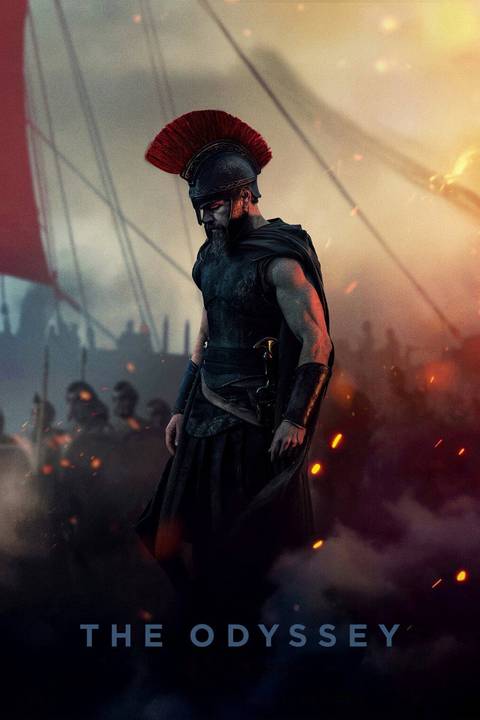
The Odyssey
Release Date July 15, 2026
Runtime 173 minutes






 English (US) ·