
 3 weeks ago
34
3 weeks ago
34
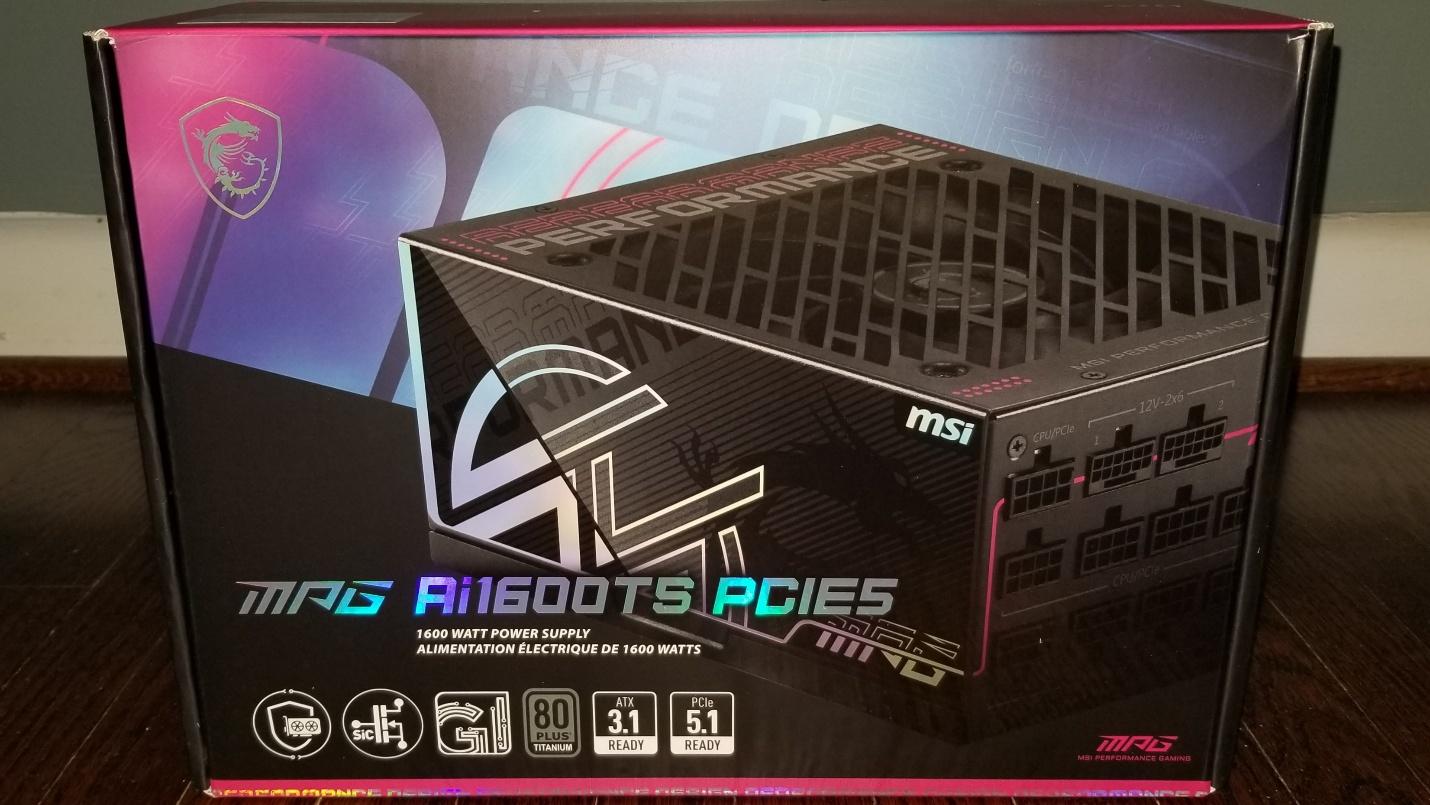
At CES 2026, MSI unveiled a new lineup of power supplies under its MPG and MAG series. The 2026 MPG models are available in 1600W and 1300W variants and feature server-grade SiC MOSFETs designed to deliver a high level of stability and power efficiency. However, the standout addition is GPU Safeguard+, a new protection system aimed at preventing the overheating and melting issues associated with 12V-2x6 GPU power connectors.
Today, we will take a closer look at GPU Safeguard+. We will explore the PSU’s available software monitoring tools, explain how they work, and demonstrate how to use them. We will also evaluate the 12V-2x6 protection system in practice by simulating an improper cable connection to see how the safeguard mechanism responds. This should give us a decent indication of whether or not this feature works in practice, though naturally it would be impossible to test in all scenarios.
12VHPWR/12V-2x6 Connector Issues
12VHPWR/12V-2x6 Connector Issues
With the launch of the RTX 40-series in 2022, high-end GPUs adopted the new 12VHPWR power connector. The goal was to simplify cable management by replacing 3x8-pin configurations with a single connector. Under normal operating conditions, this setup is reliable. However, several factors can lead to an improper connection, potentially causing overheating issues.
One of the main issues with the implementation of this connector is the lack of load balancing. If the cable is not properly connected, excessive current can be routed through a single wire instead of being distributed evenly. This can lead to overheating and, in severe cases, melting of the cable or connector, potentially damaging the GPU, the power supply, or both.
What can cause a faulty connection?
At one point, improper cable insertion by the user was believed to be the primary cause of these failures. While this can still contribute to the problem, the updated 12V-2x6 connector specification introduced several changes intended to reduce the likelihood of user error. In addition, manufacturers implemented features such as colored connector housings to make it easier to verify that the cable is fully seated.
Many reported cases have also been linked to the use of 12VHPWR and 12V-2x6 adapter cables rather than native PSU cables designed specifically for those connectors.
The issue has continued to persist, with reports of damage affecting GPUs ranging from the RTX 5090 to the RTX 5070, as well as models of the 9070 XT that utilize the 12V-2x6 connector.
This is where GPU Safeguard+ comes in.
What is GPU Safeguard+?
What is GPU Safeguard+?
GPU Safeguard+ is a safety mechanism designed to combat the aforementioned issues with the 12V-2x6 connector. It does this through multiple phases.
First, the PSU detects a fault, such as a current imbalance between an abnormally uneven current distribution from the power supply’s 12V-2x6 connector or a sudden current spike that exceeds the safe load range.
After a fault has been detected, the PSU warns the user of the anomaly through a built-in buzzer or through various software tools, which we will discuss later. The buzzer continues to beep for 3 minutes after the fault has been detected.
If the current returns to normal, the buzzer continues to beep, but the PC remains powered on. The user must force shutdown the PC and reconnect or change the cable. The issue is recorded in a log automatically.
If the current is still abnormal, the buzzer continues to beep, but the power to the GPU is cut, and the screen goes black. The user must force shutdown the PC and reconnect or change the cable. The issue is recorded in a log automatically.
The best course of action is for the user to turn the PC off immediately once they hear the buzzer beeping. According to MSI, the three minutes between the first beep and the PSU cutting power to the GPU if the current remains abnormal are meant to allow the user to save their work before shutting down, or to take action on the user’s behalf if they are not around when the fault is detected.
Software Monitoring Tools
The MSI MPG Ai1600TS power supply (along with the 1300W variant) comes with a USB-C Port and a USB-C to 9-pin cable that is plugged into the USB-C port in the PSU and the 9-pin USB connector on the motherboard. This allows the user to monitor PSU performance through various metrics in MSI Center, MSI Afterburner, and HWiNFO.
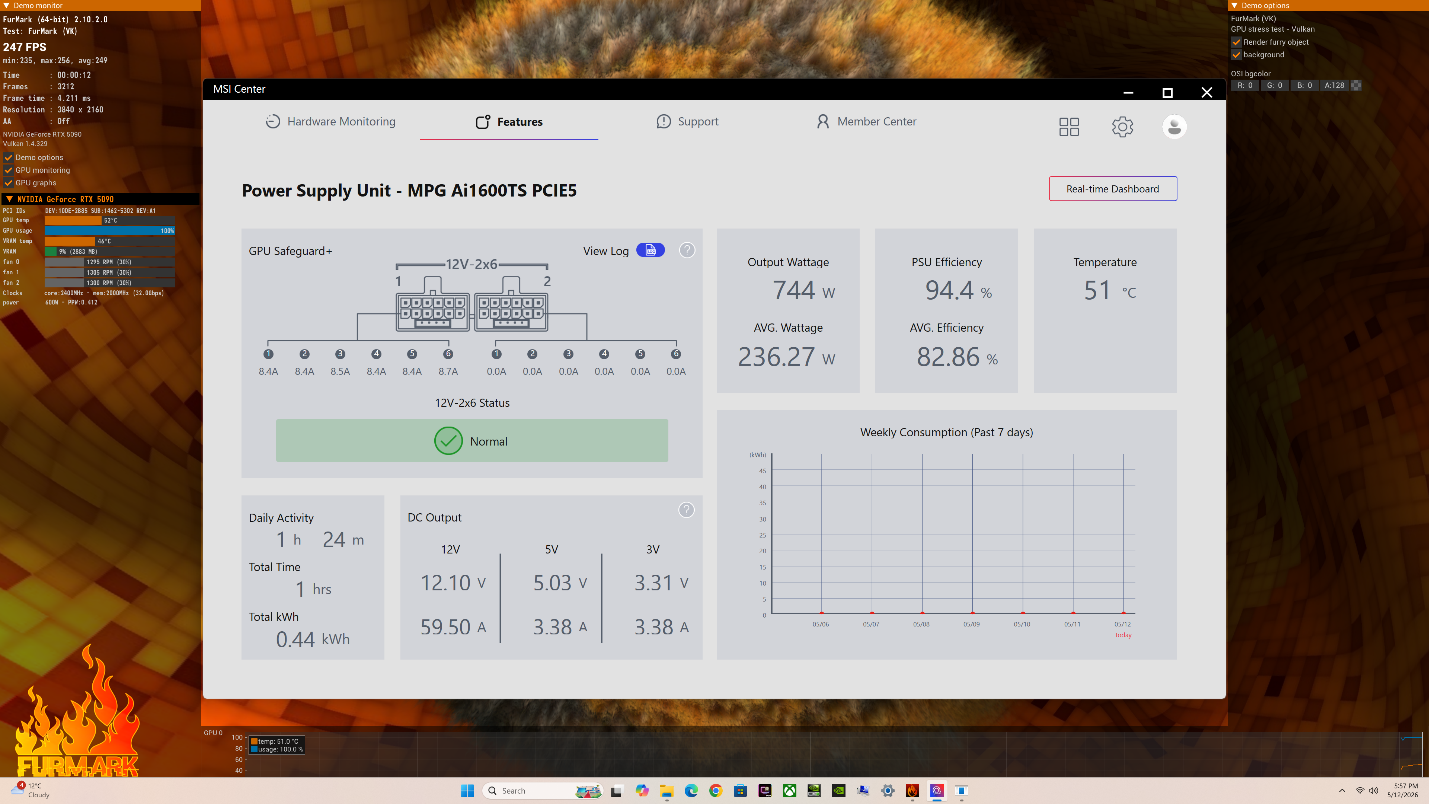
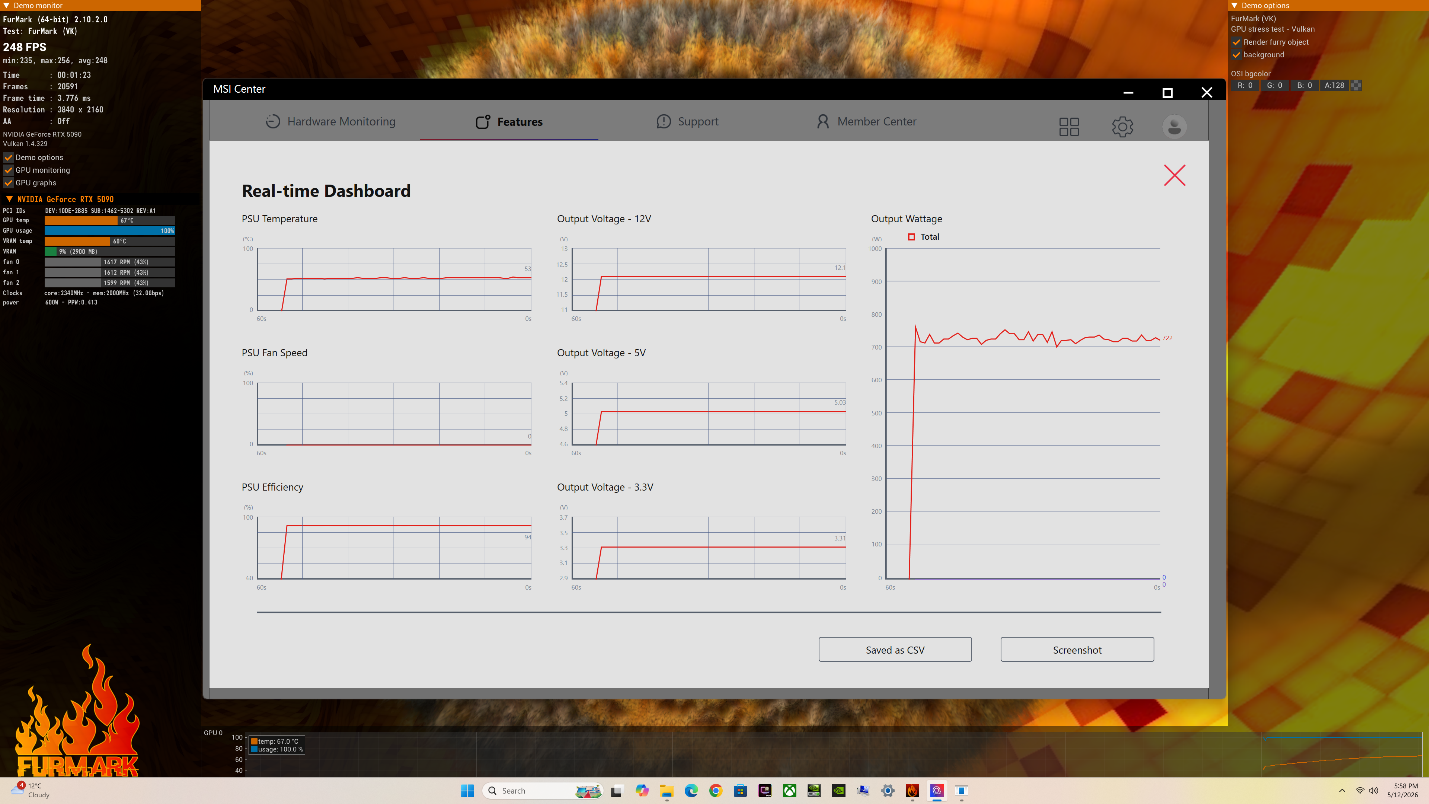
To access the PSU monitoring in MSI Center, go to the Features tab and select ‘power supply.’ This will take you to a page where you can view metrics such as total system output wattage, PSU efficiency, PSU temperature, and most importantly, per-pin current distribution for the 12v-2x6 connector. There is also a real-time dashboard where you can see the same info on several graphs, and also save this info as CSV for further analysis.
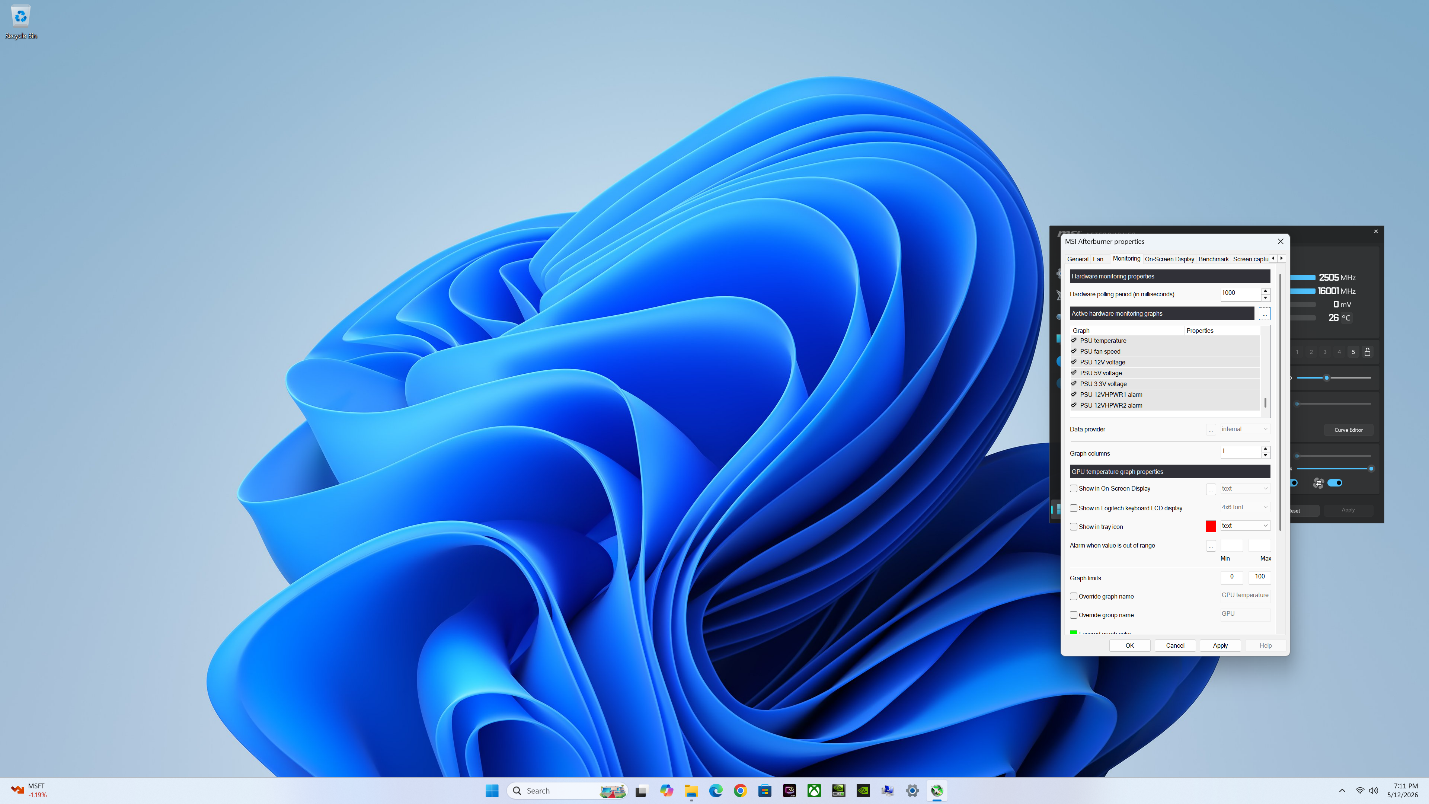
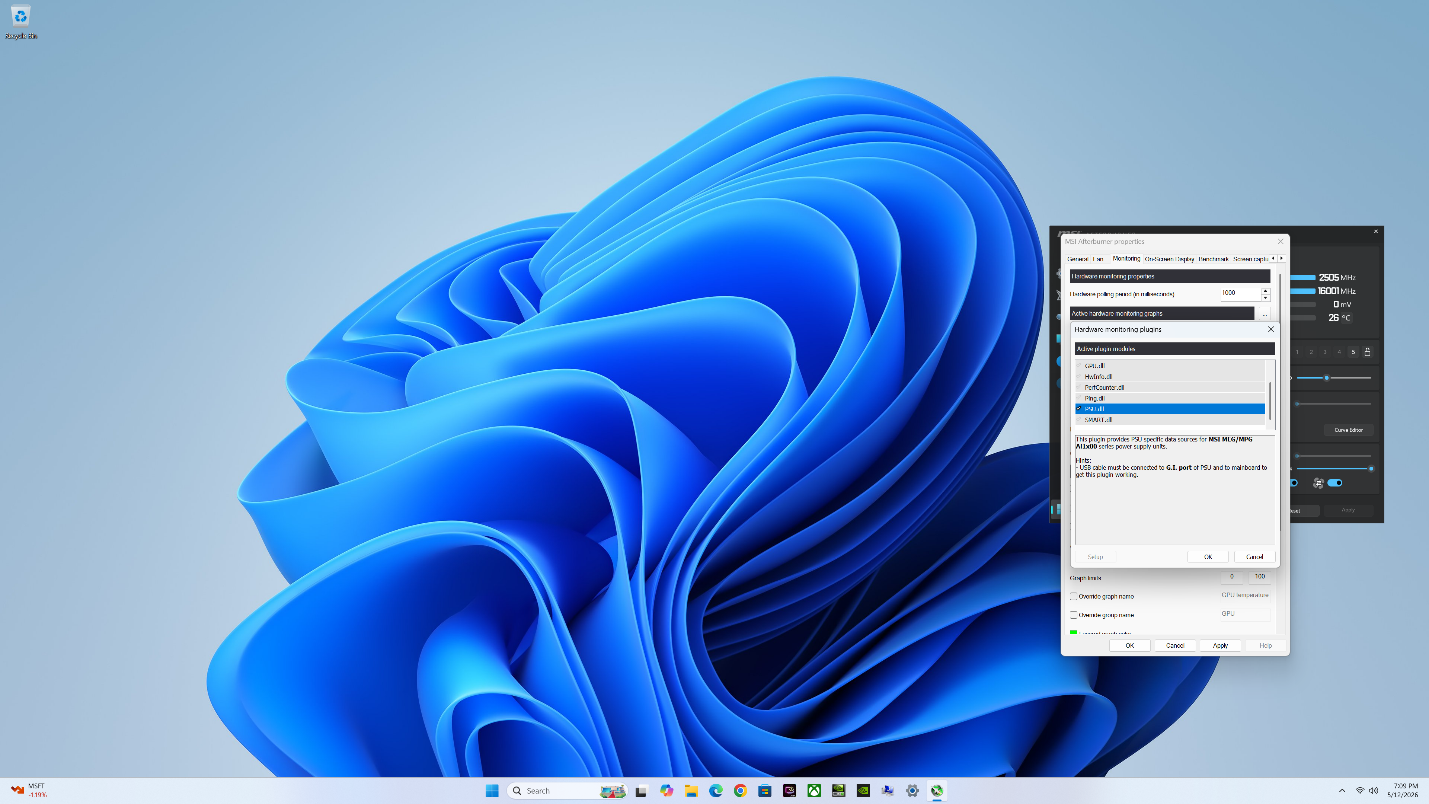
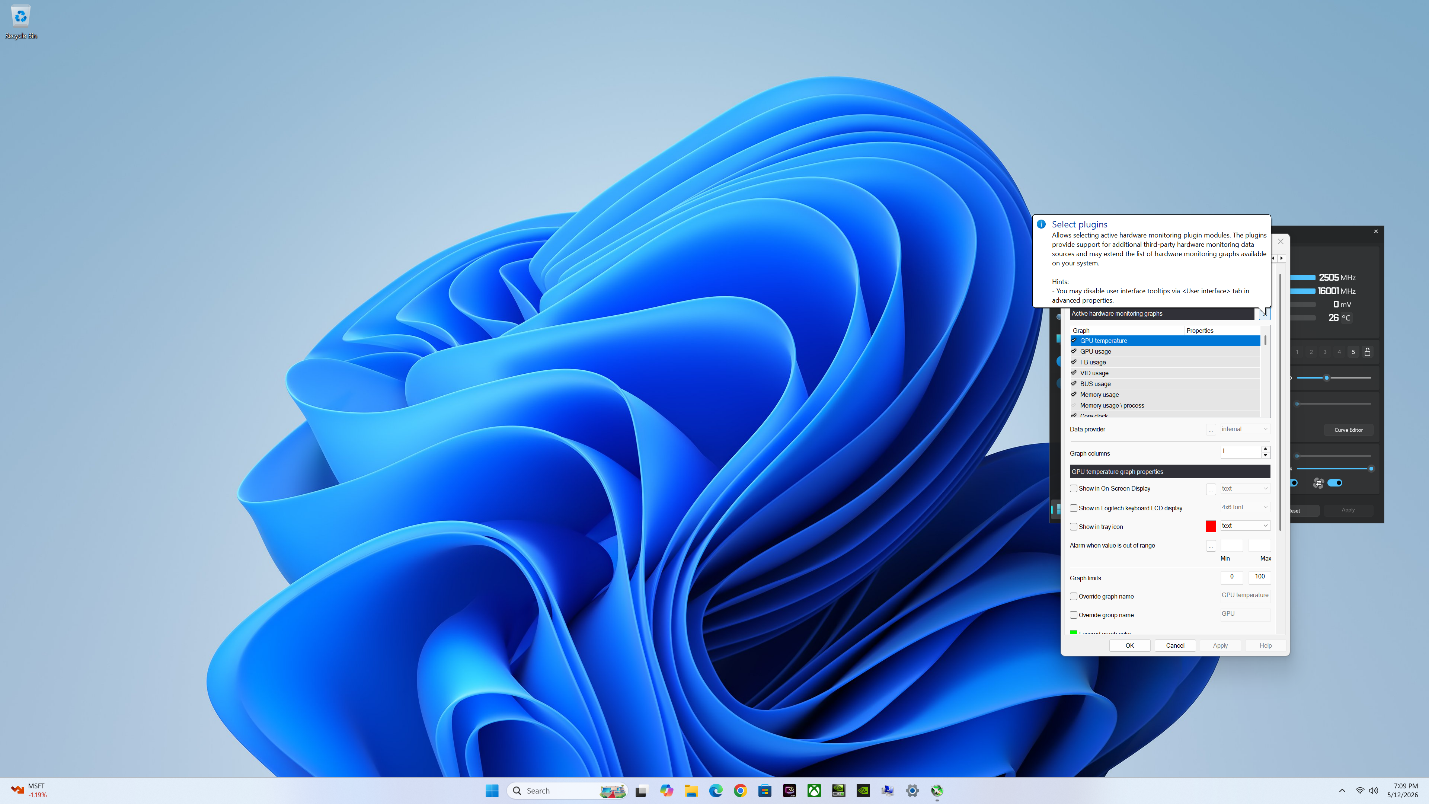
To enable PSU monitoring in MSI Afterburner, make sure you are using version 4.6.7 of Afterburner. Open up the settings in Afterburner and head to the Monitoring tab. Press the ellipsis next to “Active hardware monitoring graphs,” and you will get a pop-out window with available plugins. Scroll down and activate the PSU.dll plugin. Hit OK, and once you are back in the Monitoring tab, you will see several PSU metrics available, which you can add to the on-screen display.
You can also set alerts with customized values for these metrics. By selecting the ‘PSU 12VHPWR1 alarm’ or ‘PSU 12VHPWR2 alarm’, you can enable GPU Safeguard+ for the 12v-2x6 connectors. If a fault is detected, you will get a pop-up warning you of abnormal current. MSI Afterburner will then reduce the GPU power limit to 75% and will advise you to shut the PC down and check your connection.
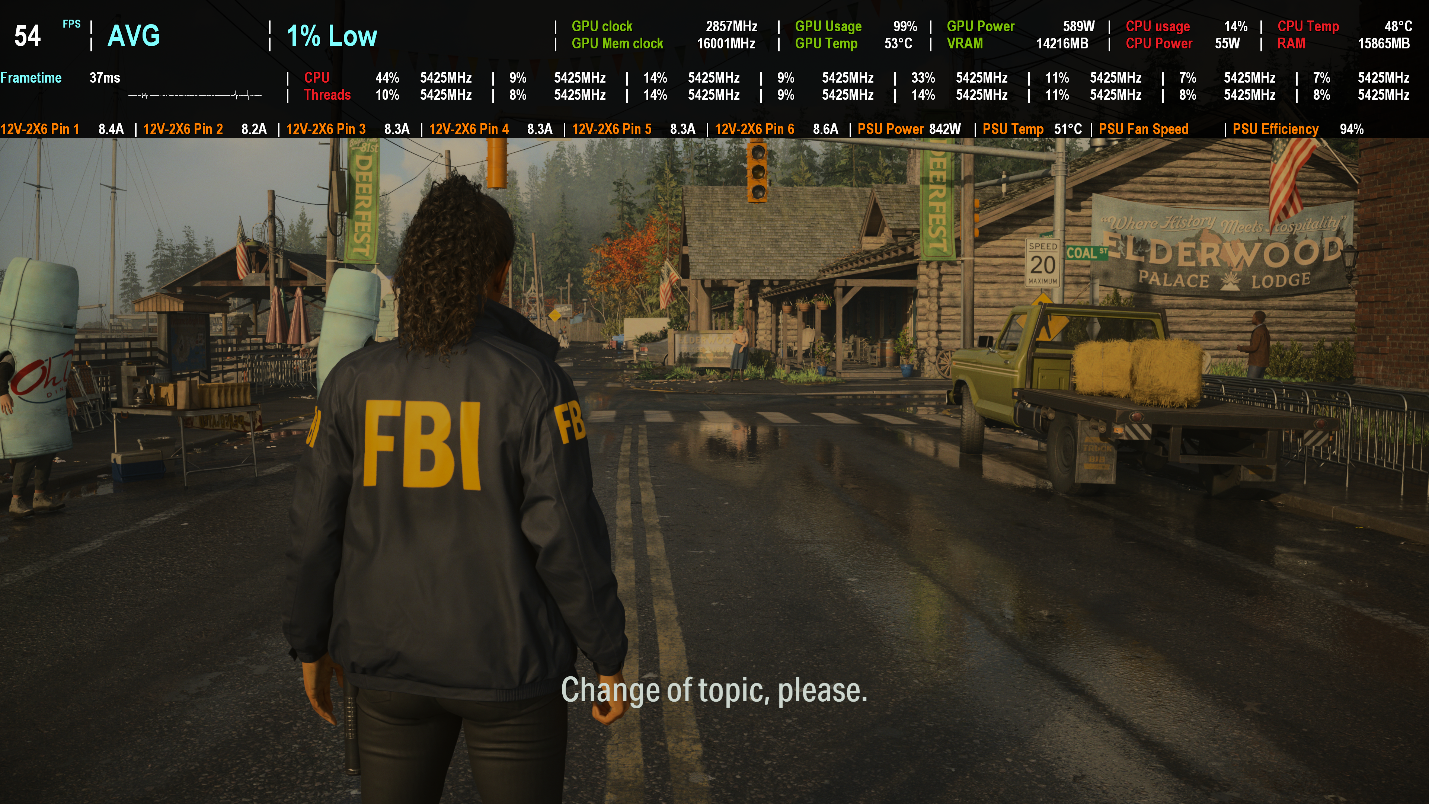
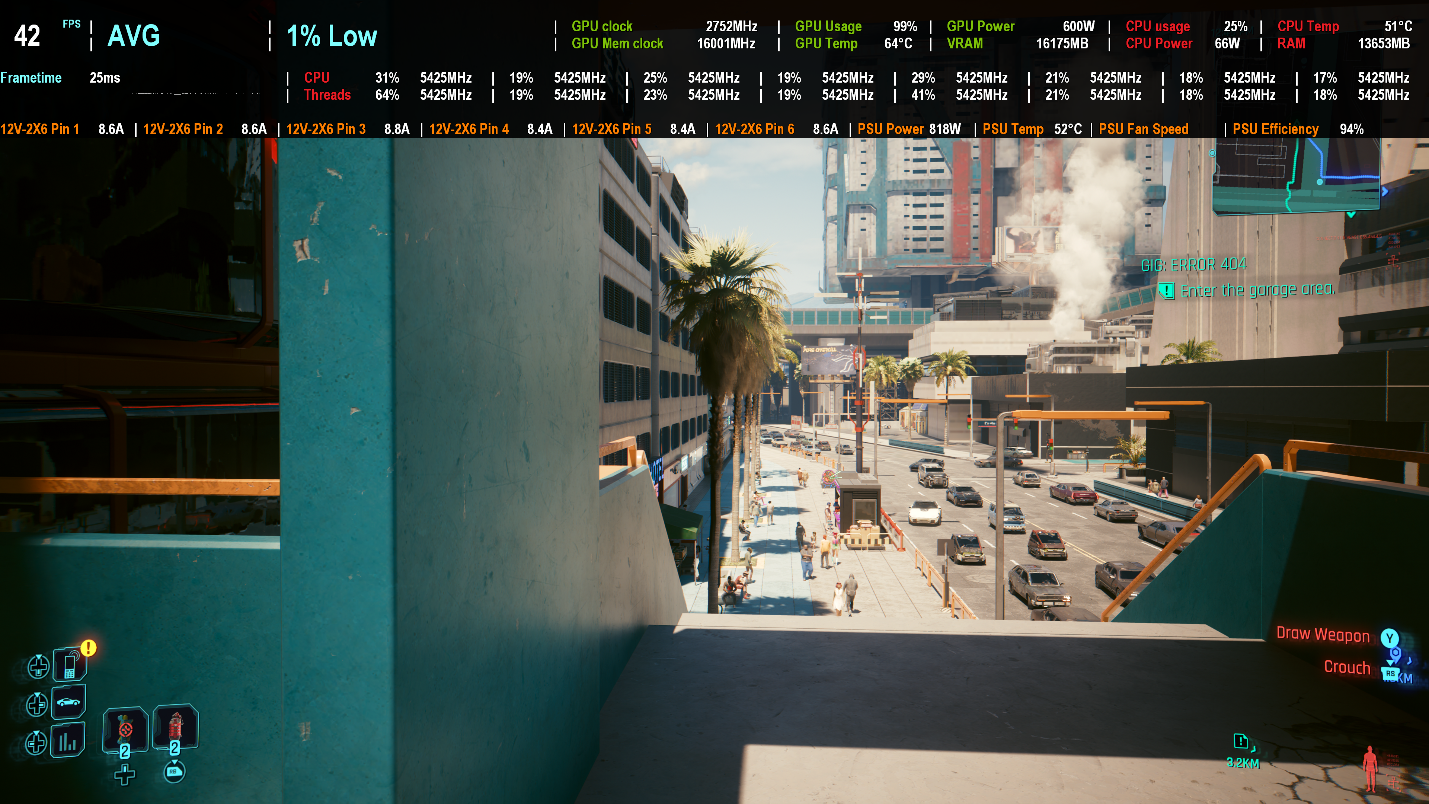
Above, you can see the MSI Afterburner PSU metrics in action during gameplay. We tested in Alan Wake 2 and Cyberpunk 2077 at native 4K with path tracing and maxed out settings. Under these conditions, total system power draw occasionally exceeded 800W.
PSU efficiency remained high at 94%, and the cooling fan never needed to engage during testing. Out of the box, the PSU ships with a relatively relaxed fan curve, though it can be customized through MSI Center. By default, the fan only begins spinning once the PSU consistently reaches roughly half of its 1600W rated capacity. The brief power spikes observed during testing were not sustained enough to trigger active cooling, with PSU temperatures remaining in the low 50°C range throughout. This keeps the PSU nice and quiet during operation.
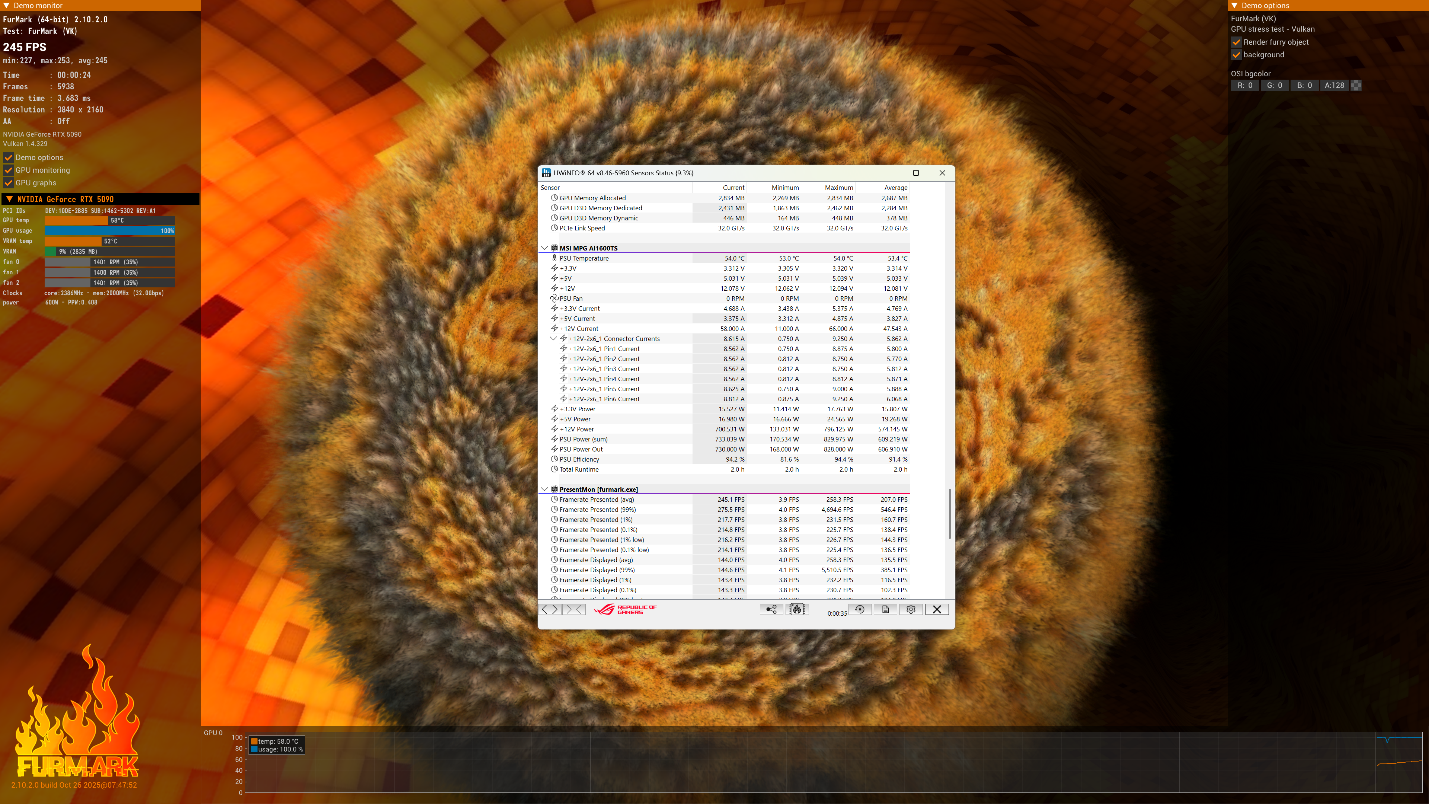
HWiNFO v8.42 added monitoring support for the MSI MPG Ai1600TS and MSI MPG Ai1300TS power supplies. Similar to MSI Center and MSI Afterburner, you can setup alerts for abnormal current distribution.
Testing GPU Safeguard+
Testing GPU Safeguard+
In order to test GPU Safeguard+ functionality, we simulated an improper connection of the 12v-2x6 cable into an RTX 5090. Do be aware that we cannot test every possible scenario, so view our results as a general indicator of how the tech would ideally work.
Test system
- MSI GeForce RTX 5090 Vanguard SOC
- AMD Ryzen 7 9800X3D
- 64GB (2x32GB) G.SKILL Flare X5 DDR5 @6200 MHz CL30
- Crucial T700 Gen5 SSD
- ASUS ROG STRIX B850-F Gaming WiFi
- Corsair Nautilus 360 RS AIO Cooler
- HAGS enabled
- Windows 11 25H2 (Build 26200.8328)
- NVIDIA Driver 596.49
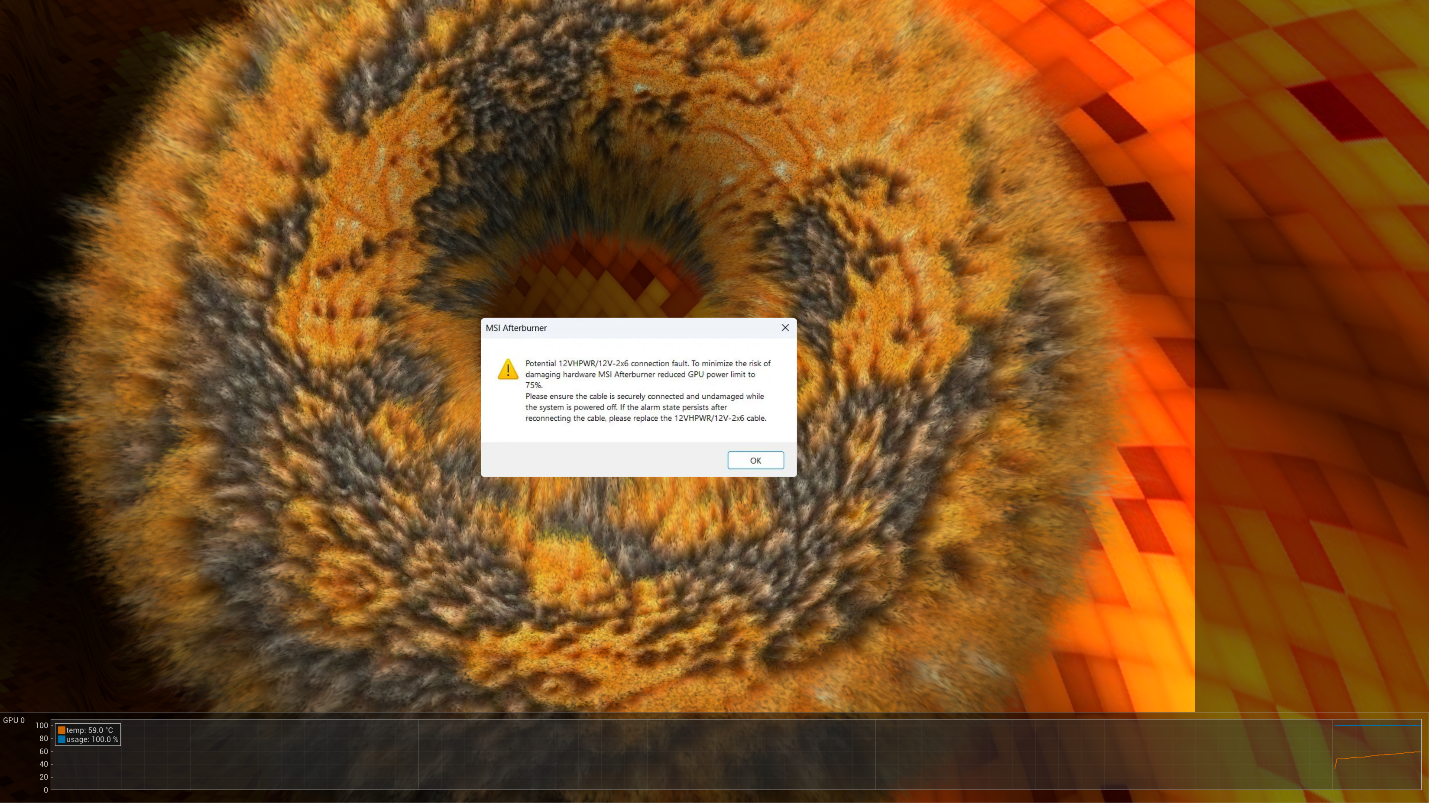
As you can see above, once we ran Furmark to apply 600W to the 5090, it did not take MSI Afterburner long to warn us of a fault. In addition to the pop-up warning, an audible alert sounded, and Afterburner automatically lowered the GPU power limit. MSI Center also detected a current imbalance, which also triggered a series of pop-up warnings, as did HWiNFO.
The alerts continued for three minutes before the PSU cut power to the GPU, causing the display to go black. At that point, we performed a forced shutdown of the system and properly reseated the cable. After powering the PC back on with the connector fully inserted, the system returned to normal operation.
Of the three software monitoring tools we tested, MSI Afterburner offers the most comprehensive monitoring and safety mechanisms. Not only does it issue a pop-up warning and an audible alert, but it also immediately limits the power to the GPU. It also allows you to conveniently monitor various metrics in real-time during gameplay.
Is Your GPU Safe?
Is Your GPU Safe?
The system worked well for us overall. The solution implemented by MSI is more comprehensive than simply having an improved cable that enlarges wire load capacity and reduces cable temperature. GPU Safeguard+ offers active protection that not only warns the user of an anomaly, but actually takes action to mitigate the risk of damage. Based on our testing, it works exactly as intended, but do be aware that we cannot simulate all possible failure scenarios or setups.
If we had one nitpick, it would be the three minutes between fault detection and the PSU finally cutting power to the GPU. In most scenarios, this is unlikely to cause any damage. Most users will also be close enough to their PC to hear the audible alerts and shut the PC down manually long before the protection kicks in. Still, we’d prefer a faster response for extra peace of mind. MSI says that the three-minute window is meant to allow users ample time to save their work before shutting down, but one to two minutes would also be plenty of time.
GPU Safeguard+ is an innovative protection feature that will hopefully become the standard on all high-end PSUs. Several other manufacturers have already announced similar technologies, and we hope to see every premium PSU adopt robust GPU protection in the near future. With the 12V-2x6 connector likely here to stay, features like this will be essential – especially for owners of power hungry GPUs.




 English (US) ·