
TDM Neo: Two-minute review
If you follow your audio news, no doubt you followed the early-2026 unveiling of the TDM Neo with fascination. It’s a novel audio gadget: it functions both as a loudspeaker and as a pair of headphones, with a neat twisting mechanism folding it or unfolding it between the two.
Months on, and the TDM Neo has been released, so I naturally made sure to test a pair to see how well they work… and unfortunately, I can’t really recommend it to anyone but collectors of neat knicknacks.
The problem is almost entirely in the audio department: the Neo just doesn’t sound good. As a pair of headphones it’s okay, but imprecise in a way that many rivals aren’t. However, when you turn it into a portable speaker, you get a tinny bass-less hiss which even bargain-bin Amazon options beat.
Latest Videos FromTechRadar
I’ll be forgiving: it’s likely that you can’t get high-tech driver systems in a gadget like this due to its form function. But at the same time, a valid reason for something bad doesn’t mean it’s not bad. Pick up something else from our list of the best Bluetooth speakers, I promise you’ll enjoy it more.
Not helping the Neo's case are a few other imprecisions. Take, for example, the design: the twisting mechanism locks the speaker mostly in place, but not always; it’s a bit loose. This means you don’t always get a secure fit, and the speaker can be quite wobbly.
Another gripe: there’s a TDM app, but to use some of its key features, you need to make an account. You can’t just boot up your speaker and change the EQ, without giving over some of your data. Why?
It’s a real shame that the TDM Neo has these issues, because there are signs that the company put some real thought into the device, with some neat touches. There are some useful in-box extras such as a sturdy carry case and high-quality cables, and some of the features (including different EQ modes per format) let you tweak with the nitty-gritty.
I’d be remiss not to mention the price. It matches top-tier Bluetooth speakers or mid-range headphones, despite the sound and build quality — again, as a proposition it's just really hard to justify.
As a viable consumer product, the TDM Neo isn't easy to recommend. It’s a neat concept, with some thought put into its various departments, but several gaping weaknesses mean you’ll be disappointed if you spent your money on it. Keep your eyes peeled for a Neo 2, though – if TDM fixes these issues, it could make something really special.
TDM Neo review: Price and release date
- Unveiled in January 2026, sold from October
- Available for $249 / £249 (about AU$500)
- TDM also sells battery replacements
The TDM Neo was initially unveiled at CES 2026 in January of the year, but it took until September for the device to go on sale and October for it to ship.
You can buy the Neo for $249 / £249 (about AU$500, but I can’t find the device available to buy in Australia). It’s a high price, but a little more justified when you consider that you’re getting two devices.
While repairability isn’t touted as one of the Neo’s key features, TDM does sell battery replacement kits online for $29 / £23 (about AU$46) , and has an online guide on how to swap them out. So the brand deserves kudos on the repairability front.
TDM Neo review: Specs
Swipe to scroll horizontally
Drivers |
40mm / 40mm |
Active noise cancellation |
No / No |
Battery life |
16 hours (speaker) 200 hours (headphone) |
Weight |
340g |
Connectivity |
3.5mm, USB-C, Bluetooth 6.0 |
Frequency response |
Not specified |
Waterproofing |
None |
TDM Neo review: Features
- Incredibly good battery life
- App brings EP, some extra tools
- Account required for some features
One real strong suit is the TDM Neo's battery life. You’re looking at 16 hours of listening in speaker mode, which is above-average for a device of this size… and a wild 200 hours of listening when you’re in headphone mode.
That’s right, well over a week straight of listening without having to charge them up, and dwarfing the 100-plus hours the previous frontrunners hit. Helping that figure is the lack of ANC, which is par for the course with on-ears, so nothing to get upset about.
On your smartphone, you can download the TDM. app to get some extra features. I found it a little tricky to locate, since putting ‘TDM’ into the app store brings up loads of options, so make sure to download the option with the full stop after the letters.
The app offers all the basics: you can see battery level, toggle a low-latency gaming mode, and find the Neo if you’ve mis-placed it. There’s also an option to change what twisting the unit does, away from switching formats as it currently does, and some battery saver modes which are an appreciated rarity.
The equalizer has several presets and space for two custom modes, and I really appreciate that you can set a separate EQ for when the Neo is in headphone mode and when it’s in speaker mode. It’s a neat touch, but it shows that TDM has really thought through the design.
However to actually edit the 5-band equalizer yourself, and also to use the find-device function, you have to create an account and log in on the app. The TDM Neo is an audio gadget; you shouldn’t need to create an account to use all of its features.
- Features score: 3.5/5
TDM Neo review: Design
- Twisty twisty: headphones to speakers using magnets
- Headphones are fairly sturdy, but a little heavy
- Speakers feel unstable and wobbly
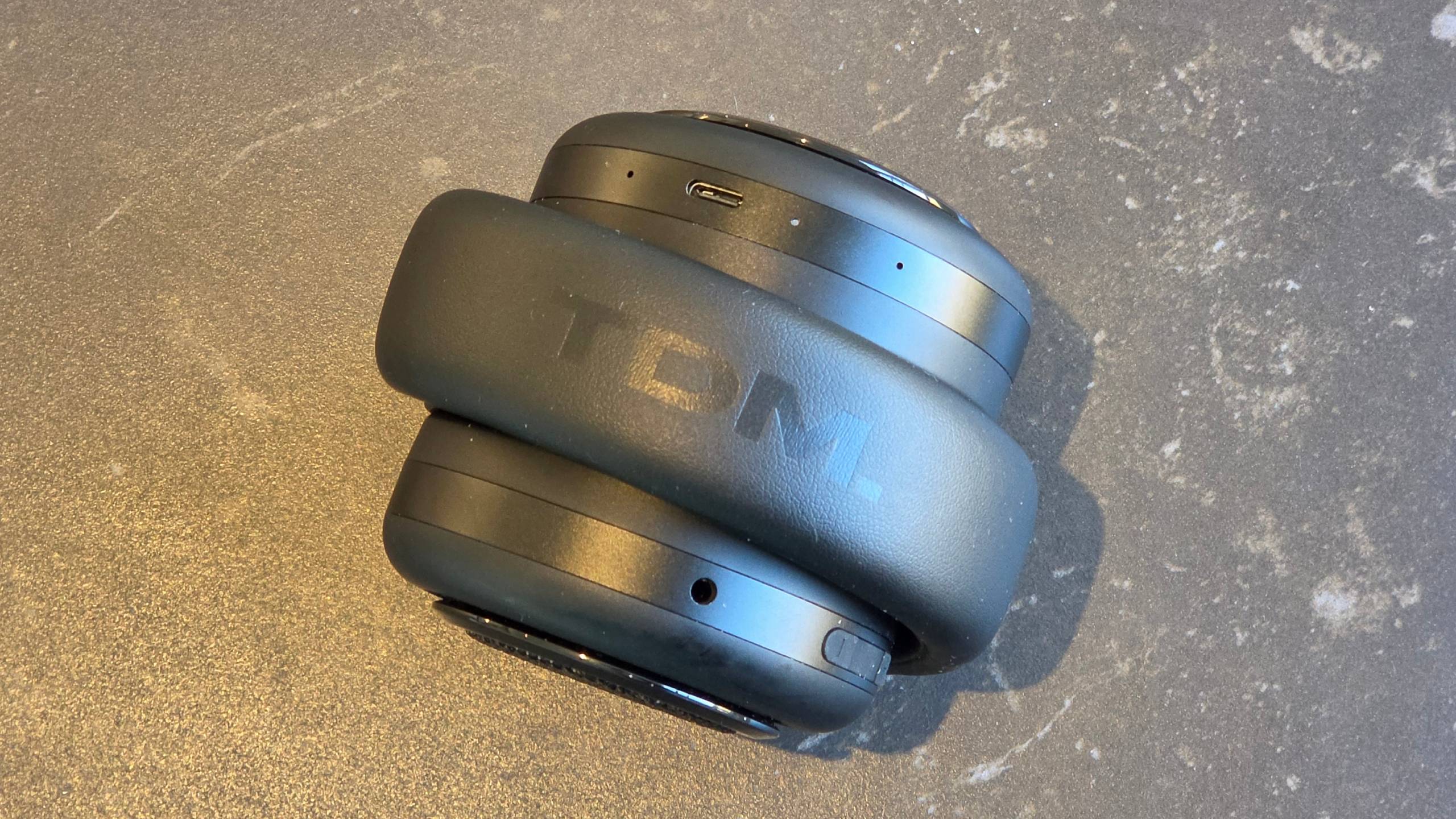
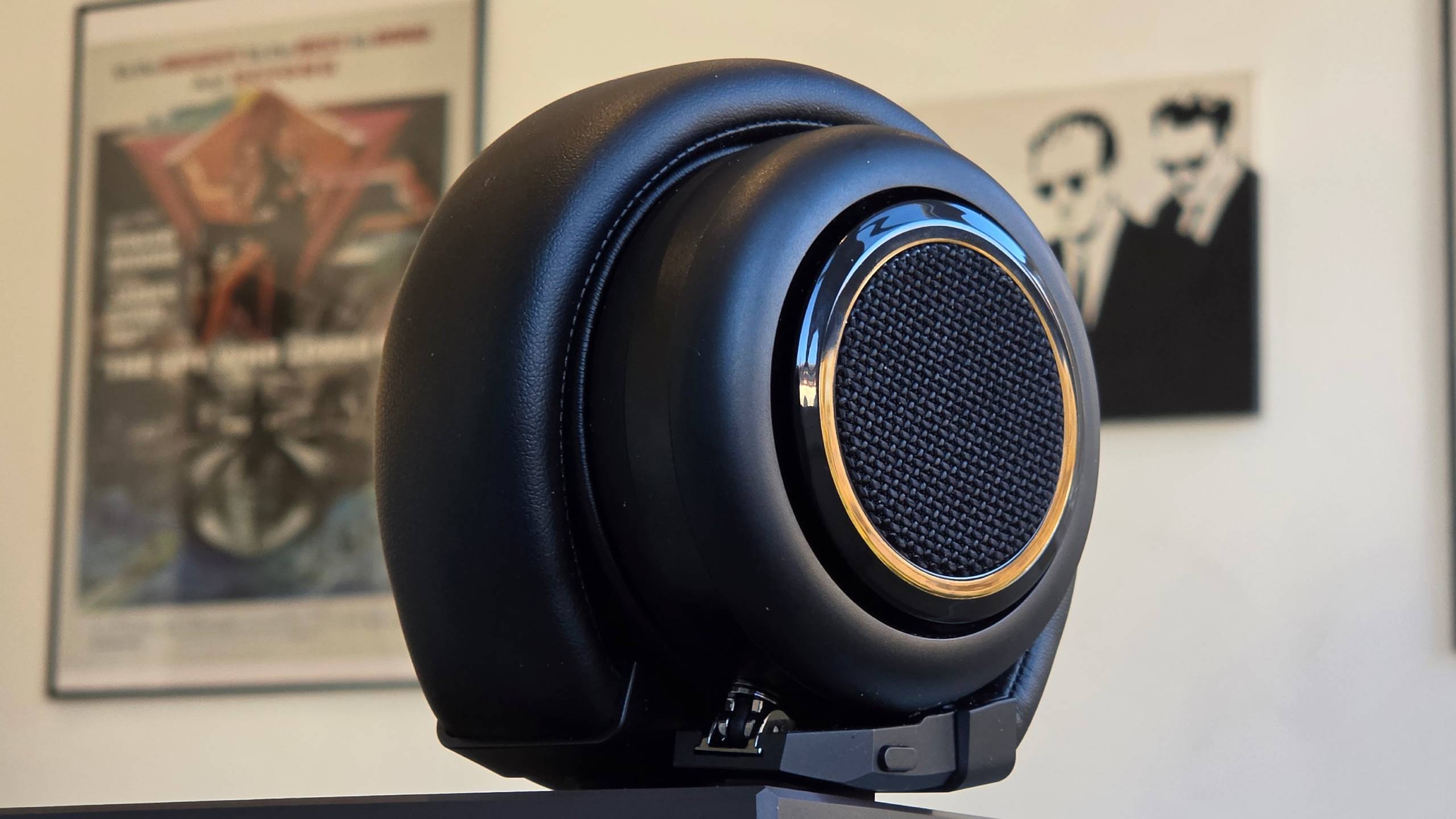
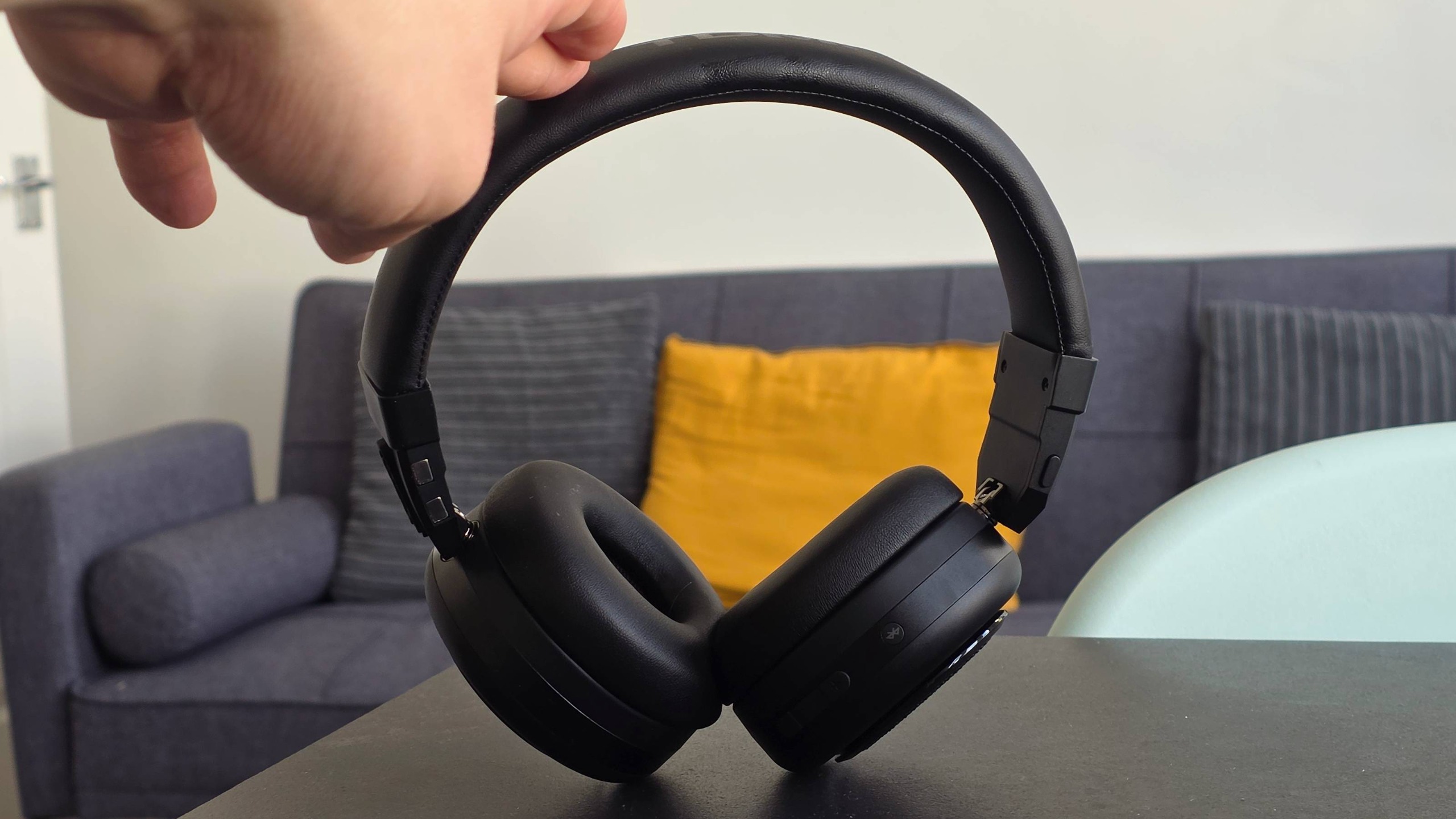
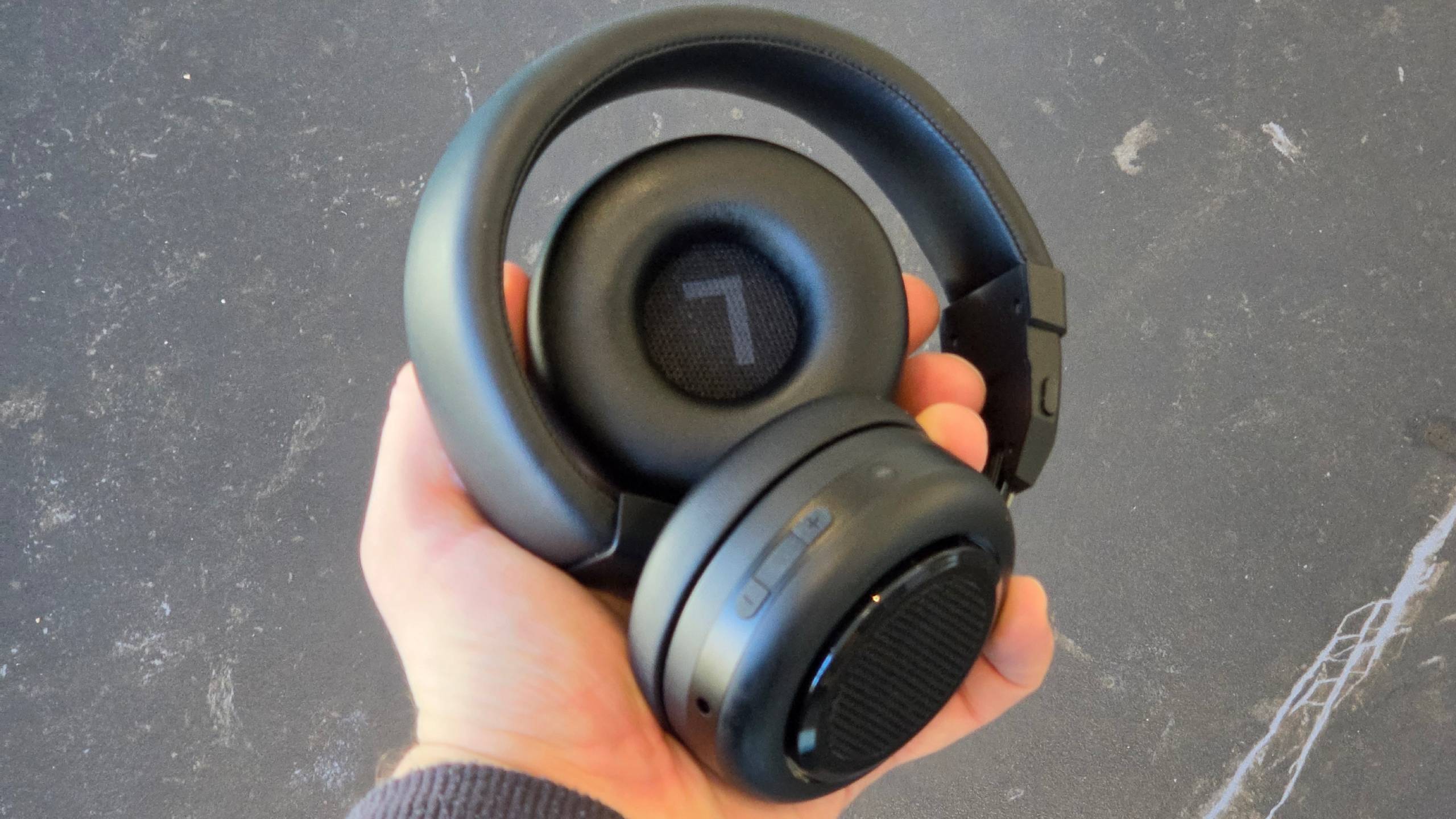
Well, this is the whole thing of the TDM Neo, isn’t it? They’re designed to be dual-purpose. They begin as headphones, and you twist them into a speaker configuration, wherein the cups are housed in the headphone band and use outward-facing drivers. I’d compare the process most to using those pop-up festival tents: it takes a knack but when you know, you know.
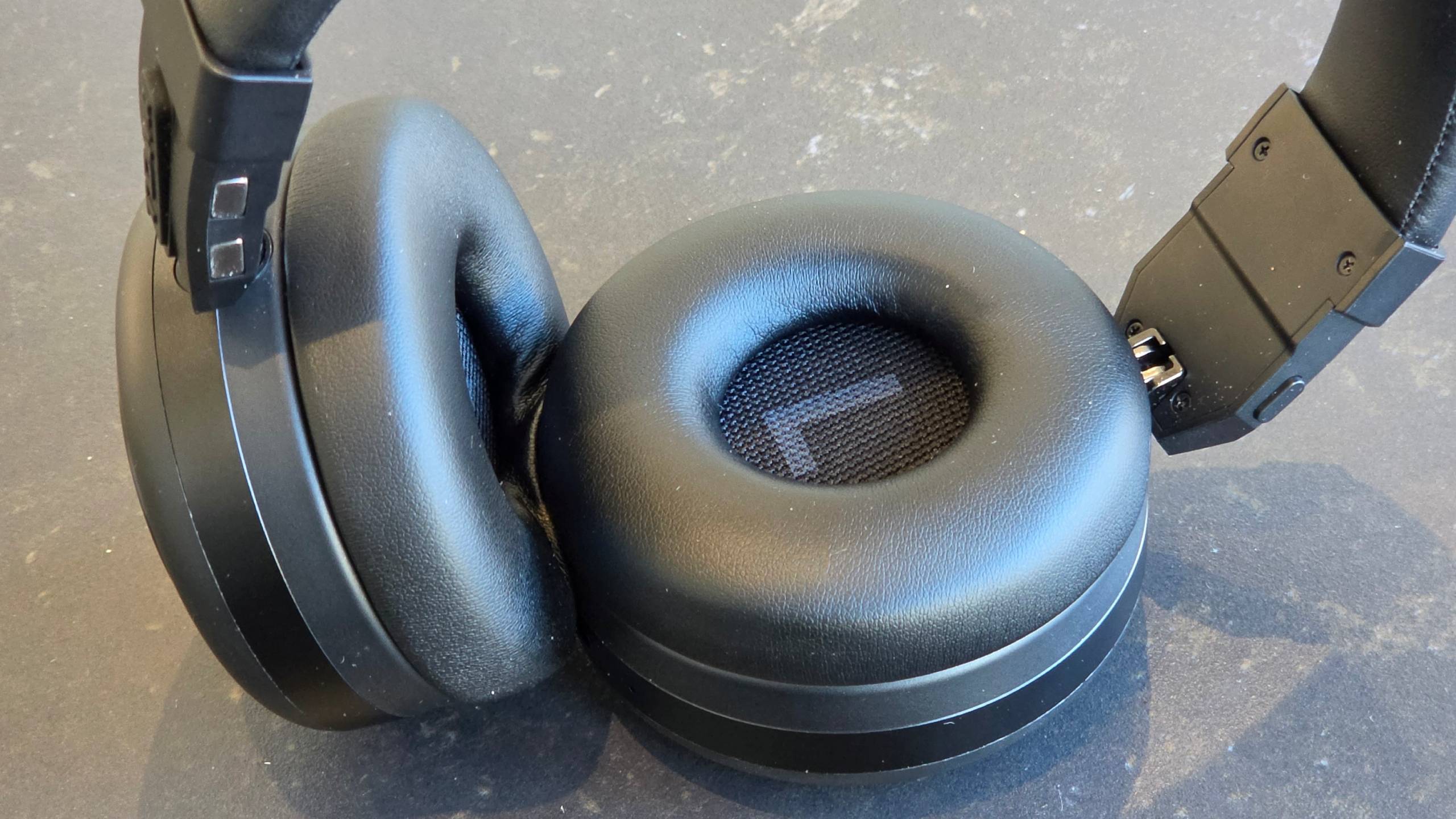
As headphones, they’re fairly sturdy on-ears which are surprisingly comfortable to wear. That’s despite these puppies weighing a fair bit more than the average pair, at 340g. They have a fairly reliable fit, as long as you’re not jogging in these things. A small release catch lets you extend the length of these; I say this because it took me a good week of testing to realize that’s what the buttons do, so if you own a pair, there’s a good chance you missed it.
But twist the Neo into speaker mode, and it’s a different affair. Music automatically switches to play from the speakers when the cups are bent to a certain degree, and two magnets on the band meet (or roughly at that point, although they don’t need to physically touch).
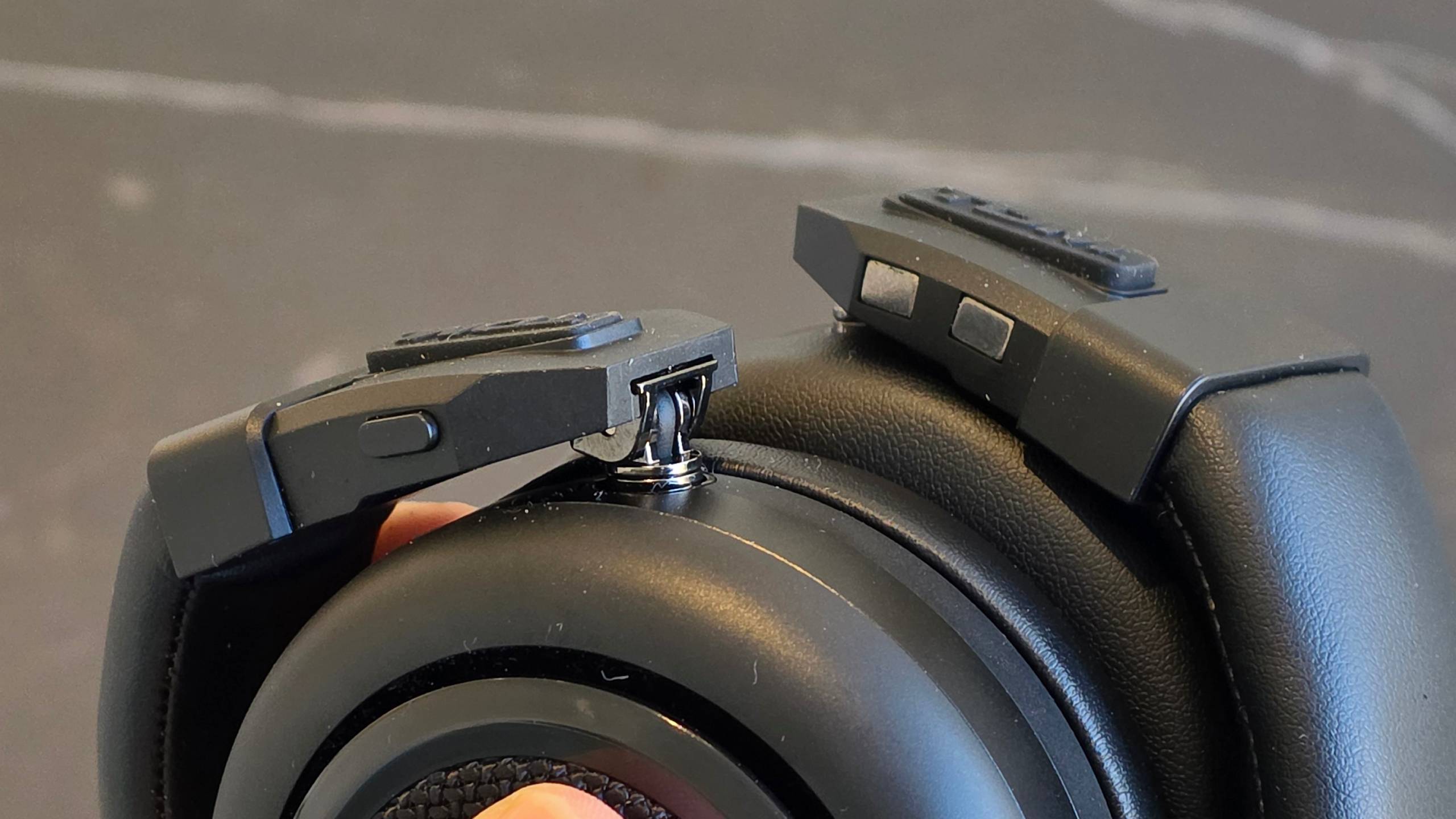
It’s not a precise science, and every time I twisted the device down, I’d end with the two halves of the speaker in different places; sometimes they were aligned, sometimes not, and sometimes pointed in different angles.
Musically, this doesn’t make much of a difference, but it means the device is weighted in different ways, and doesn’t have a flat base to lean on. As a result, the speaker would be unstable, rocking when I put it down and constantly shaking if it was on a surface that was being jolted (like, say, a table where board games were being played).
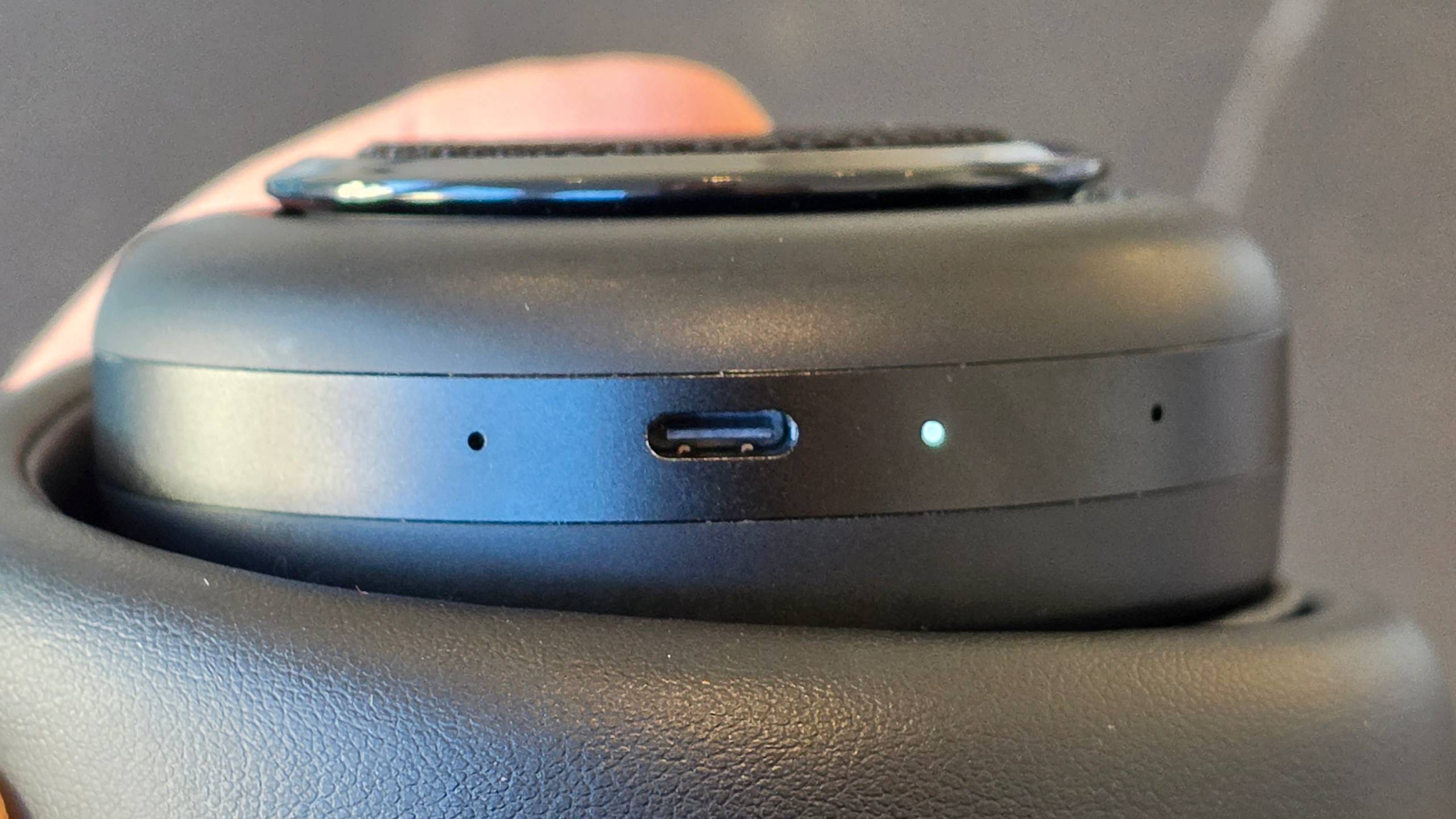
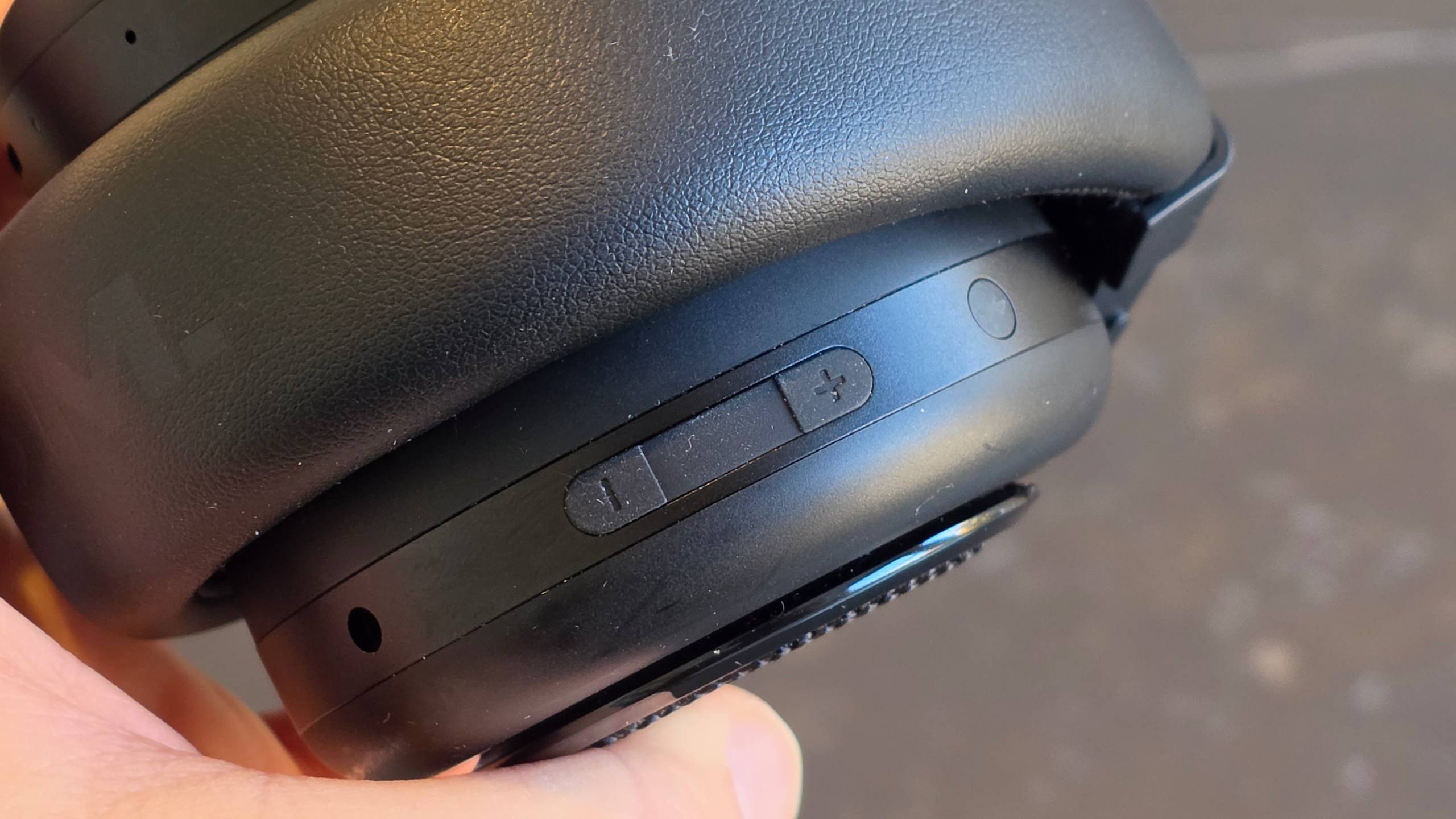
On one of the cups there’s an LED indicator and USB-C port, the latter of which is facing directly upwards, so I imagine this is a no-go in rainy environments or anywhere where particles could fall in (there’s no IP rating). The other cup houses a 3.5mm jack, pairing button, volume rocker and power button. The volume and power buttons are made of a cheap-feeling rubber, which quickly looked scuffed on my review unit.
At least it’s a fairly compact speaker, being only slightly bigger than my Tribit Stormbox Micro 3. Several times I took it to other locations, because it’s small enough to carry in a bag fairly comfortably, without taking up too much room.
- Design score: 3/5
TDM Neo review: Sound quality
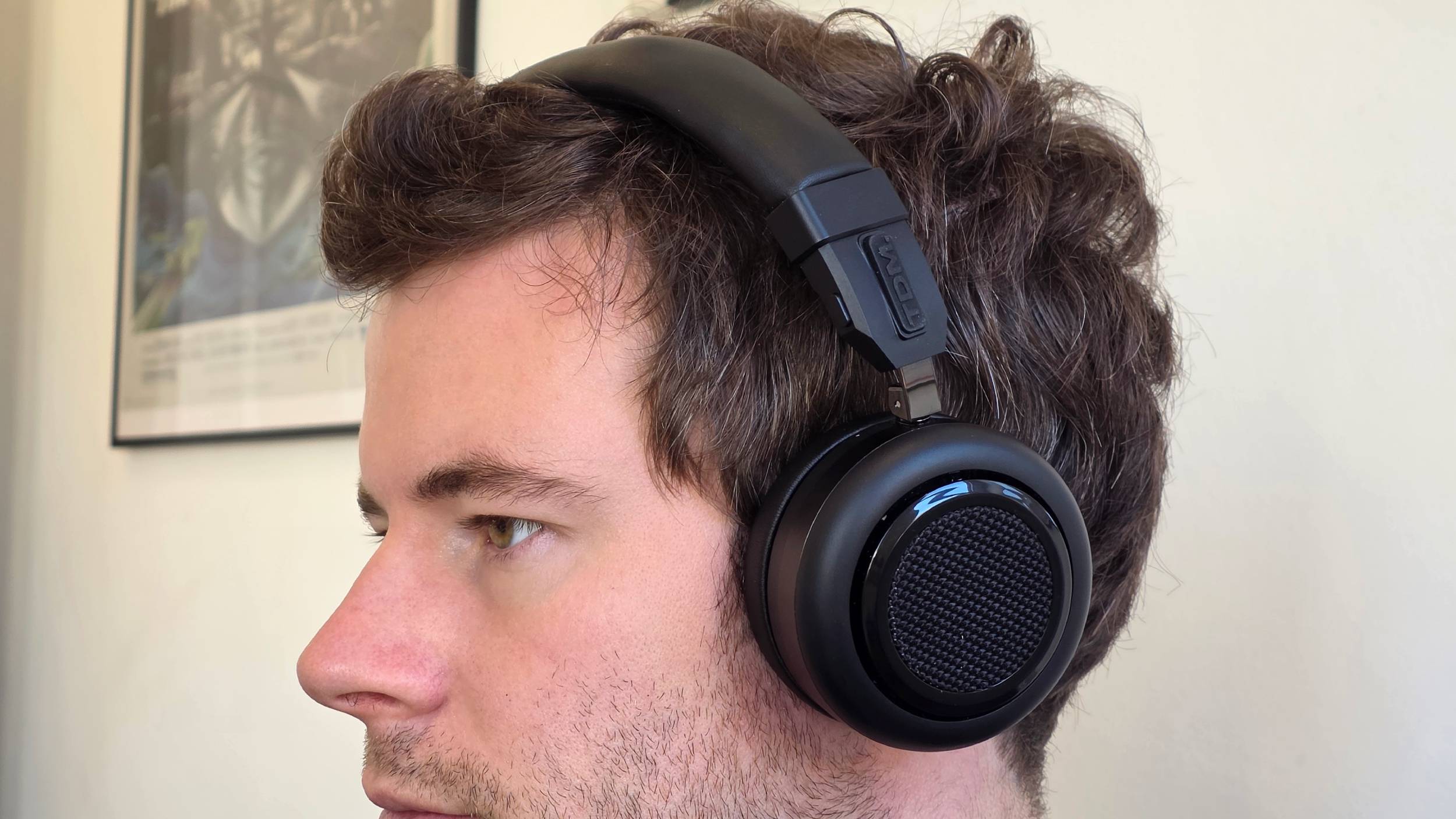
- Headphones & speakers both have dual 40mm drivers
- Speakers are tinny, lack much bass
- Headphones have muddy, rumbly sound
Important context: the TDM Neo has two sets of drivers, and so when you’re in headphone mode, you’re listening to different drivers than when you’re in speaker mode. Otherwise, the room-filling audio would deafen you the first time you put the Neo on your head. Sensible.
This results in two very different sound profiles for the device, even if all four drivers are 40mm ones. Unfortunately, depending on your mode, the sound ranges from ‘not great’ to ‘bad’.
It’s the loudspeaker mode that I’m filing as ‘bad’ – years of using Tribit, JBL or Ultimate Ears speakers has ruined me, it seems. Put frankly, the TDM Neo sounds tinny. It lacks any credible bass to speak of, relying on a steaming pile of treble to pass as a song. But even then, high treble and mid lines are conspicuously absent too.
One of my favorite bands to test hi-fi gadgets with is Morningsiders, as their varied instrumentation (‘band’ instruments with strings, brass, piano, so on) makes it easy to analyze speakers. I wanted to put on one of their songs with a more prominent bassline, to see how the Neo fared, and skipped through nearly an entire album without finding one… until I realized that the Morningsiders weren’t the problem.
In something like Hang the Cedar, bass is only apparent from the void in a track it leaves, while acoustic guitar sounds like a metallic sneeze and even some of the guitar harmonics are missing.
I don’t like being overly negative in product reviews, and luckily I can calm it, because the headphones don’t sound as bad. I still wouldn’t pick them over… well, much, but I didn’t physically recoil while testing them for this review.
The headphones have bass — in fact, it’s quite prominent, even if you’re not coming straight from the speakers. It’s a little ‘looser’ than I like from bass, sometimes sounding rumbly and imprecise, but it’s certainly powerful. I was half expecting the treble to be missing in compensation, but that’s not the case — it’s not too energetic or sharp, but it completes the V-shape sound profile that ensure the headphones are much more pleasant than the speaker.
Yes, V-shape means that mids are a little lacking, but not to a fault. In Morningsiders’ Four Face Liar, for example, acoustic guitar is barely audible between the bass and vocals. But ‘barely audible’ is still a step above the ‘nonexistent’ bass of the speakers.
With support only for the SBC and AAC codecs, you won’t be able to enjoy high-res music with the Neo. And you’re probably wondering whether the equalizer or presets saves the sound? Unfortunately not, it just exacerbates or masks the issue depending on how you use it.
- Sound quality: 2.5/5
TDM Neo review: Value
- You're getting two devices in one...
- ... but two devices would be cheaper...
- ... and they'd work and sound better, too
As mentioned before, the TDM Neo is essentially two devices in one. In the same way that you pay a premium for folding phones, because they’re both smartphones and tablets, you’d expect to pay a little more for a novel hybrid gadget like this.
Saying that, it dashes their appeal against the rocks. You could easily pick up a solid option from our Bluetooth speakers buying guide and one of the best cheap headphones for less; each device would beat the TDM Neo’s audio and design pretty handily
The premium price really doesn’t help the Neo; $249 / £249 is a cost that you’d only really consider going for if you were buying from a big audio brand like Sony or Bose, not a Kickstarter brand selling a rough-and-ready piece of kit. If you find it half price, maybe it’s worth buying; and if you have some unique use case in which you need a 2-in-1, then perhaps pick it up. But if you’re just interested in the novelty, it’s hard to recommend.
- Value: 3/5
Should I buy the TDM Neo?
Swipe to scroll horizontally
Features |
The incredible battery life, and a few other neat touches, work well. It's a shame that you need an account to run them. |
3.5/5 |
Design |
It's a neat twisty concept, but neither form works well compared to alternatives. |
3/5 |
Sound quality |
The speaker sound bad, and the headphones aren't great. |
2.5/5 |
Value |
It's a jack of all trades, but a master of none |
3/5 |
Buy them if…
You only have space for one device
I've said you'd be better off buying two devices for the price, but if you literally only have space for one, this is basically your only way of listening to music.
You need headphones with incredible battery
Need a pair of headphones with an absolutely ludicrous battery life? This is it.
Don’t buy them if…
You want good audio
Not everyone buys audio gadgets with sound quality in mind, but if you care even 1% about how your music sounds, you might want to skip these.
You don't want any more accounts
Hate making new accounts for every app, service and feature? Honestly, me too.
TDM Neo review: Also consider
Usually, we'd list several similar gadgets to the reviewed one, which you may want to do instead. However I'm going to do something different here; I'm going to list one speaker and one pair of on-ear headphones, which together cost less than the TDM Neo.
Swipe to scroll horizontally
Drivers |
40mm |
48mm |
40mm |
Active noise cancellation |
No |
No |
Yes |
Battery life (ANC on) |
16 hours (speaker) 200 hours (headphone) |
24 hours |
70 hours (ANC off) |
Weight |
340g |
330g |
200g |
Connectivity |
Bluetooth 6.0, USB-C, 3.5mm |
Bluetooth 6.0 |
Bluetooth 6.0 |
Waterproofing |
N/A |
IP68 |
N/A |
Tribit Stormbox Micro 3
This is my go-to portable Bluetooth speaker; it's about a quarter of the price of the Neo, yet sounds far better. It has a useful carry strap and sits nice and flat on a surface. Plus, it's incredibly durable.
Read our full Tribit Stormbox Micro 3 review
OneOdio Focus A1 Pro
For even less money than the Tribit, these are solid on-ear headphones released earlier in year. They sound decent and last for ages, plus weigh far less than the Neo.
Read our full OneOdio Focus A1 Pro review
How I tested the TDM Neo
- Tested for over two weeks
- Paired with Android phone for Bluetooth
- Used mostly at home, but on some walks too
The testing time for the TDM Neo lasted for two weeks, not including the writing time for the review.
I used the TDM paired with my Samsung Galaxy Z Fold 8, over Bluetooth. Lots of the testing took place at home in speaker mode, but I also used the headphones at home and while going on walks around my local area. Testing was largely done via Spotify, for music and audiobooks, but also on YouTube and several games.
I've been reviewing gadgets for TechRadar since early 2019, and in that time have tested plenty of speakers and headphones.
- First reviewed in October 2026







 English (US) ·