Studio Ghibli's Most Infamous Box Office Bomb Proves How Deeply Fans Misunderstand The Anime Giant
3 weeks ago
17
Custom Image by Hannah Diffey
Published May 3, 2026, 8:01 AM EDT
Hannah is a senior writer and self-publisher for the anime section at ScreenRant. There, she focuses on writing news, features, and list-style articles about all things anime and manga. She works as a freelance writer in the entertainment industry, focusing on video games, anime, and literature.
Her published works can be found on ScreenRant, FinanceBuzz, She Reads, and She Writes.
Studio Ghibli is often treated like animation’s safest recommendation, as the studio has become synonymous with comfort, whimsy, and childhood wonder. That reputation is understandable when films like My Neighbor Totoro and Kiki’s Delivery Service remain the company’s most recognizable exports. Yet that image has also flattened public understanding of what Ghibli has always been capable of.
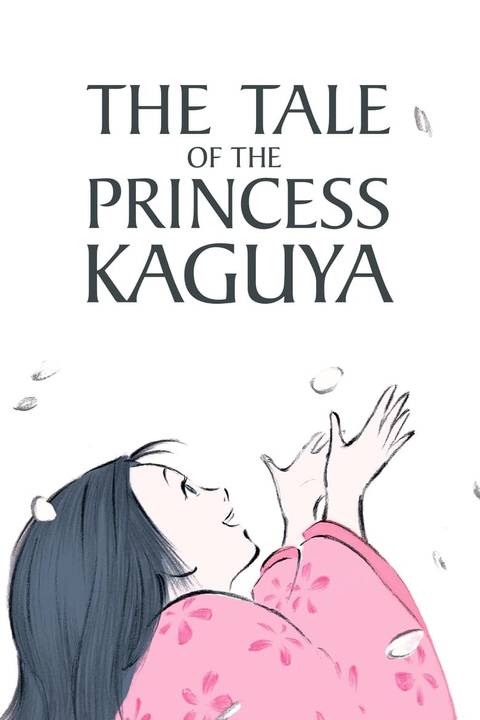
The Tale of the Princess Kaguya Was Never As Family-Friendly As Its PG Rating Suggested
One of the strangest things about The Tale of the Princess Kaguya is how often it is discussed as a gentle children’s fantasy when the film itself repeatedly argues otherwise. While it carries a PG rating in the United States, much of its content feels far closer to PG-13 in tone, emotional intensity, and subject matter.
The film contains recurring non-sexual nudity of babies and children, especially in its early sequences, presented with naturalism rather than exploitation. That alone would not make it unusual, but the surrounding material grows considerably heavier. Kaguya’s life is shaped by coercion, social confinement, and the constant pressure to surrender her autonomy for status and marriage to men who are far older than her.
That tension reaches its most uncomfortable point in the emperor sequence, where Kaguya is forcibly embraced and restrained despite clearly resisting. The scene is short but very distressing, and it is difficult to imagine many viewers interpreting it as typical children’s material, as it clearly symbolizes sexual assault. The film also includes an onscreen death, suicidal desperation, and mature emotional betrayal that push it well beyond what many audiences expect from PG animation.
Studio Ghibli’s “Wholesome” Reputation Has Always Been Incomplete
Image created by Joshua Fox
The larger issue is not that The Tale of the Princess Kaguya was somehow mislabeled by audiences, but that many viewers continue to misunderstand Studio Ghibli itself. The studio has become shorthand for soft, restorative animation, as though it only makes comforting and cute stories. That reputation is not false, but it is incomplete in ways that often distort its most ambitious work.
Even some of Ghibli’s most beloved films are more severe than their reputations suggest. Princess Mononoke is the clearest example, featuring severed limbs, ecological collapse, moral ambiguity, and brutal violence throughout its 1997 runtime. It became a massive hit in Japan, earning roughly ¥20.1 billion, yet its darker themes are often treated as an exception rather than part of the studio’s overall works. The same goes with Porco Rosso and Grave of the Fireflies.
That is what makes The Tale of the Princess Kaguya so interesting. It is not an outlier because it is serious or adult. It is only treated that way because audiences have spent years reducing Ghibli to its most marketable traits. Takahata’s film simply strips away the misconception and forces viewers to confront the studio as it actually is: emotionally expansive, often severe, and uninterested in staying inside family-brand expectations.
Kaguya Failed Commercially, But It May Be One Of Ghibli’s Biggest Statements
Part of The Tale of the Princess Kaguya's commercial failure came from timing and expectation. Released in Japan in 2013 opposite Hayao Miyazaki’s The Wind Rises, Takahata’s film was inevitably overshadowed by the marketing power of Miyazaki’s supposed retirement. One film was sold as a major event from Ghibli’s most famous director. The other was a meditative tragedy built around emotional suffering and social critique.
That made The Tale of the Princess Kaguya a difficult sell, especially with its unique watercolor aesthetic and slow, mournful pacing. But its box office disappointment says more about audience assumptions than the film’s quality. This was never meant to be easy comfort viewing. It was a devastating, adult meditation on freedom, gender, class, and the cost of forced femininity.
The legendary Studio Ghibli is teaming up for a major new project, rekindling the magic of its classic films in a bold way that fans will love.
In that sense, The Tale of the Princess Kaguya may be the clearest proof that Studio Ghibli has long been misunderstood. Its failure did not reveal the limits of the studio. It revealed the limits of the audience that expected another comforting fantasy and instead received one of Ghibli’s most emotionally punishing masterpieces.

 Custom Image by Hannah Diffey
 Image created by Joshua Fox








 English (US) ·