
 3 weeks ago
29
3 weeks ago
29

Published Oct 5, 2026, 8:00 AM EDT
A roadlike to die for
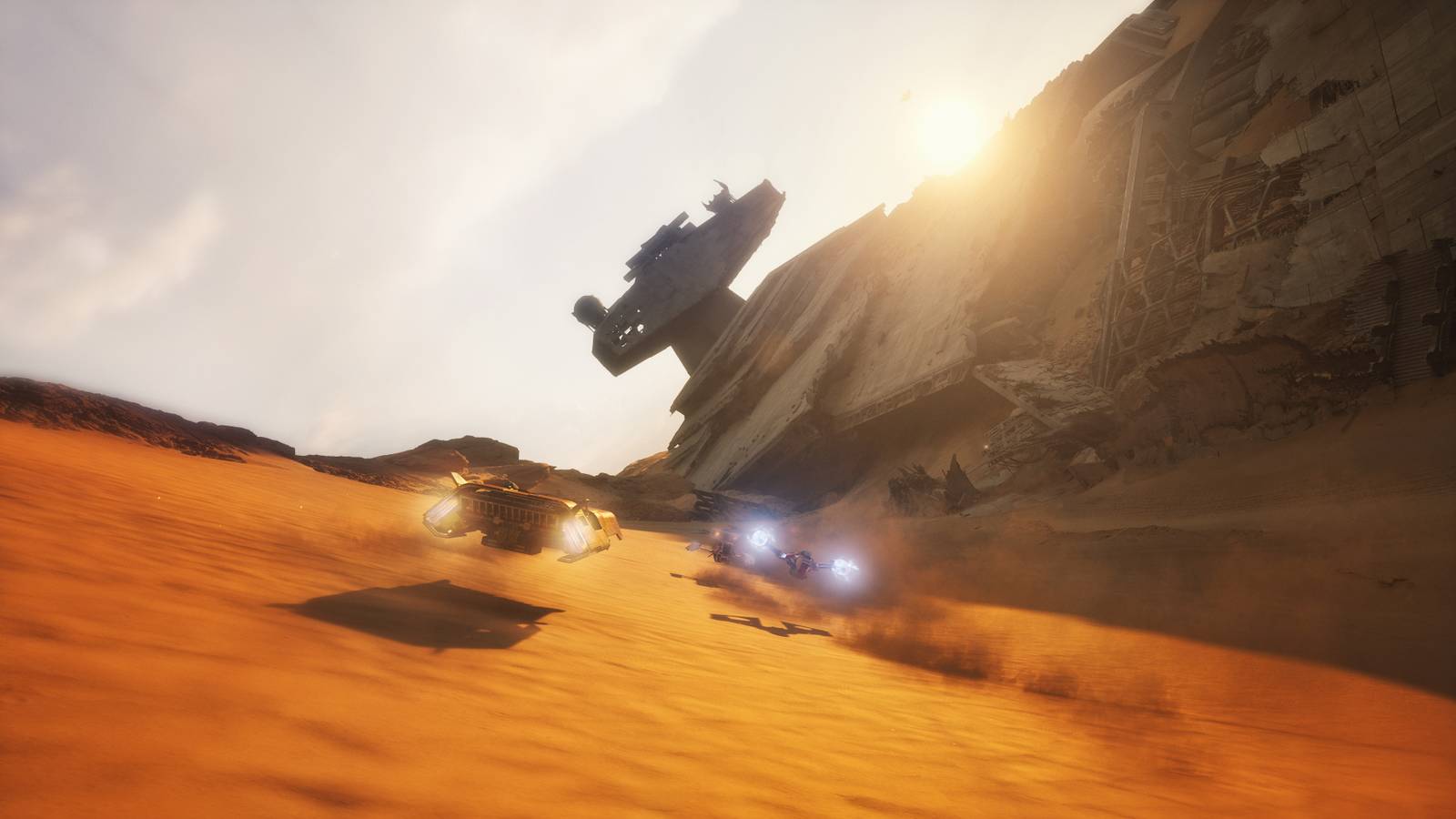 Image: Lucasfilm/Fuse Games
Sign in to your Polygon.com account
As far as debuts go, Fuse Games, a Guildford-based studio made up of a gamut of developers from Electronic Arts and Criterion Games, could have done way worse than start with a Star Wars game. It’s not just any ol’ Star Wars game, but one set in a genre that Lucasfilm Games barely touched on since Star Wars Episode I: Racer in 1999.
Earlier this week, Polygon spoke with Craig Derrick, executive producer at Lucasfilm Games, and Matt Webster, founder of Fuse Games, about Fuse's first venture into a galaxy far, far away and what they want gamers to take away from their experience with the arcade racer. For the team, it was about creating something that would revolutionize the racing genre without coasting on Star Wars nostalgia.
Fuse Games and the beginning of Galactic Racer
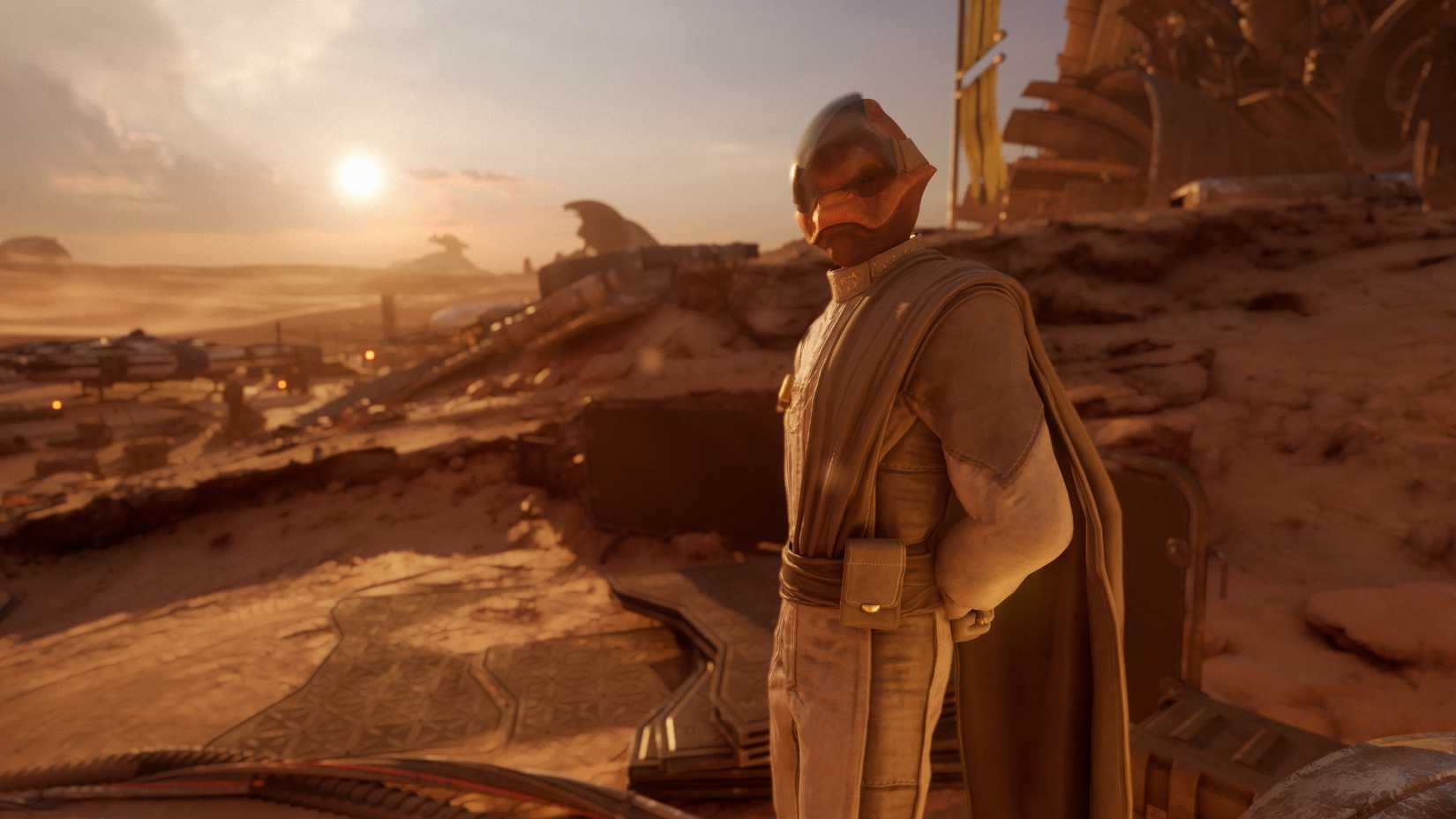 Image: Fuse Games/Secret Mode
Galactic Racer has plenty of surprises, but Fuse Games taking the wheel for the first new Star Wars racing game in 24 years wasn't one of them. Criterion Games brought the critically acclaimed Burnout franchise to life, featuring high speeds and aggressive mechanics that often made racing feel more like a battle than a race; the perfect vibe for a setting where podracing and speeder racing can often mean life or death.
Yet for all the obvious nostalgic longing for a game like Episode I, both Webster and Derrick were clear that the game — while a foundational influence — should only serve as a starting point.
"Our goal wasn't to just make players remember something that they played a long time ago," Derrick explained. "It was, 'how do we lean into the authenticity of Star Wars and nostalgia and make something new, make it feel like it's something you've never experienced before, but yet can call back to those memories and that experience?'"
After playing Episode I a short time ago to prepare for my time with Galactic Racer, one thing became quite clear: I was oh so bad at Galactic Racer. I smashed into walls, flew into acid pools, and skidded so hard around corners that I was genuinely surprised Darius Pax saw my Shade’s performance in their first race and still wanted me to enter the Galactic League.
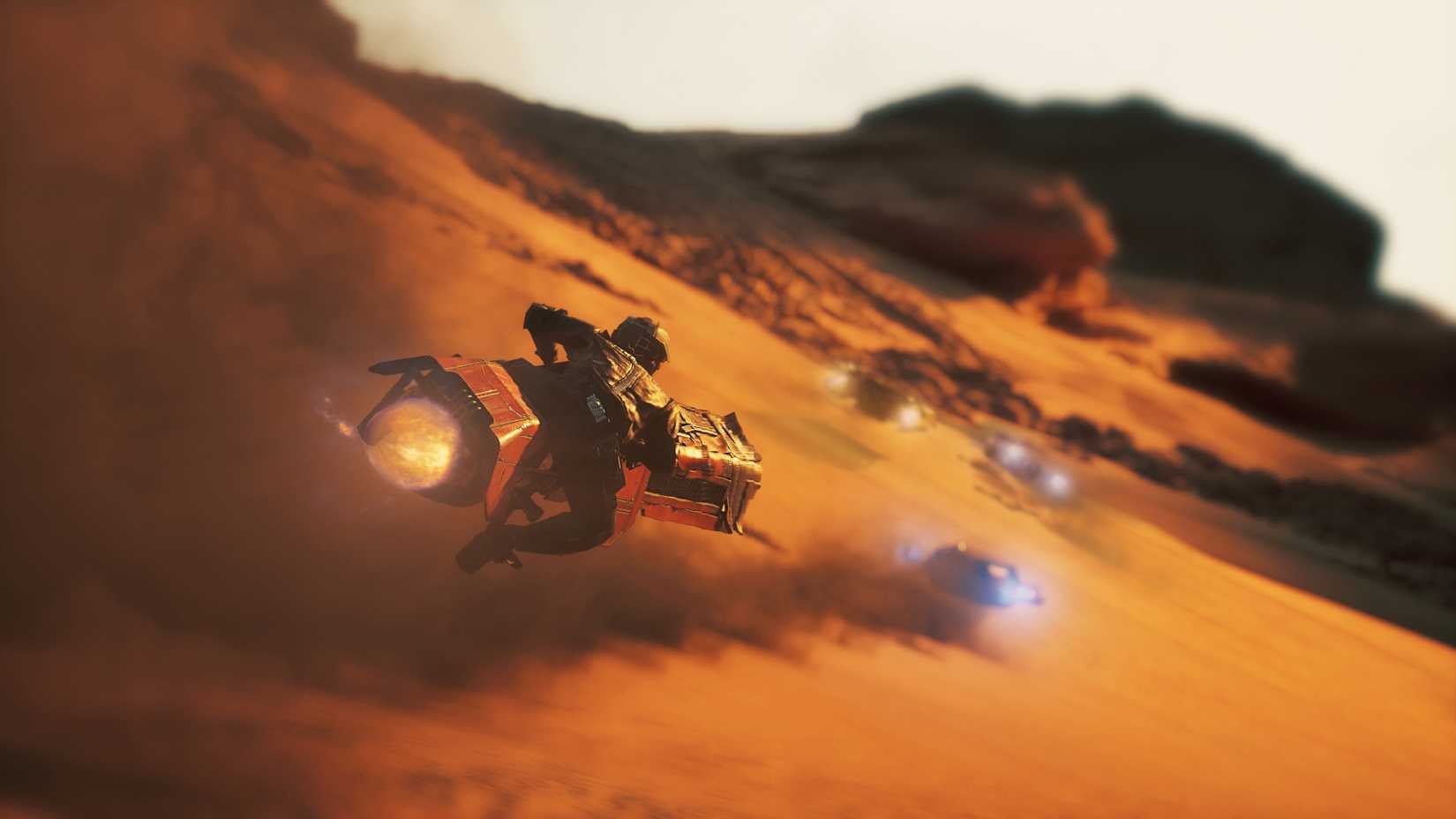 Image: Fuse Games/Secret Mode
The difficulty curve isn’t too shocking. Episode I is pretty old, and I've played it so many times over the years that I could probably do it with my eyes closed. The biggest bombshell, though, is Galactic Racer’s decision to throw you in at the deep end with almost no warning. At the start of the story campaign, there's a brief segment introducing the different vehicles you can race, including the landspeeder, speeder bike, and skim speeder. Those are easy enough to understand, even if I didn't master them.
However, by your second or third race, things start to get more difficult. There are planetery conditions that the UI warns you about (for example, Sentinel I's toxic atmosphere or Jakku’s blazing heat), but it doesn't tell you how they affect your vehicle.
Galactic Racer won't hold your hand
When I asked Webster and Derrick why there wasn’t a more in-depth tutorial to help players understand, Webster explained it was a deliberate choice made from a "philosophical perspective."
"The joy of discovery is really powerful, and I think in game-making we're coming out of the other side of perhaps the over-tutorialization of some experiences," Webster said. "Where players are like, 'Let me go play, let me tinker, what does that do?' It's OK to have questions, because it's incredibly rewarding when you go and find the answer."
Webster isn’t wrong about over-tutorialization. Earlier this month, Insomniac Games’ Wolverine was criticized for how much it holds players’ hands, further sparking conversation about whether game developers trust the people they’re making games for. That said, as Webster told us, the balance between accessibility and gameplay complexity is a "fine line" to walk.
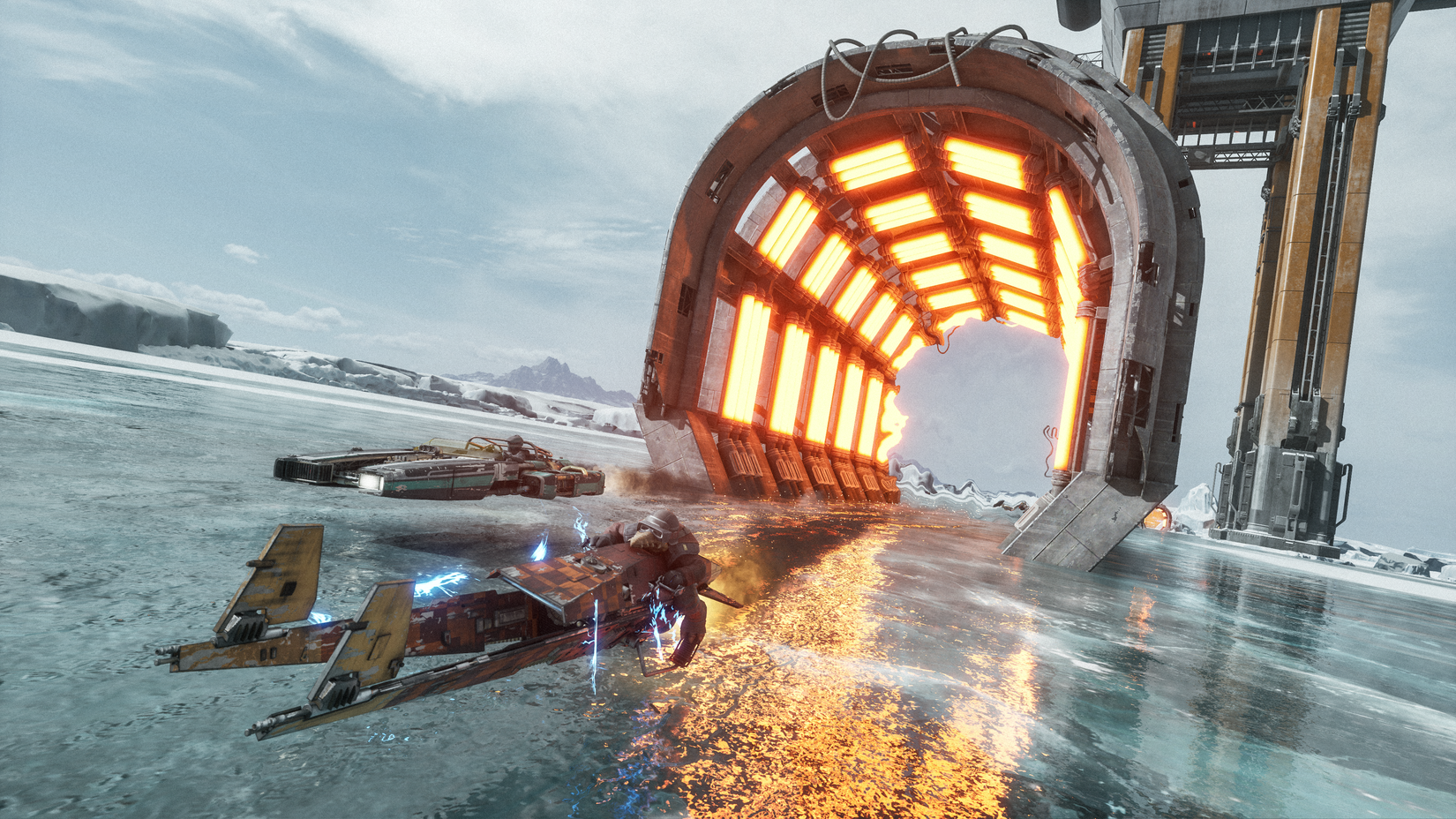 Image: Fuse Games/Secret Mode
Even so, Fuse Games hasn't shied away from difficulty in Galactic Racer. On the contrary, the game embraces it fully, with players moving through a run-based, roguelite progression where they take part in several races to reach the qualifying race that’ll take them to the next stage of the Galactic League. Even reaching that qualifying race takes a lot of effort and can end in failure, forcing players to retake races to progress. Despite the very different settings, I couldn’t help but be reminded of my time with Supergiant Games’s Hades, a roguelite in which you play as Hades' witty son, Zagreus, trying to escape the Underworld. My first handful of attempts ended in colossal failure and frustration, but as I kept playing and grew stronger, I slowly learned to take whatever wins I could, no matter how small.
I posed this question to Webster and Derrick: Could Galactic Racer be considered a racing roguelike as well as an arcade racer, and if so, was it always meant to be from the beginning of development?
"You're absolutely right. By technical definition, [Galactic Racer] is a roguelike. [...] It’s that aspect of consequence, it's that reinforcement of the core loop of the game, that there are things at stake, and victory is going to be hard-earned," Webster explained. "There are challenges that you'll need to face and some that you won't surpass, that you’ll need to go back and use your skills and your capabilities to help you get the best out of the machine you're building."
 Free sign-up
Get Polygon’s Wishlister newsletter
A weekly cheat sheet to what you’ll eventually love to play. No buying, no commitment — just saving for later.
Sign up freeFree. Unsubscribe anytime.
It also came down to replayability, which, according to Webster, is what racing "thrives" on. The more time players spend with the vehicle and its environment, the more they understand its nuances and dynamics and can adapt and improve.
As for whether this was the plan for Galactic Racer from the start, Derrick points once more to Episode I as Fuse Games' biggest influence. He notes that, because the team based so much on Episode I, they could easily have leaned into that more nostalgic angle, where players could race a couple of vehicles on a number of planets, and that would have been enough.
But that idea wasn't what Webster or Lucasfilm wanted.
Galactic Racer wants to revolutionize the racing genre — and Star Wars
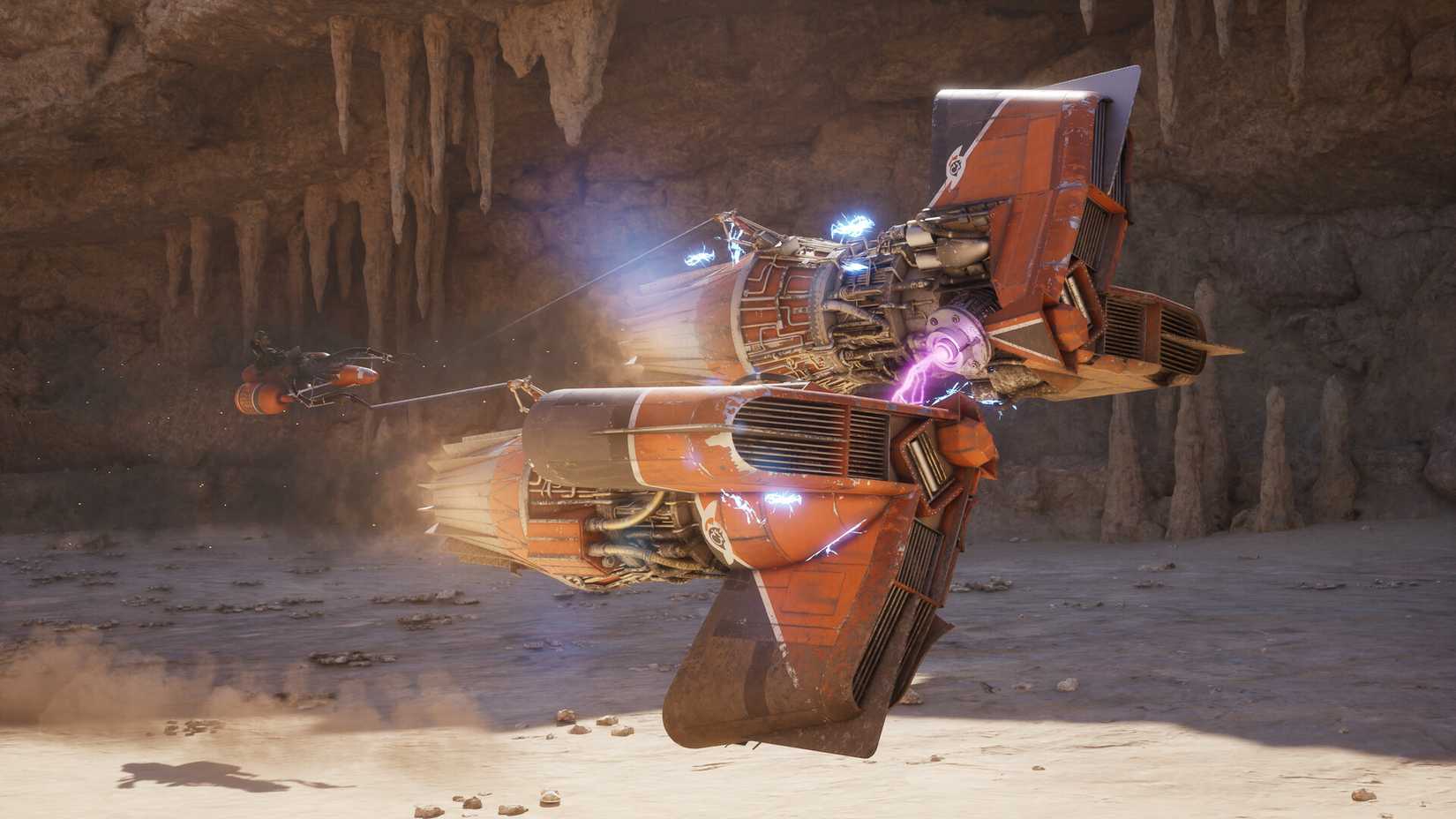 Image: Fuse Games/Secret Mode
"[Fuse Games] came in wanting to evolve [the genre]. Principally, it was around this notion of a roguelike, run-based type of progression. How do we do that? We had to get it right the first time," Derrick tells us. "We had to get racing right, the feel, the look, the experience, the sound, what was driving — excuse the pun — the story. And as we started to crack the story around the Galactic League, you start to find discovery in the story that helps support the runs-based experience."
I should also point out that overcoming failure, as a core concept, is ultimately at the very heart of Star Wars. When Luke fails to lift the X-Wing with the Force on Dagobah, it's only Yoda showing him that it can be done that gives him the strength to try again. Hell, a young Anakin Skywalker hadn't even finished a race before he went on to win the Boonta Eve podrace. Webster and Derrick want you to lose, because losing isn't actually failure at all.
It's this call to not be afraid of failure that Webster and Derrick hope inspires gamers, regardless of whether they're fans of Star Wars or racing games, to give Galactic Racer a chance.
"The goal from the very beginning was just don't make a good racing game and put Star Wars on it," Derrick said. "Make a game that could only exist as a Star Wars racing game."
Star Wars: Galactic Racer will be released on Oct. 6 on PlayStation 5, Windows PC, and Xbox Series X.





 English (US) ·