
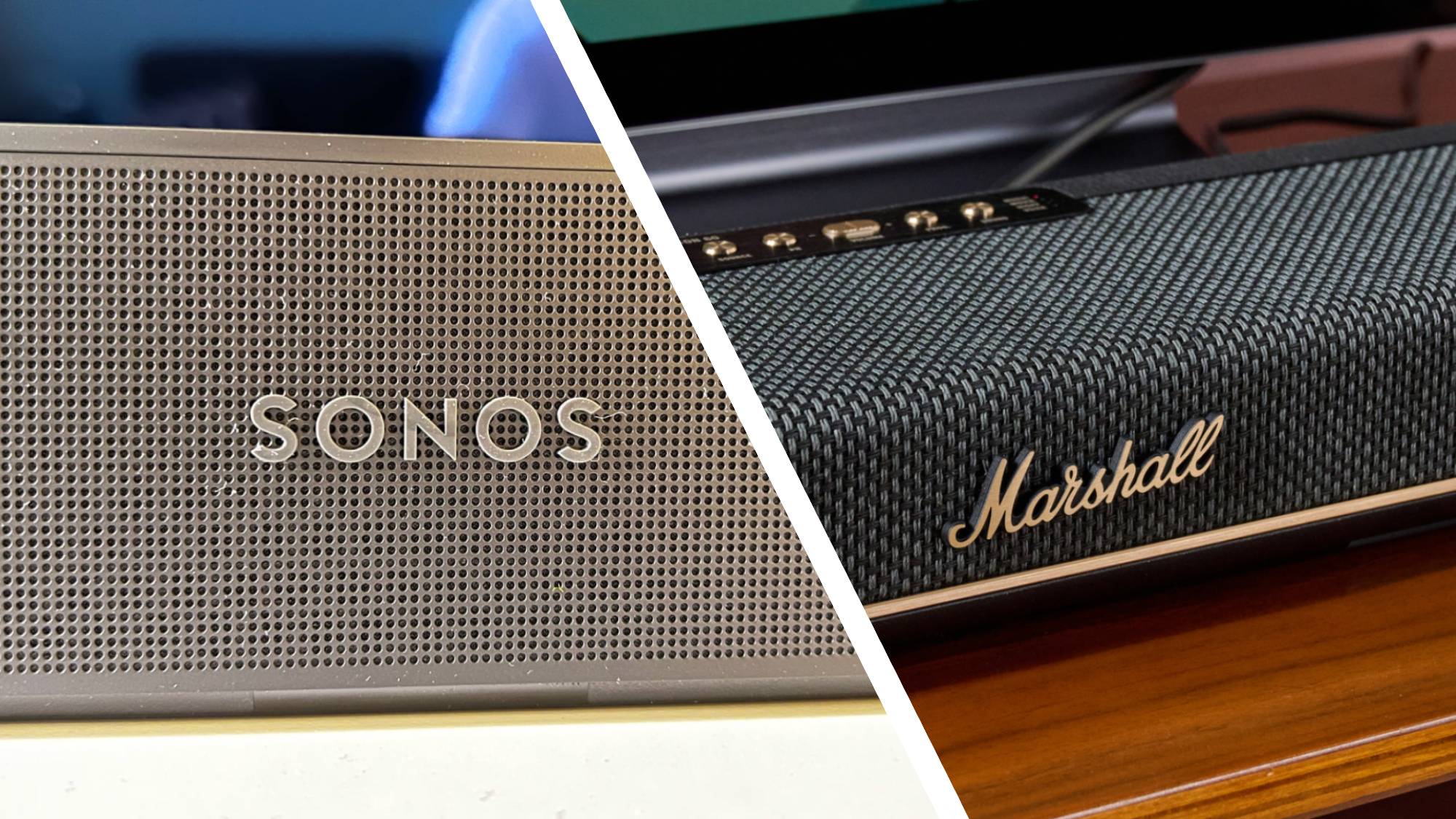
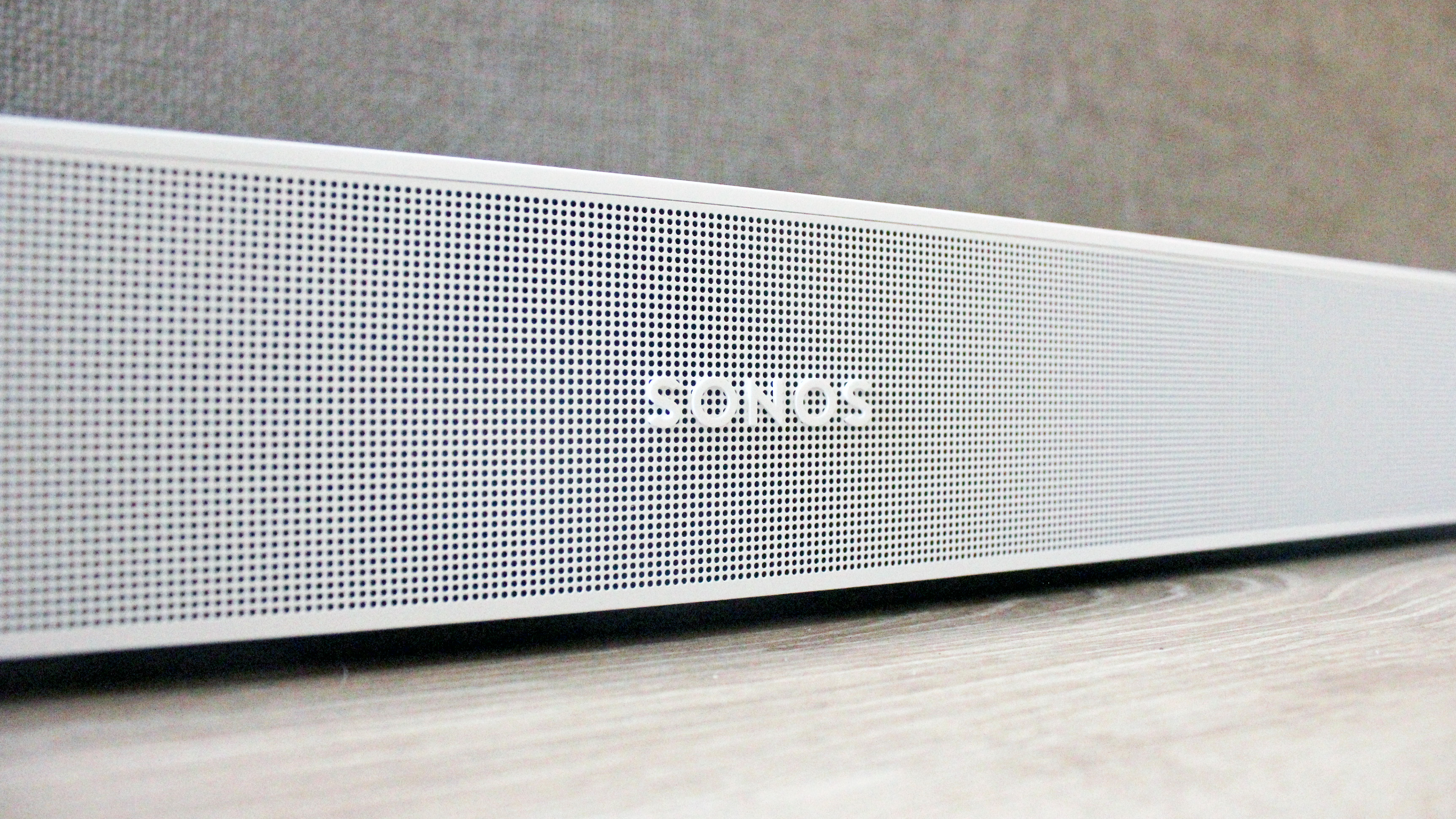
The Sonos Beam Gen 2 is an awesome Dolby Atmos soundbar that delivers great sound and plenty of features in a single compact package. Although the virtual Atmos on offer here isn’t the best we’ve heard, this soundbar is still a fantastic performer, and fits small spaces perfectly – and its mid-range price won’t be too hard on your bank balance either.
Pros
- Impressive bass and dynamics
- Neat, modern aesthetic
- Awesome features including multi-room support
Cons
- Atmos effects are less convincing
- No Bluetooth
- Omits DTS:X
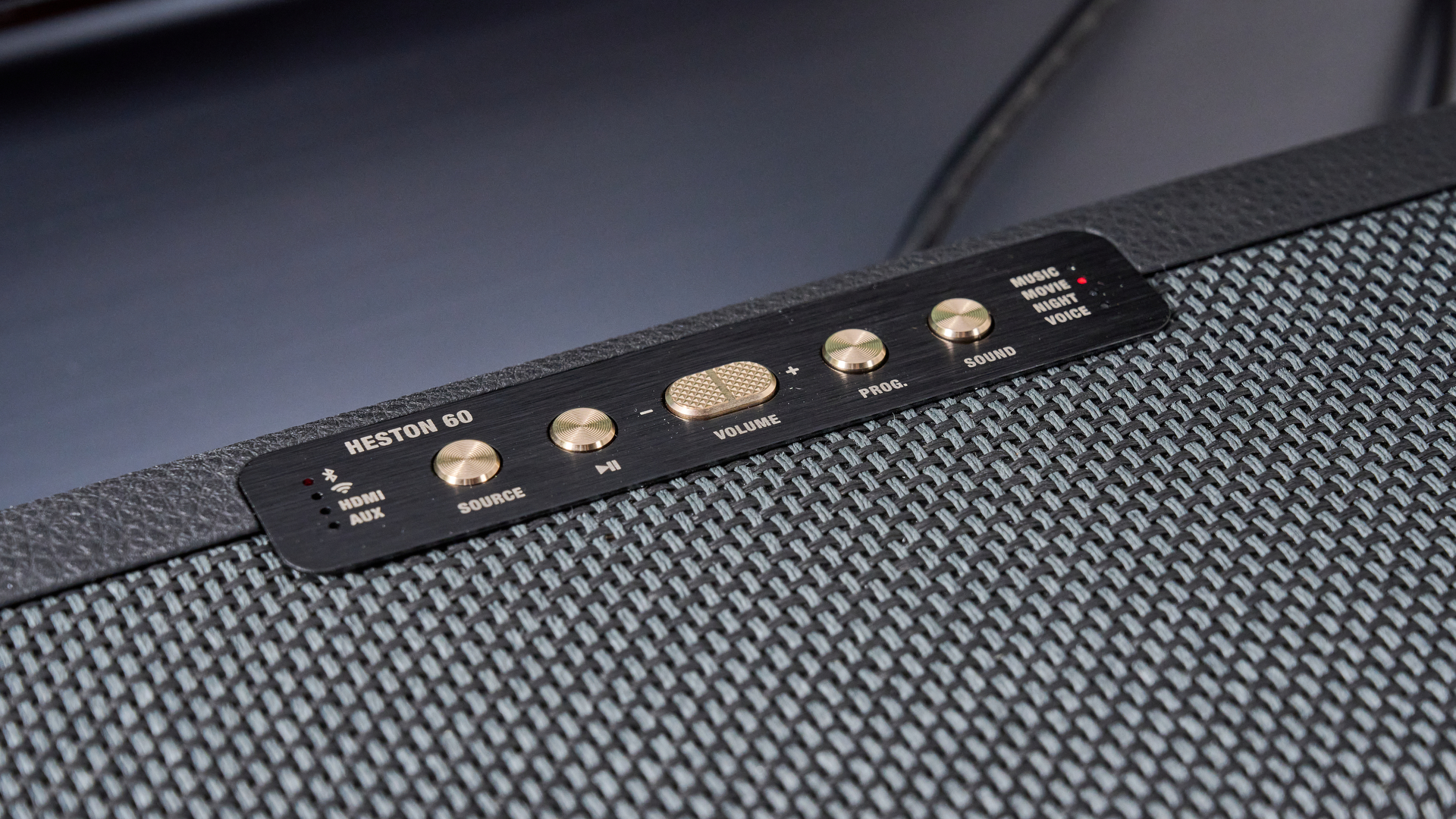
The Marshall Heston 60 delivers punchy, clear, and cinematic audio that stimulates the senses. This soundbar’s Dolby Atmos performance is very solid considering its confined dimensions, as is its bass output and dialogue. The bug-prone companion app needs some tweaking, but the Heston 60 remains one of the strongest small soundbars around.
Pros
- Impressive Atmos
- Beautiful amp-inspired look
- Excellent connectivity options
Cons
- Buggy companion app
- Beam is a lot cheaper now
- Not particularly powerful
But can the Heston 60 outdo Sonos’ long-standing compact Atmos king? Or will it just fall short? I tried both models alongside one another in our TV testing space at Future Labs to find out which is the best soundbar. I compared both on their feature set, audio performance, design and ease-of-setup, as well as value for money. Here’s which soundbar came out on top…
Sonos Beam Gen 2 vs Marshall Heston 60: price and availability
Perhaps unsurprisingly given its age, the Sonos Beam Gen 2 is the cheaper of these two models. It had a launch price of $449 / £449 / AU$699 when it hit the shelves in October 2021, but now you’ll regularly find it going for less in seasonal sales. During Black Friday, for example, I saw it on offer for under $350 / £350.
Meanwhile, the Marshall Heston 60 is likely to cost you a fair bit more. It has a list price of $699.99 / £499.99 / AU$999, and there’s been no sign of a discount yet – which is to be expected, given it only released in September 2025. You can grab the Heston 60 either in Black & Brass or Cream, and the Beam Gen 2 in Black or White.
Sonos Beam Gen 2 vs Marshall Heston 60: specs
Swipe to scroll horizontally
Dimensions | 25.6 x 2.7 x 3.9 inches / 651 x 68 x 100mm | 28.7 x 4.9 x 2.7 inches / 730 x 124 x 68mm |
Speaker channels | 5.0 | 5.1 |
Connections | HDMI eARC, Ethernet, Wi-Fi | HDMI eARC, RCA Mono (sub out), USB-C, 3.5mm, Bluetooth 5.3, Wi-Fi |
Dolby Atmos / DTS:X | Yes / No | Yes / Yes |
Sub included | No | No |
Rear speakers included | No | No |
Sonos Beam Gen 2 vs Marshall Heston 60: features
Both models have a good set of features, with plenty of customization options. The Beam Gen 2 connects up to the Sonos app, and can be added to your home ecosystem. That means you can access multi-room audio, and seamlessly connect up to other Sonos speakers – a huge benefit of this model.
On top of that, the app opens up TruePlay – essentially a room-calibration tool that makes use of a built-in mic. There’s also EQ and channel level adjustment options, voice-assistant compatibility, and an audio swap feature that Sonos Ace users may appreciate.
It’s a similar story with the Heston 60. A new Marshall app includes detailed EQ options, channel level control, a variety of sound modes, and a room correction tool. It also supports Auracast, so if you want to broadcast audio to a bunch of modern Marshall speakers – think the Marshall Kilburn III or Marshall Bromley 750 – you can do so. Built-in AirPlay 2 and Google Cast are also nice to have, and you can link internet radio or streaming services to the soundbar’s physical program buttons.
The Heston 60 has a wider set of connectivity options in general. The Beam Gen 2 omits Bluetooth – and by extension Auracast – as well as the RCA mono, USB-C, and 3.5mm ports that you’ll find on the Heston 60. Crucially, though, both support HDMI eARC and Wi-Fi streaming, which are the main options I use day to day.
Outside of this, both soundbars support Dolby Atmos and higher-res music streaming formats, though only the Heston 60 has DTS:X compatibility – so, if you make use of that codec when watching 4K UHD Blu-rays, for example, then you may prefer Marshall’s bar.
All in all, it’s a fairly close race in the features department. If you’re invested in the Sonos ecosystem, the Beam Gen 2 may suit you better. But for most consumers, the Heston 60’s inclusion of more connectivity options and DTS:X support makes it a slightly more enticing pick.
Sonos Beam Gen 2 vs Marshall Heston 60: performance
The Sonos Beam Gen 2 is a 5.0 channel soundbar, while the Heston 60 is a 5.1 model, and they do have slightly different configurations. The Heston 60 makes use of seven active drivers capable of a 56W maximum power output. On the other hand, the Beam Gen 2 has just five drivers, but has 80W of power.
These differences were reflected in the sound I heard from each bar – the Beam Gen 2 is a little more powerful, and the rumble of low-frequency sounds hit with a little more intent. In The Boy and the Heron, there’s a scene with a deep rumble that runs throughout, and the Beam Gen 2 replicated it with considerable impact, really immersing me in the action.
On the Marshall Heston 60, bass was certainly admirable given the bar’s compact size, but it didn’t quite have the bite of the Beam.
Both soundbars perform very well overall, with punchy low-end output, clear mids, and controlled treble, and will provide a gigantic improvement over basic TV audio.
For example, dialogue in movies and TV shows is fantastically clear from both models – though speech did get a tad more breathing room on the Beam Gen 2 – ideal for more action-packed scenes. A speech enhancement from Sonos and Voice mode from Marshall are on board if you want to focus in on voices too.
One area that I picked up on a fair amount of difference, though, was Dolby Atmos performance. While watching a 4K Blu-ray of The Mask, the cartoonish spinning effects, background noises, and characters dashing around sounded better placed on the Heston 60. As The Mask spun into the backdrop of an open space, there was more depth and width to his movement from Marshall’s compact bar.
The Beam Gen 2 still plated up solid three-dimensional audio effects – they just weren’t as nuanced or convincing as the Heston 60’s. It was a similar story with Top Gun: Maverick. The Sonos bar mapped the movement of Tom Cruise’s Kawasaki motorcycle well, and jets flying across the screen sounded as if they surpassed the confines of the soundbar’s restrictive form.
However, the Heston 60 delivered a touch more finesse overall, even with height elements. For instance, when Cruise flew his jet up and overhead, the vertical extension on offer was more striking from Marshall – the move was replicated decently on the Beam Gen 2, but its height effects didn’t make a big impression on me. In honesty, though, neither of these compact soundbars are top-drawer in this department – a full-size model like the Samsung HW-Q990F or JBL Bar 1300MK2 with dedicated up-firing drivers will be better if you're after peak performance.
All in all, this is actually quite a tight contest. The Sonos Beam Gen 2 offers a bit more firepower, with mightier bass and even slightly improved dynamics. But the Marshall Heston 60’s handling of Dolby Atmos is superior, in my view. There are great benefits to picking either bar, so we’ll call it a tie in this category.
Sonos Beam Gen 2 vs Marshall Heston 60: design & setup
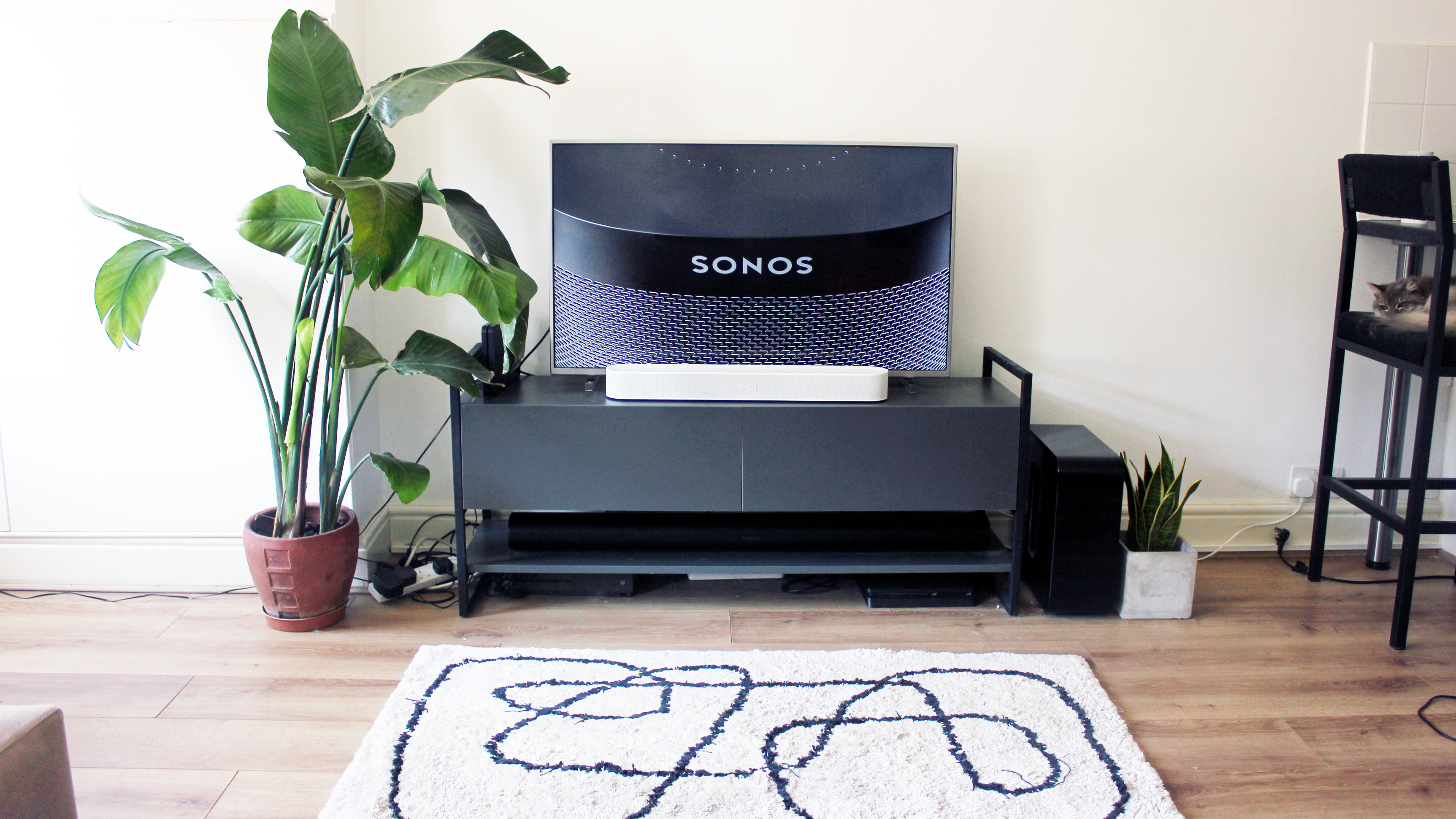
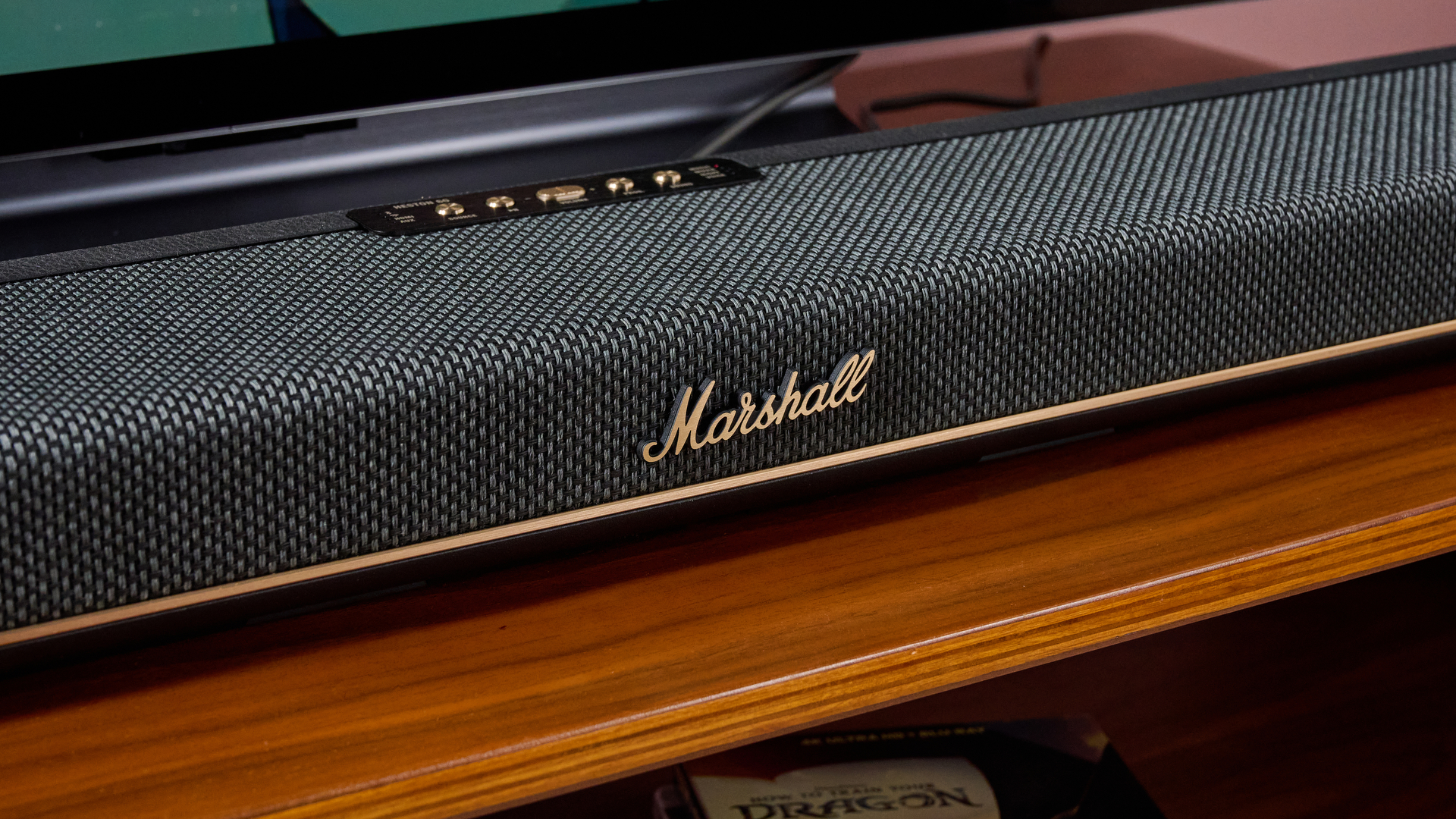
I’m a big fan of how both of these soundbars have been designed. Each are highly compact, making them easy to slot into tighter spaces or place in front of smaller TVs. And both can be purchased in a couple of different color options, which is always nice to see.
In terms of looks, the model you prefer will largely come down to the aesthetic you’re going for. The Sonos Beam Gen 2 is a modern, curved, and sleek soundbar that’s housed in neat plastic casing.
Meanwhile, the Heston 60 really stands out from the crowd, with frets, a faux-leather exterior, and golden details. I personally love the amp-inspired design of Marshall’s compact bar, and think it gives off more of a luxurious feel – but I certainly won’t deny the class of the Beam Gen 2.
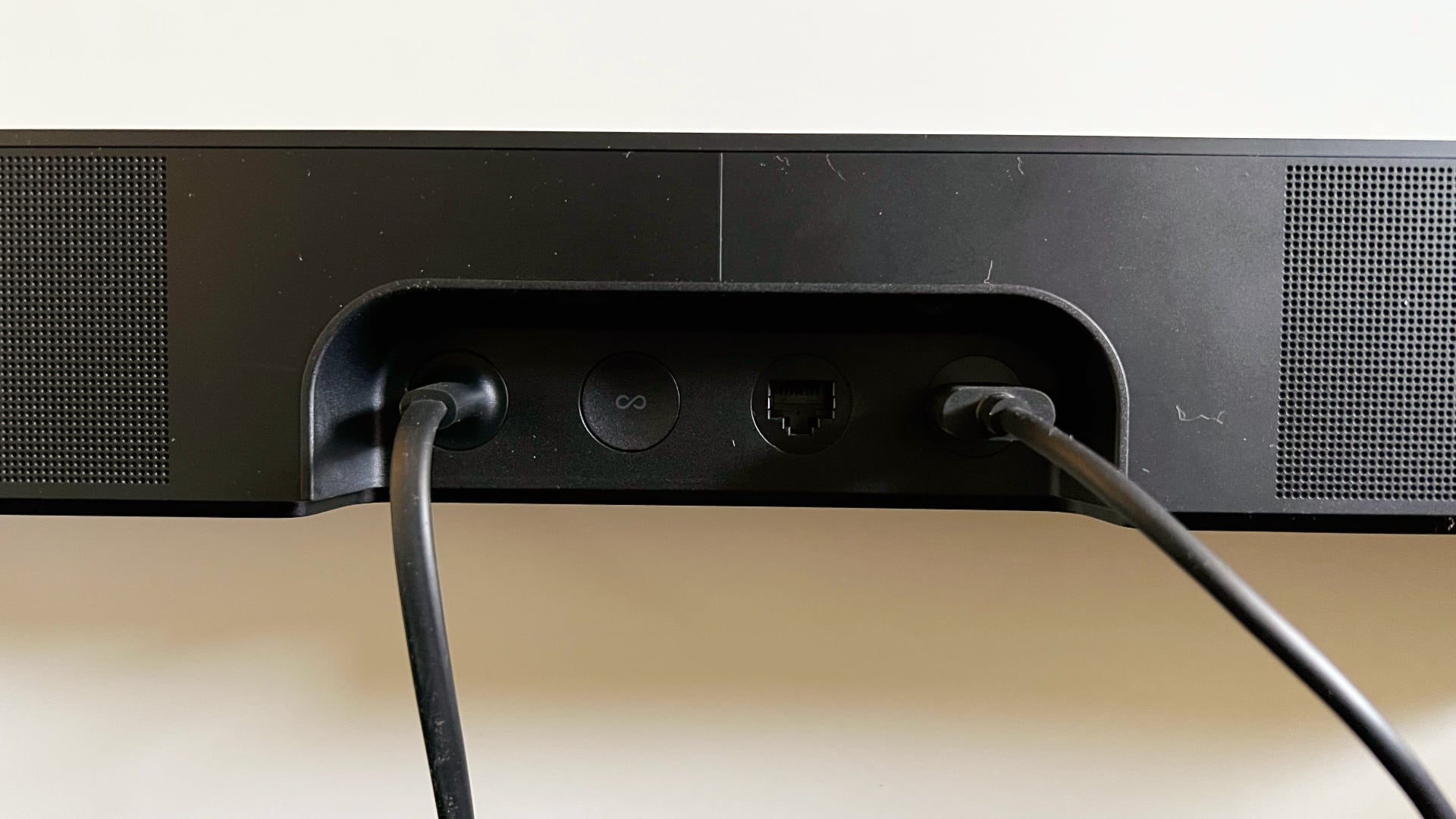
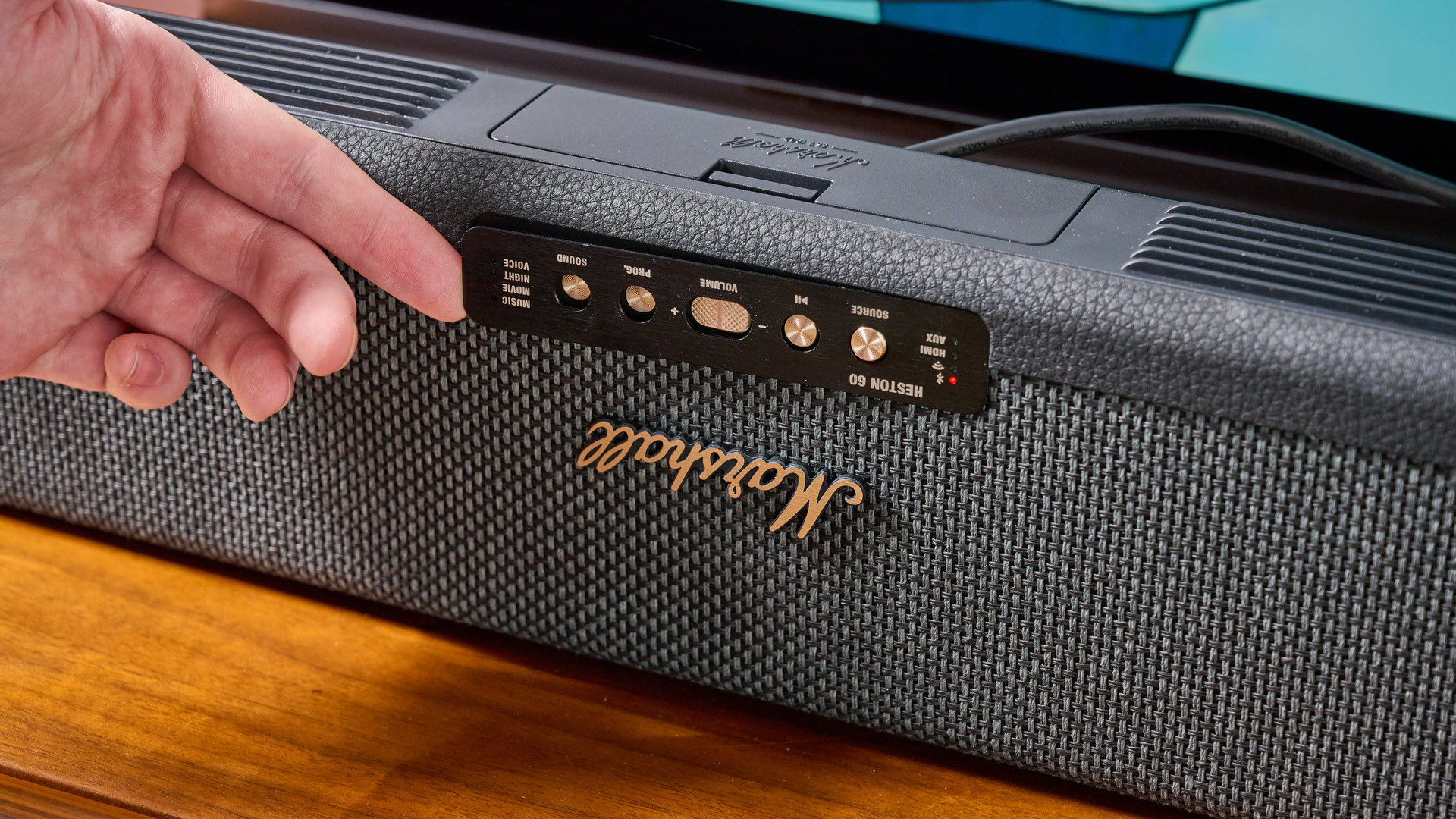
Both have practical physical controls too, which are responsive and work well. Neither come with a physical remote, as you can simply use your standard TV remote to alter volume, and the Sonos or Marshall apps to adjust sound modes, channel level, and more. One small thing I really like about the Heston 60, though, is that its control panel is magnetic, so you can flip it for when the soundbar is wall-mounted – a real sign of the care and thought put into its design.
Set-up wise, it's pretty straightforward from Sonos and Marshall. You can just connect either bar up with an HDMI cable and power source, and you’re good to go. Both apps are well laid-out, and open up additional options, like room calibration for the ultimate viewing experiences too.
However, I should mention that I’ve found the new Marshall app to be pretty buggy – registering the Heston 60 sometimes takes a couple of tries, which isn’t a problem I've encountered with the Beam Gen 2.
In the end, it’s a close one again. Setup is pretty easy across both bars, although I do hope Marshall gets its app working a little better. Build quality is impressive from both too, although I do think the Heston 60 has more of a premium feel to it, which gives it a slight edge for me.
Sonos Beam Gen 2 vs Marshall Heston 60: value
Perhaps the most important question, then, is which soundbar is better value for money: the Sonos Beam Gen 2 or the Marshall Heston 60?
Let’s start by talking about price. The newer and luxurious-looking Marshall Heston 60 does, unsurprisingly, have a higher asking price. It will set you back $699.99 / £499.99 / AU$999, and there’s not been a sign of a sale just yet.
The Sonos Beam Gen 2 – which was released more than four years ago now – isn’t quite as pricey, typically coming in at $449 / £449 / AU$699. I’ve seen it go on sale a few times over the years, and during big sale events like Black Friday, you can expect to see it dip to around $350 / £350.
Does the Heston 60 do enough to warrant the extra price? I think it depends on what you’re looking for. If you want impressive Atmos in a small package, it’s a very strong candidate. Its premium aesthetic is also a huge selling point, and makes it just as much of a statement piece as it is a soundbar.
But the Beam Gen 2 just feels like such a good buy. Sure, it leaves out DTS:X, and it’s missing the wide connectivity options of the Heston 60, but it delivers plenty of bang for your buck. Surprisingly hard-hitting bass, very good dynamics, crystal-clear dialogue, and the ability to customize sound to your liking… those are some serious positives.
I think the Heston 60 handles Dolby Atmos better, and that’s worth keeping in mind, but for pure value for money, Sonos just about gets the nod from me.
Sonos Beam Gen 2 vs Marshall Heston 60: verdict
As you’ll have likely gathered, this is a phenomenally close affair. In fact, I’m not sure if there’s been a tighter battle in any of the tech showdowns I’ve written thus far.
And it’s easy to see why. The Sonos Beam Gen 2 is older, and by extension a little cheaper. And it still supplies powerful, high-calibre sound, with Dolby Atmos support and a whole host of smart features.
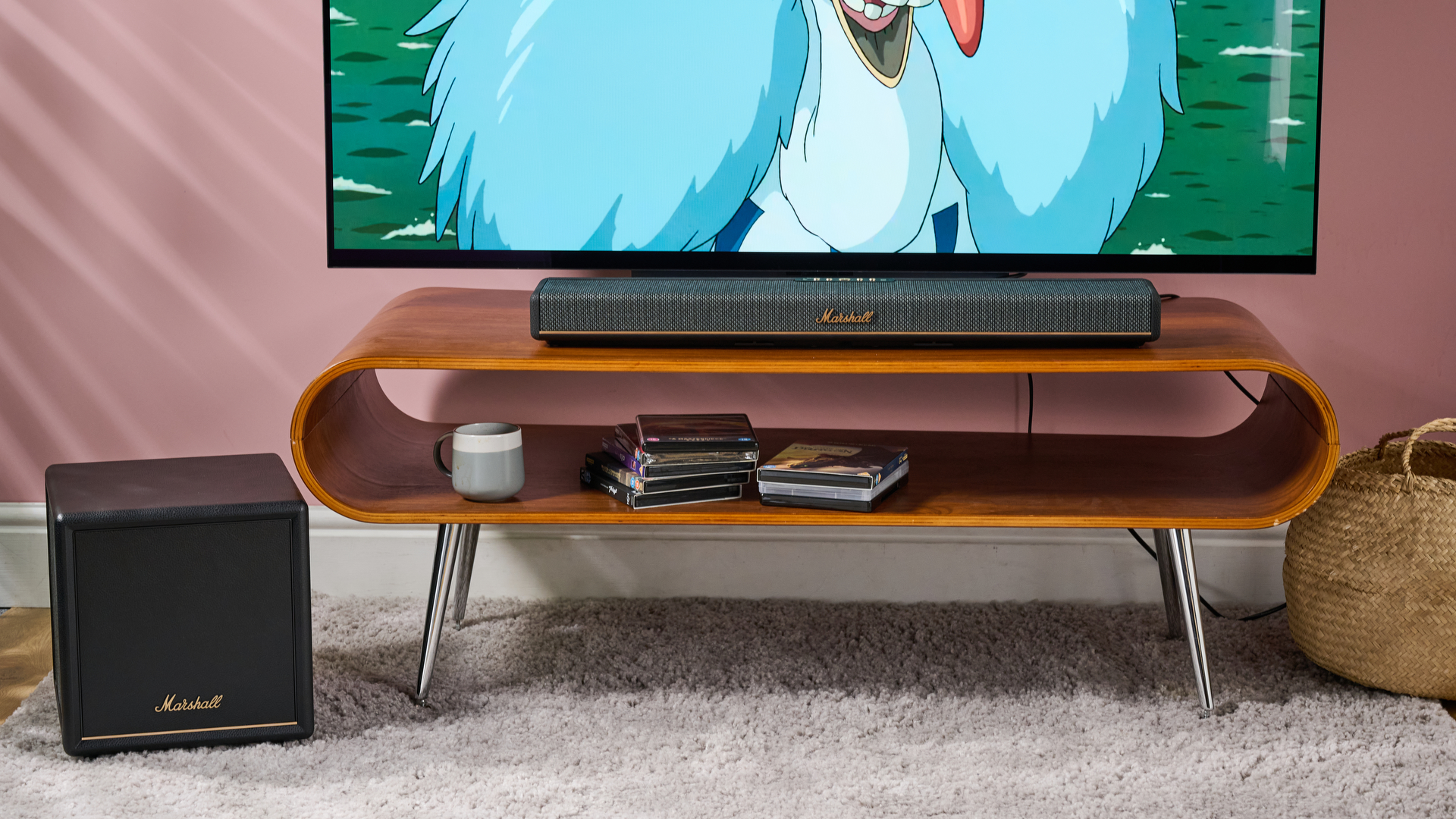
The Heston 60, though, is an absolute beauty with even better Dolby Atmos performance, bundles of connectivity options, and a stand-out aesthetic. It’s a little pricier, yes, but I think a lot of consumers will consider it worth the spend on looks alone.
I’d happily recommend either soundbar – both are top-class compact picks. But if I had to give the slight edge to one, it would probably be the Sonos Beam Gen 2. I do prefer the design of the Heston 60, but Sonos offers a little more value for money as well as better low-end and dialogue replication, giving it the tiniest of leads.




 English (US) ·