
 Image via Apple TV+

Published Apr 9, 2026, 1:58 PM EDT
Julio is a Senior Author for Collider. He studied History and International Relations at university, but found his calling in cultural journalism. When he isn't writing, Julio also teaches English at a nearby school. He has lived in São Paulo most of his life, where he covers CCXP and other big events. Having loved movies, music, and TV from an early age, he prides himself in knowing every minute detail about the things he loves. When he is older, he dreams of owning a movie theater in a small countryside town.
Sign in to your Collider account
Apple TV has now confirmed that Silo Season 4 has also wrapped filming, a major update for fans of the Rebecca Ferguson-led sci-fi series. With both of the show’s final seasons now complete, Silo is officially heading toward its planned ending — and that’s exactly what makes its final stretch so exciting. It’s not that one of our favorite sci-fi series is ending soon that has us excited, but that it appears to have been given exactly the runway this story needs. Expanding Silo has already proven tricky across its first two seasons, and with that Season 2 finale teasing even bigger storylines ahead, keeping the remaining chapters focused feels like the smartest way forward.
'Silo' Seasons 1 and 2 Only Adapt the First Book in Hugh Howey's Trilogy
Created by TV veteran Graham Yost, Silo actually adapts a book series written by Hugh Howey known as the Wool trilogy. The catch is that, instead of one season per book, Apple TV+ didn't initially set a proper timeline for the books to be adapted, so Season 1 tells the story that extends about halfway into the first book, Wool, when protagonist Juliette Nichols (Ferguson) is sent out to clean. It's a good point to finish the season, actually, and, given how successful it was in setting up the many mysteries around Silo 18, renewing the series for Season 2 and giving it more time to wrap up the plot in the first book seemed like a no-brainer, right? Well, not really, as it turns out.
Collider Exclusive · Sci-Fi Survival Quiz Which Sci-Fi World Would You Survive? The Matrix · Mad Max · Blade Runner · Dune · Star Wars
Five universes. Five completely different ways the future went wrong — or sideways, or up in flames. Only one of them is the world your instincts were built for. Eight questions will figure out which dystopia, galaxy, or desert wasteland you'd actually make it out of alive.
💊The Matrix
🔥Mad Max
🌧️Blade Runner
🏜️Dune
🚀Star Wars
TEST YOUR SURVIVAL →
01
You sense something is deeply wrong with the world around you. What do you do? The first instinct is often the truest one.
APull on every thread until I understand the system — then figure out how to break it. BStop asking questions and start stockpiling — food, fuel, weapons. Questions don't keep you alive. CKeep my head down, observe carefully, and trust no one until I know who's pulling the strings. DStudy the patterns. Every system has a rhythm — learn it, and you learn how to survive it. EFind the people fighting back and join them. You can't fix a broken galaxy alone.
NEXT QUESTION →
02
In a world of scarcity, what resource do you guard most fiercely? What we protect reveals what we believe survival actually requires.
AKnowledge. If you understand the system, you don't need resources — you can generate them. BFuel. Everything else — movement, power, escape — runs on it. CTrust. In a world of fakes and informants, a truly reliable ally is rarer than any commodity. DWater. And after water, information — the two things empires are truly built on. EShips and credits. The galaxy is big — you survive it by being able to move through it freely.
NEXT QUESTION →
03
What kind of threat keeps you up at night? Fear is useful data — if you're honest about what you're actually afraid of.
AThat reality itself is a lie — that everything I experience has been constructed to keep me compliant. BA raid. No warning, no mercy — just the roar of engines and then nothing left. CBeing identified. Once someone with power decides you're a problem, you're already out of time. DBeing outmanoeuvred — losing a political game I didn't even know I was playing. EThe Empire tightening its grip until there's nowhere left to run.
NEXT QUESTION →
04
How do you deal with authority you don't trust? Every dystopia has a power structure. Your approach to it determines everything.
ASubvert it from the inside — learn its rules well enough to weaponise them against it. BIgnore it and stay out of its reach. The further from any power structure, the better. CAppear to comply while doing exactly what I need to do. Visibility is the enemy. DManoeuvre within it carefully. You can't beat a system you refuse to understand. EResist openly when I have to. Some things are worth the risk of being seen.
NEXT QUESTION →
05
Which environment could you actually endure long-term? Survival isn't just tactical — it's physical, psychological, and very much about where you are.
AUnderground bunkers and server rooms — cramped, artificial, but with access to everything that matters. BOpen wasteland — brutal sun, no shelter, constant movement. At least the threat is honest. CA dense, rain-soaked city where you can disappear into the crowd and nobody asks questions. DMerciless desert — extreme heat, no water, and something enormous living beneath the sand. EThe fringe — backwater planets and busy spaceports where the Empire's attention rarely reaches.
NEXT QUESTION →
06
Who do you want in your corner when things fall apart? The company you keep is the clearest signal of who you actually are.
AA tight crew of believers who've seen behind the curtain and have nothing left to lose. BOne or two people I'd trust with my life. Any more than that and someone talks. CNobody, ideally. Alliances are liabilities. I work alone unless I have no choice. DA community bound by shared hardship and mutual survival — people who need each other to last. EA ragtag team with wildly different skills and total commitment when it counts.
NEXT QUESTION →
07
Where do you draw the line — if you draw one at all? Every survivor eventually faces a moment that tests what they're actually made of.
AI won't harm the innocent — even the ones who'd report me without hesitation. BI do what I have to to protect the people I've chosen. Everything else is negotiable. CThe line shifts depending on who's asking and what's at stake. DI draw a long-term line — nothing that compromises my people's future, even if it'd help now. ESome lines, once crossed, can't be uncrossed. I know which ones they are.
NEXT QUESTION →
08
What would actually make survival worth it? Staying alive is one thing. Having a reason to is another.
AWaking others up — dismantling the illusion so no one else has to live inside it. BFinding somewhere — or someone — worth protecting. A reason to keep moving. CAnswers. Understanding what I am, what any of this means, before time runs out. DLegacy — shaping the future in a way that outlasts me by generations. EFreedom — for myself, for others, for every world still living under someone else's boot.
REVEAL MY WORLD →
Your Fate Has Been Calculated You'd Survive In…
Your answers point to the world your instincts were built for. This is the universe your temperament, your survival instincts, and your particular brand of stubbornness were made for.
The Matrix
You took the red pill a long time ago — probably before anyone offered it to you. You're a systems thinker who can't help but notice the seams in things.
- You're drawn to understanding how the system works before figuring out how to break it.
- You'd find the Resistance, or it would find you — your instinct for spotting constructed realities is the machines' worst nightmare.
- You function best when you have access to information and the freedom to act on it.
- The Matrix built an airtight prison. You'd be the one probing the walls for the door.
Mad Max
The wasteland doesn't reward the clever or the well-connected — it rewards those who are hard to kill and harder to break. That's you.
- You don't need comfort, community, or a cause larger than the next horizon.
- You need a vehicle, a clear threat, and enough fuel to outrun it — and you're good at all three.
- You are unsentimental enough to survive that world, and decent enough — just barely — to be something more than another raider.
- In the wasteland, that distinction is everything.
Blade Runner
You'd survive here because you know how to exist in moral grey areas without losing yourself completely.
- You read people accurately, keep your circle small, and ask the questions others prefer not to answer.
- In a city where humanity is a legal designation rather than a feeling, you hold onto something that keeps you functional.
- You're not a hero. But you're not lost, either.
- In Blade Runner's world, that distinction is everything.
Dune
Arrakis is the most hostile environment in the known universe — and you are precisely the kind of person it rewards.
- Patience, discipline, and political awareness are your core strengths — and on Arrakis, they're survival tools.
- You understand that the long game matters more than any single victory.
- Others come to Dune and are consumed by it. You'd learn its logic and earn its respect.
- In time, you wouldn't just survive Arrakis — you'd begin to reshape it.
Star Wars
The galaxy far, far away is vast, loud, and in a constant state of violent political upheaval — and you wouldn't have it any other way.
- You find meaning in being part of something larger than yourself — a cause, a crew, a rebellion.
- You'd gravitate toward the Rebellion, or the fringes, or whatever pocket of the galaxy still believes the Empire's grip can be broken.
- You fight — not because you have to, but because standing aside isn't something you're capable of.
- In Star Wars, that willingness is what makes all the difference.
↻ RETAKE THE QUIZ
Season 2 picks up where the first one left off and continues the plot of Wool, but it wasn't nearly as brilliant. With a lot of mysteries already set up and Juliette facing the outside world on her own, it seemed like it was time to start answering some questions instead of taking as much time as Season 2 takes to set up new mysteries. As exciting as the second half of Wool is, it also picks up the pace, since there are now many plots in motion: Juliette venturing outside, Bernard Holland's (Tim Robbins) plot to take over Silo 18, the rebellion that's brewing down in Mechanical... the list goes on. But most of these answers don't come until after Wool is finished, really. It's a trilogy, and the first novel is usually the one that sets up the world and its mysteries, and answers typically come later.
Silo Season 2 greatly expands on the story told in Wool, although not necessarily for the best. It follows the plot of the book to some degree, introducing characters like Solo (Steve Zahn) and developing others, like Lukas Kyle (Avi Nash). This is good, but not enough to fill a whole season. The rebellion in Silo 18 succeeds and reaches its peak, and Juliette's plot in Silo 17 is stretched to match it, way beyond what's in the novel. She spends around half the season simply trying to get to Solo, which involves a series of MacGuffins that, for a character as intense as her, feel more like a waste. It's frankly tedious, but it looks like this won't happen again in Season 3 and 4 because there will simply be no time.
'Silo' Seasons 3 and 4 Will Have To Adapt One Book Each
Wool is the first book in Howey's trilogy, followed by Shift and Dust. Each of them comprises a series of short stories that together build the larger picture of what's really going on in the silos. They break the world of the series wide open, zeroing in on why there are so many silos, who set them up, how, and when. In fact, the epilogue scene in Season 2 already introduces two of their characters, with Congressman Daniel (Ashley Zukerman) and journalist Helen (Jessica Henwick) meeting in a restaurant in Washington, DC, before silos are even a thing. It's all an even bigger conspiracy, so if Silo wants to do justice to the whole story, it will have no option other than to stick close to the books.
Most of Shift takes place in the past, with Daniel (whose name in the books is Donald) as the protagonist, as he's caught in the conspiracy that leads to the creation of the silos. In Silo Season 2, we see that Washington, DC is largely contaminated by radiation set off by dirty bombs, although no one really understands whether those were launched by enemy nations or whether there is something else happening. As we follow Daniel's journey and his role in the whole conspiracy, there are also many jumps between timelines, explaining, for example, what the previous rebellion in Silo 18 (which we hear a lot about throughout Season 1) was all about, what really happened in Silo 17, and how things came to be as they are at the beginning of the series.

Related
It's in Dust that we get to see the true outcome of everything from the previous books as all storylines converge. It really is a lot of ground to cover, so Silo won't have time to keep expanding on plots as it did to Juliette in Silo 17, or keep brewing new rebellions every season. Instead, Seasons 3 and 4 will have to be as objective as possible and stick close to the books' storylines if they want to achieve the same ending. It's possible that the series changes everything and goes in a completely different way from the books, but given how successful it has been in its adaptation so far, it isn't likely. This doesn't mean that certain changes wouldn't be welcome, of course.
What Storytelling Changes Will Apple TV's 'Silo' Series Need To Make?
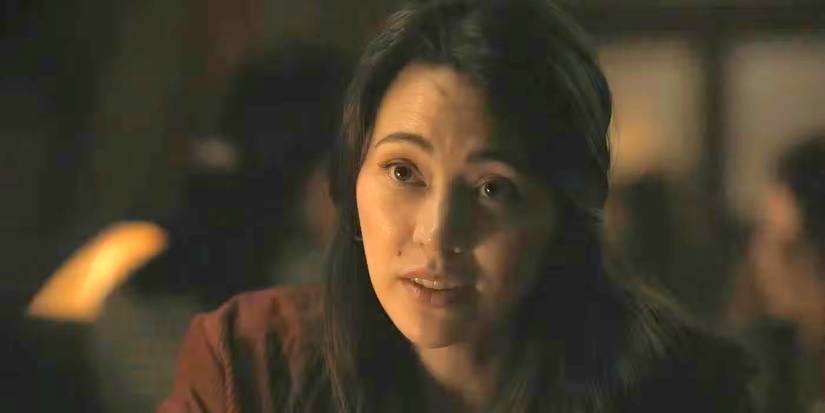 Image via Apple TV+
Taking a story from books and turning it into a TV series is never an easy job. Storytelling in TV is completely different from storytelling in books, for many reasons. It's not just about content, but it's about form. Adapting it usually requires changing many details about the original, cutting some things, and sometimes even adding others. Seasons 3 and 4 of Silo will have to be more faithful to the original Howey books, and they have also already started adapting some key aspects of Shift and Dust into the series. Again, it's not just about faithfully telling the story, but also about how to do it. For example, Helen is an original character in the TV series, so how close to the books will these final seasons keep it?
The very fact that Juliette will remain the protagonist is already a major departure from Shift, which focuses mostly on Daniel, meaning that Silo will indeed have to change some things in order to successfully adapt the story. It wouldn't make sense to suddenly reduce Juliette's role now after she has spent half a season swimming in Silo 17, right?
Instead, it looks like Silo will have events from both Shift and Dust told in Season 3, leaving most of the final book for Season 4 as the grand finale. Daniel's story in Shift is essential, and it will probably be developed in parallel to the beginning of Juliette's plot line from Dust via flashbacks. As for Shift's storylines within the silos, those will either be cut entirely or incorporated in smaller doses in Season 4, when all the protagonists are already working together, and there's time for that. Either way, even cutting some things from the story apparently requires adding others, like Helen. As long as that works to keep Silo from deviating from its main plot as it did in Season 2, it will be for the better.
Silo is streaming on Apple TV.
Release Date May 5, 2023
Showrunner Graham Yost




 English (US) ·