
 1 day ago
7
1 day ago
7
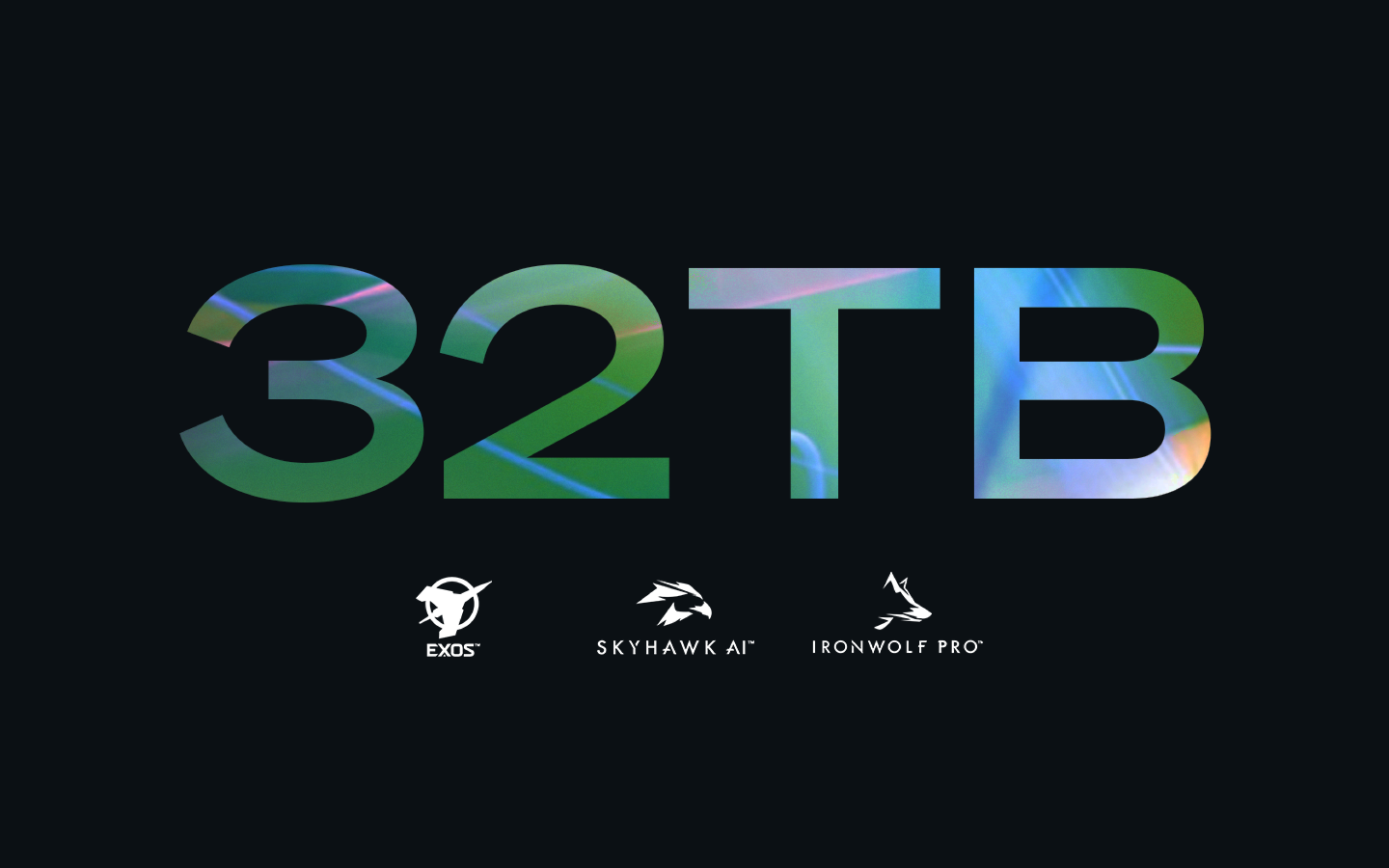
In the AI boom, we've already seen data centers switch to hard drives not only to alleviate cost, but also to combat limited SSD availability. Now, Seagate is here to help by updating its existing lineups with new 32 TB variants created for AI workloads: SkyHawk AI for $699.99, Exos for $729.99, and the top-end IronWolf Pro for $849.99. These are much less exclusive, though, and technically aimed at regular consumers.
Moreover, all three of these are standard 3.5" SATA III drives, spinning at 7200 RPM, and equipped with a 512 MB cache pool. In terms of workload, these are rated for ~550 TB/year with 2.5 million hours of MTBF. You'll also find the same 5-year warranty included across the board, along with Seagate's software suite.
As for SKU-specific specs, the SkyHawk AI is the entry-level "video-optimized" option, and Seagate says it can record/store more than 10,000 hours of video with metadata and analysis. It includes a bunch of AI features like ImagePerfect AI, which is supposed to prevent dropped frames when running tens of streams in parallel. The drive can also sustain read/write speeds of up to 285 MB/s.
Moving on to the IronWolf Pro, its 32 TB variant is aimed at sprawling NAS setups where multi-bay configs are the norm. It shares many of the same specs but comes with AgileArray software for RAID configs. It also has RV sensors to maintain performance when spinning next to other drives. You also get IronWolf Health Management for predictable health monitoring. It's priced at $729.99, so just $30 more than the SkyHawk.
Finally, we have the top-end Exos 32 TB, which is technically not a consumer hard drive since it's aimed at small to mid-sized hyperscalers, but no one's stopping you from buying one. The press release says Seagate is targeting data center reliability with Exos thanks to its Mozaic technology. Once again, the on-paper specs are largely identical, but these should consume less power, which matters in cloud environments. Exos drives also have an impressive 3 TB per platter density.
We couldn't find an active listing for this one, sadly, but links for the other drives are included above. So, whether you're just an enthusiast looking to level up your archival duties, or a professional hunting for an enterprise-grade solution for your company, there's at least one drive in these lineups that fits your needs.

Follow Tom's Hardware on Google News, or add us as a preferred source, to get our latest news, analysis, & reviews in your feeds.




 English (US) ·