Samsung starts winding down chip production six days before planned 18-day strike — company enters 'emergency management mode,' daily losses could hit $2 billion
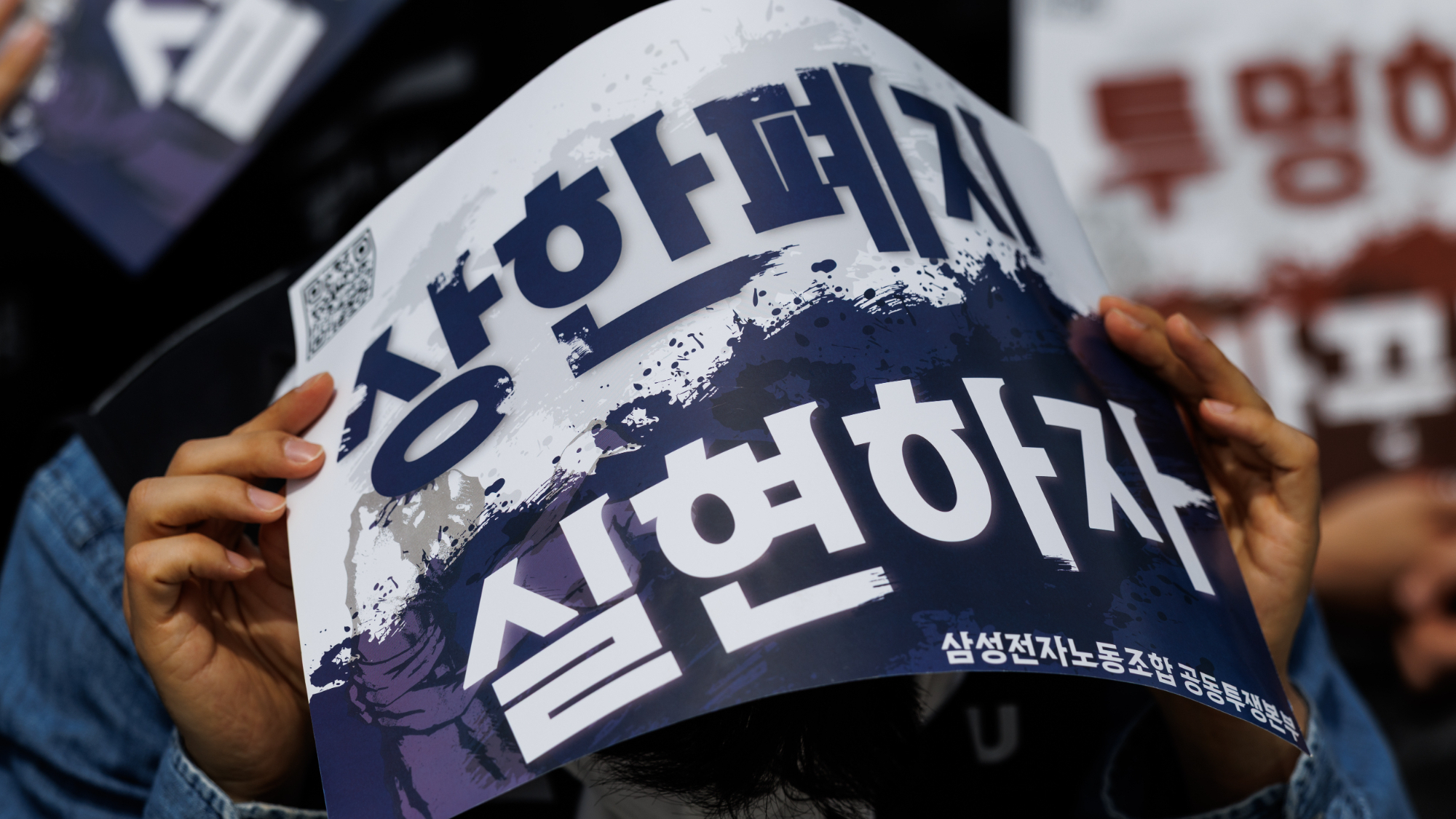
The pre-strike adjustments, described as “emergency management mode," are designed to limit losses at facilities that normally operate around the clock. However, they also mean that Samsung's chip production is already declining days before the union's 18-day walkout is scheduled to begin on May 21st.
The process involves restricting how many new wafers are fed into production lines and changing the product mix to focus on higher-value chips like HBM and advanced node semiconductors, per a source reported by the Herald.
This slowdown adds to a timeline of disruption that’ll extend well beyond the planned strike dates. KB Securities analyst Kim Dong-won estimated in a recent report that restarting and stabilizing Samsung's highly automated production lines after an 18-day stoppage could take an additional two to three weeks. Combined with this pre-strike wind-down period, Samsung's total window of reduced output could stretch to six weeks or longer.
According to the Seoul Economic Daily, daily losses could approach 3 trillion won ($2 billion) if fabrication lines are paused entirely. Professor Kwon Seok-joon at Sungkyunkwan University previously estimated that the 18-day walkout alone would cause 10 trillion to 17 trillion won ($17 billion) in direct losses, while JPMorgan has projected total losses of up to 43 trillion won ($28 billion) when factoring in labor costs and extended production disruption.
As of yesterday, May 14th, more than 43,000 workers had signed up to participate in the walkout, approaching the union's target of 50,000. "Even at the current level, more than half of the entire semiconductor (DS) division workforce is joining, and the company judges that a de facto shutdown is imminent,” a source told the Seoul Economic Daily.
Samsung sent a letter to the union today following the collapse of talks earlier this week, proposing that both sides resume talks without preconditions on Saturday, but union head Choi Seung-ho rejected the overture, telling Korean media that negotiations could take place after June 7, the scheduled end date of the strike.
Get Tom's Hardware's best news and in-depth reviews, straight to your inbox.
TrendForce projects that the strike could disrupt 3% to 4% of global DRAM supply and 2% to 3% of NAND supply, given Samsung's production share. The longer-term risk, however, may be reputational because Samsung is ramping up the supply of HBM and high-capacity server DRAM for AI infrastructure. Even brief delivery uncertainty could push customers toward SK hynix and Micron.
Luke James is a freelance writer and journalist. Although his background is in legal, he has a personal interest in all things tech, especially hardware and microelectronics, and anything regulatory.
Samsung starts winding down chip production six days before planned 18-day strike — company enters 'emergency management mode,' daily losses could hit $2 billion

 3 weeks ago
38
3 weeks ago
38








 English (US) ·