Samsung's critical union negotiations break down eight days before planned 18-day chip factory strike that's projected to cost $700 million per day — Korean PM calls emergency meeting as strike looms
3 weeks ago
30
(Image credit: Getty Images / Jung Yeon-Je)
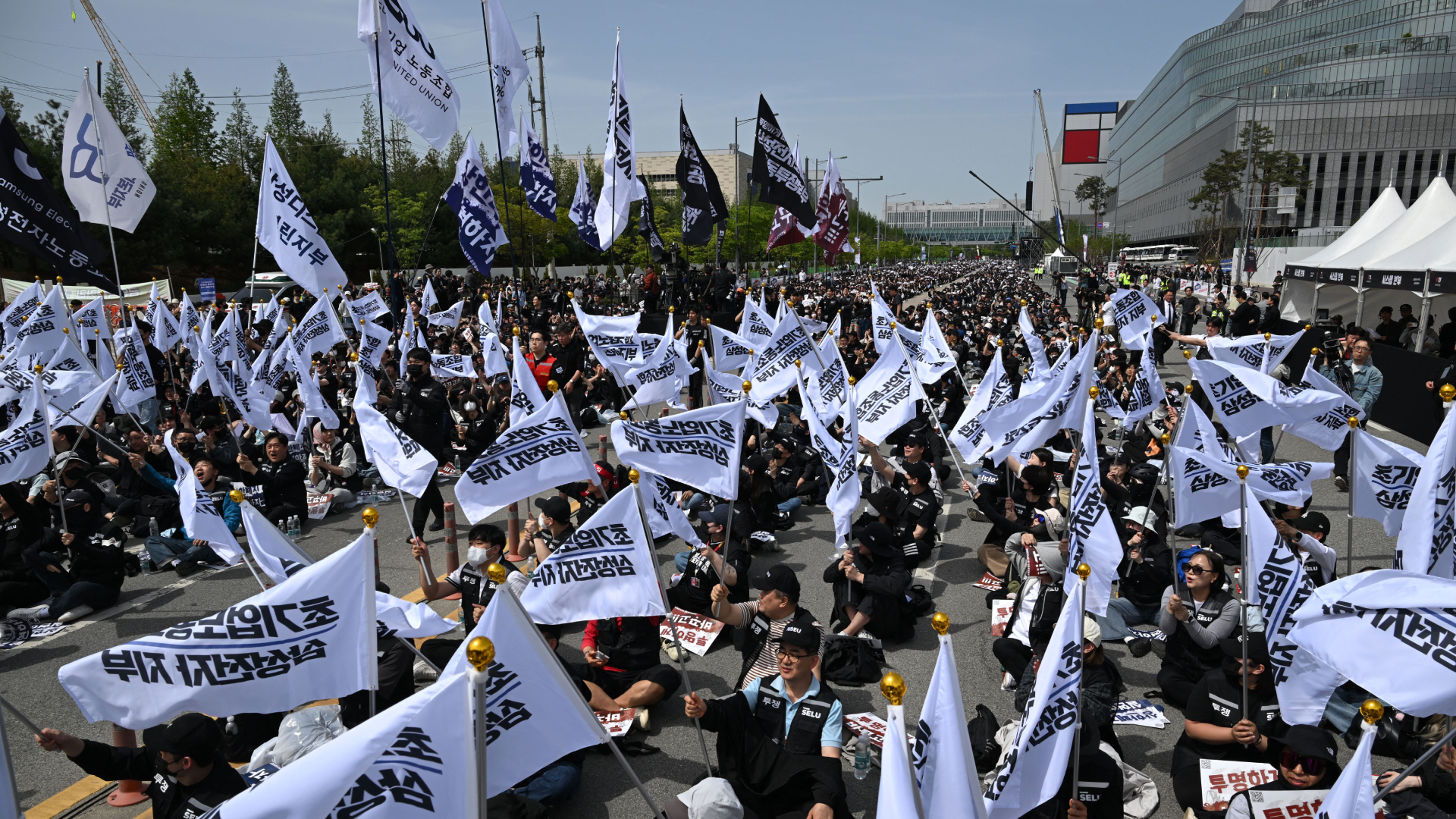
Government-mediated negotiations between Samsung Electronics and its largest labor union fell apart on Wednesday, according to Reuters, leaving just eight days before an 18-day strike that could shut down much of the world's biggest memory chip operation. The union warned that it is “no longer considering additional negotiations” until after the proposed general strike.
South Korean Prime Minister Kim Min-seok responded by convening an emergency ministerial meeting, instructing officials to closely manage the situation given what his office called the potential gravity of the impact on the national economy.
The breakdown followed two days of marathon talks brokered by South Korea's National Labor Relations Commission. The commission said it ended proceedings because of the gulf between the two sides and the union's own request to suspend discussions.
JPMorgan has estimated that an 18-day work stoppage would cost Samsung over 4 trillion won in direct revenue, roughly 1% of its semiconductor division's annual sales. Professor Song Heon-jae of the University of Seoul puts the figure higher, projecting losses of approximately 1 trillion won ($700 million) per day from factory shutdowns, Seoul Economic Daily reported on April 26. Meanwhile, the union's own estimate sits at up to 30 trillion won ($20.3 billion) in total damages.
Samsung has offered a one-time payment for 2026 but refused to commit to permanent changes in how bonuses are calculated, according to union representative Choi Seung-ho. That fell fundamentally short of the union’s demands, which include the scrapping of a cap on bonus pay currently set at 50% of base salary, and the allocation of 15% of annual operating profit to performance payouts.
While Choi said the union doesn’t plan to resume talks before the May 21st strike date, it would consider a new offer if Samsung puts one forward. Samsung said it regretted the outcome and would continue seeking dialogue.
“We spent 16 out of the 17 hours of mediation simply waiting around,” Choi said, according to Korea JoongAng Daily. “We declared the negotiations over because management kept extending the mediation without making any meaningful changes to its proposal, which appeared to be an attempt to weaken momentum for a general strike.”
Get Tom's Hardware's best news and in-depth reviews, straight to your inbox.
The collapse has raised the prospect of an emergency arbitration order, a legal mechanism that would immediately freeze industrial action for 30 days while the labor commission mediates. South Korean Labor Minister Kim Young-hoon stopped short of invoking it on Wednesday, saying the dispute should be resolved through dialogue. The union has warned that such an order would damage labor relations further.
The tool has rarely been used, and doing so would be an unusual step for the current administration, which is friendly towards unions, but the economic stakes are substantial: semiconductors accounted for 37% of South Korea's total exports in April, up from 20% a year earlier, according to government data cited by Reuters.
The union now counts more than 90,000 members, representing over 70% of Samsung's South Korean workforce. That figure has grown from roughly 73,000 earlier this month and 32,000 during Samsung's first-ever strike in 2024. A one-day walkout in April offered a preview of what a full stoppage could do: Samsung's memory fab output fell 18% on the affected shift, and contract foundry production dropped 58%. With a potential 18-day strike, the losses in production and profit could be even larger.
Luke James is a freelance writer and journalist. Although his background is in legal, he has a personal interest in all things tech, especially hardware and microelectronics, and anything regulatory.
Samsung's critical union negotiations break down eight days before planned 18-day chip factory strike that's projected to cost $700 million per day — Korean PM calls emergency meeting as strike looms

 3 weeks ago
30
3 weeks ago
30







 English (US) ·