
 2 weeks ago
25
2 weeks ago
25
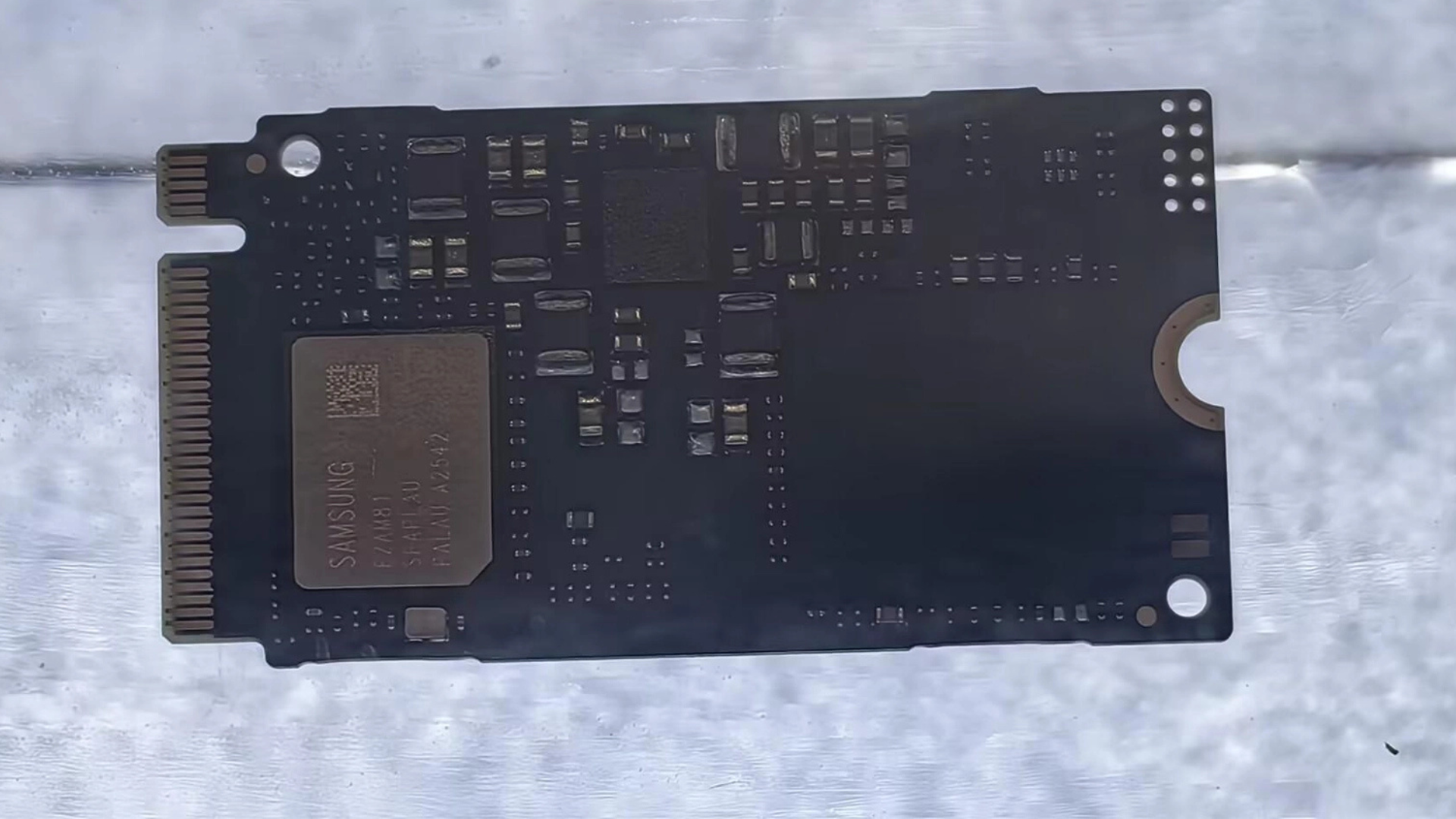
As reported by BigGo Finance, Samsung has unveiled the company's next-generation BM9K1 SSD at the China Flash Market Summit 2026 (CFMS 2026). The BM9K1, which will rival the best SSDs, is a PCIe 5.0 drive with QLC NAND and features an SSD controller built around the open-source RISC-V architecture.
Go deeper with TH Premium: AI shortages
Notable with the BM9K1 is Samsung’s departure from an Arm-based controller to a proprietary one built in-house using the open-source RISC-V instruction set architecture. The company said the RISC-V design enables more granular firmware optimization for QLC NAND management and AI-specific I/O patterns, resulting in a 23% improvement in energy efficiency over the BM9C1. That gain in efficiency is naturally going to make a big difference in thermally constrained, small-form-factor applications focused on AI.
Article continues below
Samsung BM9K1 SSD Specifications
Swipe to scroll horizontally
| Row 0 - Cell 0 | Samsung BM9K1 | Samsung BM9C1 | Micron 3610 | Samsung 9100 Pro |
Interface | PCIe 5.0 (NVMe) | PCIe 4.0 (NVMe) | PCIe 5.0 (NVMe 2.0) | 2.0)PCIe 5.0 (NVMe) |
NAND | QLC | QLC | QLC (G9 276-layer) | TLC (V8) |
Seq. read | 11.4 GB/s | 5 GB/s | 11 GB/s | 14.8 GB/s |
Seq. write | Not disclosed | 4.5 GB/s | 9.3 GB/s | 13.4 GB/s |
Controller | Samsung RISC-V | Samsung 5nm | - | Samsung 5nm Presto |
Capacities | 512GB, 1TB, 2TB | 2TB512GB, 1TB, 2TB | 1TB, 2TB, 4TB | 512GB, 1TB, 2TB, 4TB, 8TB |
With its introduction, the BM9K1 also enters a small category of similar drives. Micron’s 3610, announced at CES back in January, is the only other PCIe 5.0 QLC client SSD announced so far. The 3610 reaches 11 GB/s sequential reads and 9.3 GB/s writes, and Micron is already sampling it to OEM partners in capacities up to 4TB. Samsung's drive edges ahead in raw sequential read throughput at 11.4 GB/s, but tops out at 2TB and has not disclosed write speeds.
Both QLC drives sit well below Samsung's own TLC-based 9100 Pro and its OEM counterpart, the PM9E1, which delivers up to 14.8 GB/s of read speed using V8 TLC NAND and the 5nm Presto controller. There’s a cost trade-off, though, with QLC packing four bits per cell versus TLC's three, yielding higher density and lower per-gigabyte pricing at the expense of write endurance and sustained write performance.
Samsung plans to bring the BM9K1 to market in 2027, but hasn’t disclosed any information on pricing or form factor.

Follow Tom's Hardware on Google News, or add us as a preferred source, to get our latest news, analysis, & reviews in your feeds.





 English (US) ·