
 5 hours ago
14
5 hours ago
14
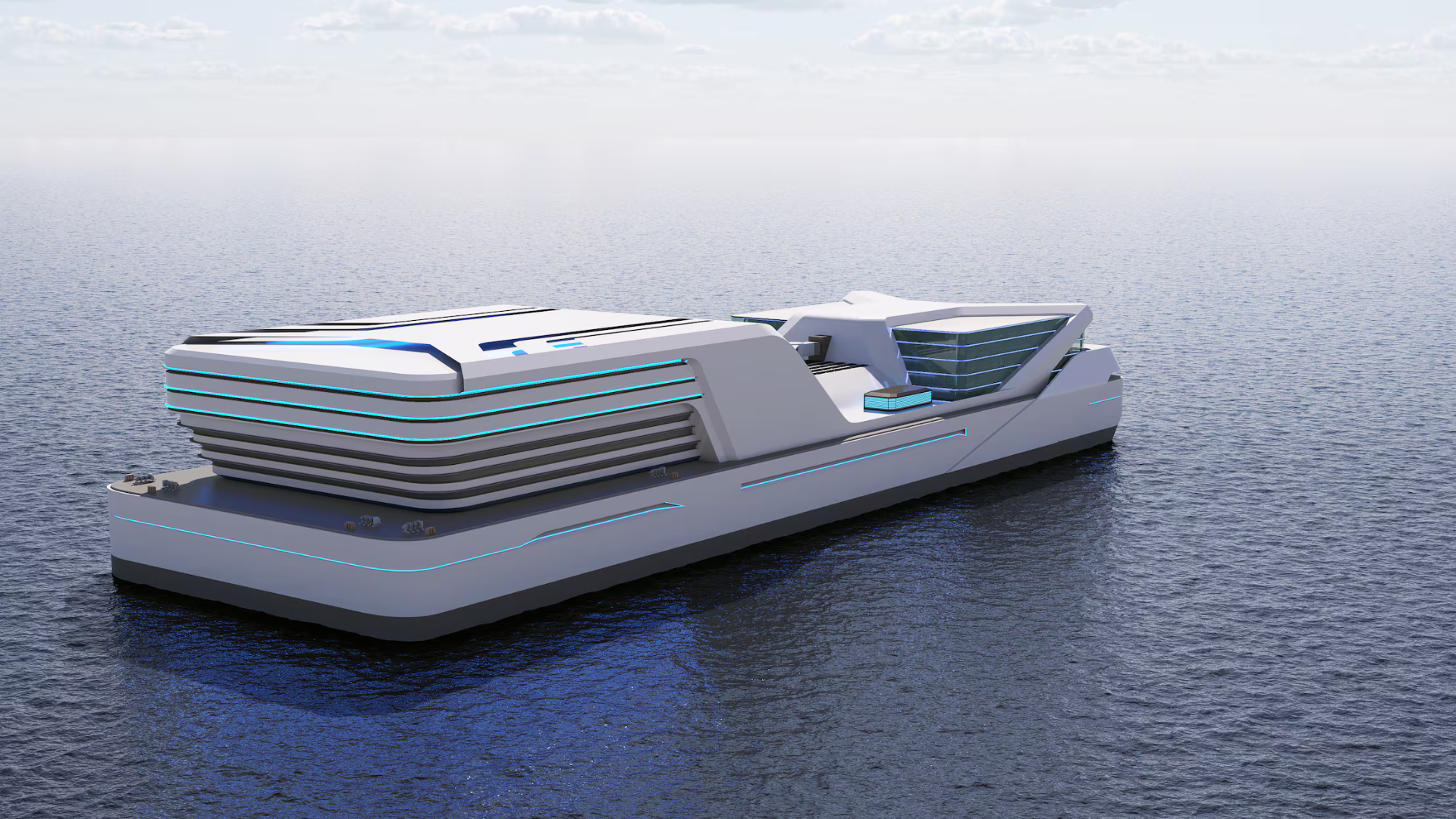
Samsung Heavy Industries signed a three-way agreement with Greek shipowner Capital Clean Energy Carriers and classification society Lloyd's Register at the Posidonia shipping exhibition in Athens earlier this month to commercialize a 50MW floating data center, according to Chosun Biz. The deal followed the signing of a joint development agreement between the shipbuilder and Supermicro to verify whether AI servers can run reliably on water, with the design pairing seawater cooling with LNG-fueled fuel cells for onboard power. Under the proposed business model, shipowners will buy the platforms and lease capacity to operators on long-term contracts, much like how they charter tankers.
Go deeper with TH Premium: AI and data centers
The memorandum of understanding splits the work three ways: Samsung Heavy handles technology and construction, Capital leads project sourcing and investment, and Lloyd's Register covers regulation and certification. Samsung Heavy signed a second memorandum with consulting arm Lloyd's Register Advisory covering feasibility studies and an assessment of the North American market.
Receiving approval in principle from the American Bureau of Shipping and Lloyd's Register in April, the 50 MW project can draw external power through subsea cables when moored in ports or coastal waters, or generate its own using solid oxide fuel cells running on LNG, sidestepping long grid connection queues that have stalled land-based projects in the U.S. and Europe. Jerry Kalogiratos, CEO of Capital Clean Energy Carriers, said in Lloyd's Register's announcement that floating data centers offer "a scalable and flexible solution, with the unique advantage of mobility."
Meanwhile, the agreement with Supermicro is designed to address the question of whether precision AI hardware can tolerate environmental factors like vibration, tilt, salt, and humidity over a multi-year service life. Samsung Heavy will develop offshore positioning control and technologies to seal out salinity and moisture, while Supermicro validates server operating conditions in river and marine environments. The shipbuilder is leaning on its floating LNG production facility experience to integrate power, cooling, networking, and safety systems into a single hull.
Besides Samsung Heavy, Japan’s MOL is also building a 73 MW floating data center with Karpowership for a 2027 deployment, China's 24MW subsea facility off Shanghai entered full operation last month, and Nautilus Data Technologies operates a much smaller 6.5MW barge at the Port of Stockton, California. Samsung Heavy also has a potential anchor tenant, having signed a letter of intent with OpenAI in October alongside Samsung's 900,000-wafer-per-month Stargate memory commitment, covering joint development of floating data centers. To date, however, there’s no signed customer contract for a named deployment.

Follow Tom's Hardware on Google News, or add us as a preferred source, to get our latest news, analysis, & reviews in your feeds.





 English (US) ·