

Another year has drawn to a close, and at the top of our best VPN rankings, the usual big dogs continue to dominate. Still, that's par for the course in a market where reliability and trust tend to win out.
Beyond the usual suspects, however, 2025 produced a run of smaller but telling changes from providers that aren't usually at the centre of the VPN conversation.
1. Norton VPN

Norton VPN has quietly had one of its busiest years to date. Known for one of the best antivirus products on the market, Norton 360, the provider is clearly trying to reposition its VPN. But, instead of chasing flashy extras, Norton spent 2025 solidifying the fundamentals.
That makes sense, because earlier versions of Norton VPN struggled to stand out. The feature set felt thin, OpenVPN performance lagged behind rivals, and device limits caused unnecessary friction, a point we highlighted in our earlier Norton VPN review.
Notably, those issues have not disappeared entirely, but the direction of travel is clear, and the changes this year directly address how the service feels in day-to-day use.
Over the course of 2025, Norton has rolled out a series of updates aimed at fixing the weak spots and strengthening the service, including:
- 25 Gbps servers in key international locations: Norton has upgraded its network in major cities such as New York, Chicago, London, and Tokyo. It now offers faster connections, fewer slowdowns at busy times, and a smoother experience for streaming, downloading, and everyday browsing.
- Five new P2P-optimised cities: Users can connect to servers specifically designed to handle P2P traffic, which means more reliable connections, positioning Norton VPN as a sturdy torrenting VPN.
- New locations, including virtual servers in India and Berlin: These additions help users connect to region-specific services and avoid being routed through distant, poorly matched servers.
- OpenVPN is now available in UDP and TCP: Users can prioritise speed or stability without the need to understand the technical differences, quietly fixing one of Norton VPN's longer-standing weaknesses.
- Independent audit of the Mimic protocol: Norton passed a third-party audit of its proprietary Mimic protocol, which is designed to disguise VPN traffic so it blends in with normal HTTPS connections and can more easily evade VPN bans. External audits are a key trust signal in the VPN industry, and this step puts Norton on a more comparable footing with providers like ExpressVPN that submit its systems to regular scrutiny.
There's more coming in 2026, and Norton has been open about its roadmap. Based on the pace of change this year, it's worth keeping a close eye on where this VPN goes next. For deeper reporting and insider detail, our ongoing coverage on TechRadar is well worth following, especially after recent behind-the-scenes access to Norton's teams.
2. NymVPN
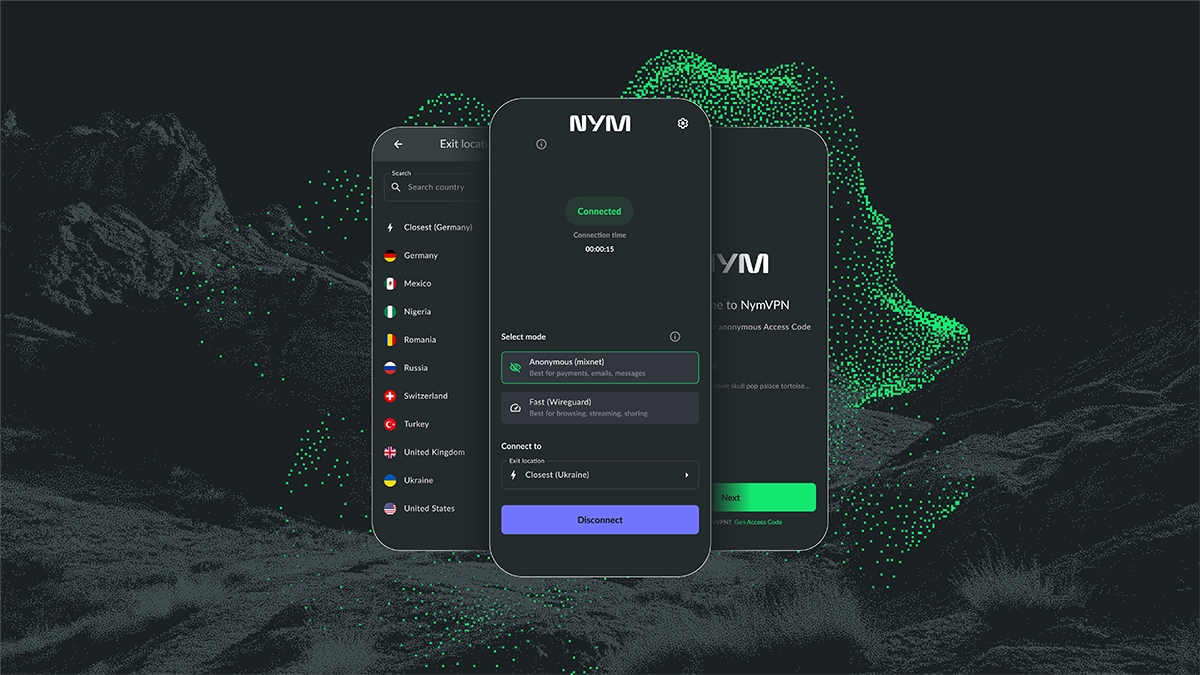
NymVPN bills itself as the world's most secure VPN, a bold claim that has caught the attention of plenty of privacy advocates in the space.
The project is backed by cryptographers, academics, and figures such as Chelsea Manning, which might suggest this is not just another marketing-led attempt to chase mainstream VPN users but a technical effort to rethink online privacy from the ground up.
After a long and sometimes rough beta phase, which we covered in our Nym VPN review, its full release arrived in March 2025.
The Switzerland-based provider's mission is clear and unapologetic: build a fully decentralised VPN that can withstand surveillance, censorship, and metadata tracking, while reducing reliance on Big Tech's data-hungry infrastructure.
At the heart of this approach is Nym's mixnet. Instead of sending traffic through a single encrypted tunnel, the mixnet routes data across multiple independent nodes, adds cover traffic, and shuffles packets to obscure timing and patterns. The result is that even metadata (who is communicating with whom and when) becomes far harder to analyse. It is closer in spirit to Tor Browser than a traditional VPN, but wrapped in a more consumer-friendly package.
NymVPN has also been sharpening its censorship-unlocking tools. Recent updates introduced QUIC support and a new Stealth API, both designed to help traffic blend in with regular internet activity and bypass deep packet inspection. Users can now choose US servers by state, which helps when content or access rules change from one region to another.
There are still rough edges, though. It's not the most beginner-friendly VPN out there, which is hardly surprising given its experimental design, and the heavy privacy tech can drain battery life faster than most users expect.
How well Nym smooths these issues out in 2026 may determine whether it remains a niche favourite or becomes a genuine force in the wider VPN space.
3. EventVPN

We are usually cautious when it comes to recommending free VPNs, and recent events explain why.
This year, researchers uncovered free VPN apps and browser extensions on Google Play and the Apple App Store that secretly routed traffic through Russian or Chinese networks, bundled foreign SDKs with military-linked ties, or acted as browser-level surveillance tools. Others were caught stealing infrastructure from legitimate providers, while some malicious extensions spied on millions of users for years before resurfacing under new names.
Even when a free VPN is legitimate, compromises are unavoidable. Services like PrivadoVPN Free and Windscribe Free are safe but rely on monthly data caps, limited server selection, or reduced performance. Proton VPN Free removes data limits, but restricts server choice and advanced features.
In short, the best free VPNs protect privacy, but only within carefully drawn boundaries.
Built by the team behind ExpressVPN, EventVPN is a rare example of a free VPN that is upfront about how it works and how it pays for itself
This is the context in which EventVPN becomes interesting. Built by the team behind ExpressVPN, EventVPN is a rare example of a free VPN that is upfront about how it works and how it pays for itself.
Instead of data harvesting or hidden tracking, it relies on an ad-supported model, something the company is unusually transparent about.
That trade-off allows EventVPN to offer unlimited bandwidth and access to many of the same security foundations as ExpressVPN, including a strict no-logs policy, kill switch, RAM-only servers, and post-quantum encryption.
The downside is obvious. Watching a 30-second ad just to connect won't suit everyone, especially frequent VPN users. EventVPN does offer an optional paid upgrade, priced at $69.99 per year, for those who want an ad-free experience.
With stricter age verification rolling out, social media bans, ongoing censorship, and rising demand for free privacy tools, EventVPN offers a more trustworthy alternative to the wave of questionable free VPNs we identified this year.
It is not perfect, but it is credible, transparent, and worth watching as it evolves through 2026.






 English (US) ·