
 5 hours ago
19
5 hours ago
19
The biggest tech show of the year kicks off next week, as some of the industry’s top players show up to Las Vegas for CES 2026. We’ll be there to see all the new product demos we can and to bring you the most exciting news from the show. Follow our coverage for a preview of all the new tech these companies are planning to launch in 2026.
Expect to see the usual suspects: laptops, smart home gadgets, and TVs, and a whole lot more wearables and health tech. We’re anticipating seeing more products with AI integration. Also, robots. Perhaps, humanoids even.
Follow along with CES 2026
Read all the announcements live from CES 2026.
CES 2026 officially starts on Tuesday, January 6th, but stay tuned for news and announcements starting Sunday ahead of the show floor opening, when there are also lots of press conferences. Here are the major beats we’re expecting to see at the show.

Laptops are always big at CES, with most major companies — save for Apple — announcing new models. They range from iterative spec bumps to whole new designs. Plus, there’s always the occasional concept that may or may never come out.
CES 2026 should bring new laptops featuring three new chips: Intel’s Panther Lake, Qualcomm’s Snapdragon X2, and AMD’s rumored “Gorgon Point” processors. Intel and Qualcomm are hyping up the efficiency of their new chips while simultaneously emphasizing graphics power — which always sounds too good to be true and often is. But battery life ranges from good to excellent among current offerings, and AMD proved with Strix Halo that integrated graphics could be downright impressive. I’m intrigued to see how things progress from here, especially in a year that doesn’t have new Nvidia GPUs. (But then again, Nvidia may soon compete in a different way.)
Regardless of how the latest chip showdown shakes out, I hope we see more unique ideas in laptop form factors. Give me more rollables, dual-screens, foldables, or any other clever uses of screen real estate that can be dreamed up. But like my favorite laptop from the last CES, let’s hope the radical stuff makes it past the concept stage.
- Antonio G. Di Benedetto
Robots and smart locks and AI, oh my! CES 2026 will be overrun by robots. From ever-wilder vacuums, pool cleaners, and lawn mowers, to humanoid bots with hands, limbs, and deeper intelligence, this will be the year smart home robotics moves from science fiction to science fact.
Will we all have humanoids doing our laundry by the end of the year? Nope. But the idea of robotic helpers, in some form, will soon be mainstream, thanks to huge advances in computer vision. And it all kicks off next week in Vegas.
This will be the year smart home robotics moves from science fiction to science fact
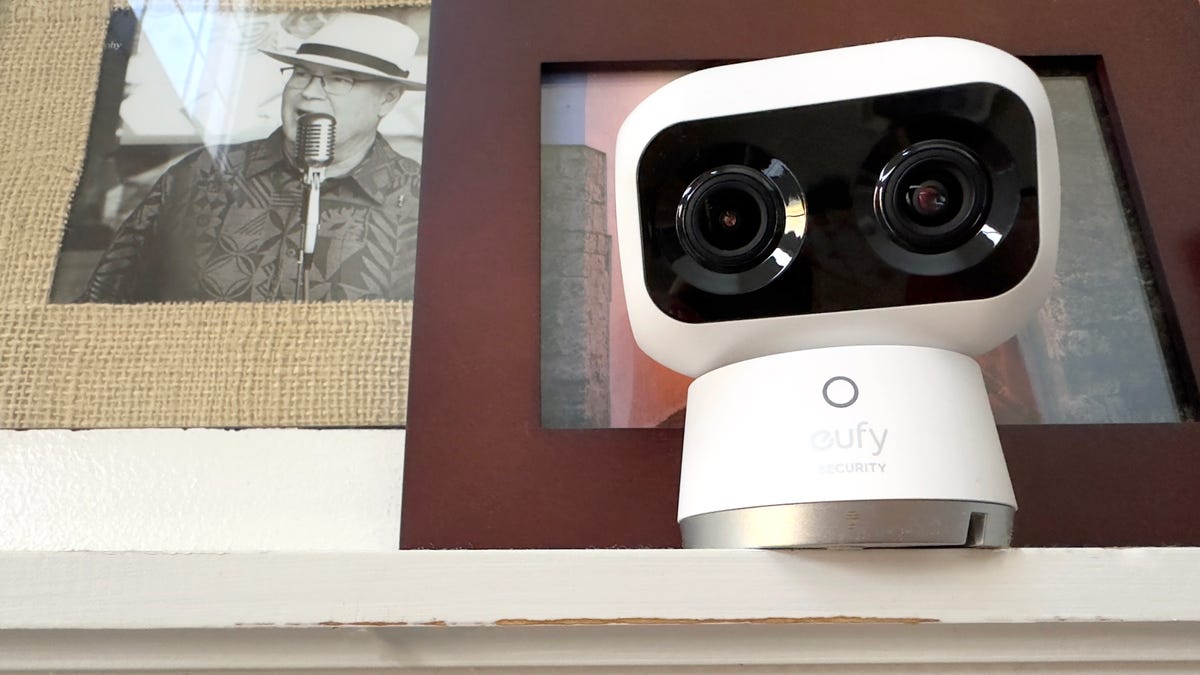
Similarly, AI is powering advances in security cameras, moving them beyond pure surveillance and into a more integral role in home automation. Expect new capabilities that use deeper intelligence to provide much-needed context. Cameras becoming part of Matter is also a step forward here, and I hope to see companies announce support for the standard — even though the platforms are lagging behind.
The other big trend will be smart locks. Yes, I said this last year (and I was right), but delays around the Aliro standard slowed the onslaught. Still, smart locks remain the hottest thing in the smart home — being both an excellent entry point (ha) and a lynchpin for a fully integrated home. Expect to, once again, see a slew of palm, facial, and UWB-based unlocking locks, along with better form factors, as tech companies finally accept that not everyone wants Star Trek–style hardware on their front doors.
- Jennifer Tuohy
CES 2025 was a big year for PC gamers — new flagship Nvidia graphics cards, SteamOS handhelds, and 27-inch 240Hz 4K OLED displays — but don’t expect 2026 to offer the same! On the PC side of things, Nvidia’s RTX 50 Super has likely been postponed, we can’t trust Intel’s latest desktop GPU tease, and we’re not expecting gaming GPUs from AMD. The historically splashy Razer doesn’t have a booth on the floor for the second year in a row, and the “Gaming / XR” chunk of the Las Vegas Convention Center looks like it’s only tangentially about gaming this year: it looks like we’ll see more video glasses there than anything else!
It looks like we’ll see more video glasses there than anything else!
It seems like Lenovo will have a rollable gaming laptop and a SteamOS version of the existing Legion Go 2 handheld, and I’m really curious how integrated graphics in Intel’s and in Qualcomm’s latest laptop chips might perform and whether they’ll fit in handhelds too. Lastly, Lego is going to be at CES for the first time in years…
- Sean Hollister

What began with last year’s CES — when Hisense revealed its first RGB Mini LED TV, which it officially released this past summer — is primed to blow up at CES 2026 when every company will likely show their own RGB LED TVs. Samsung and LG have already announced plans to release smaller sizes, with Samsung offering its 2026 Micro RGB LED TVs with panels ranging from 55 to 100 inches, and LG debuting its first Micro RGB evo TVs in three sizes of 75, 86, and 100 inches.
Last September, TCL announced two new RGB LED TVs for the Chinese market and there are expectations of similar news for the US and Europe at CES. And I hope Hisense will extend its UX line into smaller screen sizes. (While Sony showed off its RGB LED in 2025 and filed a patent for something called True RGB, it hasn’t made major TV news at CES for a few years. I don’t expect that to change in 2026.)
The big question that has yet to be answered is how early into 2026 will we see any of them for sale and how much they’ll cost. Both the 115-inch Samsung Micro RGB LED TV and 116-inch Hisense RGB Mini LED in 2025 were in the $30,000 ballpark, with a 100-inch version of the Hisense announced for $19,999. The technological advancements made to RGB LED over the past year, and the promise of stiff competition, is sure to bring prices closer to a more manageable range. Once CES begins, I hope we’ll find out exactly how manageable.
- John Higgins
CES is not for normie phones. The phones that make it to CES are weirdo phones, and the number-one weirdo phone I’m hoping to see one way or another is the Samsung Galaxy Z Trifold. Samsung isn’t usually one for showing off phones at the show; the S-series usually gets a refresh a couple of weeks later in January. But this year might be different: the Trifold just launched in Korea, and CES seems like a nice big stage for a global debut. I am ready, in my heart of hearts, for a phone with two hinges.
I think it’s a fair bet that we’ll see this double-folding beaut at CES
Will it be excessive? Undoubtedly. Will it cost a buttload of money? You know it. But think of all the things you can do with a phone that’s also a proper 10-inch tablet. Maybe this is the phone that will deliver on the promise of leaving my laptop at home. Are you there, DeX? It’s me, Allison. Either way, it’s gonna be so sick the first time I fold up this phone and then fold it again. I think it’s a fair bet that we’ll see this double-folding beaut at CES, and what better way to usher in the Year of the Folding Phone?
- Allison Johnson
Wearables and health tech

For so many years, wearables went hand-in-hand with health and fitness tracking. This year, I’m expecting to see fewer fitness trackers and more XR and AI devices. Specifically, smart glasses. They were a big fixture at CES 2025, and I see that trend continuing into 2026. But while the commercial market is dominated by so-called AI glasses — lightweight devices like the Ray-Ban Meta glasses — there’s much more variety at CES. I expect we’ll see some smart glasses that blur the line with headsets and maybe some interesting takes on how to embed displays.
On the health front, I wouldn’t be surprised if we see the word “longevity” tacked onto products. Think devices that are meant to help you live longer or prevent chronic diseases. Unfortunately, that means bodily fluids like blood and urine. (Why? To try and get a window into hormonal and metabolic health.) We’ve already seen this from Whoop, Oura, and Withings in 2025, so I expect we’ll see more experimental takes from smaller companies at the show.
- Victoria Song
Follow topics and authors from this story to see more like this in your personalized homepage feed and to receive email updates.




 English (US) ·