
 3 hours ago
25
State of the Video Game Industry w/Lord British - YouTube
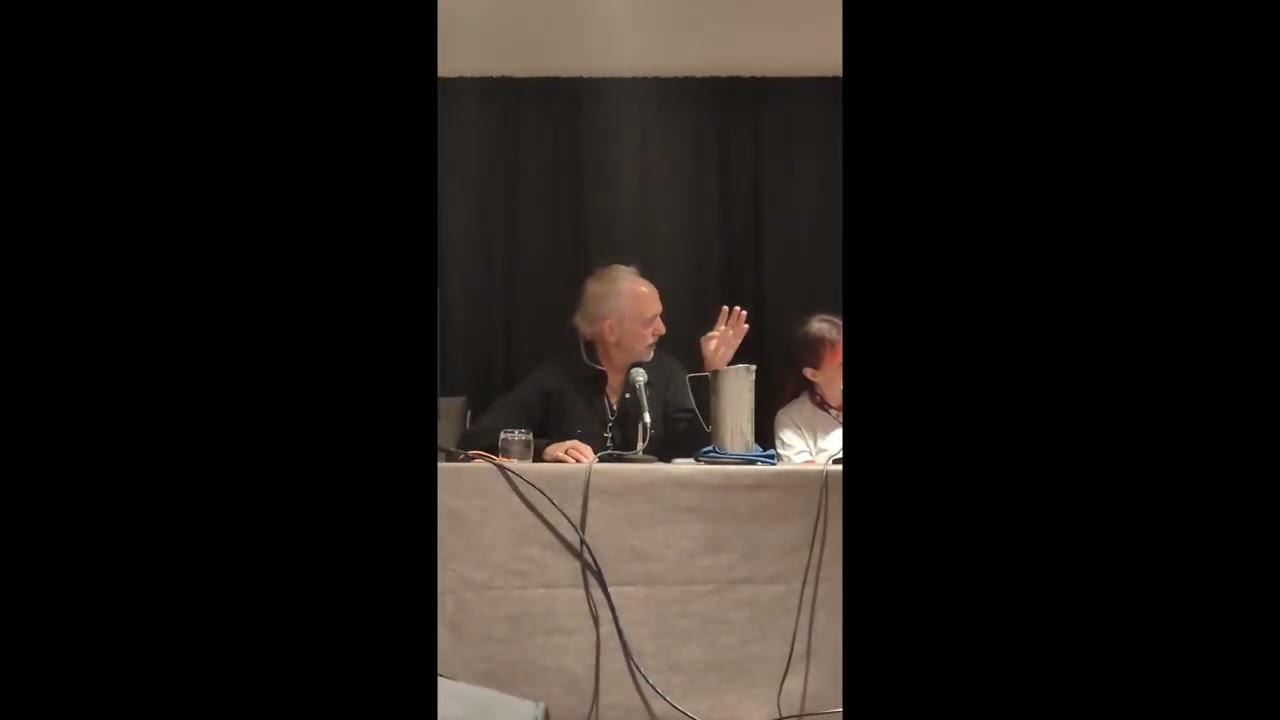
Ultima creator Richard Garriott was one of several developers on a recent panel hosted by the Georgia Game Developers Association, and Lord British was in fine form. Calling himself the "great-grandpa" of the group, he began by summarizing the current problems faced by the videogame industry.
"It's not just one thing," Garriott began. "I think if it was one thing it would be a lot easier to diagnose and come back from, but it's a lot of folks who don't understand videogames trying to make money off of videogames, it's a political climate, it's a billion things. All the threads have woven together into this horrible knot that we're seeing now."
He went on to describe a cycle he's seen play out multiple times over his years in the industry, where a technological advance comes along and everyone races to make a simple game that highlights that advance—whether it's the CD-ROM or a 3D-rendering pipeline or the internet—and only in the short gaps between these leaps forward is there much demand for something deeper.
"That cycle has been normal," Garriott said. "But we're at a new one, and this new one is machines are now fast enough to where the bells and whistles are no longer what's important." Without another advance having the same impact, he said, "we're at this kind of creative cliff where I think people don't know exactly what to do to prevent it and I think we've lost a lot of the original creators that were associated with those IPs and the bigger companies, and so I think we're floundering."
Garriott also had something to say about the way publishers have responded to the current state of the industry—by canceling games and laying off staff. Referring to his own publisher, Origin Systems, which he sold to EA in 1992, Garriott said, "Origin pre-EA, we never cancelled a project. Our theory was that if that team is capable of getting across the finish line, even if it doesn't sell well, they'll now know what it feels like to finish. And they will get feedback from the sales and the public as to what they did and didn't do right and so that team will be more strong, the individuals will be stronger, and we'll be able to circle back and do a more competent game next time.
"If you cancel a project, that means all those people on that team think you the publisher suck, because obviously their idea must've been brilliant, and so your willingness to cancel it was not their fault, but you the evil publisher. And half of them are probably going to leave or get fired, and maybe you'll scoop a few of them over into some other project that's now the priority project, but we thought that was a bad move on our own."
Things changed once EA snapped up Origin and took control, however. After that? "We canceled more projects than we completed by a long shot," Garriott said.




 English (US) ·