
I didn’t see a single rat during my time with Resonance: A Plague Tale Legacy. That wouldn’t be worth remarking on in 99.99 percent of game reviews, but 99.99 percent of game reviews aren’t discussing the latest entry in a series that, until now, was set during a fantastical version of the Bubonic Plague. A Plague Tale is the one franchise that promised that, if you bravely ventured along its dimly lit corridors, you would encounter rodents doing stuff you’d never seen rodents do before; devouring the skin off soldiers’ bones like you might clean a chicken wing, moving in waves to wreak havoc on medieval infrastructure, and whirling around in tornadoes at the behest of an evil Catholic priest. As such, it’s a bit surprising that the only time rats are invoked in this spin-off, it’s as an insult directed at you and yours.
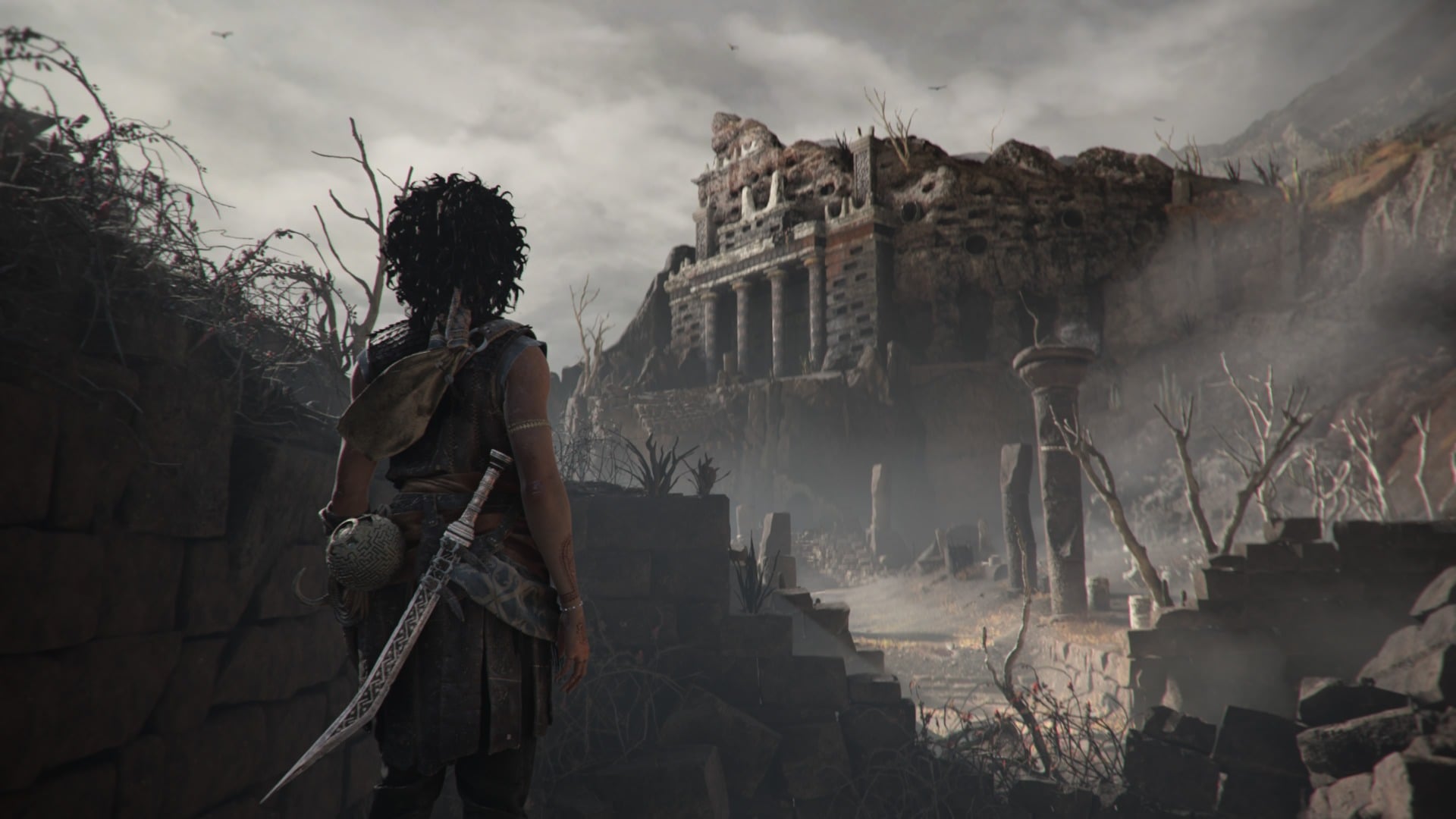
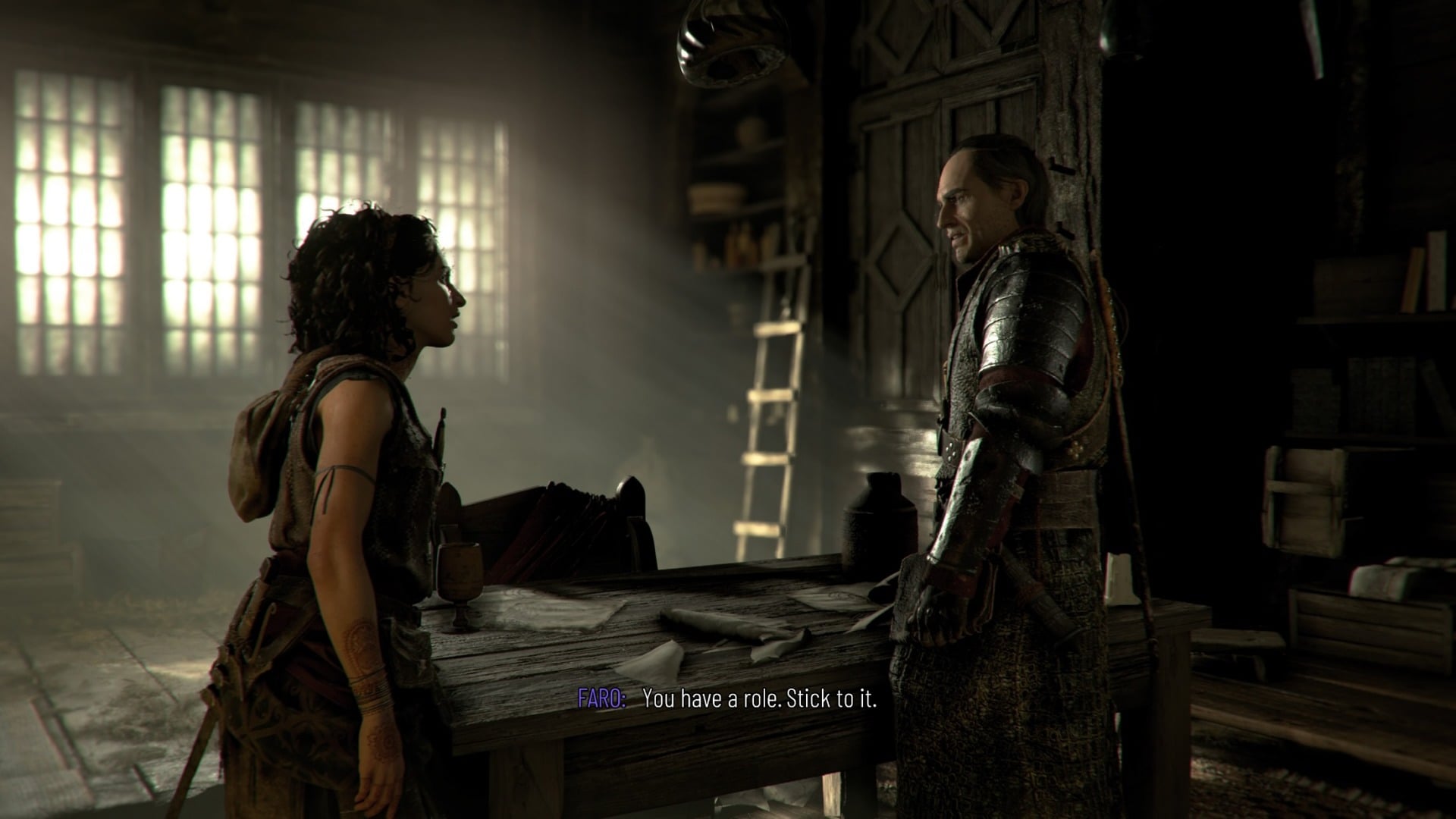
You, in this case, being Sophia, the pirate smuggler who, in 2022’s A Plague Tale: Requiem, aided series leads Amicia and Hugo de Rune in their quest to reach a mysterious island hiding magical secrets. Yours, in this case, being the misfit pirate family who raised her. As this third-person action-adventure game begins, Sophia recounts the time she spent in a convent as a child, forced by nuns to draw the contents of her supernatural visions. She’s quickly rescued by her kindhearted father, Alec, and his right-hand man, Faro, who brutally slits one of the nuns’ throats. When Alec is killed during the latest in a long line of recurring expeditions to a mysterious island—a bit of a motif in this series—which the gang believes holds the key to understanding Sophia’s visions (plus plenty of treasure), Faro takes Sophia in and raises her.
-
Back of the Box Quote:
“For Uncharted fans who miss when the games had ghouls and yetis.”
-
Developer:
Asobo Studio
-
Type of Game:
Late Middle Ages action-adventure
-
Liked:
Fast and deadly action combat
-
Disliked:
Rushed character development
-
Platforms:
PS5, PC (played), Xbox Series X|S
-
Release Date:
August 27, 2026
-
Played:
15 hours
But Sophia grows up and, as she does, Faro becomes more and more obsessed with the island, all the while denying Sophia a part in its exploration. Trust between the two deteriorates and so, when a job goes bad, Faro naturally believes Sophia was the rat that fed information to their enemies. Cut loose from her gang, Sophia and her girlfriend, Leni, set out for the island in an adventure that will take them down into its depths and the depths of history.
(At least, it seems like we’re supposed to believe Leni is Sophia’s girlfriend; the game never explicitly defines their relationship but in Leni’s introduction, Sophia tells us, “I would’ve done anything for her…”).
 Asobo Studio / Kotaku
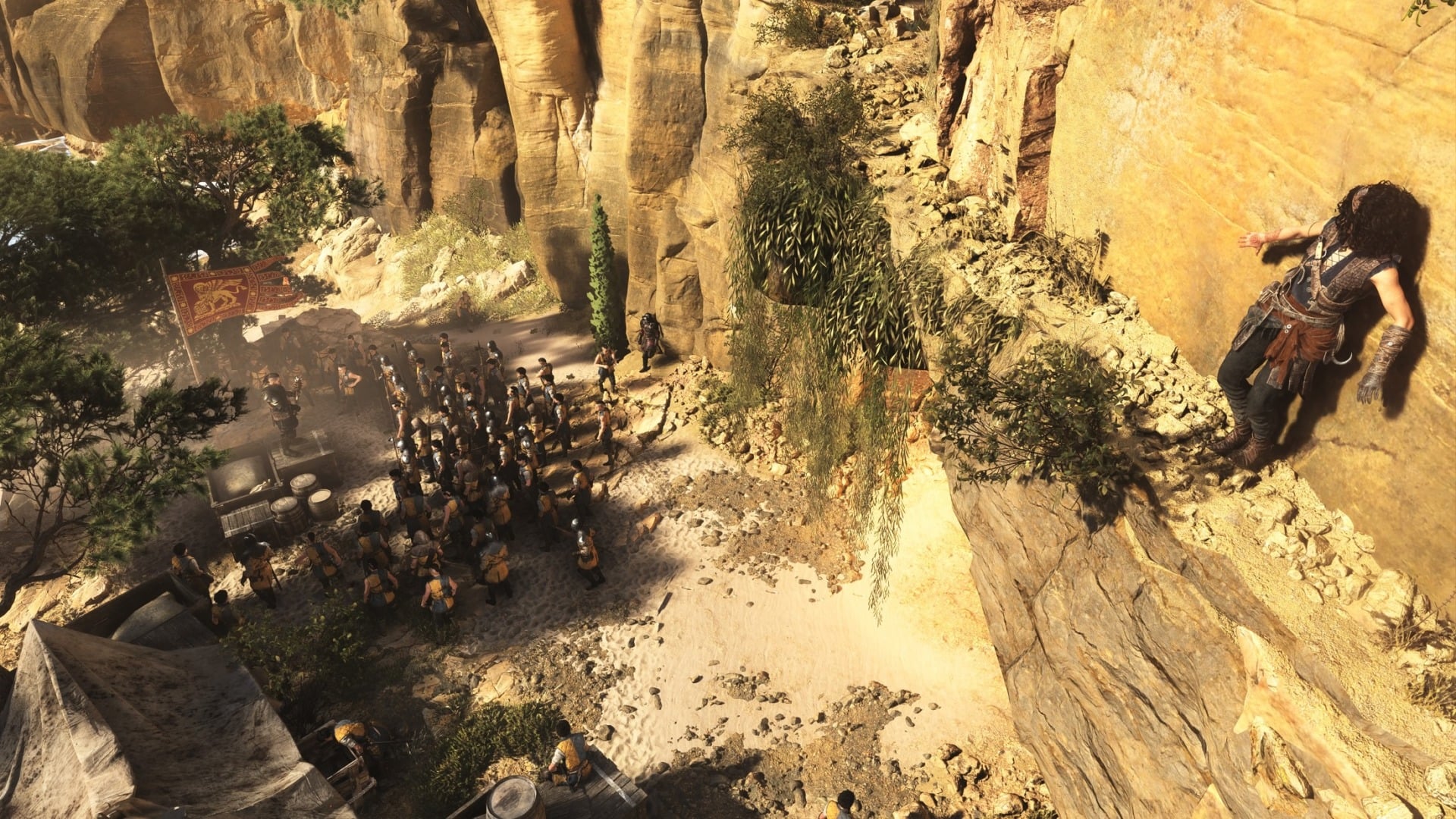
As Sophia and Leni explore the island, Resonance begins to feel extremely familiar. A Plague Tale has historically offered a double-A alternative to The Last of Us: both stealth-action series set in a dark world populated by hordes of mindless creatures, in which players take on the role of an older character protecting a younger, more vulnerable one who has an inexplicable tie to the plague destroying their world. But with Sophia at the helm, Resonance embraces Uncharted, instead. You run along rooftops, use a notebook full of sketches and diagrams to solve puzzles in ancient, cavernous test chambers, redirect beams of light, narrowly avoid spike traps, platform along mountain ledges, and squeeze through many crevices in rock walls.
That obvious inspiration becomes a bit of a problem given how fixated Resonance is on trapping you on this island. Uncharted kept its formula light and lively with a healthy dose of globe-trotting. You never got too tired of one locale because the game would spirit you away to another on the other side of the world. Jungles gave way to mountains, mountains gave way to deserts, deserts gave way to cities, and so on.
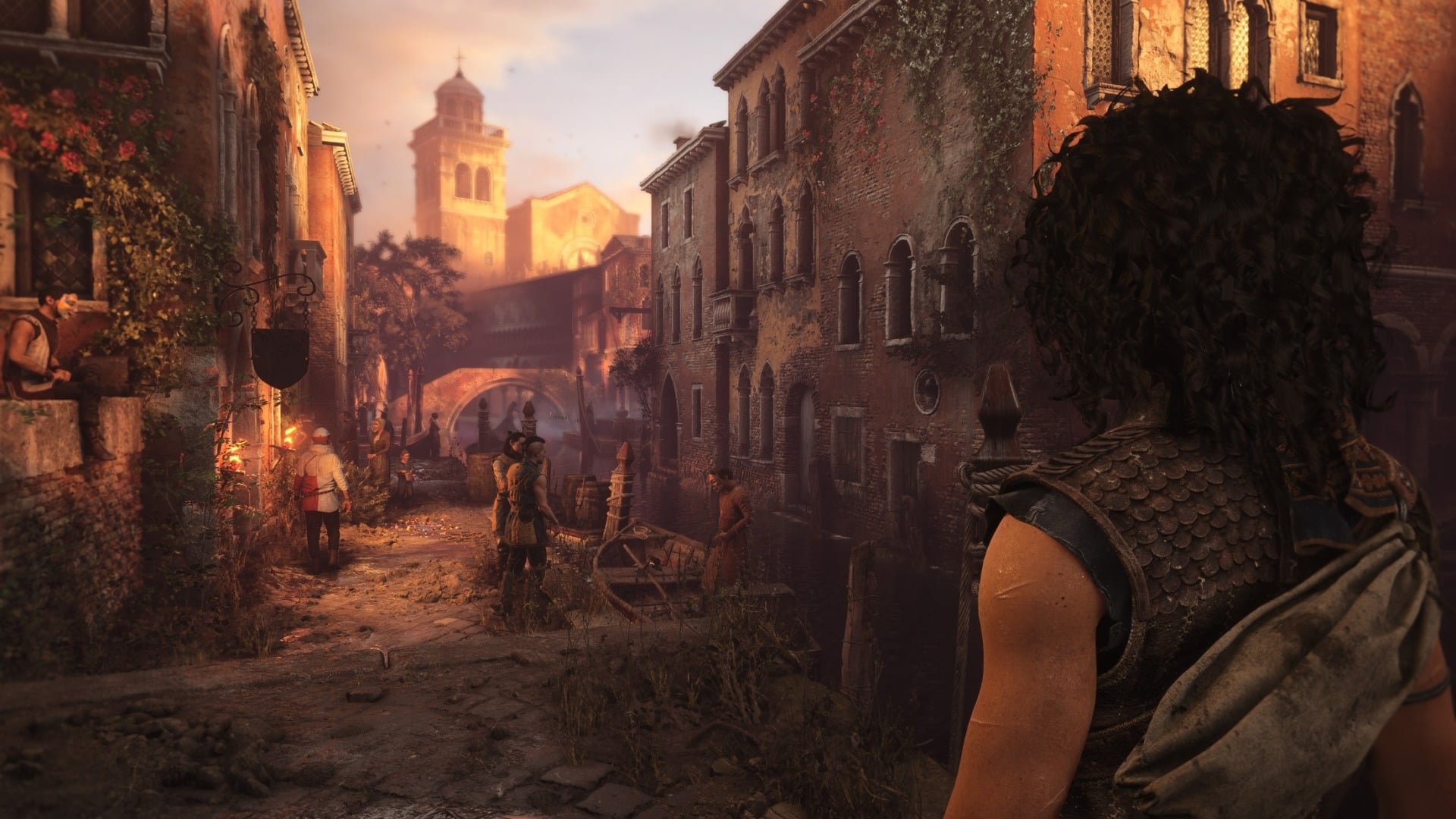
Initially it seems like Resonance will do something similar. Within the first hour, you’ve seen the convent, your crew’s shanty-town smuggler camp, a bandit-ridden beach, and the canals and rooftops of Venice. But then you arrive on the island. And stay there. And continue to stay there. And then the credits roll. The island has varied environments, but they skew darker and darker, grimmer and grimmer, as the stakes rise. The appeal of Sophia was that she was a pirate with a heart of gold. Resonance plays up that heart of gold, but keeps the pirate ship docked.
 Asobo Studio / Kotaku
The monotony of island time is broken up by intermittent flashbacks to the land’s ancient past. Every so often, Sophia gets a That’s So Raven look on her face and suddenly we’re transported into the body of Theseus, the famous slayer of the minotaur. As Sophia explores these sections, she finds clues that point her toward tools and abilities she can use to progress in the present—most notably an orb which can channel light in various ways and which serves as a key to the island’s many doors. The flashback conceit provides an interesting push and pull, and I was always eager to see how this storyline played out.
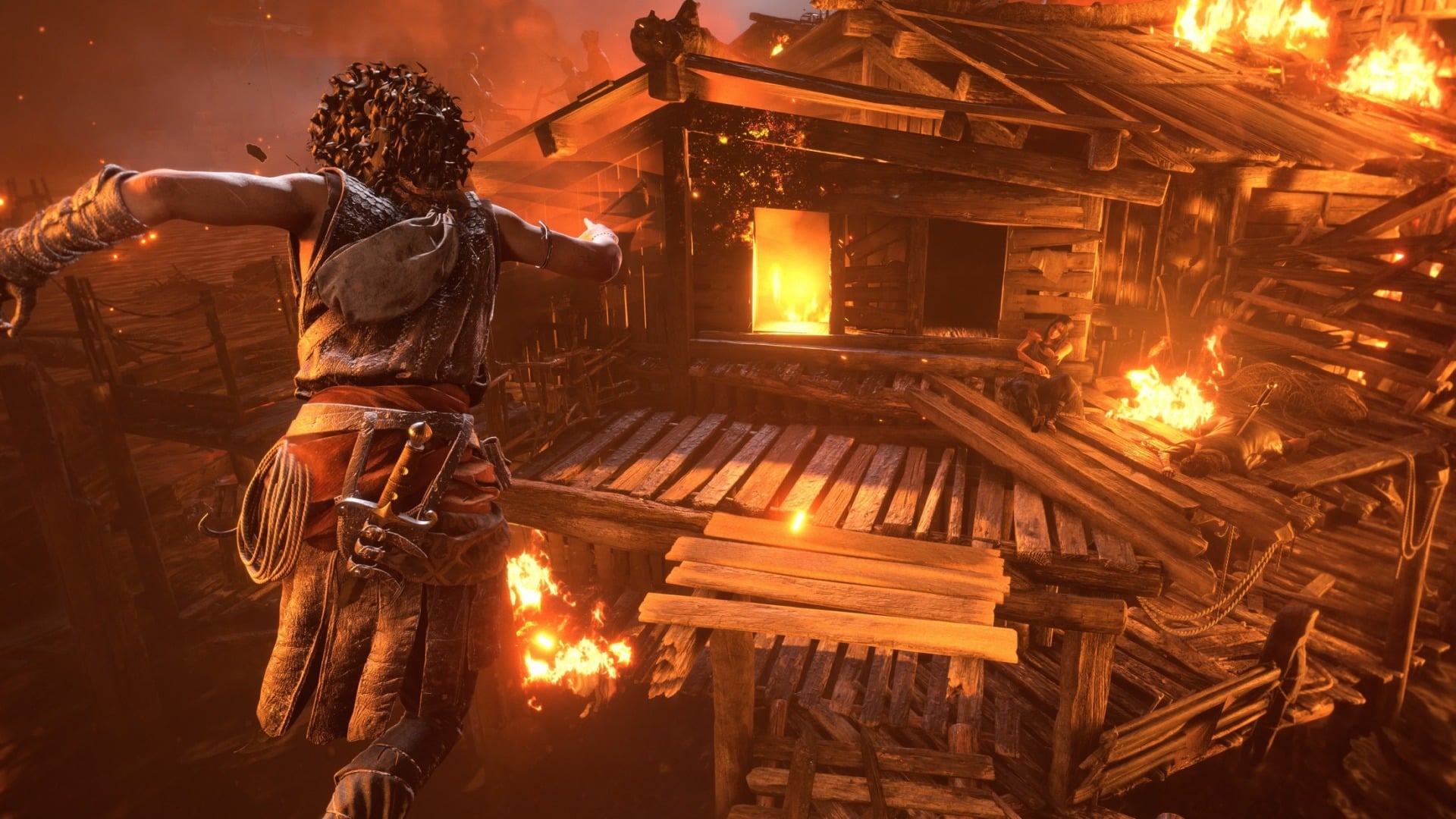
And see is the operative word. Resonance is an impressive-looking game, a major step up from Asobo’s work on A Plague Tale: Requiem. I frequently found myself switching into photo mode to snap pictures of Sophia running along burning rooftops or perched on a cliff overlooking the crystalline ocean. In fact, everything looks so good that the increasing sameness becomes that much more of a liability. Are we really wasting time in a game this pretty on the 30th rocky tunnel?
As the game progresses, Resonance‘s combat becomes its biggest point of differentiation—from Uncharted and from past A Plague Tale games. The island is lousy with soldiers searching for the treasure—the ones who refer to Sophia and co. as vermin—and Sophia will slash, slice, and kick them to get to her goal. Sophia’s sword-wielding prowess places Resonance firmly in the tradition of Rocksteady’s Arkham games. She can’t manually lock on to an opponent. Instead, she’ll automatically focus on the one closest. Once they’re defeated, she launches herself toward another with that satisfying, classic magnetic snap.
 Asobo Studio / Kotaku
This kinetic combat is complicated by Sophia’s bite-sized health bar. She can only take three hits before she’s down for the count, which makes fights fast and deadly. If you blink, you’re dead. It took a few hours for me to get to grips with the game’s timing. I’ve recently played a bit of Ghost of Yotei and, in that game, you learn to study your opponents’ stance, as the movement of their feet is the most reliable indicator that they’re about to attack. That isn’t the case in Resonance. You need to parry a few seconds sooner than felt natural, and I spent the opening hours worried that the game’s difficulty might end up being prohibitive or, at least tougher than what Plague Tale fans, accustomed to sneaking around, might want from a spin-off.
Thankfully, the game quickly doles out XP in the form of “Resonance Points.” Developer Asobo smartly hands these out for multiple forms of achievement, rather than tying them exclusively to combat performance, though you can expect to earn a few after particularly tough fights. But you’ll also find Resonance Points glinting on the ground in out-of-the-way areas, an encouragement to put as much time into exploring the island as you put into eviscerating the soldiers crawling through its caverns. Though this does raise the question of what, exactly, Sophia is finding when she picks these points up off the ground. Have experience points been physical objects this whole time?
Resonance Points can be used to unlock moves that make Sophia a better fighter. One move I purchased early on boosted the effectiveness of my dodge, allowing Sophia to not only evade enemies but send them stumbling in the opposite direction for good measure. Over the course of her journey, Sophia finds new swords, too, and I like the simplicity with which Asobo implements these new weapons. You never have to compare attack and defense stats to suss out which is better; instead, each weapon has an ability that differentiates it from others. When I was in a fight against a horde of enemies, I opted for the sword which increased the stagger damage I dealt with each dead goon. But that buff becomes useless in a one-on-one boss fight, so I switched it out with no negative effects. I wouldn’t want this approach to weapons in every action RPG, but it makes sense for Resonance, which is looking to welcome A Plague Tale fans to a different genre.
 Asobo Studio / Kotaku
Though the combat has a satisfying progression, the story and characters aren’t quite as solid. Sophia loses a bit of her spark here—it reminds me of the downgrade Jurassic Park‘s Ian Malcolm suffered when he was promoted from flavorful supporting player to bland protagonist in The Lost World: Jurassic Park—with her devil-may-care attitude crushed beneath the weight of the story. She ends up feeling too much like Amicia, plaintive and earnest.
This issue stems from Asobo’s apparent unwillingness to spend too much time on set-up. Alec dies in the first 15 minutes; you just haven’t spent enough time with him to really care. Sophia grows to hate Faro but the game yada-yadas over why and we never get a clear sense of how the animosity grew. Leni gets similarly short shrift, as the story skips over the crucial get-to-know-you moments that would help us understand why Sophia cares for her. I couldn’t help thinking back to the long patrol mission in The Last of Us Part 2, and how it gave Ellie and Dina ample time to talk, get to know each other better, and communicate their dynamic to the player. One of the game’s central mysteries—who ratted out the crew?—feels muted because of this truncation. We just don’t know these characters well enough to feel invested in their potential treachery.
Sophia’s enemies may call her “rat” as an insult but, after 15 hours with Resonance: A Plague Tale Legacy, I’ve come to appreciate the series’ mousy mascot more than ever. There’s plenty to enjoy here, and it’s far from time for players to flee the ship. But I can’t escape the feeling that this game has eschewed a core aspect of the series’ identity without something equally interesting to take its place. Rats may be absent, but something has been nibbling around the edges.







 English (US) ·