
 3 weeks ago
32
3 weeks ago
32
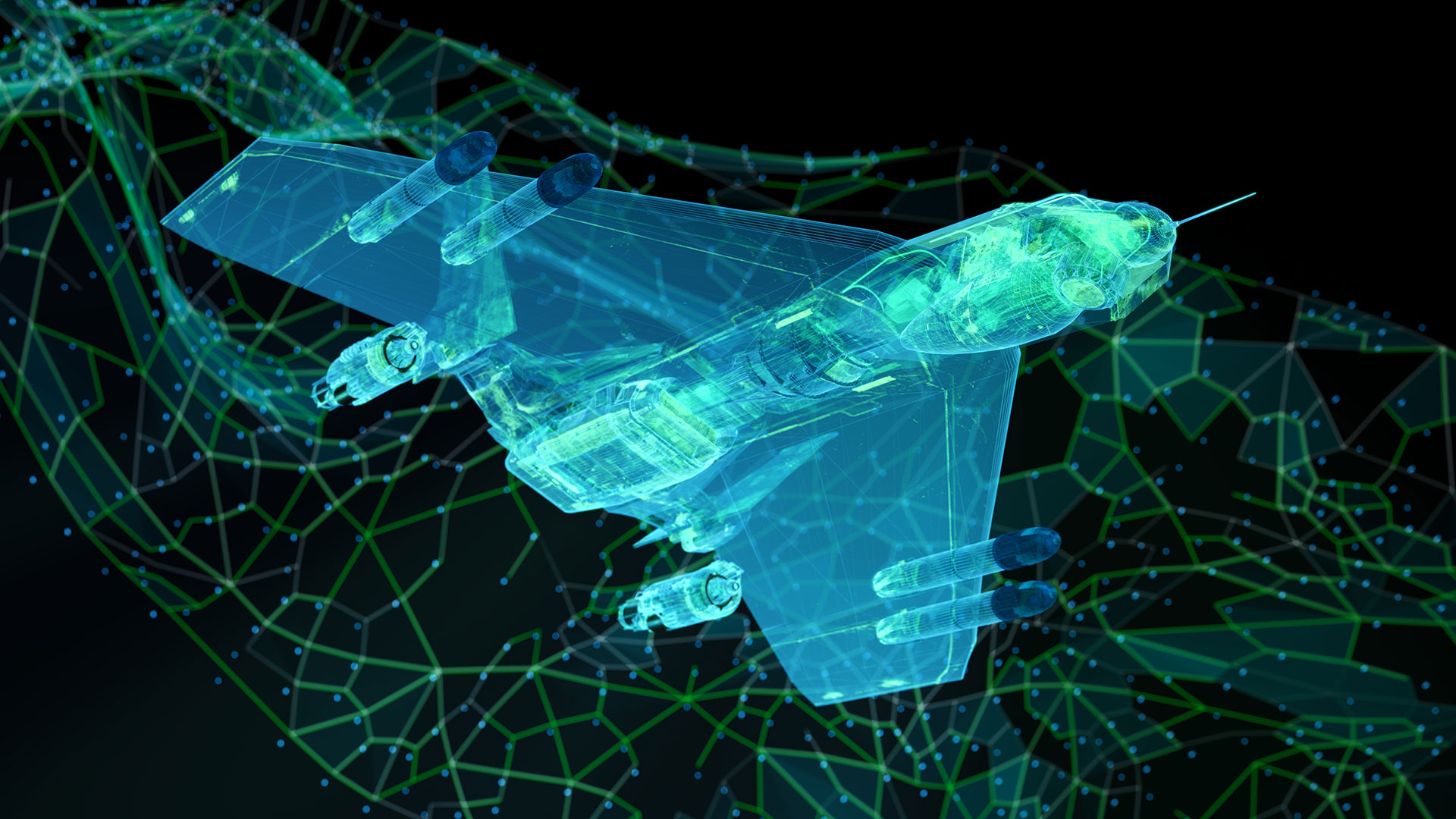
A Turkish researcher just shared details of a sprayable radar absorbent material (RAM) designed to be applied to drones and other small uncrewed aerial vehicles (UAVs). According to the Defense Blog, Yunus İnce and their small defense research firm have been working on the material, called Kürşat 3.0, for more than seven years. İnce shared test footage of the product with the publication, showing the claimed 43dB signal attenuation. This is a greater reduction compared to broadband coatings tested by academic researchers in standardized test conditions. However, the company’s claims must still be validated by a third-party expert to prove that it actually works and makes it harder to detect UAVs.
Drone warfare has exploded in recent years, with the ongoing Russian invasion of Ukraine, which started in 2022, showing how these cheap and tiny gadgets could effectively stop the advance of a multi-million-dollar tank column. Both sides of the conflict have wholeheartedly adopted UAVs as part of their military tactics, and militaries around the globe are devising cost-effective ways of taking down this new threat, like using lasers, microwaves, or good ol’ kinetic energy. Drone operators and manufacturers are not taking these threats lightly, with companies working to make them harder to detect via radar.
Traditional low-observability technologies use a combination of deflection and absorption to reduce their radar signature. This is why the F-117 Nighthawk, the first true operational stealth aircraft, had multiple angular surfaces instead of the usual smooth flowing skin found on fighter jets. Computing advancements allowed engineers to combine aerodynamics and radar deflection, which is why modern stealth aircraft like the B-21 Raider and F-35 Joint Strike Fighter are much more contoured compared to the F-117. This signal deflection accounts for the majority of an aircraft’s stealth capabilities, with RAM turning the radar waves that cannot deflect away from the receiver into heat. İnce says that the RAM their team developed uses volcanic basalt and pumice structures. These materials could plausibly work as their microscopic porosity could be engineered to trap electromagnetic signals to avoid detection.
A UAV’s advantage is its small size and low cost, making it cost-inefficient to produce specialized radar-deflecting designs. However, the Kürşat 3.0 could be a game-changer if other scientists can confirm that it really works. Many UAVs are so small that it’s difficult to detect them at longer distances — covering them with this “spray-on” RAM would only make it harder for defenders to detect and lock on to them using traditional radar sets.
This coating is not the be-all and end-all of drone stealth, though. That’s because most drones are built for efficiency and speed, not stealth, so they lack the required geometry to deflect radar signals. This is especially true for quadcopters, where the four exposed blades would easily reflect signals back to the radar transceiver. But because they’re often already tiny, covering them in Kürşat 3.0 spray would increase their survivability and make it harder for defenders to target them on their radar scopes.

Follow Tom's Hardware on Google News, or add us as a preferred source, to get our latest news, analysis, & reviews in your feeds.







 English (US) ·