
 Image via Amazon MGM Studios

Published Mar 20, 2026, 11:09 PM EDT
Amanda M. Castro is a Network TV writer at Collider and a New York–based journalist whose work has appeared in Newsweek, where she contributes as a Live Blog Editor, and The U.S. Sun, where she previously served as a Senior Consumer Reporter.
She specializes in network television coverage, delivering sharp, thoughtful analysis of long-running procedural hits and ambitious new dramas across broadcast TV. At Collider, Amanda explores character arcs, storytelling trends, and the cultural impact of network series that keep audiences tuning in week after week.
Born and raised in Puerto Rico, Amanda is bilingual and holds a degree in Communication, Film, and Media Studies from the University of New Haven.
It is somewhat ironic that a science fiction writer is critical of Netflix's hit Black Mirror. This is probably even more so now, since many of the ideas presented in the series were once considered speculative, but they no longer seem so. The series has shown several times in the past that the world we could live in in only a few years will have a lot of the same conveniences, connections, and controls, but they will be a little different, which is definitely unsettling but also somewhat familiar; you could hardly believe it to be true.
This is part of what makes the comments from Andy Weir, the acclaimed sci-fi author, that much more relevant. While promoting the movie adapted from his book, Project Hail Mary, Weir dismissed the show as broadly anti-technology — a take that, on the surface, makes sense given how often Black Mirror leans dark. But it’s also a reading that flattens the show into something simpler than it is, missing the idea it keeps returning to: the problem is what people do with the technology that is in their hands.
‘Black Mirror’ Has Never Been About Technology Alone
 Image via Netflix
In the "Andy Weir on the Economics of Sci-Fi and Space" episode of Conversations with Tyler, Weir spoke about his opinions on the hit Netflix series, saying, "There is sort of a technophobia out there, and I don't buy into it," he said. "I feel like technology generally makes things better. It's also why I really don't like the show Black Mirror, because it's pretty much all about how technology is awful and will ruin the universe."
One of the stranger things about the conversation surrounding Black Mirror is how often it ignores what Charlie Brooker has been saying for years. Brooker has gone out of his way, repeatedly, to clarify that the show isn’t interested in painting technology as some inherently corrupting force. If anything, he’s pushed back against that interpretation with a kind of low-level exasperation.
What the series actually returns to, over and over again, is the way human behavior mutates when new tools enter the picture. The technology in these episodes rarely breaks into the traditional sci-fi sense; it works — often perfectly — which makes the outcomes all the more unsettling. The systems perform exactly as they were designed to; however, the way people use them complicates everything.
We see a small, almost unremarkable choice that has a snowball effect. To make a decision based on hardship, to justify making a compromise as harmless, to be curious about something, and end up being obsessed with it. All these impulses have been around for a long time, and the show does not purport to be the first time they have happened. The show simply removes the impediments to keep them at bay.
Why the ‘Anti-Tech’ Reading Keeps Sticking
 Image via Nick Wall/Netflix
Weir is not the first person to think this way about technology, as there has been a long history of science fiction portraying technological developments with suspicion or, at times, even hostility. Black Mirror uses this language — using images of sleek technology, systems that invade privacy, and worlds that feel just slightly off. At first glance, this is enough to categorize Black Mirror under the same definition. However, classifying the show in this way does a disservice to what Black Mirror attempts to present; it also assumes an either/or relationship between technology being good and technology being bad, and, from the show's perspective, both are insufficient.
Instead, Black Mirror sits in the gray area of convenience changing values. Further, the series often uses examples from the viewer's daily life that cause discomfort through the trade-offs we make: exchanging privacy for convenience; exchanging authenticity for validation; and exchanging being present for always needing to be connected, but connected only through technological mediation. It doesn't say these choices are right or wrong. Instead, it illustrates the logical, and at times brutal, consequences of these choices.
Strip away the speculative elements — the implants, the algorithms, the near-future gloss — and what’s left is something much more grounded. Black Mirror is, at its core, a series about people navigating situations that force them to choose between competing values, with no clean way out.
The majority of people do not make good choices, and this is where this show has built its reputation for being bleak, though this may not be entirely true to label it as such. The series itself does not believe people are doomed, but rather that they cannot find an easy path to redemption. Rather than being destroyed by machines, characters are destroyed by human impulses such as jealousy, insecurity, the need for visibility, and the fear of abandonment.
In this scenario, tech will work more as an amplifier, rather than as a devourer. Therefore, when you give flawed individuals more power, greater access to resources, and far more information, their flaws will not disappear; they will expand, sharpen, and ultimately become harder to ignore.
'Black Mirror' is Misunderstood, and Probably Always Will Be
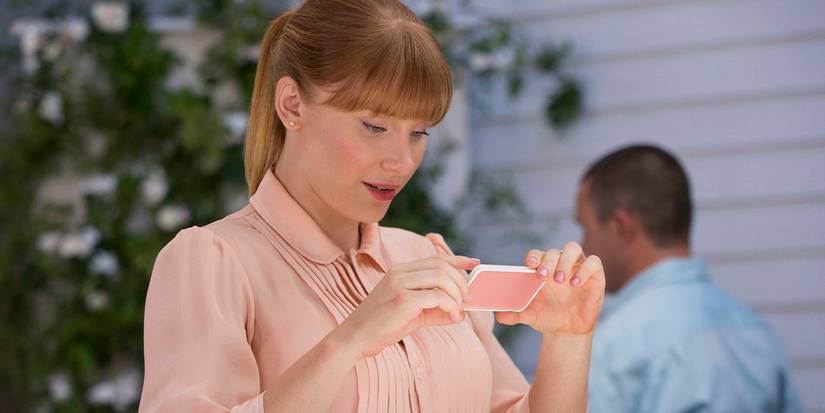 Image via Netflix
The title has always been the quiet clue. The “black mirror” isn’t some abstract concept — it’s the screen itself, the one sitting in your pocket or glowing on your desk, reflecting your face back at you when it goes dark, and that idea runs through the entire series. Technology doesn’t create new versions of us; it reflects what’s already there, sometimes in ways that are difficult to look at for too long. The discomfort comes from recognition, which is why the show resists framing its worlds as fully dystopian; many of its settings are functional, even prosperous. Life goes on, systems hold, and the larger world doesn’t collapse just because an individual story ends badly. That, in its own way, is more unsettling than any apocalyptic scenario.
Part of the issue is cultural shorthand. “That’s so Black Mirror,” or any similar derivative, has become a catch-all for anything vaguely unsettling involving technology, a phrase that flattens the show into a mood rather than an idea. Over time, that shorthand has hardened into an assumption, and naturally, Weir’s critique lands in that same space. It’s not entirely off-base — the series can be dark, even cynical — but it stops short of engaging with what the show is actually probing. It treats technology as the subject when it’s really just the lens, and maybe that’s inevitable. It’s easier to argue with a story about evil machines than one that keeps circling back to human behavior, asking uncomfortable questions without offering much in the way of reassurance.
In the end, Black Mirror isn’t especially interested in whether technology makes things better or worse; that debate feels almost beside the point. What it keeps returning to is something more difficult to pin down: what we choose to do when the tools at our disposal make those choices easier, faster, and harder to walk back.

 English (US) ·