
Having played a bit of Capcom’s space action-adventure game Pragmata at Summer Game Fest last year, its AI-infused story and lunar setting, and its original combat that mixes hacking and gunplay at the same time, had its hooks in me.
I now know the game has delivered on those intriguing themes — and more.
Review info
Platform reviewed: PS5
Available on: PS5, Xbox Series X|S, Nintendo Switch 2, PC
Release date: April 24, 2026
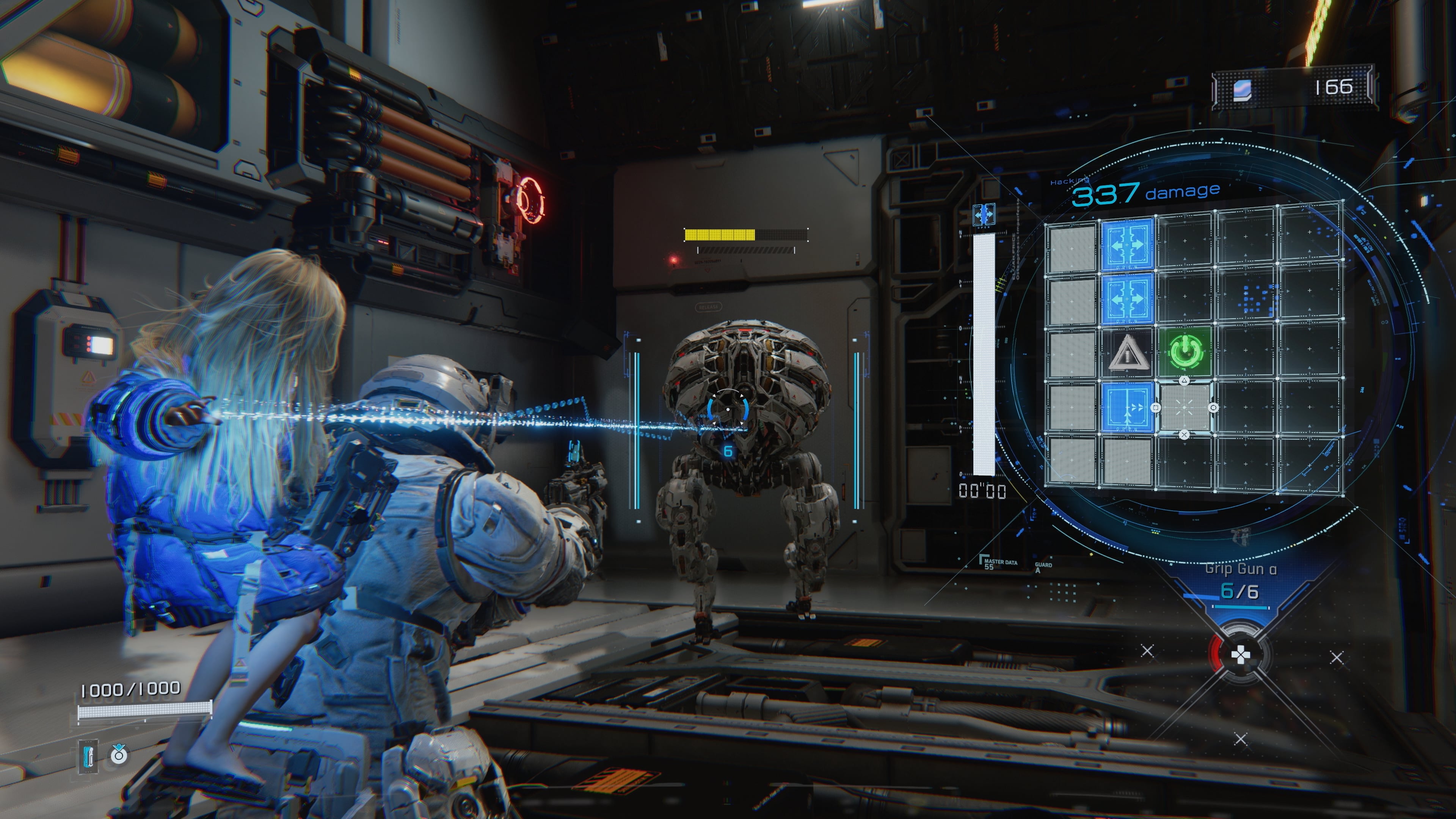
The combat is a true success, and the combination of simultaneous hacking, weapons, and the need for nimble movement and to be constantly aware can make for some excellent encounters, full of flow and sequence, and high-stakes danger. Almost without exception, balancing the hacking and weapons works completely too — yes, it forces you to multitask in the heat of battle, but somehow you quickly learn to look at both enemy and hacking screen like an Apache pilot, and execute a swift combo of both. It’s incredibly satisfying.
The setting and story provide the perfect capsule for the combat, too, and Diana and Hugh’s journey together is a memorable one. There’s a depiction of AI that feels rather timely, the moon base is exquisitely designed, featuring some extremely cool areas, and while not wholly unique, the relationship between the central pair is warm and sweet, and grows over the course of the game.
Hacked off
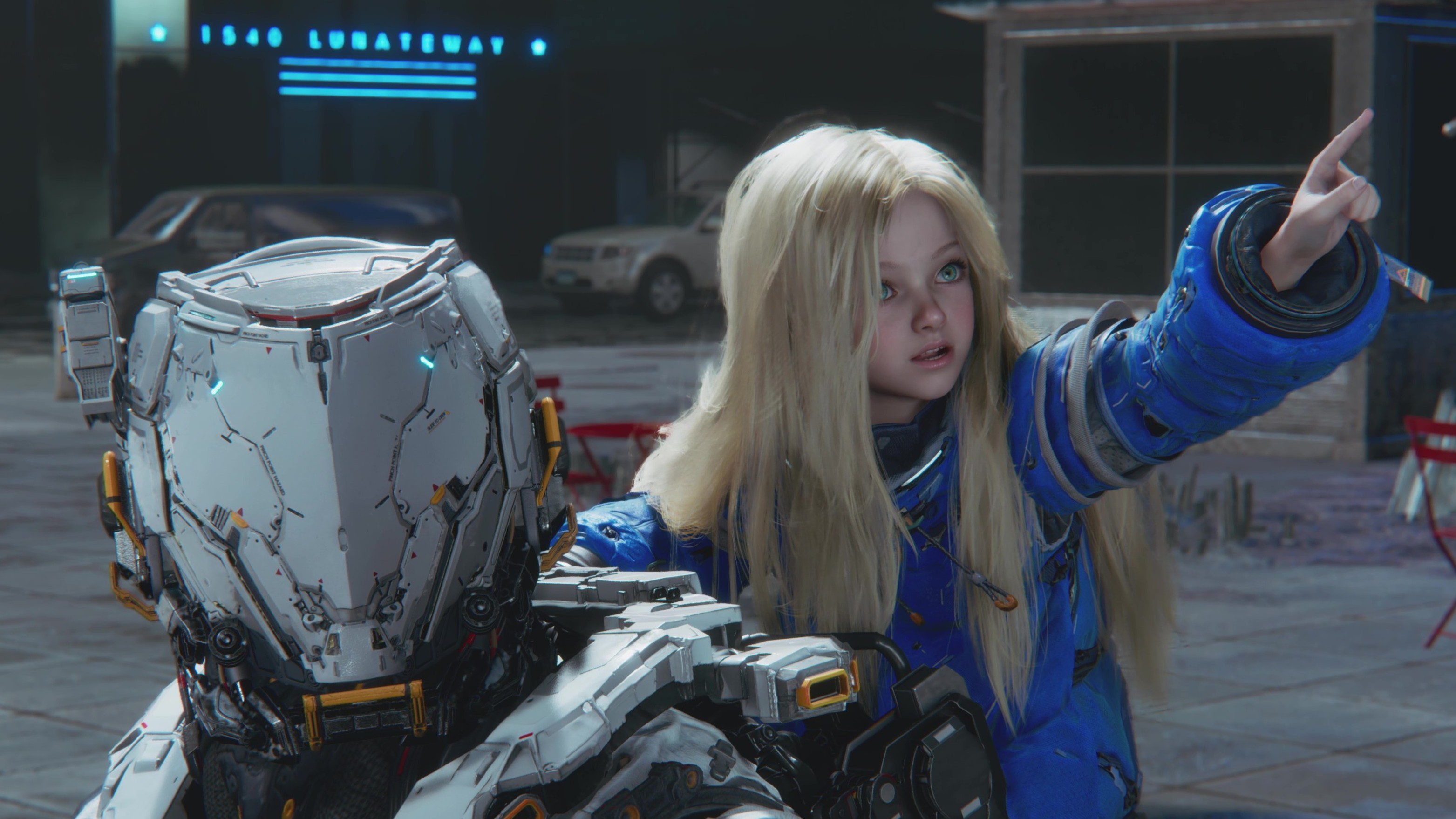
Visiting the Deplhi Corporation’s moonbase to investigate what happened after its communications ceased, astronaut Hugh is rescued from peril by young android girl Diana and soon learns that she’s not someone to just be protected, but someone who he can work with during every combat scenario to gain the upper hand against hostile security bots.
With Diana perched on your back, taking down foes involves completing a little on-screen matching puzzle (representing the girl’s hacking abilities) alongside traditional third-person shooting with Hugh’s arsenal of futuristic guns. Not only does Diana’s hack make enemies more susceptible to Hugh’s weapons in a bit of a one-two punch, but there are also status effects and extra boosts to damage that can be gained from each successful hack — though that often means spending a few more vital seconds navigating your way through a tricky matrix to hoover up some extra points.
Getting Pragmata’s action right is always incredibly satisfying — pulling off a tricky manual hack, quickly dodging an attack, and then following up with a rain of damage with a proton laser or shotgun to the head just feels great. Once you factor in the level of awareness you need, and the ability to quickly dodge to slow time at the right point, the complexity grows, but never overwhelms.
From low-grade walker bots through the ranks of tougher specimens all the way up to some pretty bombastic boss fights, there’s a deep satisfaction to be had from concentrating on combos, hacking nodes, and learning moves and weak points of enemies. The latter on bosses reminded me a lot of the Horizon games; identifying and learning weak points to target while dodging attacks around an arena.
Something else to consider is that Hugh’s guns are disposable and thrown away when empty. This means you constantly have to think on the fly and adapt to whatever weapons are around once your favorite is depleted. For example, I hated a chargeable laser weapon in the beginning, but grew to like it and rely on it as a result of necessity demanding I use it in times of need.
You can tailor your methods to your preferences, too, with a range of upgrades, abilities, and augmentations for combat, ready to be applied in a central hub once you’ve gathered enough resources. However, it’s worth noting that you won’t get to enjoy the full suite of weapons and gear until you venture back into a New Game Plus adventure, which is slightly saddening as I would have liked to experience everything in one go, trying out all the weapon types, and building fully personalised loadouts from all the options to master the game’s adventure, and its climax, in one sitting.
Lunar vibes
The lunar base provides the perfect backdrop for these enemy encounters, too.
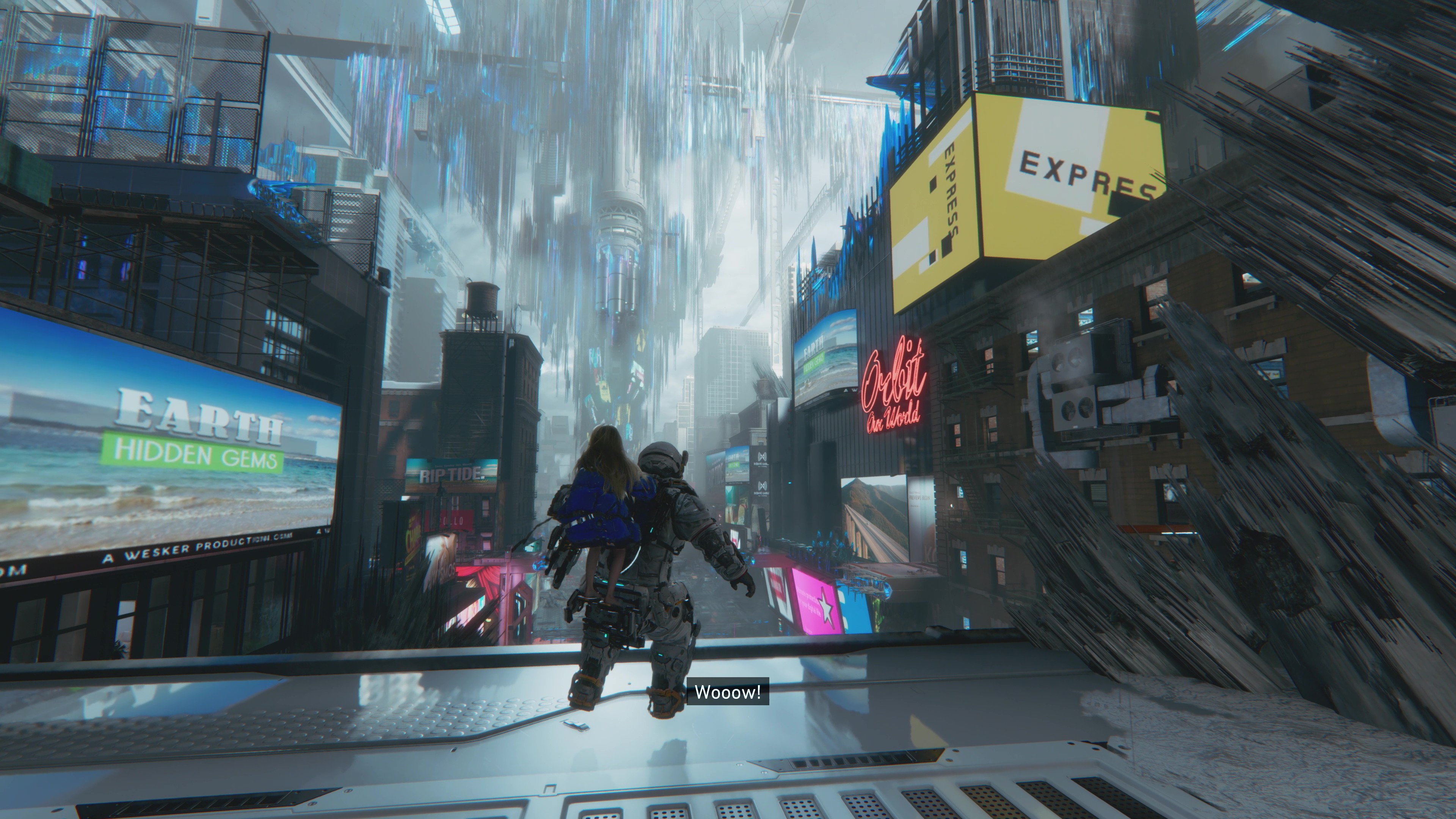
It’s incredibly well done and fantastically realised. featuring several highly cool environments from an M.J. Escher-like 3D-printed, AI-generated New York cityscape to a nature-filled biome as standouts. All of the zones look spectacular and are full of nooks and crannies to explore and design quirks to enjoy. These contrast well with the clinical, almost NASA-looking aesthetic of the rest of the base, with its massive domes and towers and skywalks.
There are some almost metroidvania in the world, too: opening up shortcuts, having strategically placed save and fast travel points, and even a little bit of Dark Souls in the return of enemies once killed in areas when you go back to them.
Best bit
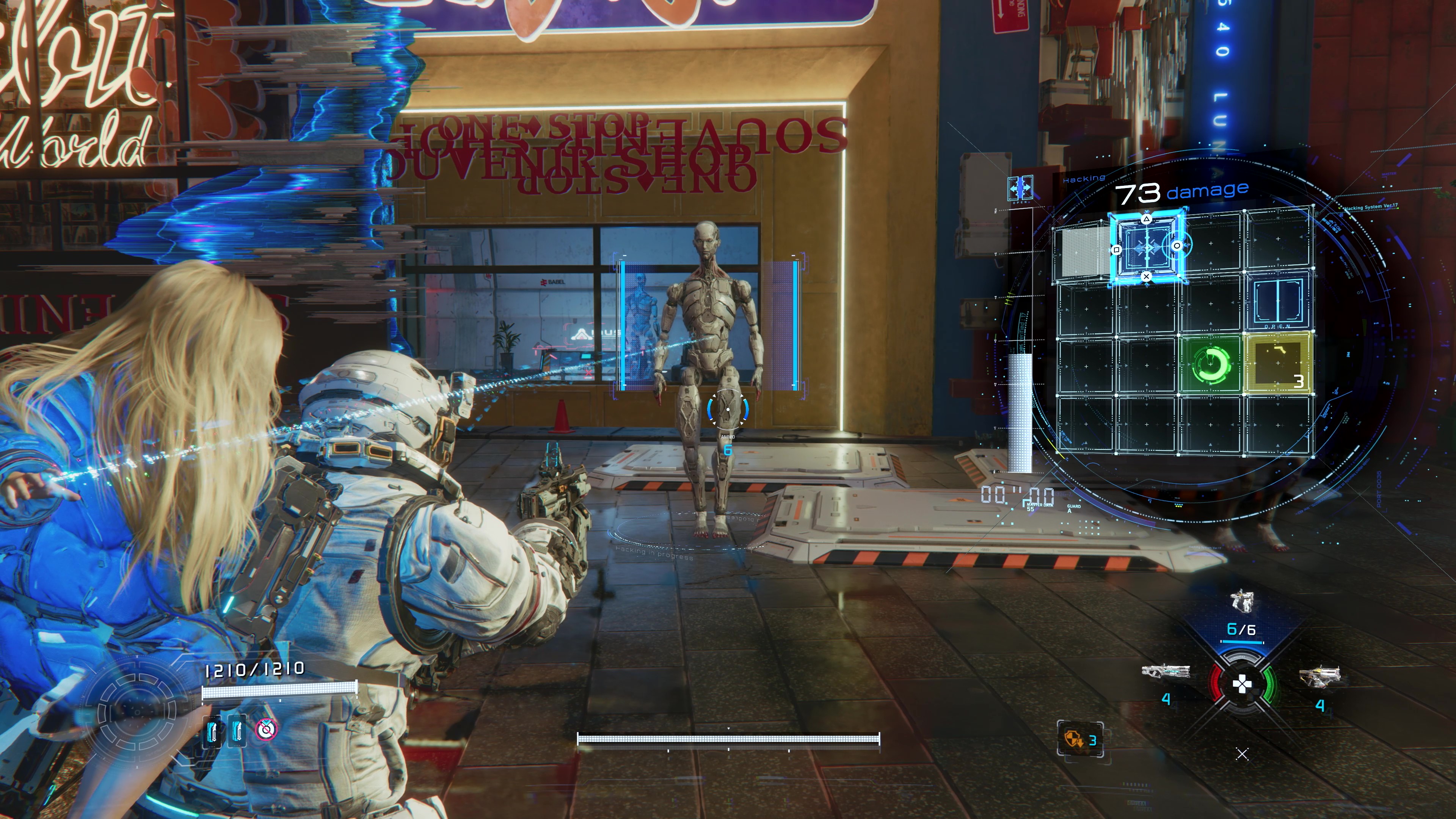
There's nothing more satisfying than when you nail a combat sequence in Pragmata, successfully utilising all the different bits and adeptly multitasking between them. Nailing a dodge, hack, and weapon strike all in quick succession makes you feel like the bots have no chance.
The narrative is not outrageously new or unique, and it starts off a little slow, but among all the bots and AI and sci-fi, there's a very human throughline. There’s a particular sequence in the second half of the game where Hugh and Diana slowly explore a series of rooms and offices; a nice change of pace, with a slow reveal of information through found files, an accompanying chill soundtrack, a noticeable change in the mood of our protagonists as they understand more, plus the uncovering of events that had occurred before Hugh’s arrival. Magic.
The relationship between Hugh and Diana works and pleasantly changes over time. At first, Diana’s playful innocence offsets the gruffness of Hugh — not totally unlike elements in The Last of Us, for example — but soon they want to spend more time together, and start making plans. Hugh begins teaching Diana about Earth and human ways of life, and it’s all quite sweet and parental. Both characters are wonderfully voiced, and by the end, I couldn’t help but come to care about both of them.
Pragmata is a wonderful, compact, space adventure with heart and soul. But that’s not to say it’s completely without a few things that stain the sheen, such as Diana’s and Hugh’s in-game, moment-to-moment commentary getting a little tiresome, some lazy enemy encounters in the back half that just lock you into smaller and smaller areas for mandatory multi-enemy fights, and a last section that does drag on a little too long.
But, all in all, Pragmata has been worth the long wait, and worthy of its place in Capcom’s pantheon of action games. Even though it’s over in a flash, its combat and hacking mix is exciting enough to pull me back in for another adventure via New Game Plus.
Should you play Pragmata?
Play it if...
You’re a fan of puzzles and satisfying combat — simultaneously
The combat in Pragmata is excellent and, even though you’ll feel like you’re learning to play the piano on a unicycle in the beginning, mastering it is incredibly satisfying.
You’re after a short but sweet space adventure
Pragmata isn’t a long game, but it’s a good one. If you’re after a compact space adventure with solid storytelling, a wonderful setting, and compelling action, then this is for you.
You’re a sci-fi fan keen for a new story
While not hugely unique, Pragmata’s narrative, combat, setting, and premise do combine really well to make a wonderful addition to the sci-fi action-adventure game pantheon.
Don't play it if...
You get frustrated with slightly repetitive enemy encounters
There’s a host of different enemy types, but at times the game’s insistence on locking you into smaller and smaller areas with enemies to fight your way out of gets a little repetitive.
You’re looking for a massive, deep space adventure
Pragmata is a short, linear game that does mix things up well with different zones to explore, but keeps everything compact — if you’re hoping for a massive game, then this isn’t it.
Accessibility features
Pragmata has several grouped accessibility settings that can be adjusted in sets, though there are no colorblind options, which is a shame. These include a visual accessibility preset which changes language, subtitle size, and background; an audio accessibility set which changes subtitles, speaker display, and closed captioning; and a motion sickness accessibility set of features which includes center reticle display, motion blur, lens distortion, and depth of field.
How I reviewed Pragmata
I played Pragmata on a PS5 Pro teamed with a Samsung Q6F 55-inch 4K QLED TV and Samsung soundbar for about 10 hours, completing the main story and doing some exploring to boot.
I used a standard DualSense Wireless controller, and I also played for a bunch of hours on my PlayStation Portal. When using a headset, I relied on a SteelSeries Arctis Nova Elite or an Audeze Maxwell 2.
First reviewed April 2026





 English (US) ·