
 3 weeks ago
30
3 weeks ago
30

Published Feb 17, 2026, 4:00 PM EST
A hardcore Pokémon Go Battle League player joined Niantic and vowed to fix it
 Image: Niantic
While many Pokémon fans may think of Pokémon Go as a means to be physically active and explore new places, collecting rare Pokémon along the way, there’s a passionate portion of the player base that’s in it to fight. Since early 2020, Pokémon Go players have been able to battle each other in the Go Battle League, where competitive online Trainer Battles take place.
But even by Pokémon Go developer Niantic’s admission, GBL battles haven’t always worked perfectly, or at least worked as players have expected. PvP battles can be inconsistent, and players have discovered ways to exploit GBL’s online play mechanics to their advantage.
In 2026, Niantic is doing something about it. The company says it’s “rebuilding the core battle system” of Pokémon Go to “harden the foundations of all battle modes, including PvP, so that battles consistently reflect player skill while maintaining the fast, responsive feel players expect.”
“In the past, some interactions could be influenced by when inputs arrived within those turns,” Niantic explained in a blog post. Differences in network conditions or device performance could affect how actions were resolved, the company said, but “the updated battle system reinforces turn-based resolution at a foundational level, better mitigating the impact of network hiccups and device performance differences. While connectivity will always play a role in online play, normal variations within turn and network tolerances should no longer change the outcome of identical decisions for a given game state.”
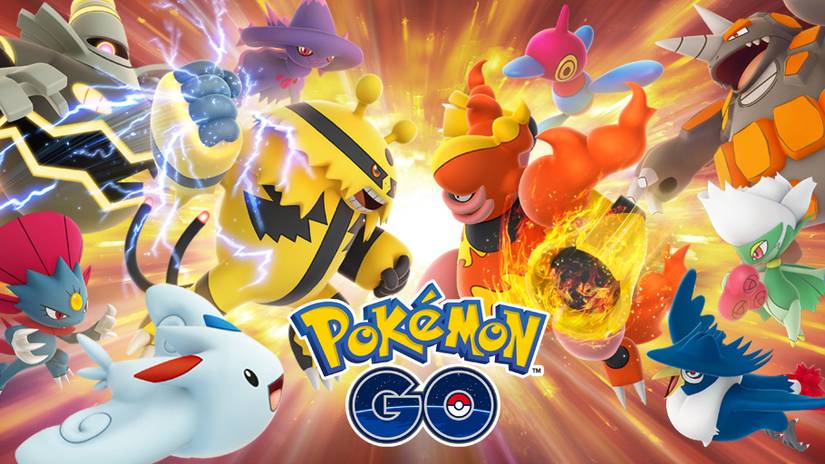 Image: Niantic / The Pokémon Company
There are a few major changes coming to Pokémon Go’s Battle League as part of Niantic’s updates. These include damage resolving at the end of a turn in PvP, rather than resolving at different points within a turn, depending on network conditions. Swapping Pokémon during PvP will also resolve before damage is applied, and swapping will be more consistent across quick swaps (voluntary swaps) and forced swaps (when a Pokémon faints and is replaced). A full explanation of what’s changing is detailed on the Pokémon Go website, if you’re wondering how this will affect your PvP battles.
At the most basic level, though, “we rebuilt the whole thing from the ground up to eliminate a lot of the inconsistencies, said Ben Li, staff server engineer at Niantic, in an interview with Polygon.
“From our testing so far, it's miles more stable and way more consistent,” Li said. “For more casual players, this should just mean that your play experience should basically line up with what you would expect it to do.”
Li said that Niantic has been reworking its battle systems for the past “two-ish years” and that PvP specifically has been updated for the past nine to 10 months. For Li, overhauling how PvP and the Go Battle League functions consistently has been something of a personal crusade.
“Before joining the company, I was deep, deep, deep into PvP,” Li said. “I would play three to four tournaments a week, at in-person tournaments, and I actually was very high up on the grassroots tournament scene. That led me to see all the issues that the layperson would've seen, and on top of that, the inconsistencies that a competitor would see. Eventually, I joined the company, and one of the first things I did was say, ‘Hey, can I please work on PvP and the battle systems? Because I think I can make it better.’ It's been a thing that has been building up throughout my time here at Niantic. It's been a long con, if you will [laughs].”
 Image: Niantic
Since Li is a veteran PvP player, he’s keenly aware of what the hardcore Go Battle League cares about. “One of the things that's very painful in the community right now is something called DRE (damage registration error), where fast moves might not register before a charge move actually fires on the same turn, which causes you to potentially miss out on a fast move, or just not hit at all because you'll faint,” he said. But that type of situation is basically eliminated by Niantic’s new system of putting everything against an actual timeline and actual turns.
“The fact that things are now lined up with what players understand the game to be like — in terms of ‘turns are segments of time, instead of this dynamically calculated thing on the server somehow’ — lines up a lot closer to how I and a bunch of other people in the community would've imagined the game to be like,” Li said.
Niantic plans to roll out changes to Pokémon Go’s battle systems in waves, starting with QR and friend battles — not actual Go Battle League battles. That wouldn’t be fair to competitive players, Li said. The team wants to “make sure our systems are healthy” before rolling them out to GBL, at which point it will roll out across the globe over time.
That way, Li said, Niantic can avoid impacting competitive players at events like the Seattle Pokémon Regional Championships 2026. “We have the ability to adjust exactly who's on the new system, who's on the old system, when and where,” Li said. “So there's a very involved activation plan that we've laid out to make sure that we don't impact our competitors.”
Despite his pride in the changes coming to Pokémon Go PvP, Li acknowledged that there’s still room for improvement. And Niantic has built new tools to monitor and replay player battles, so it can identify issues with the new system.
“I'm also a big StarCraft fan, and there are a lot of other games out there that have a system where you can actually replay exactly what happened,” Li said. “That's actually, in my opinion, the technical crowning jewel of this new system is that we are able to see exactly what's going on when given a timestamp from a player. So that's huge. In terms of engineering efforts, that made it so we can debug things much faster. We can isolate problems a magnitude faster and easier. That's the thing I'm personally most excited about as an engineer.”


 English (US) ·