
 3 hours ago
6
3 hours ago
6
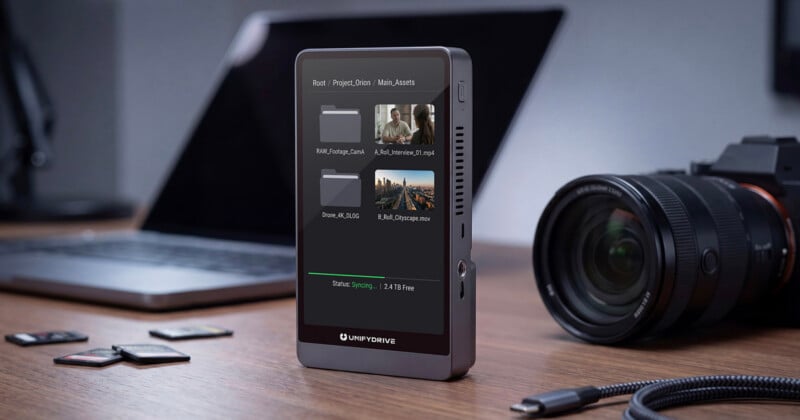
UnifyDrive has introduced PixelMob, a new sub-brand aimed at professional photographers and video creators. Positioned as a “Creator’s Companion,” PixelMob is designed to address a longstanding gap in imaging workflows: the inability to verify, at the file level, that backups are intact before leaving the field.
Closing the Gap Between Capture and Verified Backup
At its core, PixelMob is built around file-level verification rather than simple file transfer. While most portable backup solutions confirm that data has been copied, they typically do not confirm integrity until the files are reviewed on a computer later. PixelMob aims to eliminate that uncertainty by providing immediate confirmation that files are intact at the point of capture.
Currently in prototype, the device integrates a six-layer data verification architecture that includes streaming checksum validation, write-after-read integrity checks, RAID 1 mirroring, continuous drive health monitoring, synchronous dual-location writes, and AES-256-encrypted cloud backup. Each session ends with a full-screen confirmation signal and generates an exportable, file-by-file verification report that can be used as proof of delivery.
This approach positions PixelMob less as a storage device and more as a validation system designed for professional workflows where data integrity is critical.
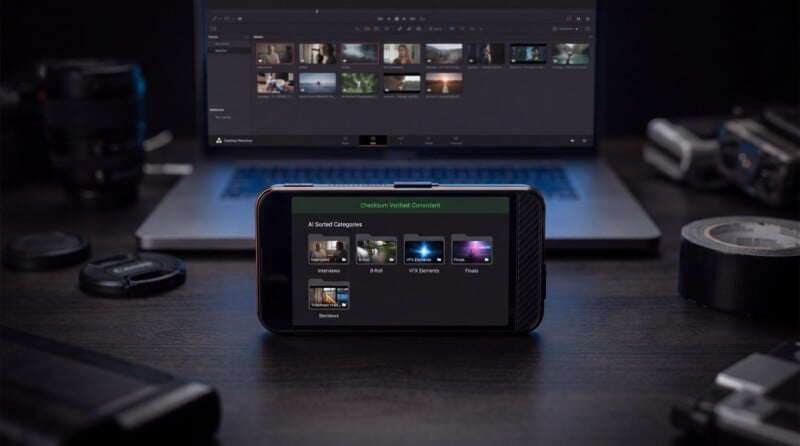
Hardware Designed for Field Use
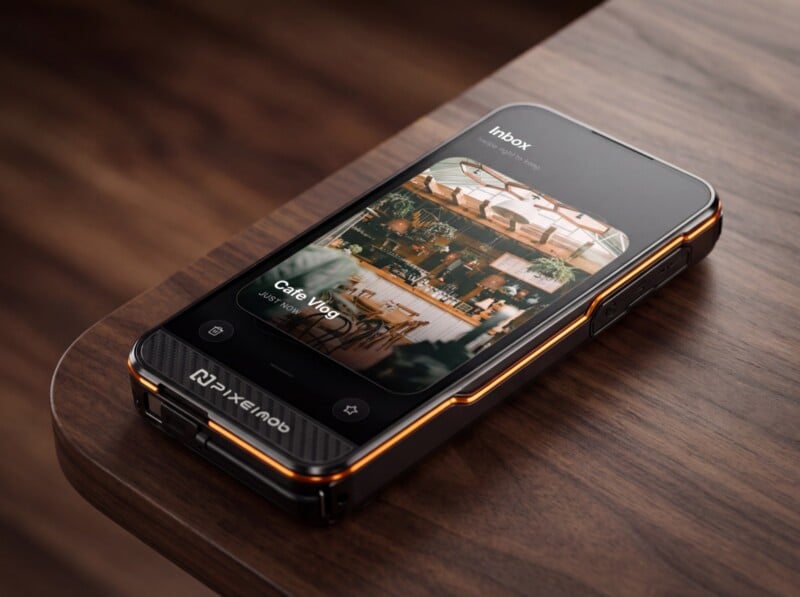
PixelMob is built as a self-contained device for on-location workflows, combining a touchscreen interface, NVMe SSD storage, and an onboard neural processing unit for local AI tasks. The goal is to enable backup, verification, and workflow management without the need for a laptop in the field.
UnifyDrive is currently developing two configurations of the device: Standard and Pro. The Standard version features a 5.5-inch touchscreen with 1080p resolution, dual M.2 PCIe NVMe slots, and support for SD UHS-II and TF card media. It includes Wi-Fi 6 and Bluetooth 5.2 connectivity, along with an estimated battery life of around eight hours.
The Pro model expands on this with a larger 7-inch OLED display rated at 1300 nits, offering 99 percent sRGB and Rec. 709 color coverage for more accurate on-device viewing. It adds a third M.2 PCIe NVMe slot, supports SD UHS-II and CFexpress Type B cards, and introduces Thunderbolt 4 and USB4 connectivity with speeds up to 40 gigabits per second. Battery life is estimated at around 10 hours, and the device supports NP-F external power options.
Beyond Backup: Integrated Creative Tools
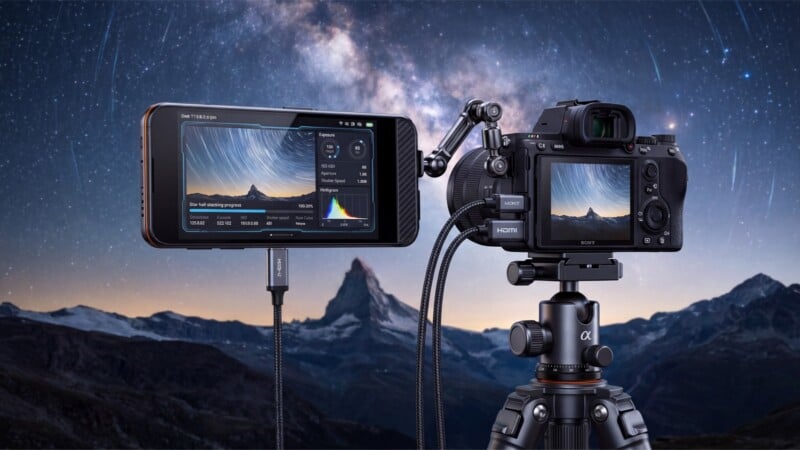
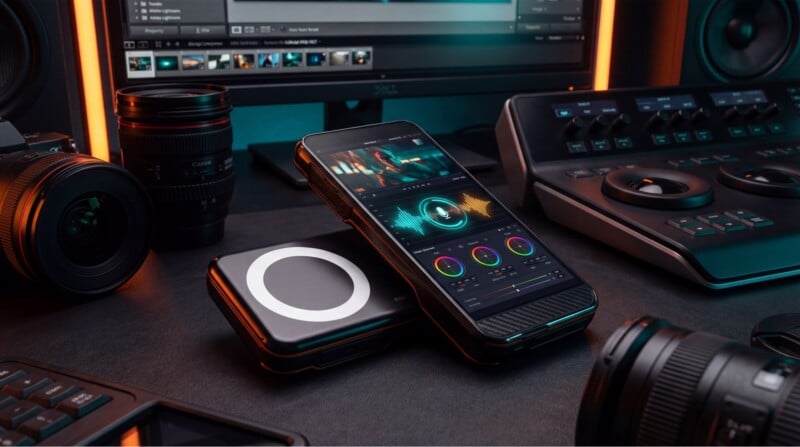
Beyond storage and verification, PixelMob incorporates a range of workflow tools designed to streamline on-location production. These include AI-assisted photo culling, HDMI monitoring and recording, and tethered camera control with features such as automated focus stacking and HDR capture.
The device also introduces voice-controlled color grading powered by an on-device language model, along with a wireless feature called Campfire that enables direct image sharing through an ad hoc hotspot without requiring additional apps.
Together, these features position PixelMob as more than a backup solution, extending into areas typically handled by multiple separate devices.


A Connected Workflow From Field to Studio
PixelMob is designed to integrate directly into UnifyDrive’s broader ecosystem. Files backed up in the field can sync directly to the company’s NAS systems, including the UC450 Pro and UC250, creating a continuous pipeline from capture through post-production.
All devices operate within UnifyDrive’s UDOS platform, which supports cross-device synchronization, AI-powered media management, and virtualization tools. This unified system is intended to reduce friction when moving between fieldwork and studio environments.
According to UnifyDrive founder Bin Yuan, the focus is not on adding more storage, but on ensuring confidence in the files themselves, particularly in professional scenarios where lost or corrupted data can have significant consequences.
“Beyond storage, PixelMob includes AI assistant photo culling, HDMI field monitoring and recording, tethered camera control with automated focus stacking and HDR, voice-controlled color grading via an on-device language model, and Campfire — an ad-hoc wireless hotspot for zero-app photo sharing. PixelMob products can back up directly to UnifyDrive NAS devices, creating a seamless field-to-studio pipeline within one ecosystem,” UnifyDrive says.

Full Ecosystem on Display at NAB
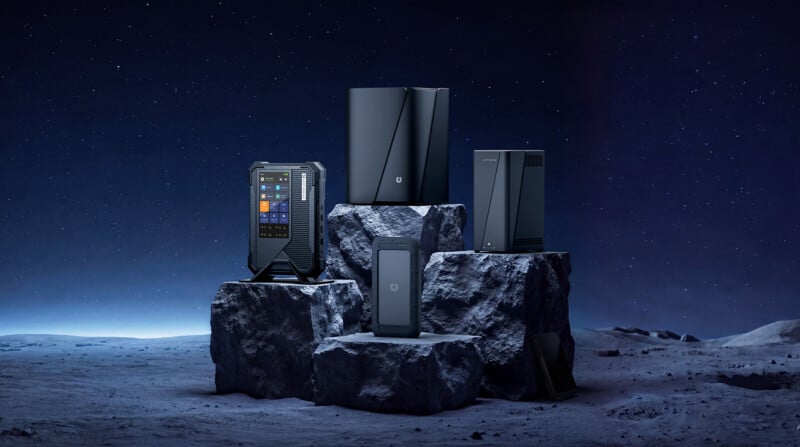
Alongside PixelMob, UnifyDrive is showcasing its full NAS lineup at NAB Show 2026, including the portable UT2, the UP6 all-in-one hub, the UC450 Pro desktop system, and the UC250 compact NAS.
These devices span a range of use cases, from lightweight field backup to high-capacity studio storage, forming a tiered ecosystem that supports creators across the entire production pipeline.
Rethinking Reliability in Creative Workflows
PixelMob reflects a broader shift toward prioritizing data integrity in creative workflows. As file sizes grow and production timelines tighten, the ability to verify that files are secure before leaving a shoot is becoming increasingly important.
By combining verification, storage, and workflow tools into a single device, UnifyDrive is positioning PixelMob as a solution to one of the most persistent risks in photography and video production: uncertainty between capture and backup.
Pricing and Availability
At the time of its debut at NAB Show 2026, PixelMob is being shown as a working engineering prototype rather than a finalized product. UnifyDrive has not announced official pricing or a release timeline, noting that specifications and configurations may evolve ahead of a commercial launch.
While PixelMob itself remains in development, UnifyDrive’s broader NAS ecosystem is already available, with products ranging from the portable UT2 at $599 to the UP6 at $1,599, providing some context for where PixelMob may eventually fit within the lineup.
Image credits: UnifyDrive





 English (US) ·