
 20 hours ago
12
20 hours ago
12
It was eight years ago that I reviewed the Panasonic ZS200, and I was immediately impressed by the compact size of the camera, along with a massive 15x optical zoom range. Most importantly, the ZS200 didn’t make any compromises when it came to handling and manual control, and the EVF was imminently useful.
Fast forward to the present day, and I have an $899 ZS300 to review. All that Panasonic has to do is make some meaningful improvements over the last eight years, and the company should have a winner. But did that happen?
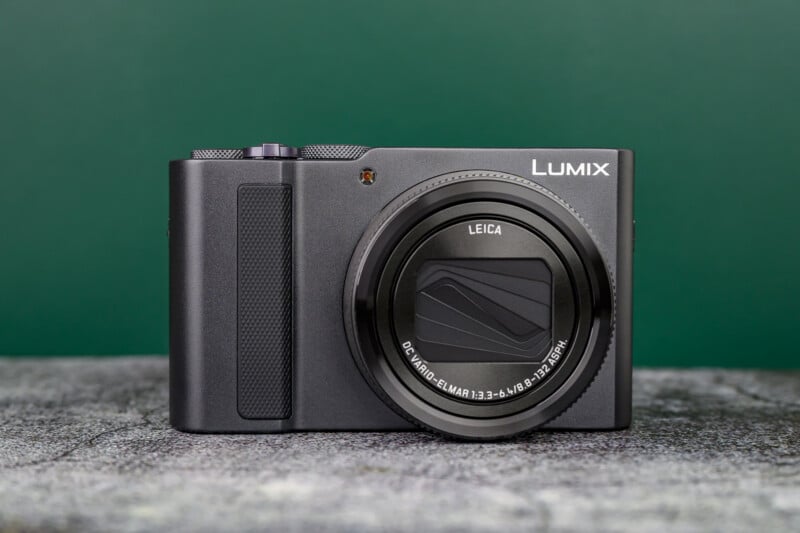 The Panasonic Lumix ZS300 is definitely stylish and compact.
Panasonic ZS300 Review: How It Feels
From a handling standpoint, the ZS200 was a great device and therefore the new ZS300 would only have to maintain the design to win me over. This is largely true of the ZS300, which has the exact same dimensions, 13-ounce (370 grams) weight, and fantastic rubber grip on both the front of the camera and the back of the thumb rest. To comply with current regulations, the ZS300 charges and connects via USB-C.
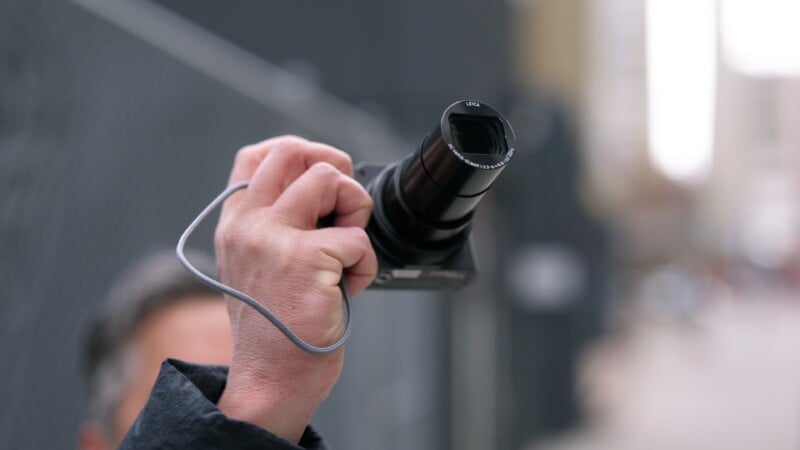 The camera is quite easy to grip and to use one-handed.
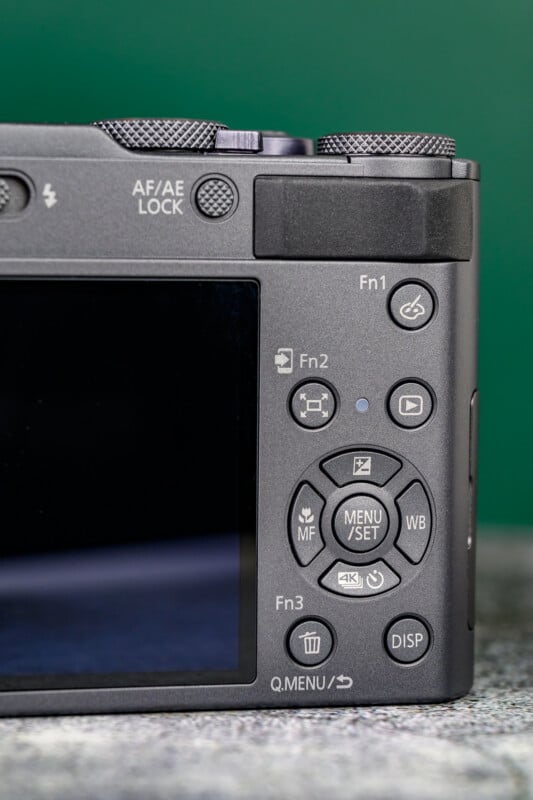 The controls are excellent, and many of the buttons are customizable.
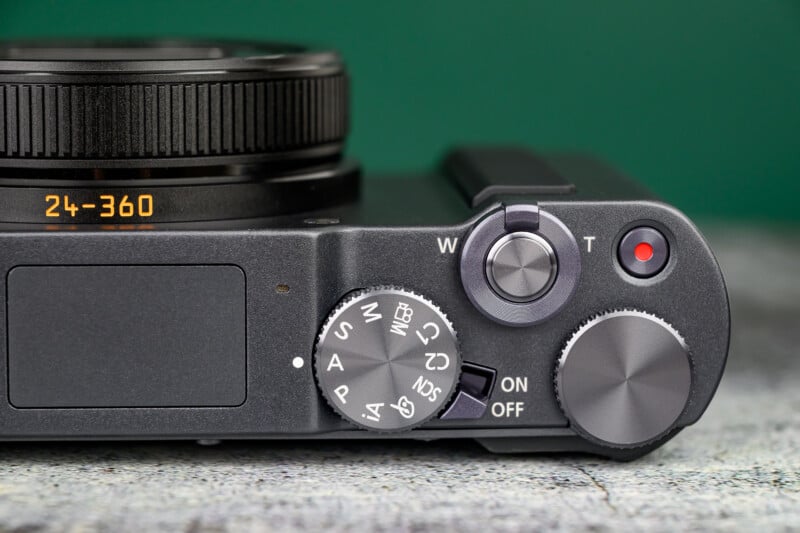 You get full manual control and two command dials to adjust exposure.
I love having dual control dials on such a small camera body, with one right at the thumb, and another on the front of the lens mount. Many of the buttons are customizable, and I can set the autoexposure lock button to be an AFON button. The menu is simple, and the quick menu is functional too. Storage is through a single SD card slot, and the camera uses the venerable BG-10PP battery. Expect about 360 shots on a full charge.
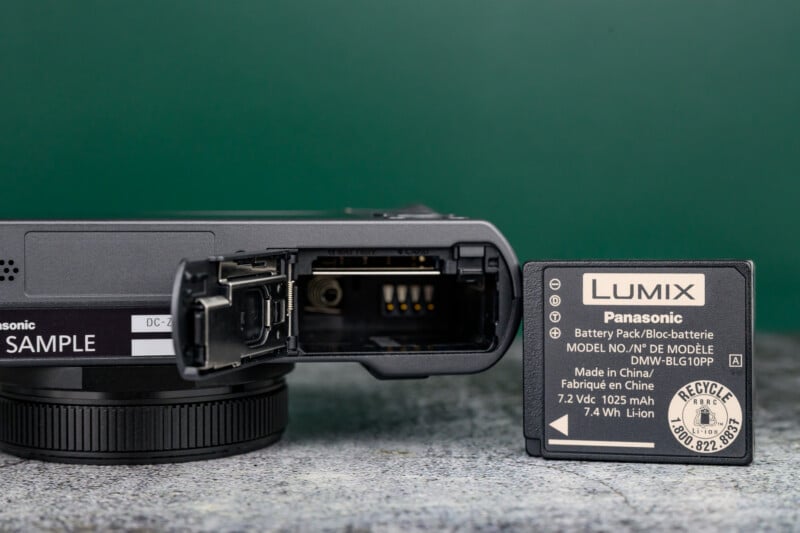 The battery and SD card storage are unchanged from the previous camera.
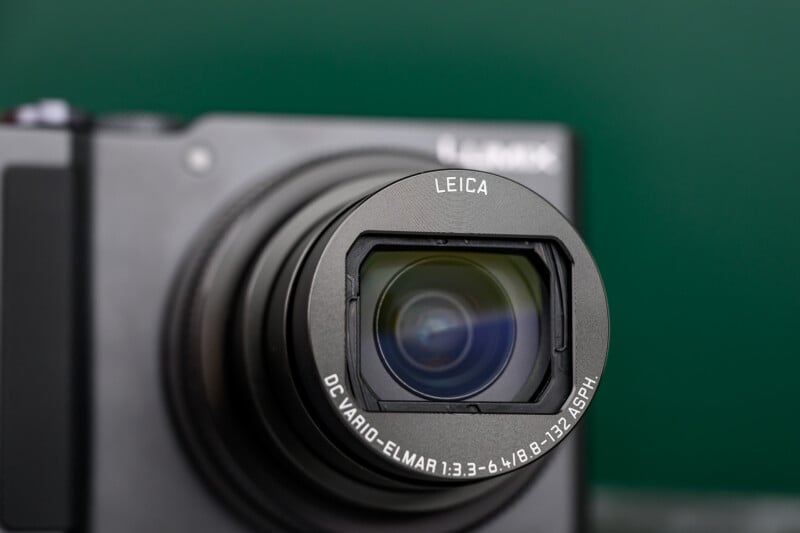 The lens has a huge 24-360mm equivalent focal range, but the aperture choices are middling.
 The lens does extend incredibly far from the body housing.
As for the rest of the camera, much of the technology we saw in the ZS200 has been brought across to the ZS300. We get the same pop-up flash, the same mechanical shutter up to 1/2000 second, and an LCD panel on the back that still does not articulate. This latest panel does increase the resolution to 1.84-million dots, but I still struggled to see it in bright light despite having the brightness always cranked to maximum.
The same Type 1, 20-megapixel sensor in the ZS300 which was at the heart of the ZS200 also returns.
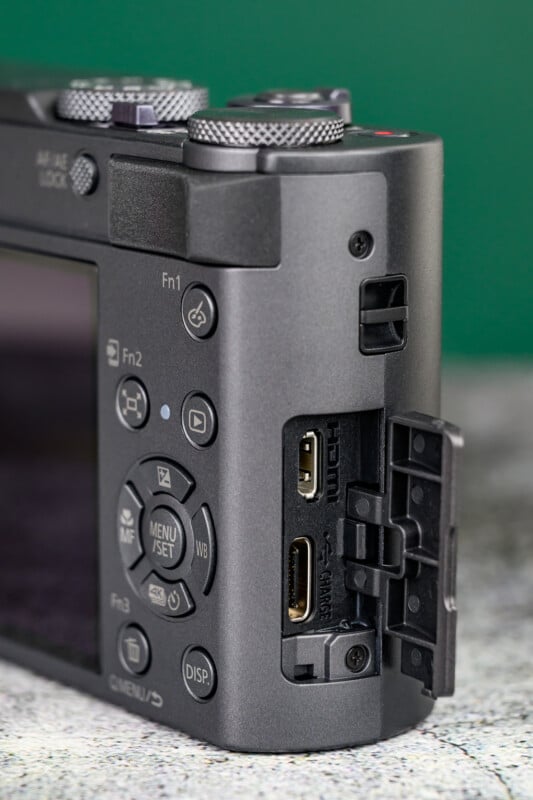 The USB-C port is a modern upgrade, but it functions essentially the same as before.
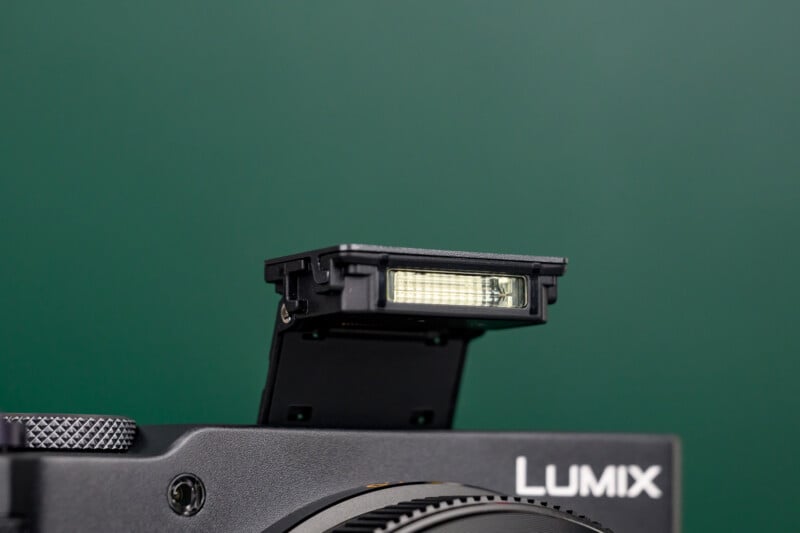 There is a pop-up flash, which should appeal to a broad audience.
 The screen does not articulate, and even more importantly, there is no EVF at all.
The camera seems to be effectively the same product that we saw nearly a decade ago with very little in the way of changes. Very little, but not none: there is one major change and that is the complete omission of an electronic viewfinder.
The previous model had a compact but usable 2.36-million-dot EVF, but the new model has only a flat and barren space where the EVF should be. This is, in my mind, an egregious fault, and one that drastically reduces the utility of the camera for my uses. The EVF was incredibly useful to stabilize the camera when shooting with the extended zoom range, as well as allow for better evaluations of accurate focus or motion blur. We hear many explanations from all the manufacturers about modern audiences not wanting EVFs, or that sourcing small screens is too costly and difficult. Whatever the reason, this basically makes the modern iteration of the ZS camera clearly inferior to the older model.
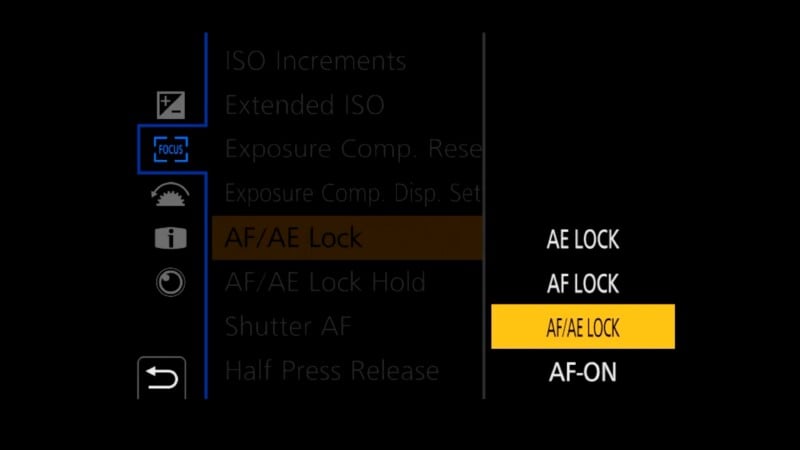 I like that I can use back-button autofocusing on the ZS300.
Panasonic ZS300 Review: How It Shoots
From a photographic standpoint, very little else has changed. The image quality is identical to what was there before and the camera has only added a Leica Monochrome color profile to the mix. The lens is still an insanely compact 24-360mm full-frame equivalent lens with a floating f/3.3-6.4 aperture. With a small sensor and a max aperture of f/8, the depth of field will always be extensive. The lens seems to be identical to what came before, and has excellent detail overall at the 24mm end, and very good sharpness at the 360mm range.
 The telephoto ability is clearly better than the latest smartphones.
 The extra zoom allows for discreet street shooting.


I was hoping that we would see some improvements to the autofocus performance, but was disappointed to see the return of the older DFD (depth from defocus) contrast-based autofocus that Panasonic used in the past but has since moved away from in lieu of hybrid phase detection autofocus. DFD was fine eight years ago, but it is showing its age in 2026.
It can be argued that a point-and-shoot doesn’t need blisteringly fast focusing, but some users will want to use the ZS300 for kids’ sports or some wildlife, and the experience will be somewhat frustrating. Added to this is that the lens does still physically zoom quite slowly and the on/off time of the ZS300 is a little ponderous for quick shooting as well — both of these were issues in the ZS200.
 You do get a huge range of zoom in a very convenient package.
 I love the new Leica Monochrome profile, and image quality overall is good.


The pop-up flash will give the now-popular straight-on flash look that everyone is clamoring for, and the color filter modes are fun to play with. What is annoying, but not particularly surprising, is that Panasonic’s newer Lumix Lab app is not compatible with the ZS300. It instead asks to connect only with the much older Panasonic Lumix Image App. That means you won’t be able to access or create custom recipes or presets, which is a bummer.
Video capability was considered decent back in the ZS200’s day, but looking at it through the lens of 2026, we found the heavy crop implemented in the 4K record modes being a big downside. Beyond that, there is still no mic jack or option to shoot 24 frames per second in 1080 mode. It really is the same as the ZS200 in pretty much all aspects, for better or for worse, and in this case it is the latter. The final word is that a modern smartphone will probably be a better video capture tool anyway.
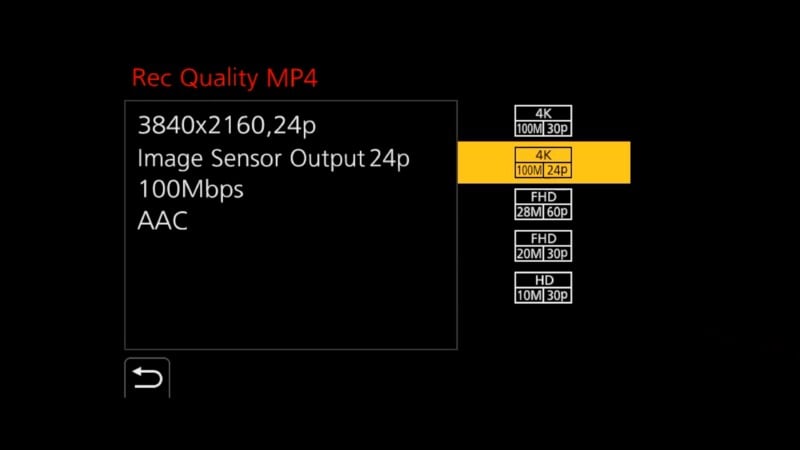 Video is the same as before and was ahead of its time eight years ago.


The Panasonic ZS300 Is a Real Downgrade
I liked the idea of this camera eight years ago, and I also see merit in Panasonic re-releasing it now. This camera is well-designed and has a telephoto lens that can still outperform anything that a smartphone can. It also has excellent manual controls and offers plenty of creativity.
However, the removal of the EVF is just such a detriment to the entire package, especially when nothing else in the camera has significantly improved. As it is, the ZS300 is a markedly worse product than the camera that came before it, so I’d rather buy the ZS200 used.
The price on the $899 ZS300 may only have gone up $100 over eight years, but I don’t like the idea of getting a less capable camera. Panasonic probably could have charged a little more and included the EVF while still finding success on the market. But if you want a big zoom range in an otherwise excellent body design, and don’t need the EVF at all, the ZS300 exists.












Are There Alternatives?
A used ZS200 will go for a similar price on the used market and will function much the same, along with the benefit of having an EVF. Sony still offer the RX100 VII on the market, and it does have an EVF along with a fairly wide zoom range, albeit at a costly price.
Should You Buy It?
Maybe. The ZS300 can still do something that smartphones can’t and it has a bigger zoom range for it’s given dimensions than any other digital camera on the market. I just take issue with the obvious hardware downgrade paired very little innovation to make up for it.







 English (US) ·