
 1 hour ago
4
1 hour ago
4
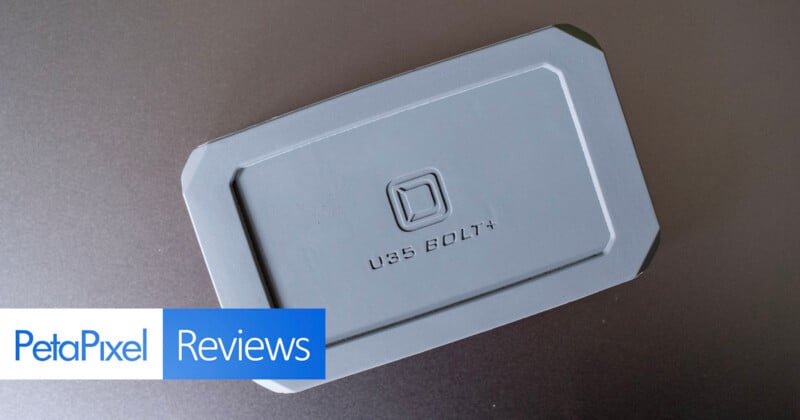
Oyen Digital recently announced the U35 Bolt+ USB4 (80Gbps) portable SSD that makes some pretty lofty promises. Designed for speed and built to withstand the elements, Oyen says it delivers up to 6,000 MB/s transfer speeds. That would be the fastest PetaPixel has ever seen.
That kind of performance is extremely fast, coming in at the upper third of the theoretical maximum specification of Thunderbolt 5. While the Oyen U35 is not a Thunderbolt drive, it does use an 80Gbps USB4 cable, meaning it gets the same pure performance of Thunderbolt 5 but with standard USB. Up until now, the only Thunderbolt 5 SSD we’ve tested is the OWC Envoy Ultra.
It seems like with the benefit of time, Oyen was able to squeeze even more performance out of the USB4/Thunderbolt 5 tech, because (spoiler) yes, it does reach (and exceed) those promised speeds. But that’s only part of the story.
Oyen U35 Bolt+ SSD Review: Design and Build Quality
Before we get to performance, however, let’s briefly cover how this thing looks and feels. I’ll get right to it: this is not a pretty SSD. It is similar in size and design aesthetic to the Glyph EX40 but somehow made that less aesthetically pleasing. This SSD isn’t going to win any beauty contests.
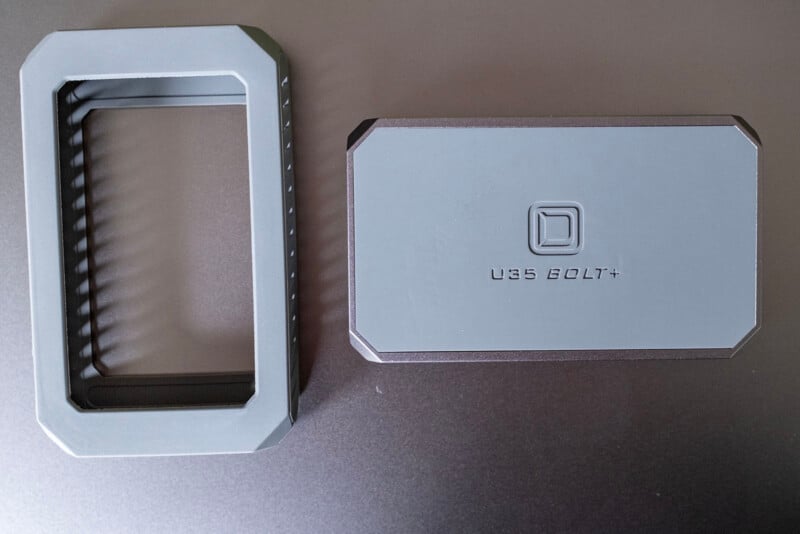 The silicone “bumper” is easily removed and I think it makes the U35 a lot more attractive when it’s absent.
It’s still just a rectangular brick, but the light gray color isn’t doing it any favors. Additionally, while both it and the EX40 have a silicone bumper around the outside edge, the one Oyen is using is much thinner and flimsier. I would categorize it as downright floppy. It easily comes off the main unit, and I’m hesitant to believe it’s doing much of anything as far as protection is concerned. Given how flimsy it is, I’m likely to take it off and sport the U35 “naked,” which I think actually ends up looking a whole lot nicer.
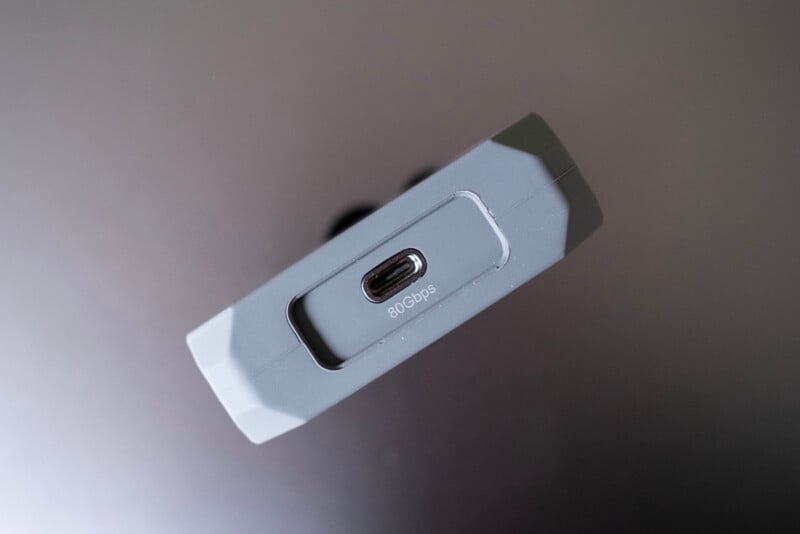
The main unit has a thin silicone layer on all six sides, broken up by edges of aluminum, which isn’t thick enough to offer any protection, but it does make the U35 slip-resistant.
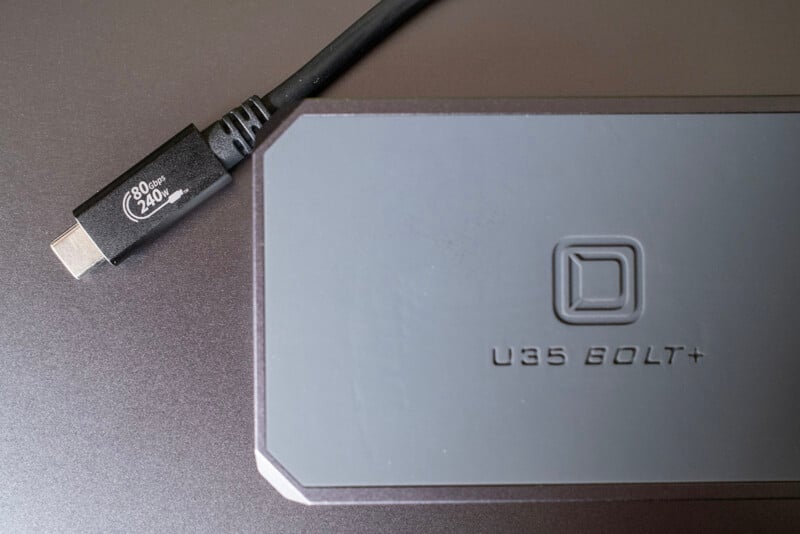
Outside of a severely recessed reset button on the back, the 80 Gbps USB-C port is the only other physical area of note on the U35. It ships with its own foot-long, 80 Gbps/240w cable, which is perfect for the intended use case — connected to a laptop while on the road.
Oyen U35 Bolt+ SSD Review: Performance
Oyen advertises the U35 Bolt+ as a “next-level” SSD built “for creators and power users,” with enough performance for 8K video and heavy VFX work thanks to up to 6,000 MB/s transfer speeds. Those are lofty promises, as 6,000 MB/s would be the fastest we’ve ever tested outside of the built-in SSD inside the most recent MacBook Pro.
Speaking of the MacBook Pro, you’re going to need a computer that supports the latest USB4 and Thunderbolt 5 peripherals, so even the M2 Ultra from 2023 doesn’t qualify and will result in about half the speed (which I confirmed).
But if you do have a newer computer with the right USB ports, then you’re in for a treat.
PetaPixel’s SSD testing involves checking the speed of the SSD right out of the box, then filling the SSD to capacity and immediately checking the speed again. Finally, the drive is formatted, and the speed is checked a third time. What this test does is not only measure if an SSD can properly manage its heat (because filling a multi-terabyte drive generates a ton of it), but also if the onboard controller is able to properly maintain performance even when the drive has data written to it and deleted from it.
Testing on the latest MacBook Pro with M5 Max, I saw some seriously impressive performance. Out of the box, the Oyen U35 Bolt+ came in with 6,064.4 MB/s read speeds and 62,78.8 MB/s write speeds. That is almost double the Glyph EX40 and over 1,000 MB/s faster than the OWC Envoy Ultra, our two previous top performers. As mentioned, only the internal SSD of the MacBook Pro beats those speeds.
Testing again when full and a third time when emptied, the Oyen U35 Bolt+ continues to impress, holding strong with very similar numbers. The onboard controller seems solid, and using this drive won’t affect maximum theoretical speeds.
 Click to view larger.
Except, there is a catch: thermals.
Unfortunately, despite Oyen’s promise of a “rugged aluminum design and integrated cooling core,” the U35 heavily thermal throttles when under sustained use. Right after being filled to its 4TB capacity, its numbers collapsed in a way we’ve never seen: write speed fell to 2,244.5 MB/s and read speed fell to 5,585.3 MB/s. That’s a 63% drop in write performance, which is highly irregular and most definitely not a good thing.
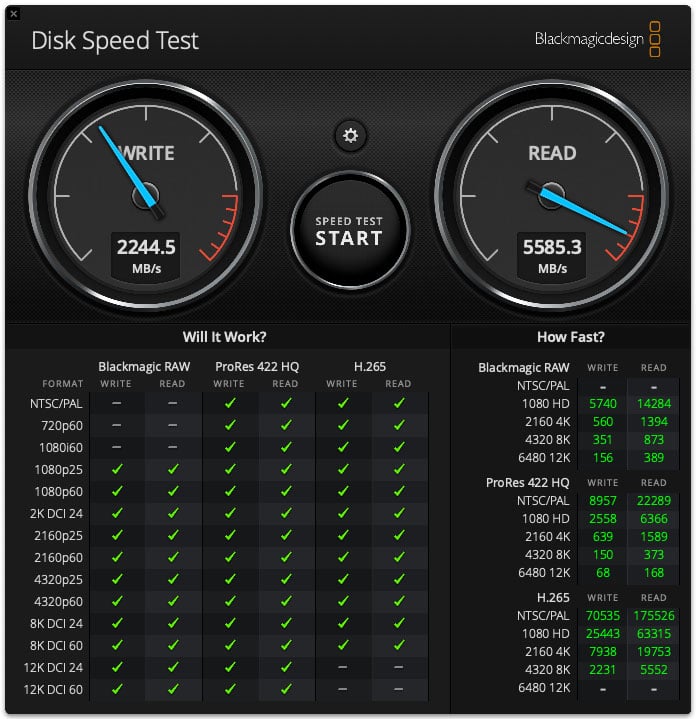 When under heavy strain, thermal throttling is noticeable.
To confirm it was thermals, we let the SSD cool for about 20 minutes before re-running the test, and that’s how we got the numbers seen in the chart above. Since it can only sink heat and has no active cooling, it takes a particularly long time to bring the temperature down after it gets warm. We elected to use the cooled thermal numbers in the chart, but we want to put a big asterisk on all of these speeds: if the U35 Bolt+ gets even a little warm, performance plummets.
I say a “little warm” because even when at its most stressed, the U35 wasn’t particularly hot to the touch. It felt about as warm as other SSDs we’ve tested do after taking on a 4TB load, so whatever controller Oyen is using might just be particularly risk-averse. Whatever the case, though, weak thermal performance is the biggest downside to this SSD.
So yes, the Oyen U35 Bolt+ is the fastest SSD we’ve ever tested… but it comes at a cost.
The Oyen U35 Bolt+ Is Fast but Thermally Weak
I do want to point out that while we saw a huge dip in performance during heavy thermal loads, those speeds are still likely way more than fast enough for what most photographers and videographers need. Even compromised by heat, the Oyen U35 Bolt+ still had the speed to handle ProRes 422 HQ 8K and 12K video playback.
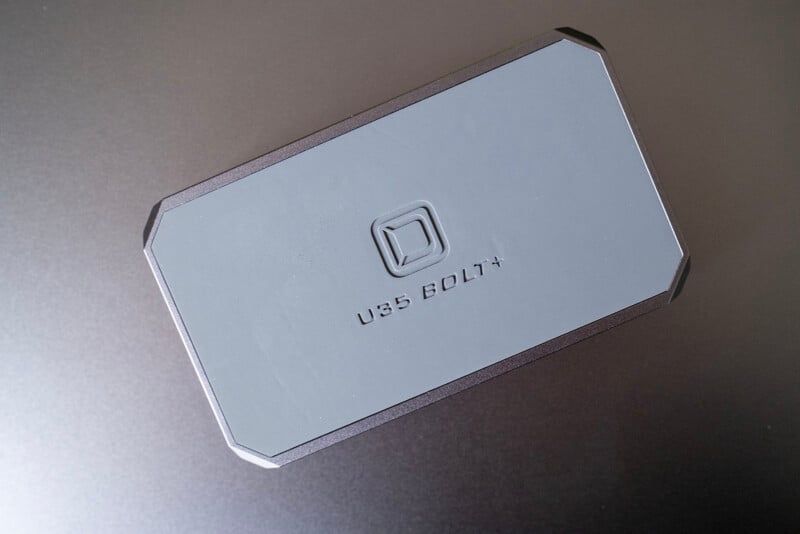
Given its reasonable asking price, there are many who might see the U35 and accept that tradeoff. It’s the best option on the market at the time of publication, but seeing as Glyph is cooking a new drive that should arrive soon, it’s unclear how long Oyen will hold onto that title.
Are There Alternatives?
Somehow, Oyen has been able to avoid the crushing high prices that have made SSD prices across the industry skyrocket. The 4TB version of this SSD costs $969 — that’s expensive, but reasonable considering SanDisk (which you should never buy) and Samsung are asking $650 and $800 for far less performant devices with that capacity.
Moving to Thunderbolt drives, prices only get higher. LaCie wants $1,600 for a Thunderbolt 5 SSD, OWC’s Envoy Ultra costs $1,200, and SanDisk’s Thunderbolt 3 SSD costs $920 (again, never buy SanDisk). The Glyph Atom EX40 is close in price, too.
The Oyen U35 Bolt+ is also available in smaller capacities: 2TB is $599, and 1TB is $459.
Should You Buy It?
Maybe. I’m hesitant to wholesale recommend the Oyen U35 Bolt+ because of the thermal limitations, but there are many who this won’t bother, and for them, this SSD is fast and well-priced.








 English (US) ·