
Ooma Office stands out as a reliable, no-contract VoIP solution crafted specifically for small businesses that prioritize simplicity and affordability in their communication needs.
As of early 2026, its pricing structure remains competitive, starting at $19.95 per user per month, and recent updates have expanded features, including advanced analytics, deeper CRM integrations, and enhanced security options, to better support modest growth.
This comprehensive review covers every key aspect—from an introductory overview to detailed comparisons—drawing on the latest available information to help business owners determine whether Ooma Office aligns with their operations.
Ooma Office VoIP: Plans and pricing
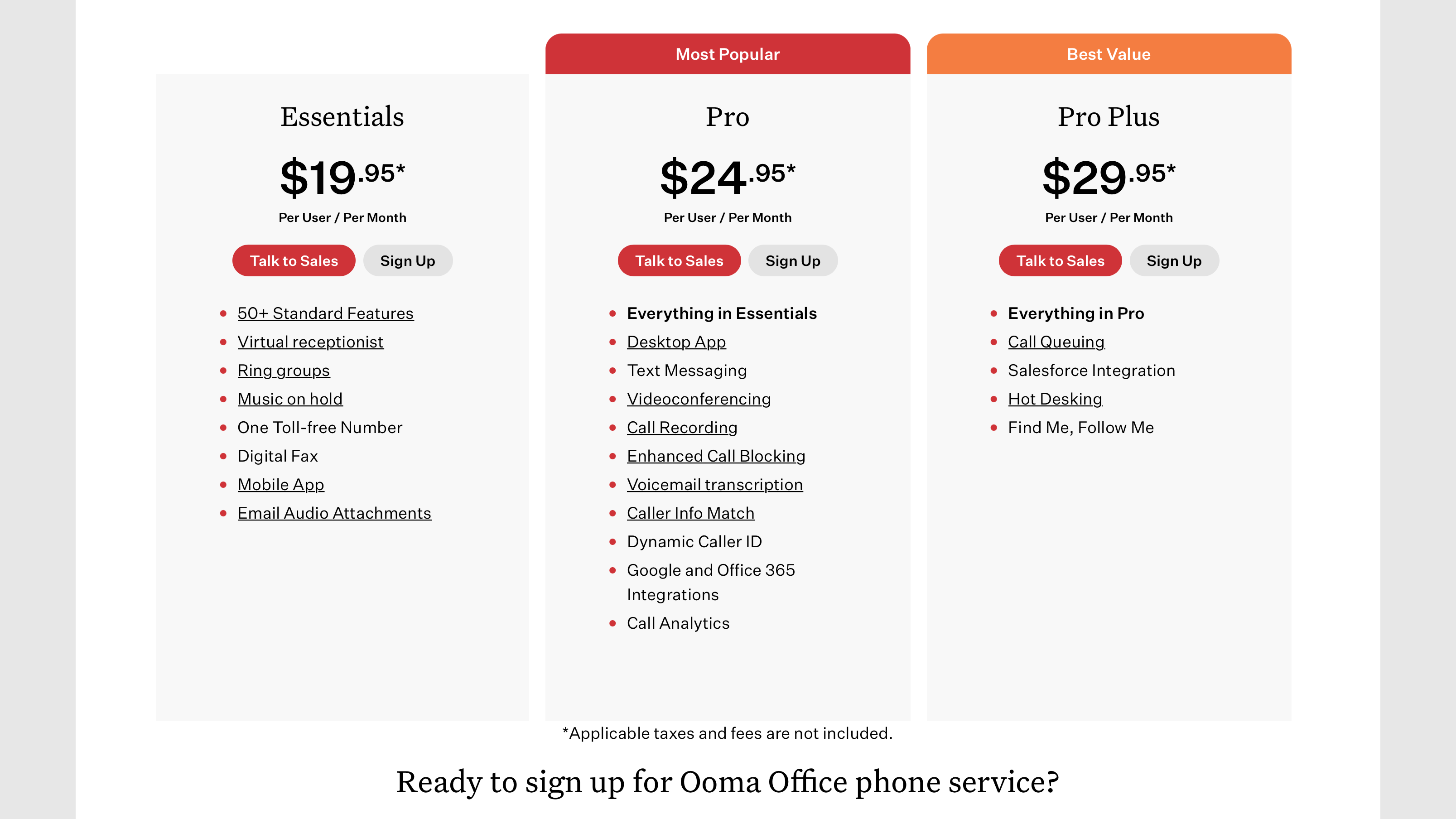
Ooma Office maintains a straightforward, tiered pricing model that scales with small teams without locking users into long-term commitments, a major draw for startups and SMBs wary of hidden fees.
The entry-level Essentials plan costs $19.95 per user per month (billed monthly) and packs over 50 essential features, such as unlimited domestic calling to the US, Canada, Mexico, and Puerto Rico, a virtual receptionist for professional call greeting, seamless mobile app access for on-the-go communication, and even one complimentary toll-free number with 500 included minutes (overages billed at roughly 3¢ per minute). Taxes and regulatory fees are bundled into the quoted price, simplifying budgeting.
Stepping up to the Pro plan at $24.95 per user per month unlocks significant productivity boosters, including a dedicated desktop app for computer-based calling, 250 SMS text messages per month (with additional texts at $0.0095 each), videoconferencing for up to 25 participants via Ooma Meetings, one-touch call recording, and automatic voicemail transcription sent directly to email. This tier appeals to teams that need more than basic telephony, such as quick video huddles or message logs for follow-ups.
The top-tier Pro Plus plan, priced at $29.95 per user per month, caters to slightly larger or more feature-hungry operations with 1,000 monthly texts, videoconferencing scaled to 100 participants, robust CRM integrations (e.g., Salesforce, HubSpot), hot desking for shared extensions, advanced call queuing, team chat functionality, and an auto dialer for outbound campaigns. For enterprises eyeing SIP trunking, multi-site management, custom analytics dashboards, and dedicated call center tools, a bespoke Enterprise plan is available through direct sales quotes, often tailored for 50+ users.
Add-ons keep costs predictable: extra phone numbers cost $9.95 per month; toll-free minutes beyond the bundle incur low per-minute rates; and hardware such as IP desk phones starts at a one-time $59.99 purchase (with bring-your-own-device support). Number porting remains free, though some initial setups may include a $29.95 activation fee. Compared to legacy phone systems, Ooma's model eliminates the hefty upfront hardware investments and maintenance contracts, making it a cost-effective pivot for businesses in rural areas where reliable VoIP is essential.
Ooma Office VoIP: Features
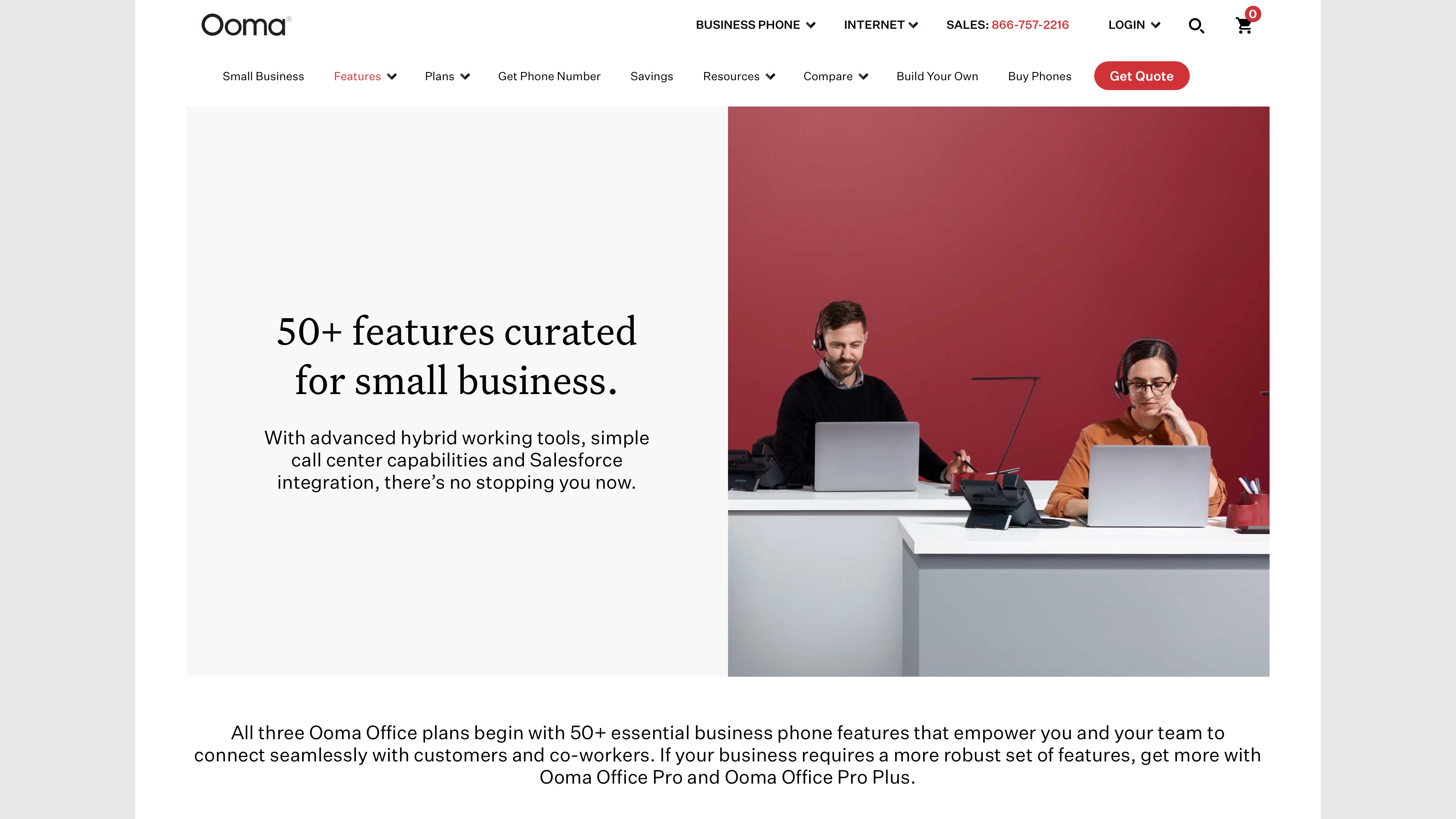
Ooma Office's feature set emphasizes reliability and core business tools, with over 100 capabilities distributed across tiers to avoid overwhelming small users.
Universal access points include Ooma-enabled IP phones, the cross-platform mobile app (iOS/Android), and softphone options, supporting crystal-clear HD voice calls, SMS/MMS messaging, and fax-to-email conversion.
Ring groups allow simultaneous or sequential ringing across extensions—ideal for sales or support teams—while music-on-hold, call forwarding, and virtual extensions ensure no call drops during off-hours.
Pro and higher tiers elevate the experience with call analytics tracking duration, volume, and outcomes; dynamic caller ID that displays team-specific info; enhanced call blocking powered by Nomorobo (flagging over 2 million spam numbers daily); and Ooma Meetings for video calls with screen sharing, recording, and participant controls.
Integrations have matured significantly, now linking with Salesforce and HubSpot for Pro Plus (contact sync, logging), QuickBooks for billing tie-ins, and Google Workspace/Microsoft 365 for calendar-based availability routing.
Pro Plus exclusives such as shared voicemail pools, online appointment booking widgets, HIPAA-compliant mode (with a Business Associate Agreement for handling protected health information), and performance leaderboards foster team accountability.
Multi-site support lets distributed teams (e.g., a PA headquarters with remote reps) manage unified directories, while bulk user imports streamline onboarding. Recent 2026 enhancements focus on AI-driven insights, such as call sentiment analysis previews in Enterprise, positioning Ooma as more than just a phone system but a lightweight UCaaS platform.
Ooma Office VoIP: Getting set up
Getting Ooma Office operational typically spans 15-30 minutes, starting with a quick online signup, number selection or porting (free, processed in one to seven days), and app downloads. Bulk CSV imports handle user provisioning for teams, auto-assigning extensions and devices; compatible IP phones plug into Ethernet for instant provisioning via Ooma's cloud.
For analog holdouts, Ooma adapters bridge existing handsets at low cost. Multi-location setups involve assigning site-specific prefixes and failover rules through the portal—no on-site servers required. Optional white-glove activation ($29.95+) includes expert walkthroughs, ideal for first-timers. Post-setup, firmware auto-updates ensure uptime, with 99.99% reliability SLA on higher plans.
Ooma Office VoIP: Ease of Use
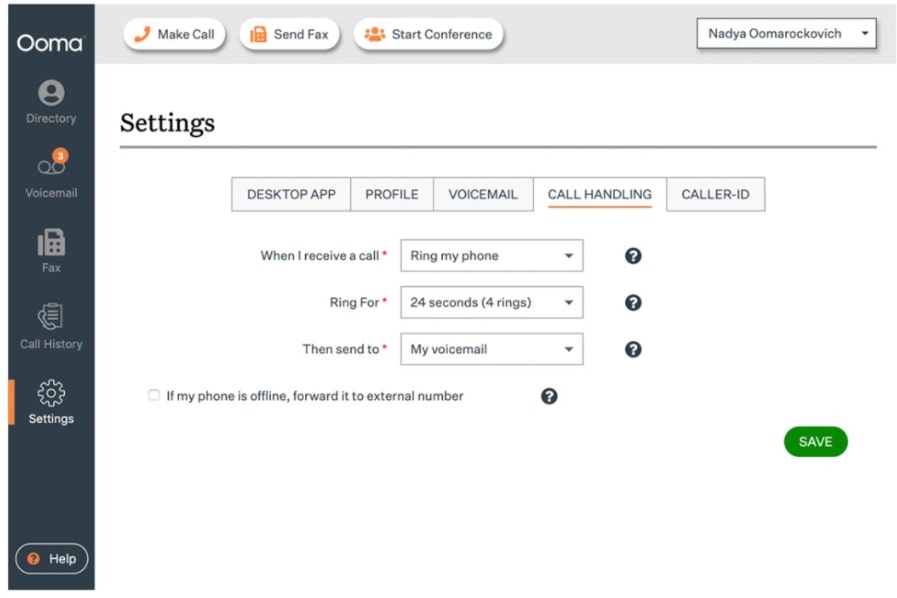
Navigating Ooma Office feels intuitive from the first login, thanks to a clean web-based admin portal that prioritizes speed over complexity—perfect for non-technical owners juggling multiple roles. Adding users, extensions, or ring groups takes just minutes via drag-and-drop interfaces, with customizable ring timers (e.g., 20 seconds per phone before failover) and unlimited virtual receptionist greetings that are recordable directly in the browser.
The mobile app mirrors desktop functionality for calls, texts, and presence indicators (busy/available), enabling field reps to stay connected without lugging hardware.
Pro users rave about the desktop softphone's company directory, one-click video launches, and speed dial groups, which scale decently up to 20-30 seats before feeling crowded. Overall, its low learning curve minimizes training time and earns high marks in user reviews for "set-it-and-forget-it" reliability.
Ooma Office VoIP: Support
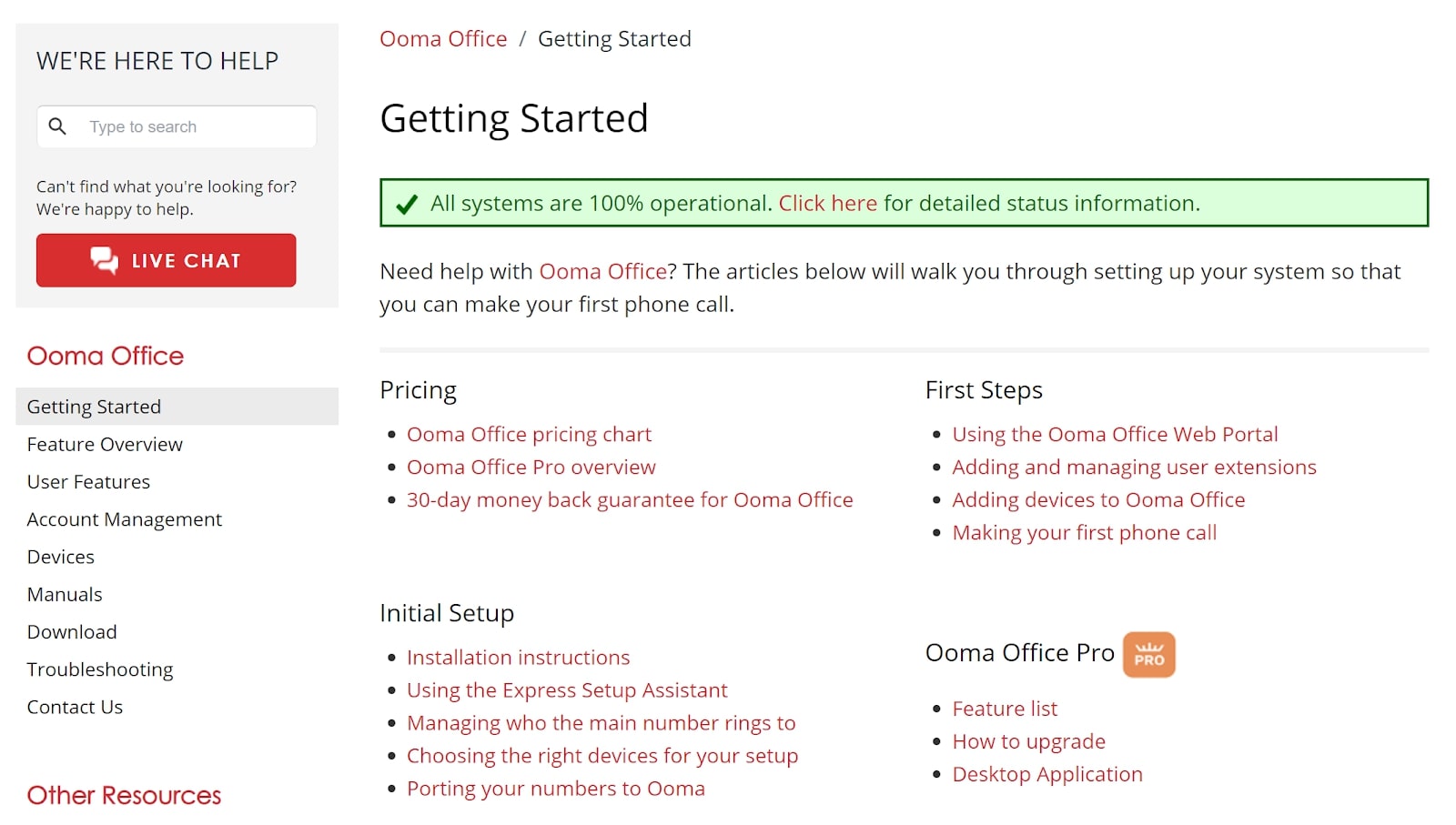
Ooma delivers round-the-clock support via phone (US-based reps), email ticketing, and live chat, resolving 90% of issues same-day per user feedback. A self-service knowledge base brims with 100+ video tutorials on ring groups, integrations, and troubleshooting, plus a community forum for peer tips.
Enterprise clients access white-glove onboarding, custom SLAs, and a dedicated account manager. Response times average under 2 minutes for chat, making it responsive for urgent outages—strong for the price point.
Ooma Office VoIP: Security and privacy
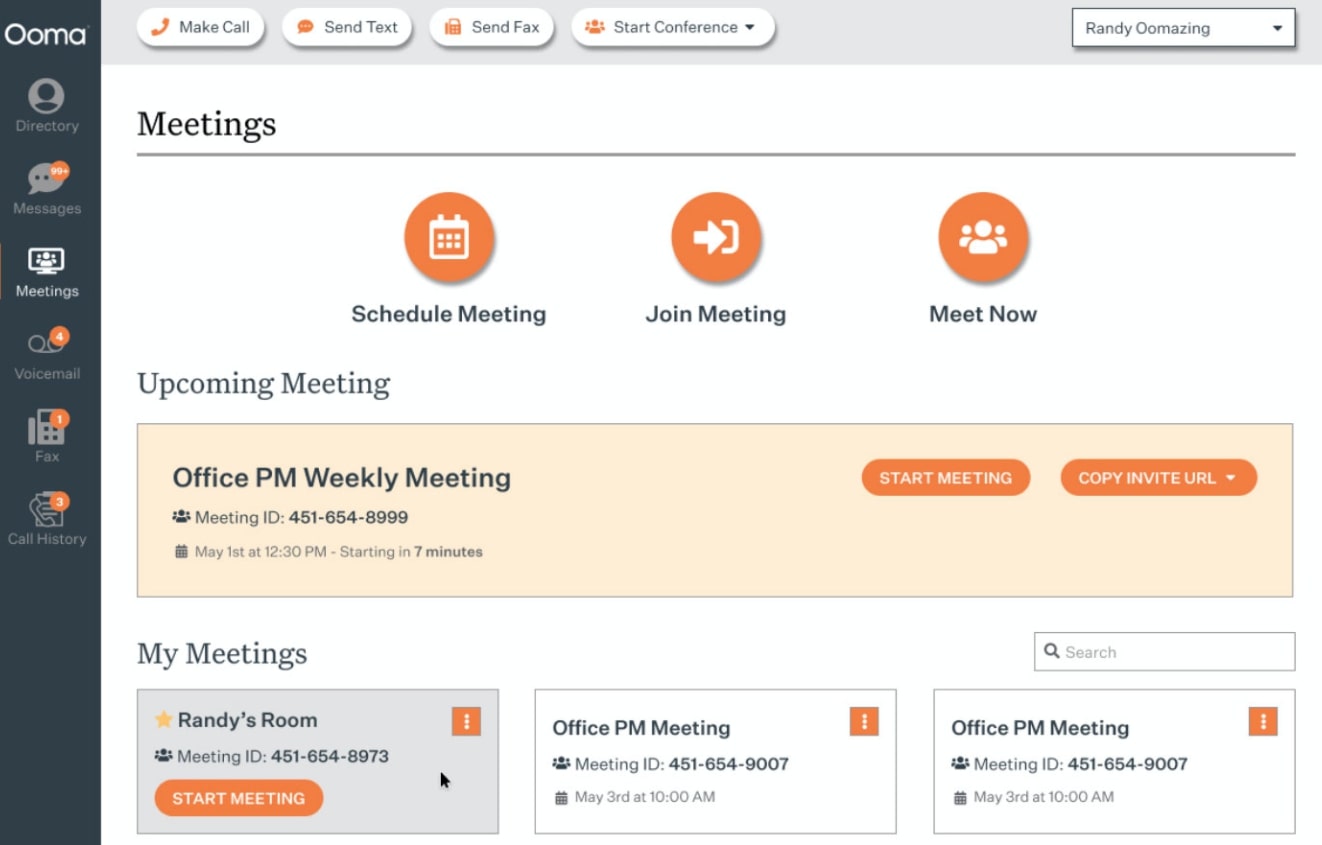
Ooma prioritizes end-to-end encryption for all voice, video, and text traffic (SRTP/TLS protocols), safeguarding data in transit and at rest against intercepts.
Pro/Pro Plus tiers amplify protection with intelligent spam screening (Nomorobo integration blocks robocalls proactively) and password-locked meetings, while HIPAA mode on Pro Plus enforces audit logs, data retention controls, and a signed BAA for healthcare compliance—crucial for PA clinics handling PHI.
The privacy policy outlines data collection limited to service delivery (call logs, billing), with no-sale assurances but legal disclosures permitted. Account access relies on strong passwords, though multi-factor authentication is absent as of 2026 reviews—a noted gap relative to enterprise peers. Regular vulnerability scans and SOC 2 compliance underpin trust for SMBs.
Ooma Office VoIP: The competition
While Ooma Office excels in simplicity and value for small teams, it faces stiff competition from more feature-rich UCaaS platforms at similar prices.
Nextiva's Essential plan starts at $19-$25 per user per month (annual billing), delivering superior call reporting, unlimited SMS/video, and unlimited international minutes to 40+ countries, though it caps advanced AI on base tiers and requires annual commitments.
RingCentral starts at $20 per user per month, with 90+ native integrations (including AI transcription and bots as standard), robust analytics for mid-market scaling, but costs rise for premium video or global expansion.
GoTo Connect, at $27 per user per month for five-plus users, excels in hyper-flexible routing (skills-based queues), deep Salesforce syncing, and granular origin-based reports—ideal for sales-heavy firms—but its interface can feel busier for absolute beginners.
Budget-conscious options like Dialpad undercut at $15 per user per month, bundling AI real-time coaching and transcription across plans, yet skimp on video conferencing depth and toll-free allotments. Finally, 8x8 matches Ooma's $24 entry with 100+ global calling features and contact center add-ons, but its steeper learning curve and setup complexity better serve established enterprises over scrappy startups.
Ooma Office VoIP: Final verdict
Ooma Office remains a top pick for small businesses, those that crave plug-and-play VoIP with virtual receptionist polish and affordable upgrades. Its 2026 refinements in analytics, HIPAA support, and integrations close prior gaps, offering solid mileage without bloat.
That said, if your team anticipates rapid scaling, heavy reporting, or 50+ users, competitors such as Nextiva or RingCentral offer deeper tools at comparable costs, making a trial comparison warranted.








 English (US) ·