
 Image via Doubleday
Published Jul 2, 2026, 8:17 AM EDT
Jeremy has more than 2600 published articles on Collider to his name, and has been writing for the site since February 2022. He's an omnivore when it comes to his movie-watching diet, so will gladly watch and write about almost anything, from old Godzilla films to gangster flicks to samurai movies to classic musicals to the French New Wave to the MCU... well, maybe not the Disney+ shows.
His favorite directors include Martin Scorsese, Sergio Leone, Akira Kurosawa, Quentin Tarantino, Werner Herzog, John Woo, Bob Fosse, Fritz Lang, Guillermo del Toro, and Yoji Yamada. He's also very proud of the fact that he's seen every single Nicolas Cage movie released before 2022, even though doing so often felt like a tremendous waste of time. He's plagued by the question of whether or not The Room is genuinely terrible or some kind of accidental masterpiece, and has been for more than 12 years (and a similar number of viewings).
When he's not writing lists - and the occasional feature article - for Collider, he also likes to upload film reviews to his Letterboxd profile (username: Jeremy Urquhart) and Instagram account.
He has achieved his 2025 goal of reading all 13,467 novels written by Stephen King, and plans to spend the next year or two getting through the author's 82,756 short stories and 105,433 novellas.
Sign in to your Collider account
There are plenty of great horror books written by Stephen King, because obviously, or possibly even “duh.” Carrie came first, if you're looking at his work in the order of publication (though The Long Walk was written earlier), and then came ‘Salem’s Lot, which was an arguable improvement upon the already great Carrie. And then King’s third published novel, The Shining, was better still, and continues to stand as easily one of King’s very best books. It’s especially great if you're judging his works that are purely horror-focused, since there’s an argument to be made that The Stand (more post-apocalyptic/dark fantasy), The Dark Tower (the whole series is a real mix of genres), and 11/22/63 (sci-fi/time travel) are potentially even better. But to stick with horror, yeah, The Shining. It works as both a psychological horror and a supernatural horror book at the same time, and much of its scares come from the interplay between those two strands of horror, and the ambiguity that arises when it’s sometimes hard to tell what’s in someone’s head, and what’s really happening. The reader feels that way because the characters are going through that a lot of the time, too, so it gets understandably immersive.
Narratively, it concerns a struggling writer who takes a job as a caretaker for a hotel during its offseason, and he plans to overcome his writer’s block while there, owing to an assumed lack of distractions. At the risk of making it sound a bit corny, he does bring his personal demons with him, so to speak, and then there are influences within the hotel that affect his sanity. He also brings his wife and son with him, and the latter is more in tune with the horrors of the hotel, and what the hotel can do, owing to his psychic abilities that he’s still getting a grip on. Everything builds slowly yet surely, and the resulting novel is genuinely gripping to read, not to mention well and truly deserving of its classic status (the differences from the movie help, honestly, because it means you can still read The Shining after watching Stanley Kubrick’s The Shining and get an experience that’s quite different, in some ways). Horror books that top this particular King novel are rare, but certainly not unheard of, as the following novels will demonstrate… including one other all-timer of a horror book from King himself.
3 'Frankenstein; or, The Modern Prometheus' (1818)
 Image via Oxford University Press USA
It’s easier to call Frankenstein; or, The Modern Prometheus just Frankenstein, though that full title is admittedly pretty cool. The book’s more than 200 years old, at this point, but it still proves more than readable and very engaging as a defining work of science fiction and horror, within the literary world. That age and a certain timeless quality to the whole thing are big factors in why it’s worth highlighting Frankenstein as an essential piece of horror, and certainly one of the most forward-thinking of its era. It’s gothic horror in style, and has a premise that feels familiar by now at least, since it’s about a scientist who tries to bring dead body parts back to life, with all those pieces being added together and basically birthing a sentient creature. From there, things do get messy and inevitably tragic, since the scientist, Victor Frankenstein, comes to regret creating his creature, and then the creature goes and seeks revenge on Victor for being created and then abandoned.
There is a certain dread and horror inspired by the uncertainty of who to sympathize with, and whether you want to blame certain characters for all the bad things that happen or not.
There’s a lot that can be analyzed here, which makes Frankenstein one of those defining books people often have to read during high school (thereby maybe getting a little sick of all the analyzing, but such is life). It’s about an inhuman creature and another lack of humanity in the creature’s maker, basically, so that makes it almost okay that the creature sometimes gets referred to as just “Frankenstein.” Viewing the creature as more tragic, or a victim, which certain adaptations play with to a greater extent than others, does make (Victor) Frankenstein the monster, so calling Frankenstein the monster is maybe actually okay? The complex morals here are a plus, though, because there is a certain dread and horror inspired by the uncertainty of who to sympathize with, and whether you want to blame certain characters for all the bad things that happen or not. It’s a different kind of uncertainty from The Shining’s, with that novel’s balance of psychological and supernatural horror, but it’s still possibly something worth considering, when it comes to the overall success – and enduring quality – of Frankenstein.
2 'House of Leaves' (2000)
 Image via Pantheon
It’s both challenging and kind of fun to describe House of Leaves, because there’s so much here, and different things that can be focused on, or even outright skipped over. The most straightforward element of the narrative is focused on the members of a family who move into a house that’s more than a little weird. There are measurements done, and it appears to be bigger on the inside than it is on the outside, somehow. That’s nothing, though, compared to the extra rooms the house seems to have, revealing it’s possibly limitless on the inside, as opposed to simply “bigger” than the outside world. People try to document the eerie spaces housed within the house, and there is an apparent documentary that came from this called “The Navidson Record.” Much of the analysis of the documentary and other relevant information comes from a blind man named Zampanò, who died while extensively researching the whole ordeal. A younger man named Johnny Truant takes on Zampanò’s notes, trying to make sense of them, all the while finding he’s possibly going mad like Zampanò might well have before him.
Johnny’s backstory gets explained in some other interesting ways, like with what’s basically a novella called “The Whalestoe Letters,” which are letters from his mother while she’s institutionalized at a psychiatric hospital. And, further, there’s an unnamed editor who pieces together many of Johnny Truant’s notes, and occasionally comments on some of the unusual things there, and noting when certain parts of Johnny’s notes were incomplete or otherwise too confusing. There are multiple narrators and points of view, as a result, and the font constantly changes to reflect this. Formatting-wise, there are also some wild things House of Leaves does, all of them going a long way toward making it a unique and singularly creepy book. If you're after immersion, when you read something that’s a psychological horror/thriller sort of novel, then it’s hard to think of too many other novels that throw you into such a nightmarish and visceral state as House of Leaves. The cult following it’s picked up in the quarter of a century or so since its publication is well-deserved, and even if it’s a long and sometimes challenging book (and one you have to read, owing to its likely unadaptability), it’s very much worth diving into.
1 'IT' (1986)
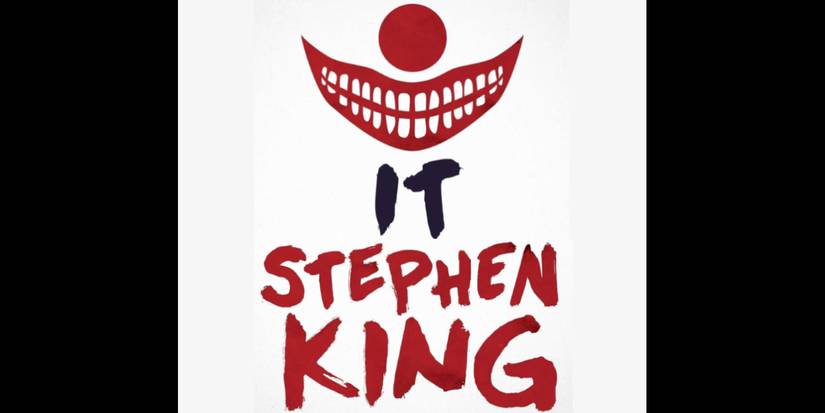 Image via Viking
Another behemoth of a horror book, IT isn't quite as experimental as House of Leaves, sure, but it’s still out there and willing to go to some wild places. It keeps to the conventions of a novel a little more, but there are also multiple narratives at play here, and Stephen King seemed willing to jump around a lot in space and time while also keeping such leaps more or less coherent… at least within the confines of this particular book. You can’t really approach it like most other Stephen King novels, unless you look at the whole thing as being a bit like The Shining and its sequel, Doctor Sleep, colliding with each other, and then having a bit more added as far as backstory goes. The comparison’s made here because The Shining has Danny Torrance (with the psychic powers) as a kid, and then Doctor Sleep is about him as an adult, more than 30 years later. And IT has a group of kids banding together to take on a demonic entity when they're all about 12 years old, though this same entity re-emerges every 27 years, so they have to get together once more as adults to defeat it (or IT) again.
The structure keeps things even more interesting because both timelines play out at roughly the same time, so it’s not like you get one half of the characters as kids, followed by a second half with them as adults. Further, there are interludes throughout IT that give more by way of backstory for the main villain, as well as the town of Derry, and it’s through one of these interludes that IT actually has a connection to The Shining, thanks to one supporting character appearing in both novels. Naturally, IT proves pretty important to the overall multiverse Stephen King has spent years (and many books) building, but you can also appreciate it on its own terms as one of the most ambitious and effectively frightening horror novels of all time. Further, it’s got a lot more to offer than just horror, since the coming-of-age elements here are powerful, and IT can be surprisingly emotional at times, too. It’s undeniably one of King’s biggest books, and also, arguably, one of his very best.
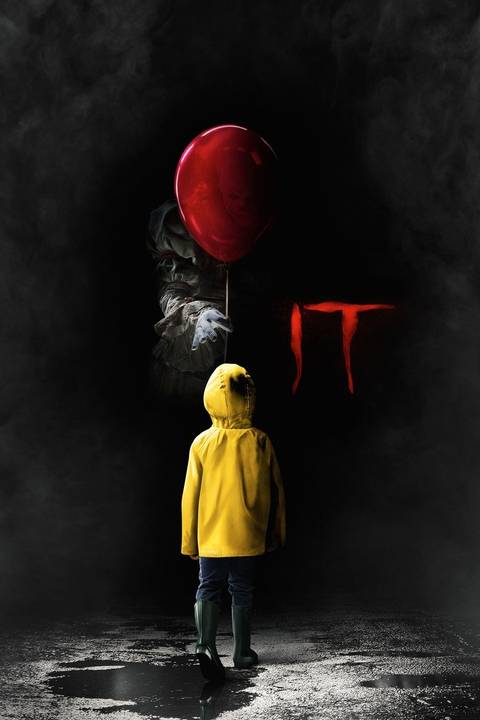
It
Release Date September 8, 2017
Runtime 135 minutes
Writers Cary Joji Fukunaga, Gary Dauberman, Chase Palmer
![Rebecca Ferguson Knew How Her Sci-Fi Series Would End Years in Advance [Exclusive]](https://static0.colliderimages.com/wordpress/wp-content/uploads/2026/07/copy-of-collider-template-5.jpg?w=1600&h=900&fit=crop)




 English (US) ·