
Netflix
This post contains spoilers for Netflix's "One Piece" season 2, episode 2.
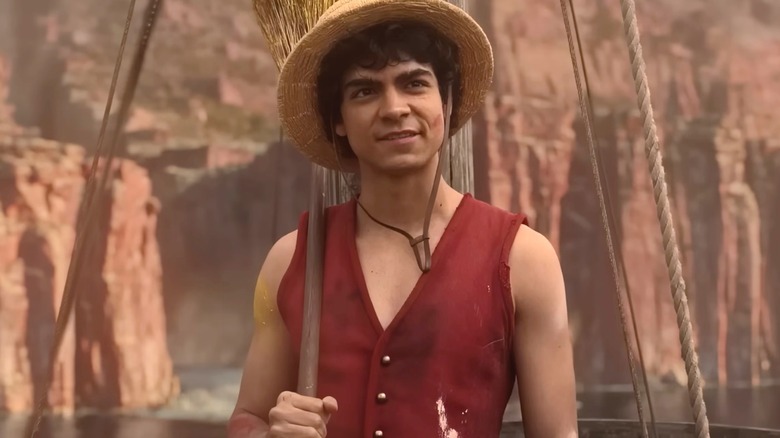
After narrowly escaping from some bad guys in the season 2 premiere of Netflix's live-action "One Piece" adaptation, the Straw Hat crew runs into trouble while en route to the Grand Line in episode 2. Their ship on the verge of being capsized, our heroes head toward a giant island whale ... and sail right into its cavernous mouth. Thankfully, Luffy (Iñaki Godoy) uses his stretchy limbs to escape and seek aid from a lighthouse keeper named Crocus (Clive Russell). This, in turn, kicks off the Reverse Mountain Arc, the first entry in the Arabasta saga in the original "One Piece" anime and manga.
Most notably, this entire chain of events does a commendable job of introducing one of the most beloved characters in the "One Piece" franchise to Netflix's live-action series: the giant whale Laboon. (Hence, the Reverse Mountain Arc is alternatively known as the Laboon Arc.)
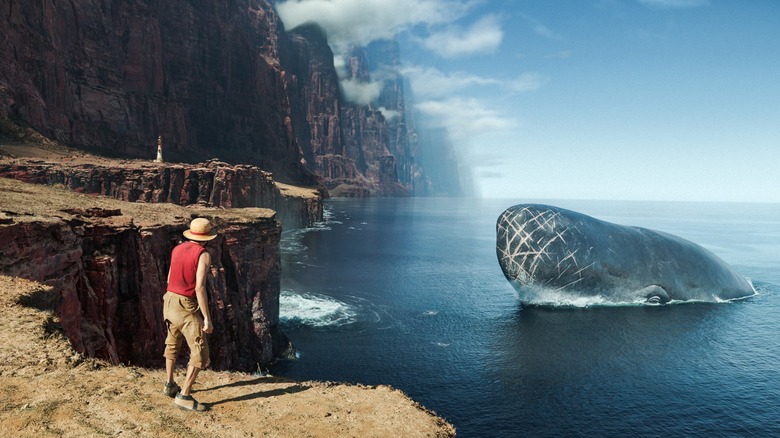
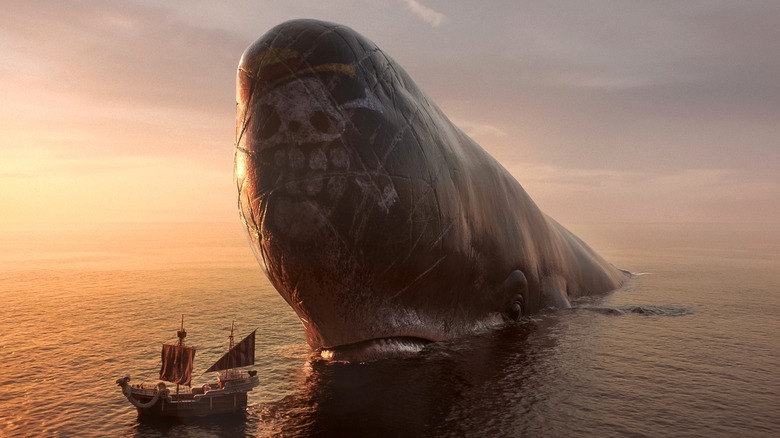
As Crocus explains to Luffy, Laboon was separated from his pod as a baby. Although the whale doesn't mean any harm, the other Straw Hats are in danger due to its obsession with butting its head against the (impenetrable) Red Line. Laboon, you see, has been doing this for decades, causing it to garner numerous scratches. This also clues us in to Laboon's tragic backstory, which goes back to the time he spent with the Rumbar Pirates and the promise that was made to him 50 years ago.
Laboon only ever wanted his friends to return in One Piece
Netflix
Perhaps the most impressive thing about this live-action adaptation is the way it captures the distinct tone of the "One Piece" manga and anime, telling a captivating tale filled with strange wonders and even stranger beasts. That's especially true of its take on the Laboon Arc in season 2, in which Crocus chats with Luffy about his experience meeting the Rumbar Pirates at Twin Cape before their journey to the Grand Line.
As Crocus recounts his story, we get to see a baby Laboon accompanying the Rumbar Pirates and happily splashing in the waters while a certain pirate (one who will become integral to the greater "One Piece" narrative down the line) plays "Binks' Brew" for the whale. Although the crew became genuinely attached to Laboon, we learn that Crocus warned them that the young whale wouldn't be able to survive the adventure they were about to undertake. So, before leaving, the Rumbar Pirates' captain promised Laboon that they would return in a few years.
Being as loyal as he is, Laboon waited for 50 years for his friends, despite Crocus' repeated attempts to console the whale. All the while, Laboon kept ramming the Red Line with his head, fueled by his desire to break it. Moved by the tale, Luffy then rouses Laboon the only way he can: by singing "Binks' Brew" and challenging him to a fight. He even paints his Jolly Roger on Laboon's head and promises to come back for the fight one day. Until then, he forbids Laboon from ramming his head, as the insignia — the symbol of their friendship — would wash away. Consoled by this new promise, Laboon releases Luffy's friends and embraces hope.
The live-action One Piece does justice to the Laboon Arc
Netflix
Season 3 of "One Piece" has already been confirmed, but we have no idea how long the series will last. After all, Eiichiro Oda's ongoing "One Piece" manga crossed the 1000-chapter threshold a while back, and the story is nowhere near over. Keeping this need to embrace brisk pacing in mind, it's great that the Netflix show fleshes out Laboon as well as it does.
The one crucial change that the live-action "One Piece" makes is that Crocus is not seen living inside Laboon's stomach. In Oda's manga, Crocus' one-track devotion to protect the whale is symbolized by this act, while he's characterized as openly compassionate. In comparison, the live-action Crocus puts on an air of aloofness, which Luffy is able to disarm with his persistent sincerity. This might explain why Crocus doesn't live inside Laboon in the live-action "One Piece": He may act like he doesn't care, but he's always looking after the whale from a distance.
As for Laboon, he underscores the theme of found family that the Straw Hats embrace during their journey. "One Piece" might've built its intricate mythos on simple values such as camaraderie and peaceful coexistence, but its complexity comes from Oda's knack for compelling characterization. Laboon is set to appear briefly in future storylines like the Thriller Bark Saga and the Fish-Man Island Saga, but his introductory arc is so compelling that it's worth remembering with fondness. The Netflix series accomplishes this within a single episode while juggling the Baroque Works storyline, which is nothing short of impressive for an adaptation that inevitably has to skip some things from its immense source material to tell a more streamlined story.
Season 2 of "One Piece" is streaming on Netflix.





 English (US) ·