
 4 hours ago
18

Published Oct 25, 2026, 8:05 AM EDT
Patricia is the former editor-in-chief of Kotaku, where she spent a decade writing and editing. Prior to that, she served as the Culture Editor at Polygon, and as a reporter at The Verge. Hernandez specializes in Pokémon TCG, Nintendo, and offbeat internet culture stories.
Shigeru Miyamoto reveals new insight into the NES classic
 Image: Nintendo
The original side-scrolling Super Mario Bros. is widely considered to be one of the best games of all time, and the list of reasons justifying that assertion is long. The NES game made Nintendo into a household name, and Mario into a media icon as recognizable as Mickey Mouse. The 1985 video game helped bring games into the mainstream, and it defined platforming as a video game genre. Super Mario Bros. remains one of the best-selling games of all time. Yet if you ask series creator Shigeru Miyamoto, none of these things truly capture SMB's biggest contribution to the world of video games.
The gaming legend, known for franchises like Zelda and Donkey Kong, recently received a prestigious Japanese cultural award that is typically reserved for artists like painters and Nobel Prize winners. The accolade was followed by a long press conference full of fantastic anecdotes from the designer's nearly 50-year career. Here, Miyamoto gave some insights on the creation of Super Mario Bros. — and his outlook on the seminal game decades after its release.
The key to Super Mario Bros.' success
He recalled, for example, thinking of the series' primary verbs through the idea of "land, sea, and air" — or running, flying, and swimming.
"When we were kids, we'd look out the window, point, and imagine people running, flying, falling into rivers ...and so on," Miyamoto said. "In Super Mario, you can actually do that."
Miyamoto then tried to identify what he saw as Super Mario Bros.' biggest invention — the most intriguing aspect of the original platformer. "Mario doesn't actually fight Bowser," Miyamoto said. "Normally, if there's a boss at the end, you have to fight him, right?"
Miyamoto revealed that, while conceptualizing the game, Nintendo had trouble designing a standard boss battle. "I realized that since it's a game where you keep running to the right, how about making it so that the person who reaches the far right wins?" Miyamoto recalled. "Then I had a brilliant idea: 'Why not just jump over the opponent instead of fighting?' All you have to do is jump over Bowser, and he'll fall. I found it surprisingly fun when I tried it, and I was really happy when I realized that."
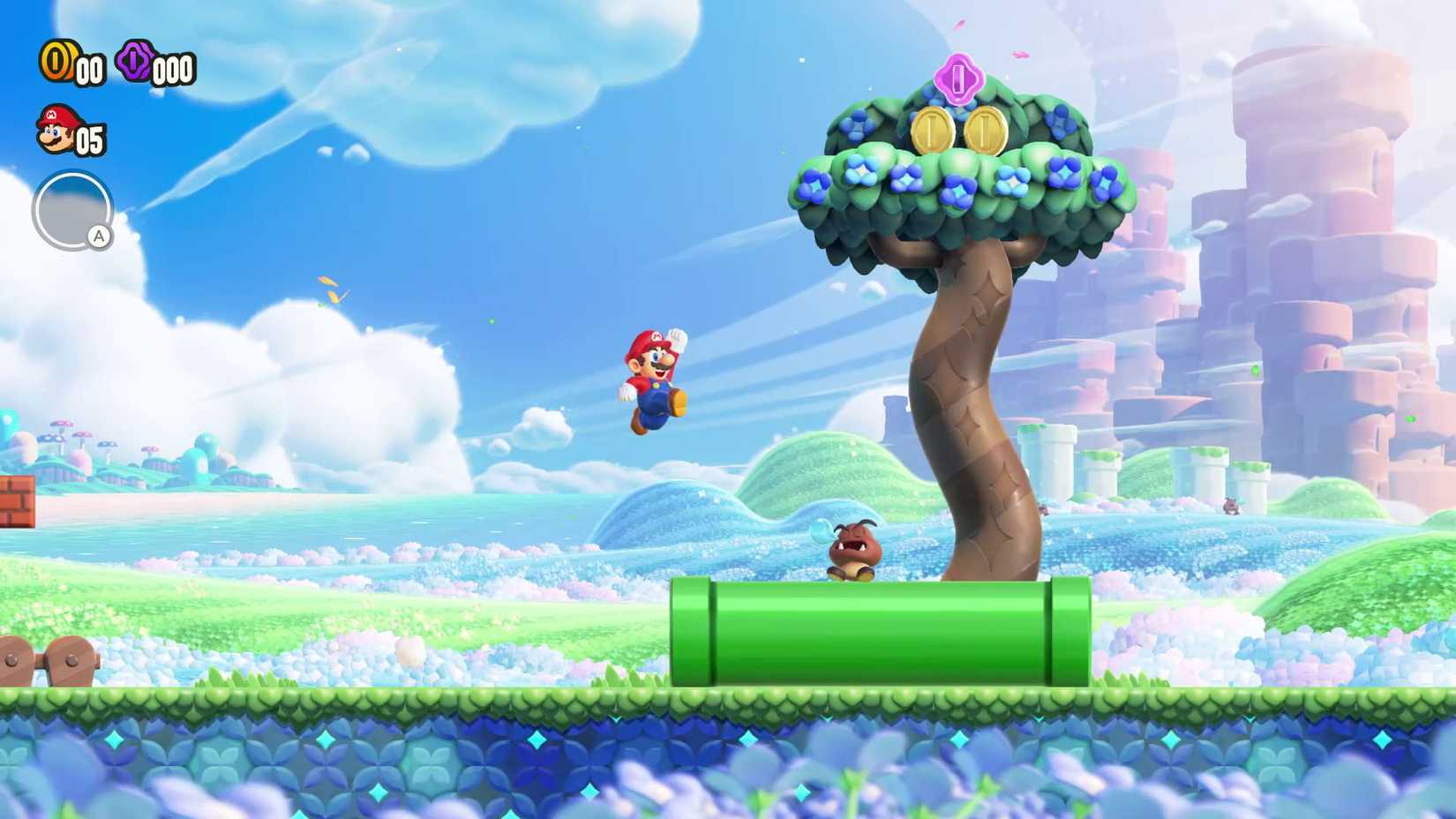 Image: Nintendo EPD/Nintendo
While modern Super Mario games do make the player actively fight Bowser, Nintendo maintains that Mario is not inherently a violent guy. Even as the plumber chucks Goombas into the abyss, some players see Mario's eternal fight against Bowser as nothing more than a stage play. This suspension of disbelief explains how the two so-called enemies sometimes team up in other video games. Any time Mario has veered from this design philosophy — like when he was given a gun in Mario + Rabbids Kingdom Battle — it has usually been preceded by long discussions about what is appropriate for the character.
To Miyamoto's credit, 41 years after Super Mario Bros. release, video games still struggle with delivering fun boss battles. Really, most big-budget video games emphasize combat. In that sense, the original Mario game remains, to this day, an unusual take on conflict resolution.




 English (US) ·