
 1 hour ago
6
1 hour ago
6
From a team of former Ubisoft people
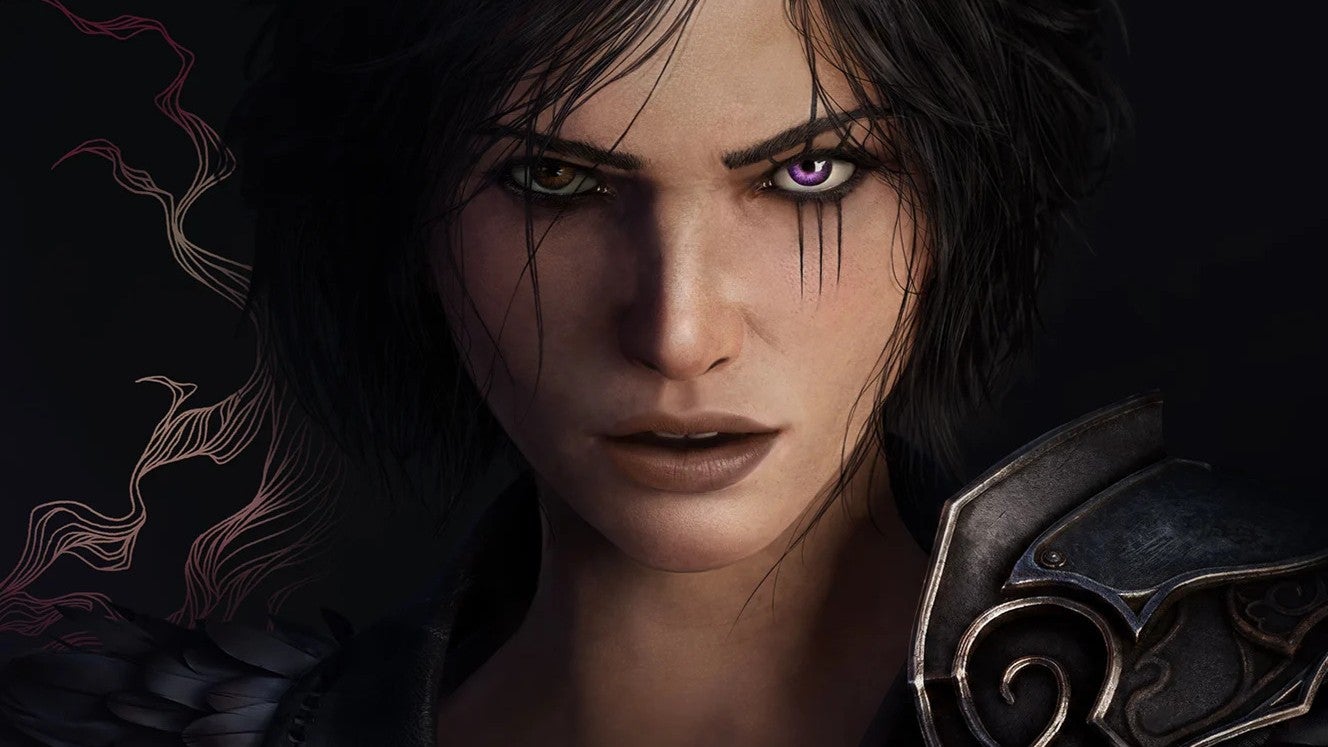
This week we got our first proper look at Warlock: Dungeons & Dragons, Wizard of the Coast's new RPG-tinted action game. In theory, it's the story of a grizzled weapon master, searching a volatile pocket dimension for somebody precious to her, but I disapprove massively of this objective, because it sounds like it's going to get in the way of searching for weird new spells and making a catastrophic mess.
Created by a team of former Far Cry, Watch Dogs and Splinter Cell devs, Warlock gives you an open world full of charms, cantrips and conjurations to gather and fool around with. I'm really hoping it's as open-ended as they're making it sound. Here's a video, followed by some commentary from creators Invoke.
Warlock takes place in Darkon, a Domain of Dread sealed away in the mist. Kind of like Blackpool, but with more turrets and mountains than rollercoasters. The aforesaid weapon master is Kaatri. Early on in the story, she teams up with an ancient witch queen, Tasha, who is appropriately voiced by Lady Dimitrescu off Resident Evil Village. Tasha grants the meathead Kaatri a bunch of magical powers. There's a price to pay, naturally, but I imagine you won't have to worry about that till the endgame. In the meantime: tentacle attacks!
Warlock features a variety of D&D spells, including old standbys like Eldritch Blast, Gust of Wind, Levitate, and Black Tentacles. The devs have tampered with their workings to suit the solo real-time action format: Fae Switch, for example, is a reimagined version of a spell from D&D's 4th edition, which here allows you to swap places with an enemy. Pact of the Blade Warlock, meanwhile, lets you summon physical weapons such as swords and hammers.
"They're not all typical to a Warlock class, so we're bringing new additions based on her patron, Tasha, to the game," explains Invoke studio founder and former Splinter Cell and Far Cry developer Jeffrey Hattem in a roundtable chat published by wccftech. "But we're also introducing a couple of new spells for the game. One of them is Tasha's Leash, where Kaatri can summon ethereal tendrils that'll grab objects or monsters and bring them towards her. She can also throw stuff after grabbing them."
Hatten stresses that "the spells are intended to be versatile tools that you can use like a tool in your toolbox, and that's how we want players to play the game". Versatility is the goal: you can, for example, use your Black Tentacles to hold up a box for platforming purposes, or deploy them to rip an axe from an ogre's fists.
Invoke's general manager and former Watch Dogs 2 senior producer Dominic Guay adds that Invoke's members are drawing on experience of games with "a systemic design approach, where you offer powers to players or abilities that are really like tools to play with, experiment with, and be creative". Some spells also combo together. You can pop out a conjuring table and summon a rainstorm, for instance, which will make your chaining Witch Bolts all the zappier.
I wouldn't say any of the above applications surprise me. Certainly, it's nothing like the kind of inadvertent cascade effect we see in Baldur's Gate 3. But I like the intention here. I also like that you aren't just plucking spells from an upgrades tree. A lot of them are optional finds, hidden around a world that's described as busier than it is vast.
"[F]rom an open world perspective," says Guay, "we want to create one with a lot of density. So yeah, you'll have to travel, but we don't want you to have daunting distances to travel where it takes 15 minutes to get somewhere. So you should always have interesting things around you that catch your attention, and different opportunities that draw you in."
In general, the game ranks exploration over "forced" story beats. The devs are trying to keep wayfinding features like in-game maps to a minimum. They've spent a lot of time pinning down the world's size. "You can't go from mountain to ocean and to all sorts of different terrain types if you only have 100 yards," Guay adds elsewhere in the chat. "So you need distance. And I think a lot, when you talk about the size of open worlds, it's always really tricky to talk about that because it's mostly how it's perceived more than the actual square footage of the world. So it is a pretty big world in the sense that you can roam it for a long time if that's what you're driven to do."
Even as they embrace – perhaps, invoke - D&D's copious history of wizarding, Invoke are fearful of scaring away people who have never rolled a D20. "What we don't want is for D&D to be a barrier to entry," Hattem said. "Like any good action adventure game, you don't need to come with a background of knowledge of D&D. Kaatri is a stranger in a strange land as she enters this world, and players are at par with that as she goes on this adventure. So anything that you need to learn about the game, you'll pick up as you go in and explore the world."
It's out sometime in 2027. I'm broadly enthused! Leaving aside the Baldur's Gate comparison, it doesn't yet look as receptive to sorcerous improvisation as Eternal Strands, which trades more overtly on real-time physics. But I feel like Invoke have the experience to deliver something pleasantly volatile. Just, don't be afraid to break the game a bit, devs. Every good spell system should be a bit broken.




 English (US) ·