Batman’s 87-Year Comics History Is Rich
To this day, one of Batman’s greatest boons is that his publication infancy in comic book source material from almost a whole century ago was full of indecision regarding what the tone of the character and his stories would be, which was largely dependent on what was successfully marketable. The first few decades of Batman arguably did DC a huge favor by not confining him to one tone, and yet the campiness and silliness of the 1960s Batman era became iconic.
However, this era was quickly followed by Dennis O’Neil Detective Comics and Batman runs, which began in 1970 and reclaimed the character’s drama-fueled, thriller-esque, and pulpy tone. Ever since, O’Neil’s signature has bled into every subsequent run and has obviously been paramount to the tone that future Batman runs and stories would inherit, whether that influence is worn knowingly and willingly or as a natural byproduct of this tone being so significant and lucid for Batman as a blank canvas.
This predates Frank Miller’s The Dark Knight Returns, as well as Alan Moore’s Batman: The Killing Joke, which are more singularly well-known, but may have ceased to be if not for O’Neil’s vital contributions to the tone that was reinstilled in Batman’s mythology and atmosphere.
Absolute Batman Is A Rejuvenation
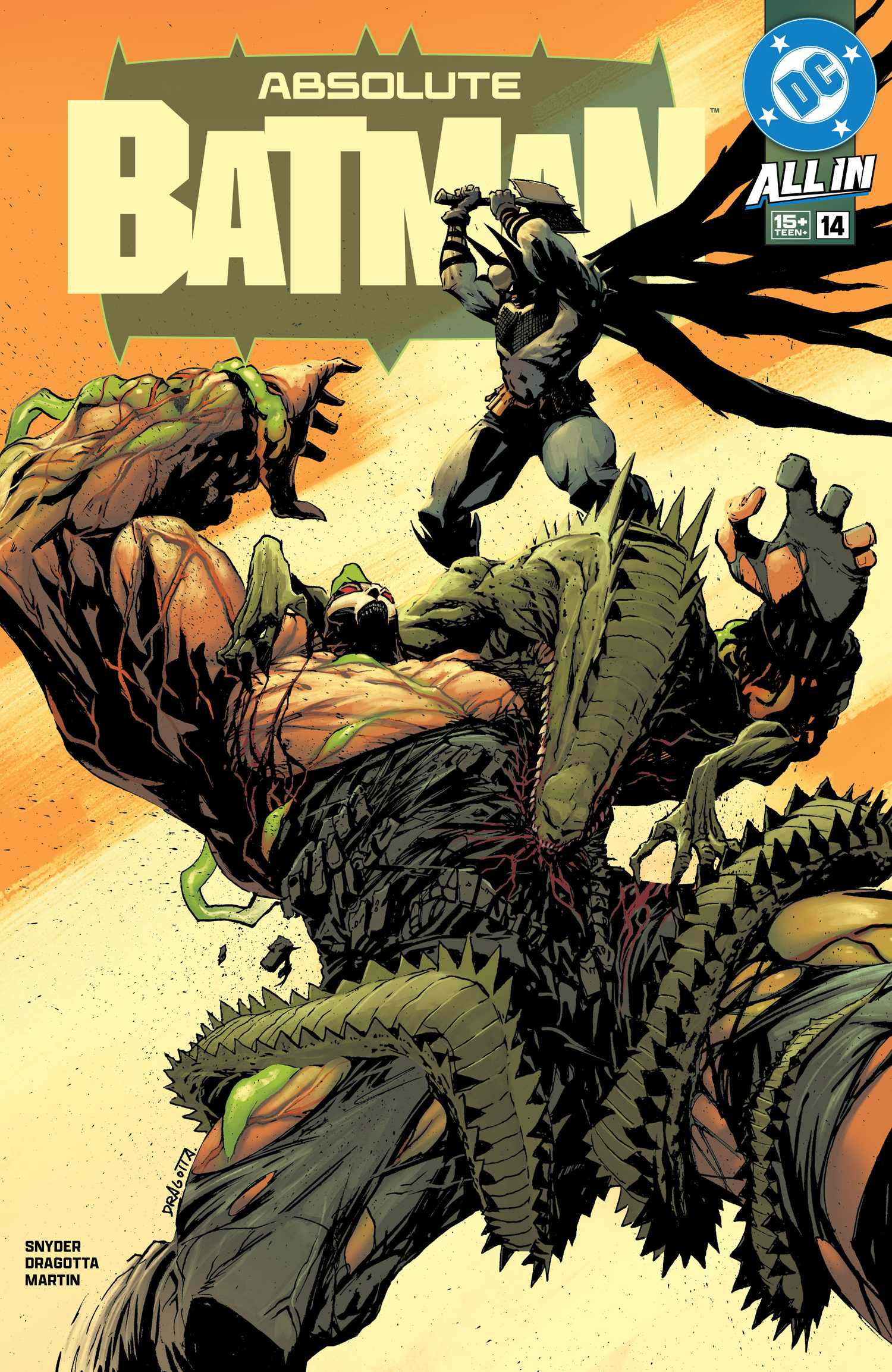
Absolute Batman is punctuated by radical deviations from traditional lore. Its hook is an original, topsy-turvy narrative that is free to rewrite Batman’s established history as readers know it, resulting in countless surprises and character developments that run perpendicular to how they have been executed in the mainline canon.
Wielding this hook and milking it for all it is worth, Absolute Batman’s tone is outrageously epic and euphorically graphic, but it strikes a neat balance between heartwarming beats of humor and levity and horrific beats of tragedy and torment. This universe having its own canon allows Snyder and Dragotta to reimagine and redesign classic Batman rogues’ gallery villains, too, with antagonists like Bane, Joker, Poison Ivy, and Scarecrow being fascinating thus far.
It is a thrill to tune into each subsequent issue simply to discover what novel terror might debut, and the series has plunged ahead at breakneck speed since the end of its introductory Black Mask arc. Plus, with redacted cover teasers, solicitations, and character design reveals made public with announcements made before readers will see such information within the pages of the book itself, there is a lot to look forward to, including Oswald Cobblepot’s Penguin and Harvey Dent’s Two-Face.
Of course, Absolute Batman is not so far removed from Batman’s fundamental ethos that the character has become unrecognizable, but the tone of the comic (and the Absolute universe) is deliberately distinct. It is unknown how long Absolute Batman will go on for, though Snyder has stated that he and Dragotta “have at least 35–40 planned now.”
This was said back in January, and it is not out of the realm of possibility that this issue count could be doubled by now. Either way, it would be asinine for DC to idly let Absolute Batman’s well run dry when it is so successful for the brand and comics, in general, and every other Absolute run deserves to have the same legroom to explore their titular characters further.
Absolute Batman has a LEGO skin in the upcoming LEGO Batman: Legacy of the Dark Knight, and is being adapted into a themed season expansion for Batman: Gotham City Chronicles, a DC miniatures board game.
Batman’s Mythology Is Timelessly Malleable
Batman’s campiness, while far less beloved than his darker material, has persisted as a nostalgic era. Indeed, an element of campiness has been a key component in ensuring that Batman can be molded to children’s content as swiftly as he is molded to adult content, with the persistence of camp as a foundational Batman underscoring being shelved after Batman Forever and Batman & Robin in the 1990s.
There have been plenty of fantastic Batman comics in the last 30-or-so years alongside phenomenal animated TV shows and movies. That said, Snyder has made a gigantic splash via the New 52 Batman run, particularly concerning the Court of Owls and Joker, and Absolute Batman is finally a drastic shove toward a new tone and era that will define the character’s foreseeable future.
Dan Watters and Hayden Sherman’s Batman: Dark Patterns is a wonderful limited series, rooted in Batman’s formative years and steeped in the character’s work as a detective in a grimy, abhorrent Gotham City. Inspired by Matt Reeves’ The Batman, this flavor of hyperrealism with an emphasis on gritty noir tales represents its own corner of the mythology that is also adored.
Meanwhile, the mainline Batman run, from writer Matt Fraction and artist Jorge Jiménez, is less than 10 issues in and has already presented readers with an endearing romantic interest, who is crucial in dissecting and deconstructing the psyches of Batman’s classic villains. Still, as lighthearted and Bat-Family-centered as Fraction’s run’s themes are, Absolute Batman is striking due to the liberty with which it can be bombastic, pulpy, and dark in a way that counters the familiar tones that Batman has been marinating in.
Absolute Batman #20 is scheduled to be released on May 13, 2026.
Created By
Bob Kane, Bill Finger
Alias
Bruce Wayne
Alliance
Justice League, Outsiders, Batman Family
Race
Human
Franchise
D.C.
One of DC's most iconic heroes, Batman is the vigilante superhero persona of billionaire Bruce Wayne. Forged by tragedy with the death of his parents, Bruce dedicated his life to becoming the world's leading martial artist, detective, and tactician. Recruiting an entire family of allies and sidekicks, Bruce wages war on evil as the dark knight of his hometown, Gotham City.








 English (US) ·