


Published May 6, 2026, 8:00 PM EDT
Tom is a Senior Staff Writer at Screen Rant, with expertise covering everything from hilarious sitcoms to jaw-dropping sci-fi epics.
Initially he was an Updates writer, though before long he found his way to the TV and movies team. He now spends his days keeping Screen Rant readers informed about the TV shows of yesteryear, whether it's recommending hidden gems that may have been missed by genre fans or deep diving into ways your favorite shows have (or haven't) stood the test of time.
Tom is based in the UK and when he's not writing about TV shows, he's watching them. He's also an avid horror fiction writer, gamer, and has a Dungeons and Dragons habit that he tries (and fails) to keep in check.
Sign in to your ScreenRant account
Netflix’s Black Mirror has built a formidable reputation for bold, unsettling storytelling that regularly defies expectations. However, as inventive as Black Mirror can be, there’s another Netflix anthology that not only matches it when it comes to delivering ambitious and weird sci-fi but surpasses it entirely.
Premiering on Netflix in 2019, the series is a dizzying anthology that takes a similar formula to Black Mirror but pushes it in a far wilder direction. While Black Mirror is often celebrated as Netflix’s go-to for strange, thought-provoking sci-fi, it doesn’t come close to matching Love, Death & Robots when it comes to sheer unpredictability.
Netflix Anthology · Animated Sci-Fi Love, Death & Robots Trivia 18 episodes per season. Zero rules. Infinite universes.
❤LoveConnection & desire
💀DeathBrutal & beautiful
🤖RobotsSilicon souls
🎨AnimationEvery style imaginable
🛰Sci-FiMind-bending futures
INITIALIZE SEQUENCE →
01
Love, Death & Robots is executive produced by two of Hollywood’s biggest names. One is Tim Miller, the director of Deadpool. Who is the other legendary filmmaker behind the series?
AJames Cameron BDavid Fincher CGuillermo del Toro DDenis Villeneuve
✓ Correct! David Fincher and Tim Miller had been developing the concept of an adult animated anthology since 2008, originally envisioned as a reboot of the cult magazine Heavy Metal. When that fell through, Netflix picked up their vision and Love, Death & Robots was born.
✗ Simulation failed! The answer is David Fincher. The Fight Club and Social Network director teamed with Tim Miller to create the series. Fincher and Miller had a shared passion for adult animation and spent nearly a decade developing the concept before Netflix brought it to life in 2019.
NEXT →
02
The beloved “Three Robots” episode features three AI characters touring a post-apocalyptic city. In the sequel episode “Three Robots: Exit Strategies,” they explore how different groups of humans tried to survive the apocalypse. What ultimately inherited the Earth?
ACockroaches BThe robots themselves CCats DPlants
✓ Correct! In the delightful twist ending, cats have evolved opposable thumbs and taken over civilization. The original episode ends with the reveal that cats manipulated humanity all along, and the sequel doubles down on this gag with the cats running a fully functional society.
✗ Simulation failed! The answer is cats. In the show’s funniest recurring twist, felines evolved opposable thumbs and inherited the planet after humanity wiped itself out. The three robots discover this to their bemused horror in the original episode’s iconic final scene.
NEXT →
03
“Zima Blue” is widely considered the series’ masterpiece. The episode follows a reclusive artist obsessed with a specific shade of blue. What is Zima revealed to have originally been before becoming a sentient artist?
AA pool-cleaning robot BA space probe CA painting AI DA medical android
✓ Correct! Zima was originally a simple pool-cleaning robot whose view of the world was defined by the blue tiles of the pool. Through centuries of upgrades, he evolved into one of the universe’s greatest artists — but his final masterpiece was returning to that original pool, stripping away his enhancements to become what he once was.
✗ Simulation failed! The answer is a pool-cleaning robot. The “Zima Blue” of his famous paintings was always the color of the pool tiles he was built to clean. The episode — based on a short story by Alastair Reynolds — is a profound meditation on identity, purpose, and finding peace by returning to your origins.
NEXT →
04
“Sonnie’s Edge” was the first episode of the entire series and set the tone with brutal monster fights. What is Sonnie’s shocking secret — the real “edge” that makes her unbeatable in the beastie arena?
AShe can feel her beast’s pain, giving her faster reflexes BShe takes a drug that enhances her neural link CHer beast has been illegally modified with military tech DHer consciousness actually lives inside the beast, not her human body
✓ Correct! Sonnie’s human body is just an empty shell — her real consciousness was transferred into her fighting beast after she was brutally attacked. She fights with the desperation of someone whose actual life is on the line, because it literally is. When her enemies kill her “human” body, she simply walks away inside the monster.
✗ Simulation failed! The answer is that her consciousness lives inside the beast. Sonnie’s human body died long ago — or rather, it’s an empty husk. Her mind was transferred into her creature after a violent attack, meaning every fight is truly life-or-death for her. That desperation is her edge.
NEXT →
05
“Jibaro” is the Volume 3 finale that stunned audiences with its frenetic animation style. The episode features a deaf knight who is immune to a siren’s deadly song. Who directed this visually groundbreaking episode?
ARobert Valley BAlberto Mielgo CTim Miller DJennifer Yuh Nelson
✓ Correct! Alberto Mielgo directed “Jibaro” and also directed “The Witness” in Volume 1. His hyper-kinetic, painterly animation style is instantly recognizable. Mielgo also won an Academy Award for his short film “The Windshield Wiper,” cementing his status as one of animation’s most exciting auteurs.
✗ Simulation failed! The answer is Alberto Mielgo. The Spanish animator and director also created “The Witness” in Volume 1. His style — frantic camera work, motion-captured performances, and painterly textures — makes “Jibaro” look like nothing else in animation. He’s also an Oscar winner for the short film “The Windshield Wiper.”
NEXT →
06
“Beyond the Aquila Rift” follows a spaceship crew who wake from hibernation thinking they’ve arrived at their destination. The horrifying twist reveals the truth. What is actually happening to the crew?
AThey are trapped in a web by a massive alien spider creature generating a comforting illusion BThey died in transit and are in a digital afterlife CThey are in a government simulation being studied DThey have been cloned and the originals are long dead
✓ Correct! The crew was flung impossibly far off course and captured by a gigantic alien arachnid creature. The “Greta” the captain has been romancing is actually the spider, projecting a comforting illusion to keep him calm while feeding on the cocooned crew. When the illusion drops, the body horror is unforgettable.
✗ Simulation failed! The answer is that they’re trapped in an alien spider’s web. The creature generates a warm, familiar illusion — an old flame, a cozy bar — to keep its prey docile while their real bodies waste away in cocoons. The final reveal of the spider and the decayed crew is one of the show’s most horrifying moments.
NEXT →
07
Many episodes are adapted from published short stories. “Zima Blue,” “Beyond the Aquila Rift,” and “Bad Travelling” are all based on stories by which acclaimed British science fiction author?
APeter F. Hamilton BIain M. Banks CAlastair Reynolds DAdrian Tchaikovsky
✓ Correct! Alastair Reynolds, known for his Revelation Space novels, is the most adapted author in the series. His stories provide the hard sci-fi backbone for some of the show’s most celebrated episodes. “Bad Travelling,” directed by David Fincher himself, is also based on a Reynolds tale.
✗ Simulation failed! The answer is Alastair Reynolds. The Welsh astrophysicist-turned-author has had more stories adapted for Love, Death & Robots than any other writer. His blend of hard science and existential dread makes his work a natural fit for the show’s darkest and most thought-provoking episodes.
NEXT →
08
“Bad Travelling,” the David Fincher-directed episode about a crew dealing with a giant crustacean monster aboard a ship, appears in which volume of the series?
AVolume 1 (2019) BVolume 2 (2021) CVolume 4 (2025) DVolume 3 (2022)
✓ Correct! “Bad Travelling” appeared in Volume 3 (2022) and was directed by David Fincher, making it one of only a handful of episodes directly helmed by one of the show’s executive producers. The tense seafaring thriller about moral compromise became an instant fan favorite and is widely considered one of the series’ best episodes.
✗ Simulation failed! The answer is Volume 3 (2022). “Bad Travelling” was directed by David Fincher and tells the story of a ship captain who must decide whether to sacrifice an island of innocent people to appease a giant talking Thanapod. It’s a masterclass in tension and moral ambiguity.
REVEAL MY SCORE →
Simulation Complete · Data Compiled Your Anthology Score
❤💀🤖
/ 8
Sentient AI — or just background static?
↻ REBOOT SEQUENCE
Where Black Mirror experiments within certain boundaries, LD+R gleefully ignores them. For anyone whose appetite for unconventional sci-fi has been sparked by Black Mirror, Love, Death & Robots feels like the natural next step, and a far more daring one at that.
Love, Death & Robots Goes Places Black Mirror Never Will
Animation Lets It Break Every Rule Without Limits
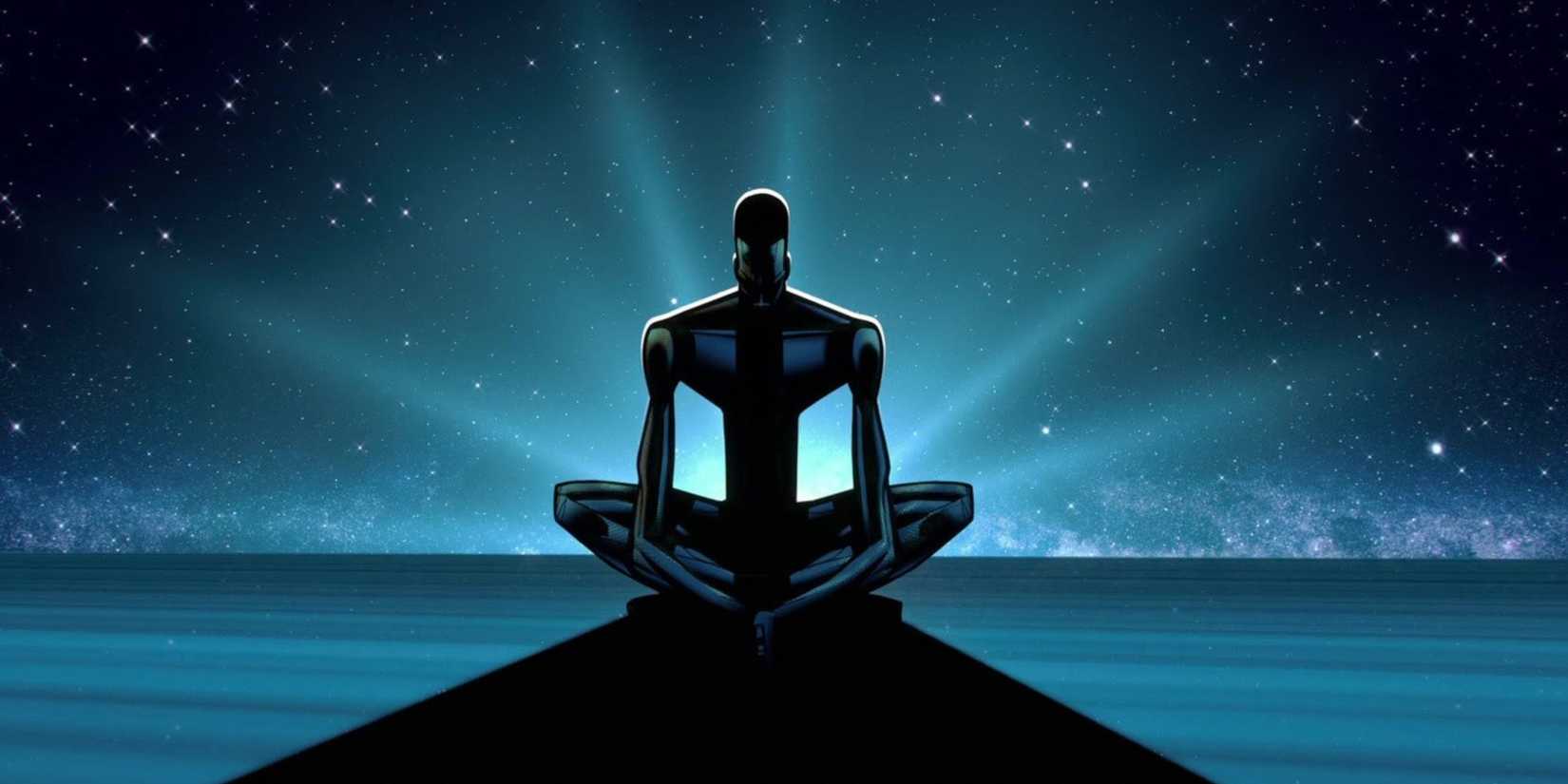
Black Mirror has long been praised for pushing sci-fi boundaries, but Love, Death & Robots operates on an entirely different level of creative freedom. The live-action format of Black Mirror inherently grounds it, even when its ideas are outlandish. By contrast, the animation of Love, Death & Robots keeps it unrestricted and capable of delivering stories that would be impossible to produce in live action.
Take "Zima Blue," for example. This season 1 Love, Death + Robots episode tells the story of an artist whose obsession with a single color leads to a profound existential revelation about personhood and AI. Its minimalist, almost hypnotic animation style perfectly complements its philosophical narrative. On the opposite end of the spectrum is "Night of the Mini Dead," which presents a zombie apocalypse through a time-lapse, miniature-style lens. There’s also the semi-live-action “Ice Age”, which sees a couple played by Topher Grace and Mary Elizabeth Winstead discover an entire civilization in their freezer.
Episodes like these are where Love, Death & Robots truly outshines Black Mirror when it comes to innovation, and this is only possible due to the inherent freedom of animation. Black Mirror may flirt with the bizarre, but it often pulls back to maintain its commitment to themes of technoparanoia and speculative futurism. Love, Death & Robots has no such hesitation. It embraces the strange, the surreal, and the outright incomprehensible. In doing so, it pushes anthology sci-fi further than Black Mirror has ever dared.
Embracing Weirdness Gives LD+R More Staying Power Than Black Mirror Will Ever Have
Its Strangeness Makes It Timeless While Black Mirror Risks Feeling Dated
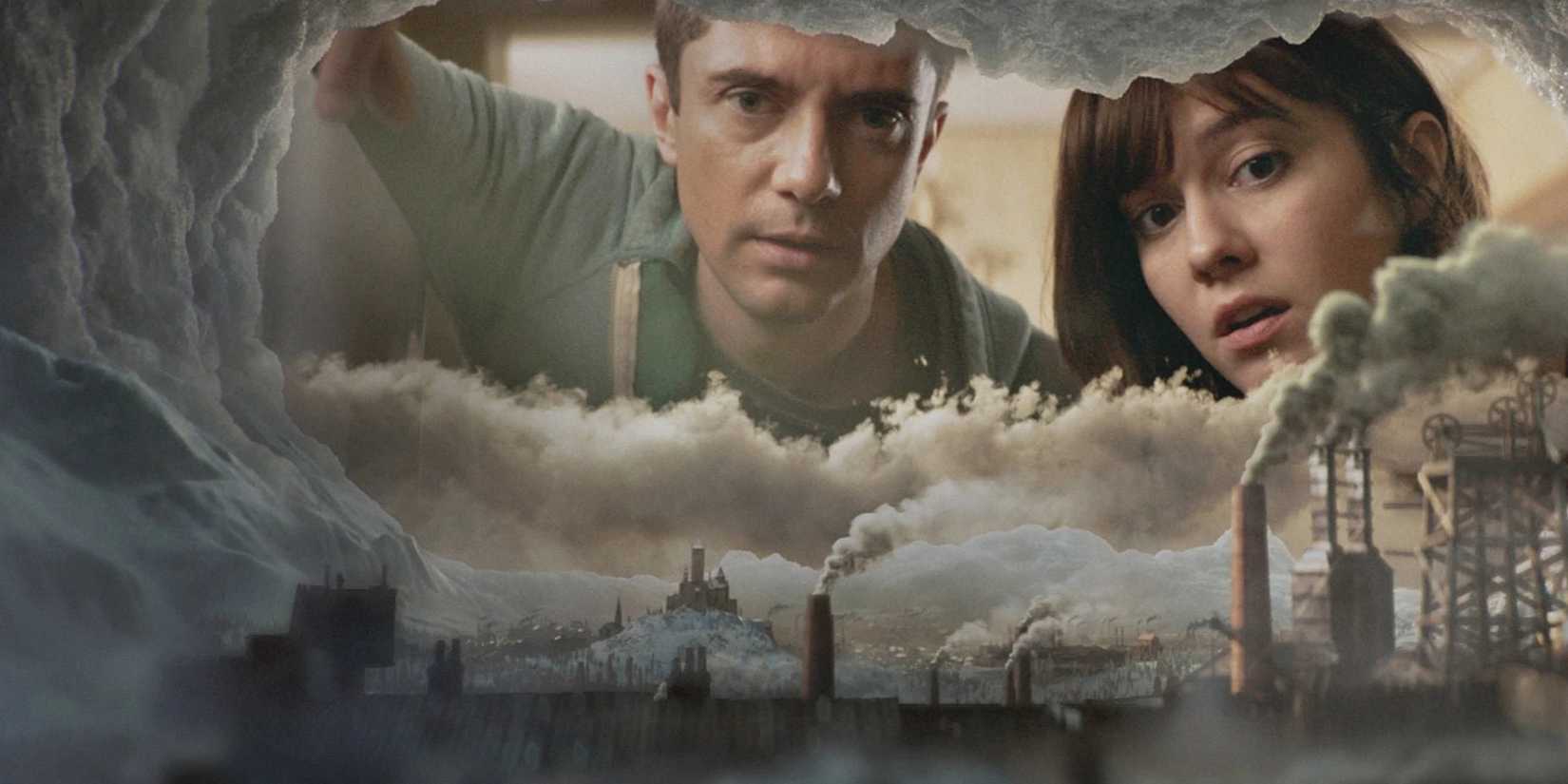
The same creative freedom that allows Love, Death & Robots to outdo Black Mirror in terms of experimentation also gives it a significant edge in longevity. While Black Mirror often bases its stories on plausible technological advancements, that grounded realism can quickly become a limitation. As real-world technology evolves, many of its once-speculative ideas begin to feel less like science fiction and more like present-day reality.
A clear example is Black Mirror’s "The Entire History Of You." When it first aired in 2011, the concept of recording and replaying memories through a contact lens paired with a brain chip felt futuristic and unsettling. Today, however, with the rise of smart glasses and constant digital documentation, the season 1 episode feels far less speculative. Its emotional core of technology fueling possessive toxicity in a relationship remains strong, but its sci-fi edge has undeniably dulled.
This is a problem Black Mirror will continue to face. By anchoring its stories in near-future realism, it risks becoming outdated as that future catches up. Love, Death & Robots, on the other hand, avoids this issue entirely. Its stories are often so detached from reality that they aren’t tied to any specific moment in time. This makes them far more resilient.
Because it doesn’t aim to predict the future, Love, Death & Robots isn’t starting to show its age in the same way as Black Mirror. The series isn’t concerned with being plausible; it’s concerned with being memorable. That difference is crucial. While Black Mirror continues to deliver compelling stories, its reliance on realism may ultimately limit its longevity.
Release Date March 15, 2019
Network Netflix
Directors Víctor Maldonado, Patrick Osborne, Robert Valley, Alfredo Torres Martínez, Jerome Chen, Emily Dean, Rémi Kozyra, Léon Bérelle, Dominique Boidin, Alberto Mielgo, Maxime Luère, Andy Lyon, Robert Bisi, Dave Wilson, David Nicolas, Simon Otto, Damian Nenow, Laurent Nicolas, Kevin Van Der Meiren, Vitaliy Shushko, Owen Sullivan, István Zorkóczy, Javier Recio Gracia, Oliver Thomas
Writers Tim Miller, Philip Gelatt




 English (US) ·