
 3 hours ago
6
3 hours ago
6
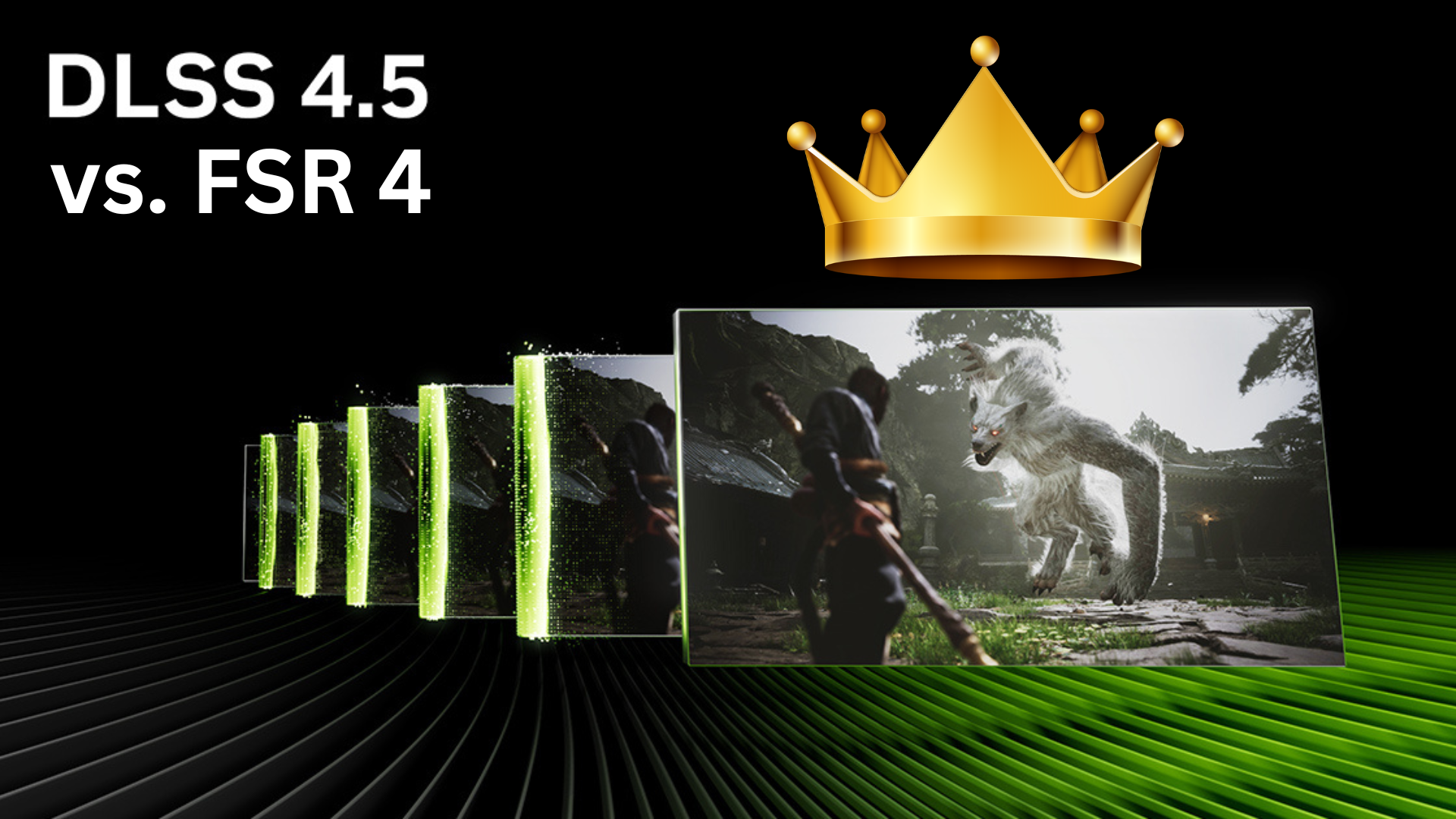
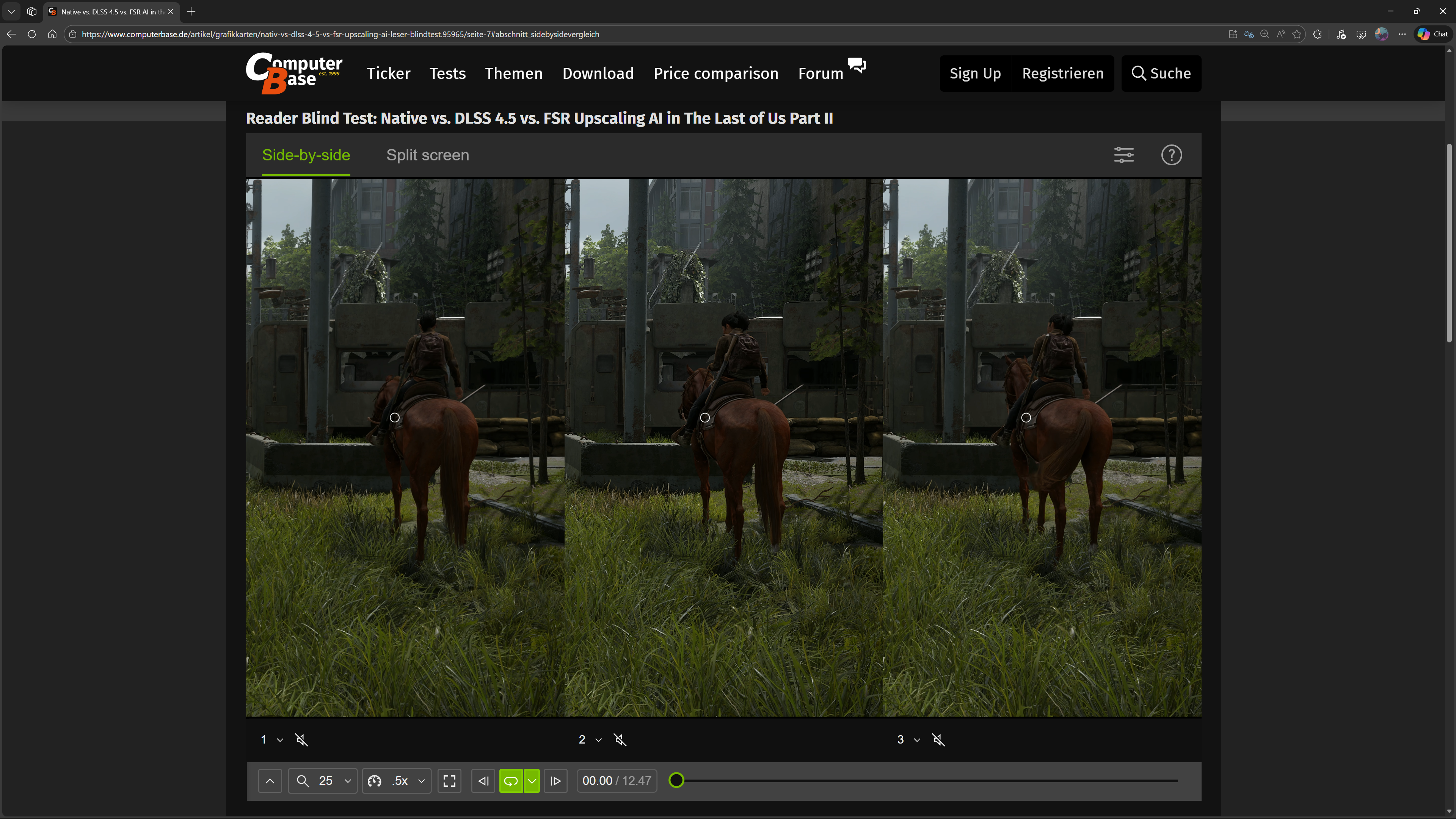
German outlet ComputerBase has conducted a blind test comparing the image quality of six games across different rendering techniques. The main showdown was between Nvidia's latest DLSS 4.5 and AMD's latest FSR 4 (Redstone) technologies, going up against native rendering using TAA. After the votes were tallied, DLSS walked away with a clear and dominant victory, scoring 48.2% of all votes.
The test emphasized "the best picture quality," which readers could choose after watching identical gameplay footage, voting for whichever option they preferred. The six games included in the test were: Anno 117, ARC Raiders, Cyberpunk 2077, Horizon Forbidden West, Satisfactory, and The Last of Us Part II. All ran at 4K resolution with upscaling set to "Quality" for FSR and DLSS.
Satisfactory was the biggest win for Nvidia, with DLSS 4.5 racking up 60.9% of all points, followed by Horizon Forbidden West, where DLSS got 56.3% of the votes. Anno 117 was another major dub for the Green Team with 50.1% of the tally. There was not a single game where FSR 4 came out on top, not even against native rendering.
The Last of Us Part II was the closest run where FSR had 25.3% of the points versus native rendering's 25.9%, but that's still a loss. The tightest it got for Nvidia, though, was in Cyberpunk 2077, where native rendering almost beat it with 32.4% of the votes, but DLSS managed to get 34.4% and ultimately came out on top. Across all six titles, on average, FSR scored 15% of the total 6,747 votes.
Native rendering still beat the Red Team by netting 24% of all votes, while DLSS emerged as the true victor with 48.2% of all votes. About 12.8% of the people couldn't discern between DLSS, FSR, and native rendering, which just goes to show how far these upscaling technologies have come. The fact that most people preferred DLSS 4.5 over native rendering is a significant result.
Swipe to scroll horizontally
Anno 117 | 282 (22.8%) 🥈 | 621 (50.1%) 🥇 | 204 (16.5%) 🥉 | 132 (10.7%) |
ARC Raiders | 328 (27.3%) 🥈 | 570 (47.4%) 🥇 | 166 (13.8%) 🥉 | 138 (11.5%) |
Cyberpunk 2077 | 372 (32.4%) 🥈 | 394 (34.4%) 🥇 | 122 (10.6%) | 259 (22.6%) 🥉 |
Horizon Forbidden West | 208 (19.4%) 🥈 | 604 (56.3 %) 🥇 | 125 (11.7%) | 135 (12.6%) 🥉 |
Satisfactory | 155 (15.1%) 🥈 | 627 (60.9%) 🥇 | 128 (12.4%) 🥉 | 119 (11.6%) |
The Last of Us Part II | 274 (25.9%) 🥈 | 433 (40.9%) 🥇 | 268 (25.3%) 🥉 | 83 (7.8%) |
TOTAL SHARE | 24.0% 🥈 | 48.2% 🥇 | 15.0% 🥉 | 12.8% |
There's an argument to be made for DLAA here — if a game was using DLAA and rendering at native res, there's a strong chance it would look better than any super-sampled image. However, that's still an Nvidia bias, and AMD doesn't have a true DLAA competitor, so the test wouldn't make sense. Intel's XeSS is also omitted here, likely because the Blue Team doesn't have a truly 4K-capable Battlemage GPU yet.
Anyhow, make sure to check out the individual pages on ComputerBase's website hosting these gameplay videos if you want to come to your own conclusion. The outlet reiterates that this test only crowns the best image quality, not the second or third best.

Follow Tom's Hardware on Google News, or add us as a preferred source, to get our latest news, analysis, & reviews in your feeds.






 English (US) ·