
 1 week ago
36
1 week ago
36
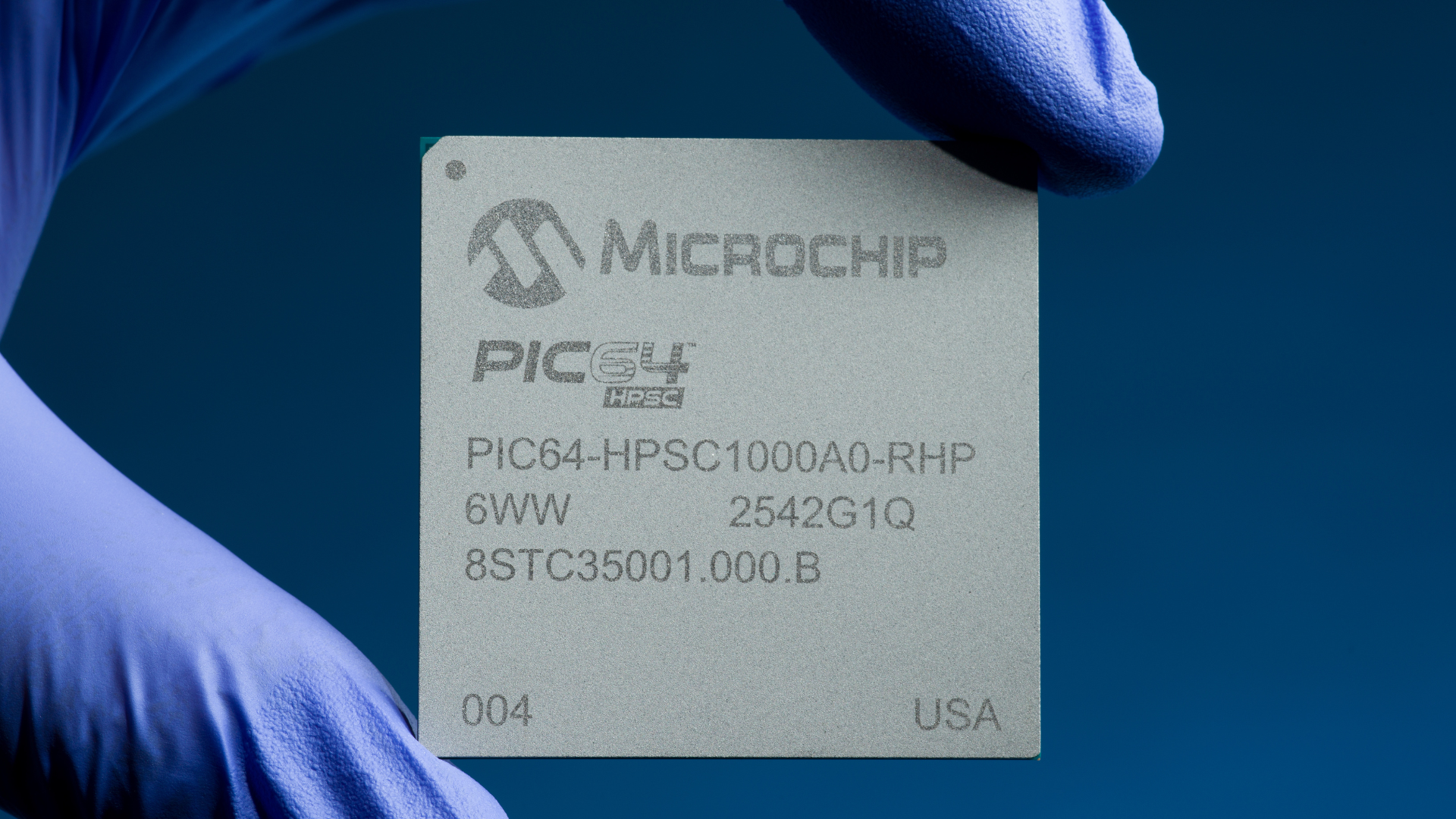
NASA has announced that it has just partnered with Microchip Technology Inc. to build next-generation chips that will power its spacecraft. This project, dubbed High-Performance Spaceflight Computing, aims to build a system-on-a-chip (SoC) that will deliver 100 times the computing capacity of current processors designed for spaceflight. The space agency said that it will come in two flavors — a radiation-hardened version for geosynchronous, deep-space, and long-duration missions and a radiation-tolerant version for low Earth orbit satellites. The former is primarily aimed at supporting missions to the Moon, Mars, and beyond, while the latter is tailored for commercial applications.
The SoC will combine both computing and networking capabilities on a single device, reducing cost and complexity, as well as allowing for better power efficiency. More importantly, it will feature a scalable architecture so operators can turn off unnecessary functions in case they need to conserve energy. We’ve seen NASA selectively turn off instruments on distant spacecraft to reduce power consumption — it executed this procedure on the nearly 50-year-old Voyager 1, which left the solar system in 2012, after scientists noticed an unexpected drop in onboard power levels.
These chips are also designed to scale as multiple units connected via advanced Ethernet. This would give NASA spacecraft massive computing power and even allow for some autonomy, like deciding the speed at which a rover will traverse a landscape or using it to analyze images independently. The Perseverance rover actually used something similar when it paired NASA’s satellite data of the Red Planet’s surface with its panoramic camera and a Qualcomm Snapdragon 801. This allows it to compare what it sees with the information gathered from space so it can determine its location with pinpoint accuracy.

Follow Tom's Hardware on Google News, or add us as a preferred source, to get our latest news, analysis, & reviews in your feeds.






 English (US) ·