
Admit it. It’s okay; we’ve all thought about it: upping sticks, going off grid, and living the vanlife. But the wanderlust usually wears off once we start to consider the impracticalities and its unglamorous aspects. Outbound doesn’t share that sour-faced realism, though. Its vision of leaving the rat race and immersing oneself wholly in nature is purely positive.
Review info
Platform reviewed: PC
Available on: PS5, Xbox Series X|S, Nintendo Switch 2, Nintendo Switch, PC
Release date: May 11, 2026 (PC, Xbox); May 14, 2026 (PS5, Switch / Switch 2)
This is a ‘survival’ game where surviving is no trouble at all; it’s just you and your camper (and potentially a companion or three), cruising the wilderness with nary a care in the world.
I, for one, have been waiting for a game like this, and judging by its art style and mechanics — not to mention the dog — it looked to be exactly what I was looking for. Having now played it, I can confirm that it succeeds in painting an idyllic picture of vanlife — to an extent.
Latest Videos From

On the road
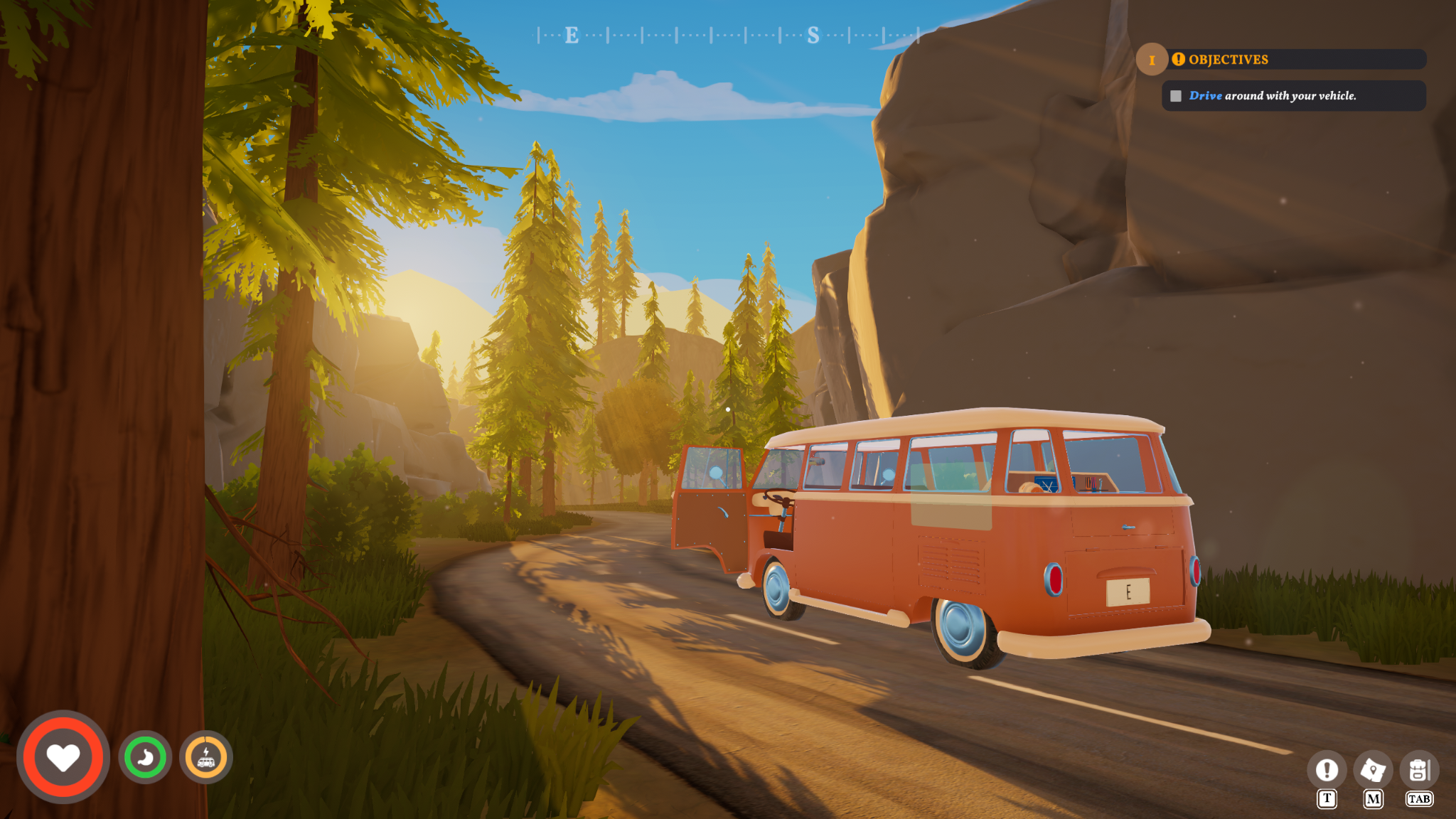
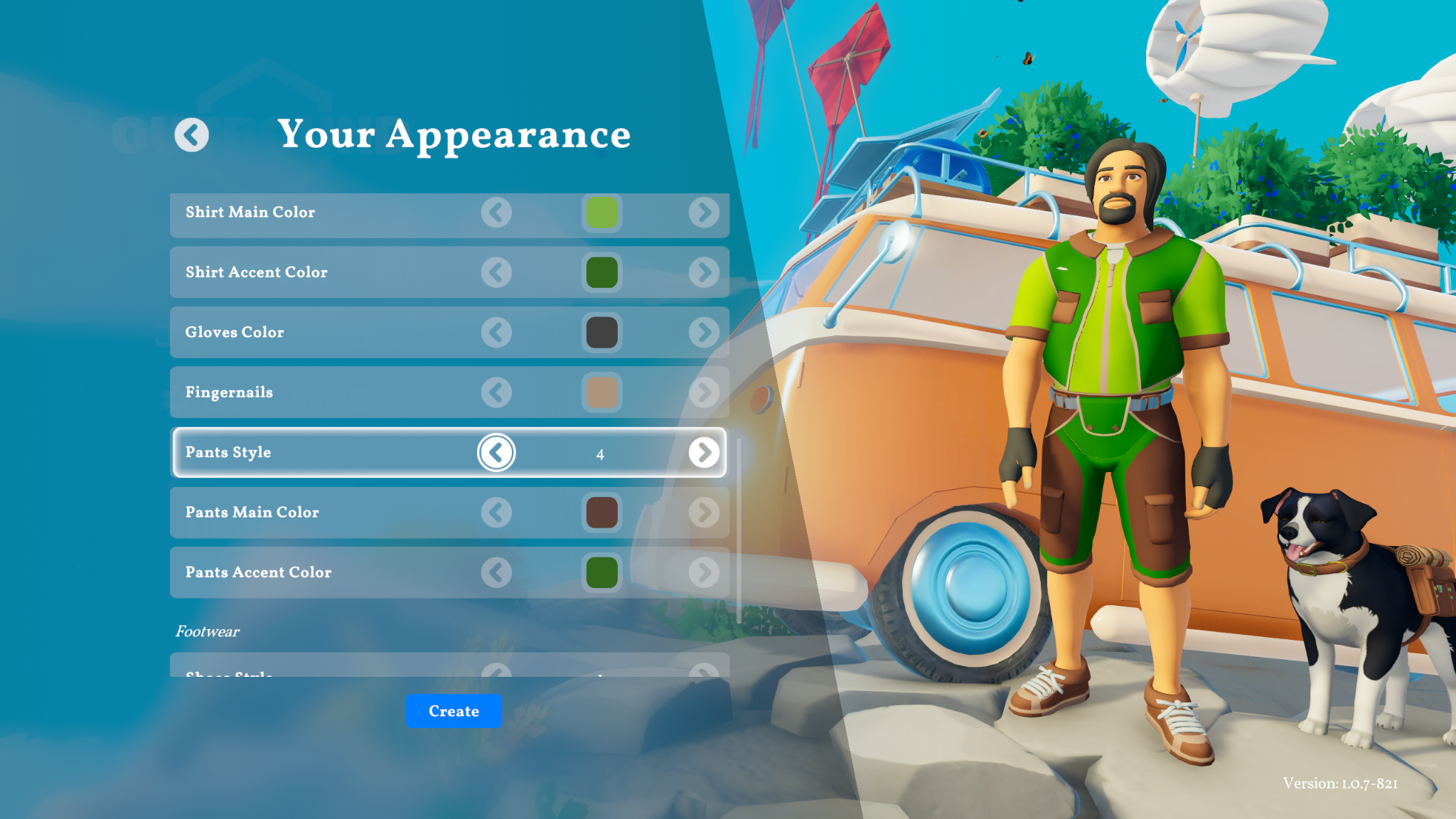
You begin by choosing your van type and creating your character. Of the former, there are three to choose from, varying in their extension capabilities, carrying weight, and handling. You can also choose any base and accent colors you like.
There are a good number of customization options for your character, with face and hair types. There are also various accessories available, including painted fingernails. Oh, and there are shoes that look exactly like Crocs, which is a win in my book (look, they’re the perfect summer shoe, okay, and I won’t hear otherwise). Clothing options are more limited, though.
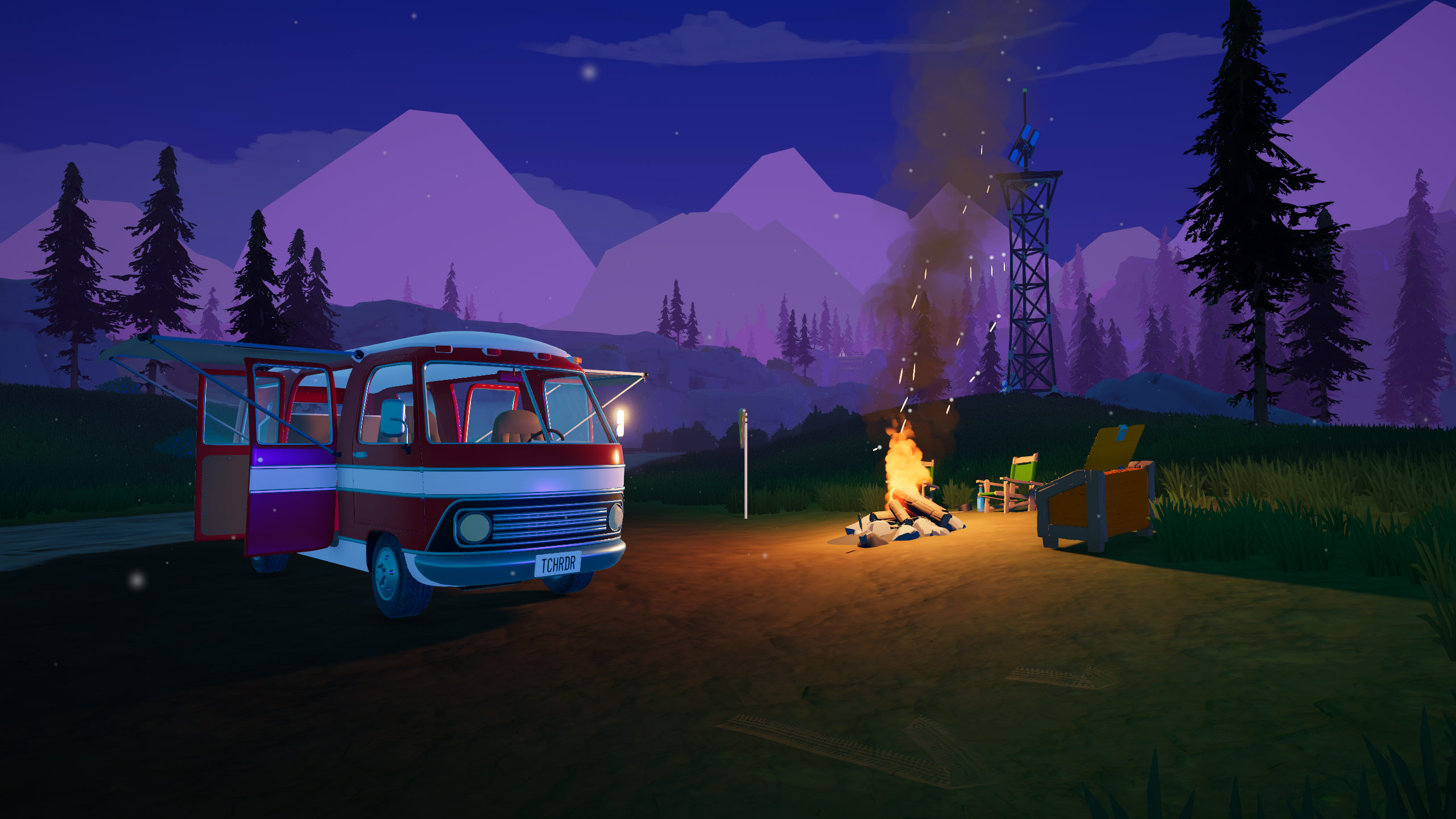
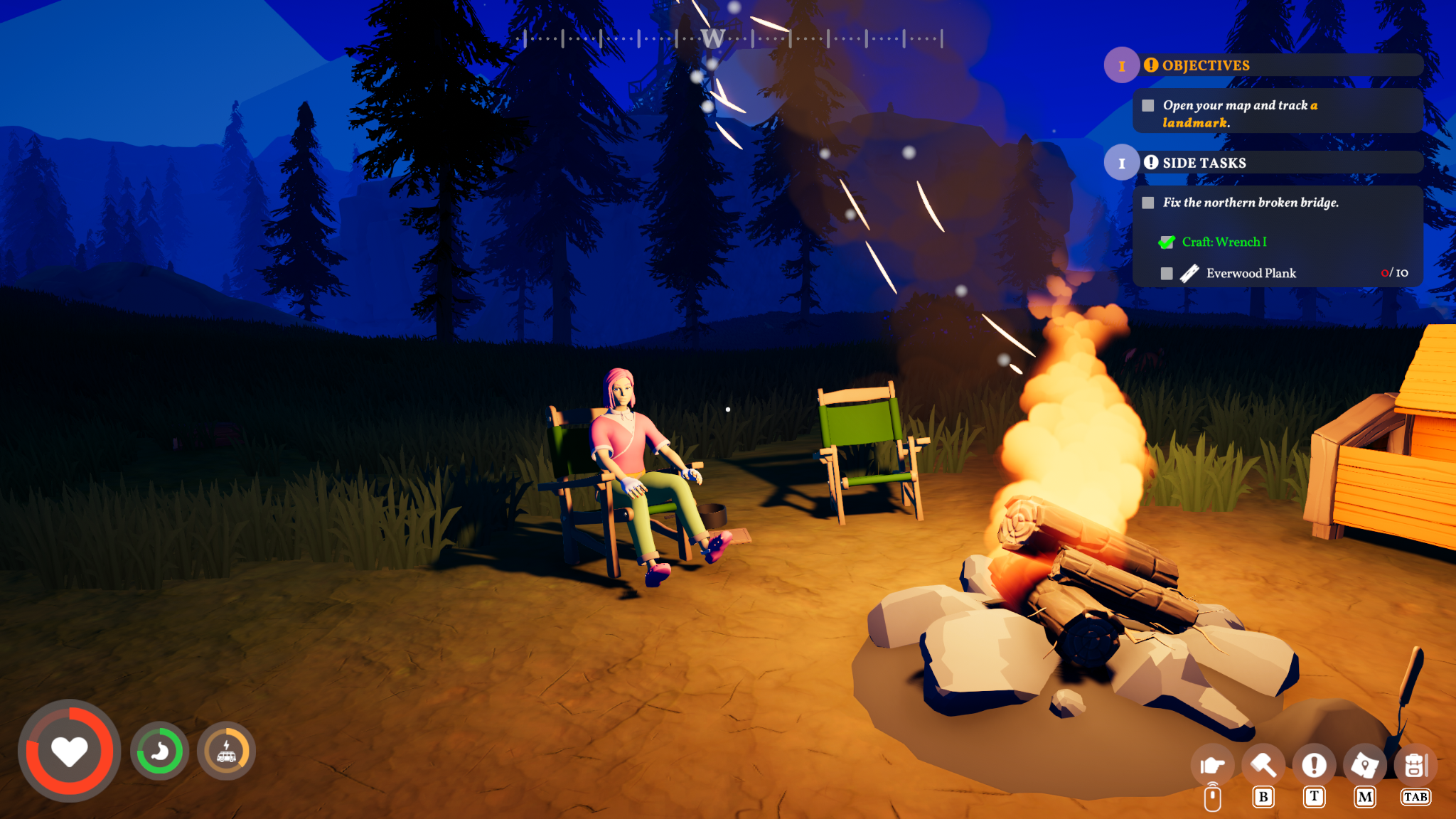
Once you’ve made your choices, you’re thrust onto the open road for a short drive before pulling up into a scenic parking lot in the middle of what looks like a North American national park. This lot is the site of the Outbound’s mini tutorial, tasking you with downloading a blueprint for a wrench from a nearby signal tower, crafting it, and using it to open the barrier to the map proper.
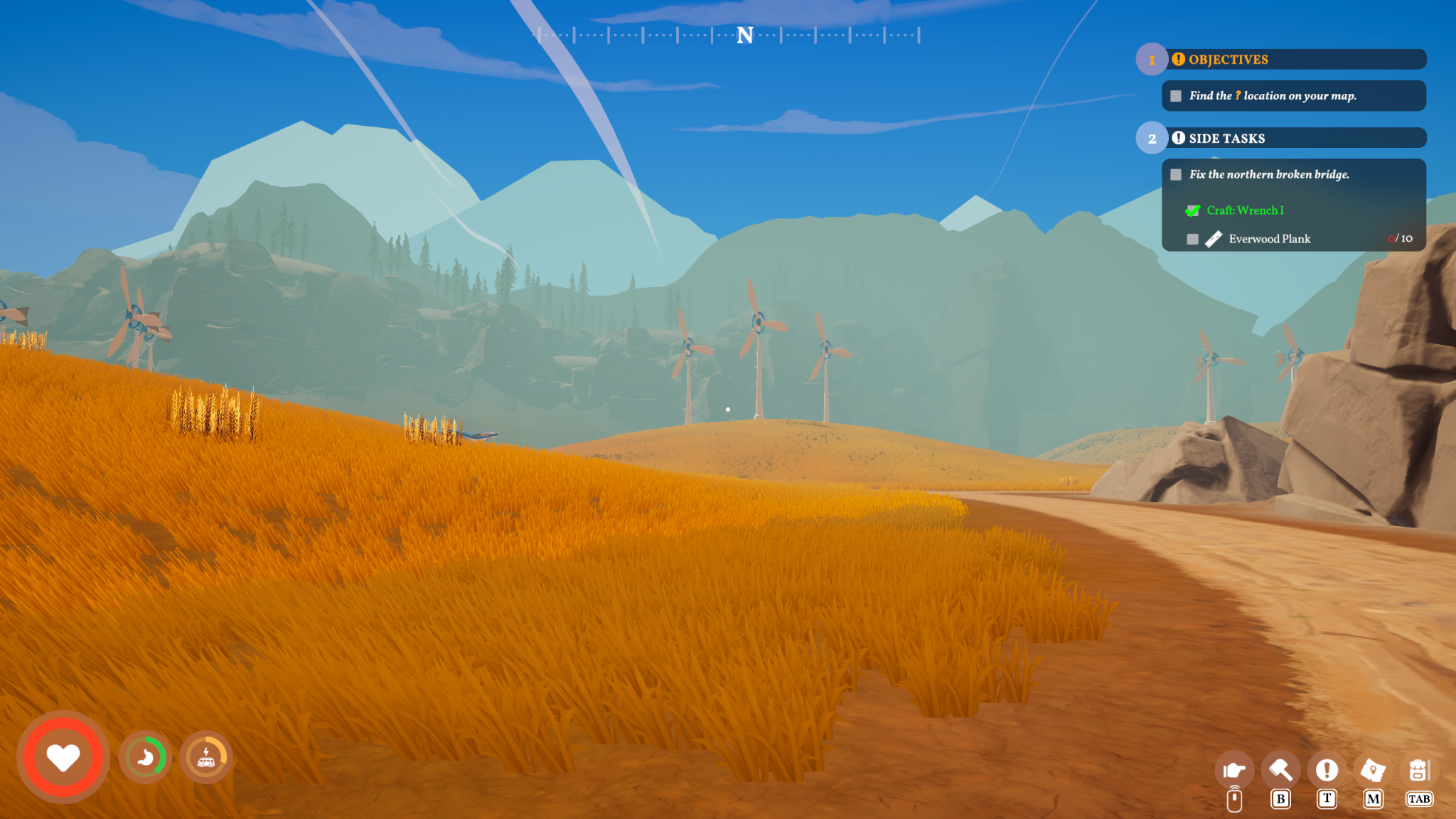
There’s no story here. No reason given as to why you’re journeying around in your van, other than a couple of lines of monologue at the start about leaving the city behind. There are various notes strewn about the map written by inhabitants, but these merely serve as gameplay hints rather than expounding some kind of overt narrative.
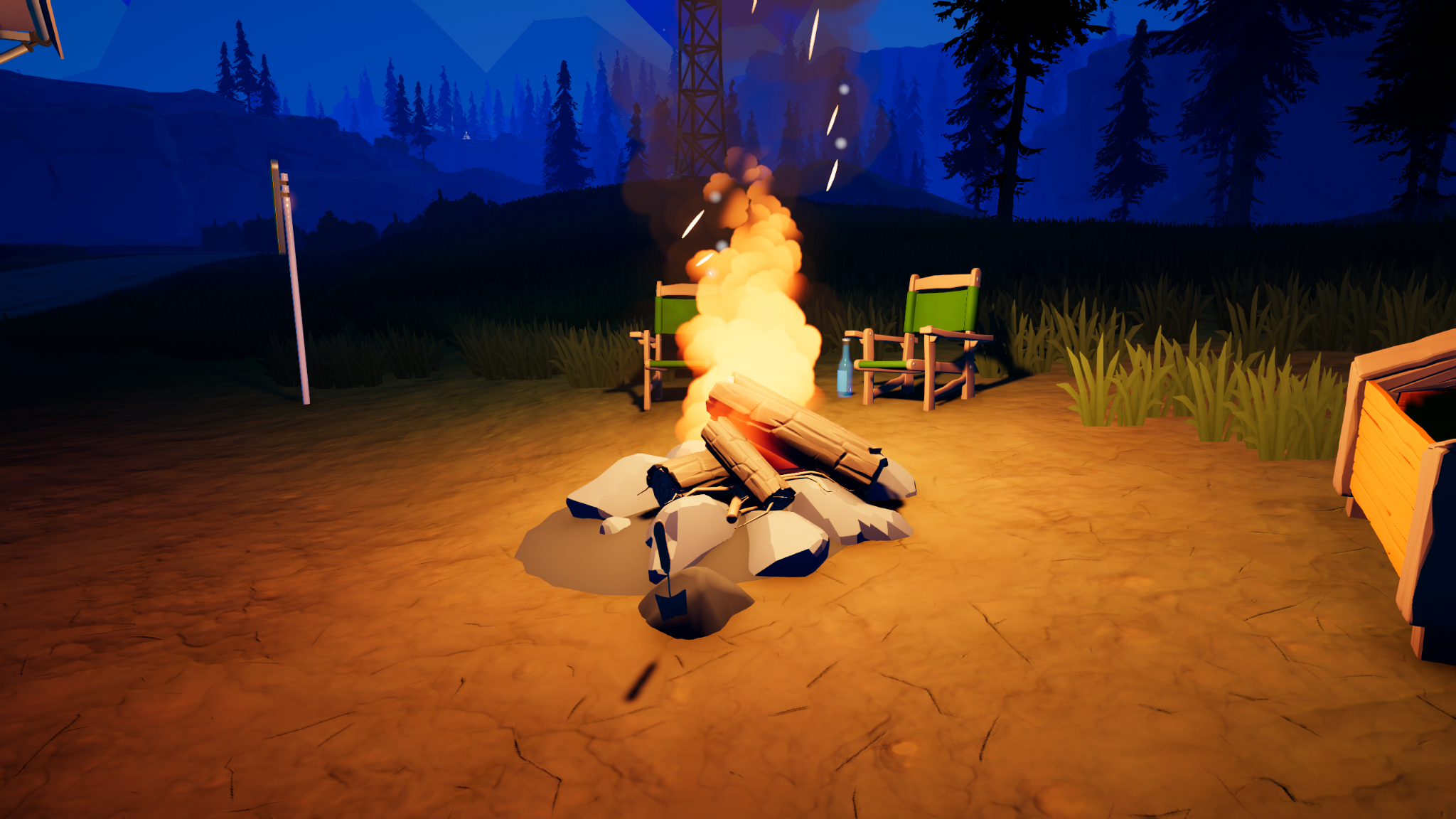
The whole game is rendered in a cell-shaded style, with a vibrant color palette that complements the tone of the game perfectly. Textures are simple but detailed, just enough to offer some semblance of realism, while landscapes on the horizon adopt a cardboard cutout look. The environment can get surprisingly atmospheric, too, especially as night falls, which really helps to sell the idyll of living deep within nature.
This soft aesthetic extends to the music, which is understated and wholesome, if a little anonymous. It drifts in and out rather than playing constantly, although there are occasions when it cuts off abruptly.
Sound effects are well placed and sufficiently detailed to feel immersive, from the cacophony of birdsong to the crackle of campfires. When rain falls, it sounds great both outside when it hits the ground and inside when it hits the roof of your van. And since your van is electric, all you hear as you drive along is the sound of the tires rustling over rough terrain, which I found oddly relaxing. Occasionally, your character will say something to give hints or after completing an action, but these are a little too generic to inject much personality or color.
The game’s map is large and expansive, mixing dirt roads and open forest with rocky canyons, streams, and waterfalls. There are also various man-made structures, from towers to treehouses, acting as points of progression.
The map screen itself is vibrant and detailed, with a rustic, hand-drawn appearance that’s clear and readable. It also tracks player locations in real time, which, as someone with a shocking sense of direction, I welcome.
Camp n’ craft
Outbound is upfront about its laid-back nature. There are no time constraints; you’re encouraged to play at your own pace and explore as you see fit. I did find the day/night cycle a little too fast, but thankfully, you can adjust this.
Attending to your needs is easy. In fact, you only have one, and that’s to feed yourself. What’s more, food is plentiful. There aren’t any real fail states, either. If your health reaches zero, as a result of fall damage or standing in a campfire for too long, the screen merely fades to black and declares that “you fainted,” before respawning you to the next day, with a quarter of your health replenished.
Best bit
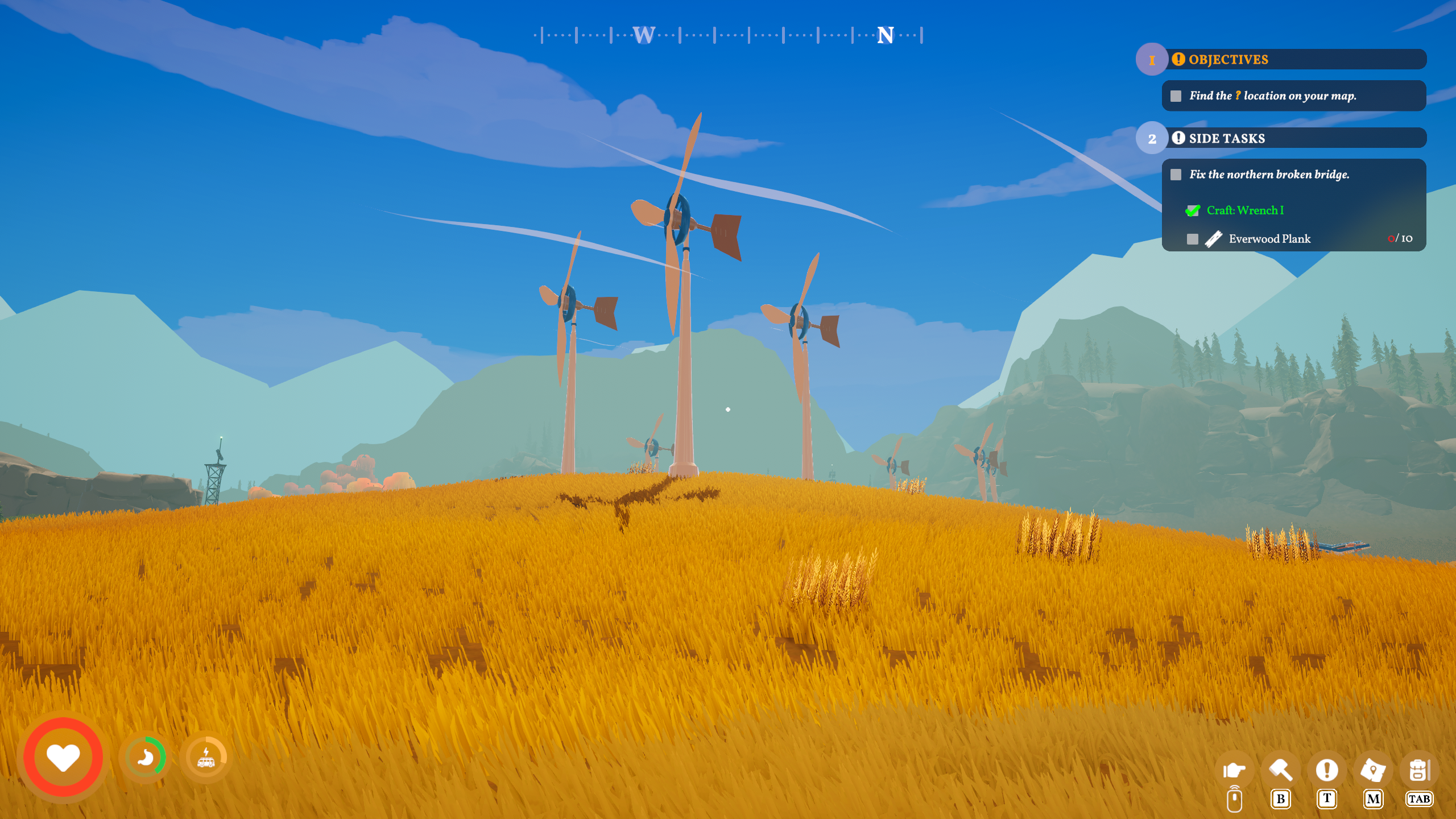
That beautiful world. Exploring the varied and picturesque environments while driving or on foot is a meditative and sometimes awe-inspiring experience.
The typical survival gameplay loop is adhered to. You collect resources for crafting and explore the environment, which in Outbound means finding signal towers for downloading crafting blueprints and investigating landmarks for more rewards.
Managing the inventories of your backpack and van storage is easy, thanks to the clear interface of both. You can easily dump everything you’re carrying in the former into the latter with a single input. And if you want to prevent certain items from transferring, you can lock them to your backpack, which is a welcome convenience.
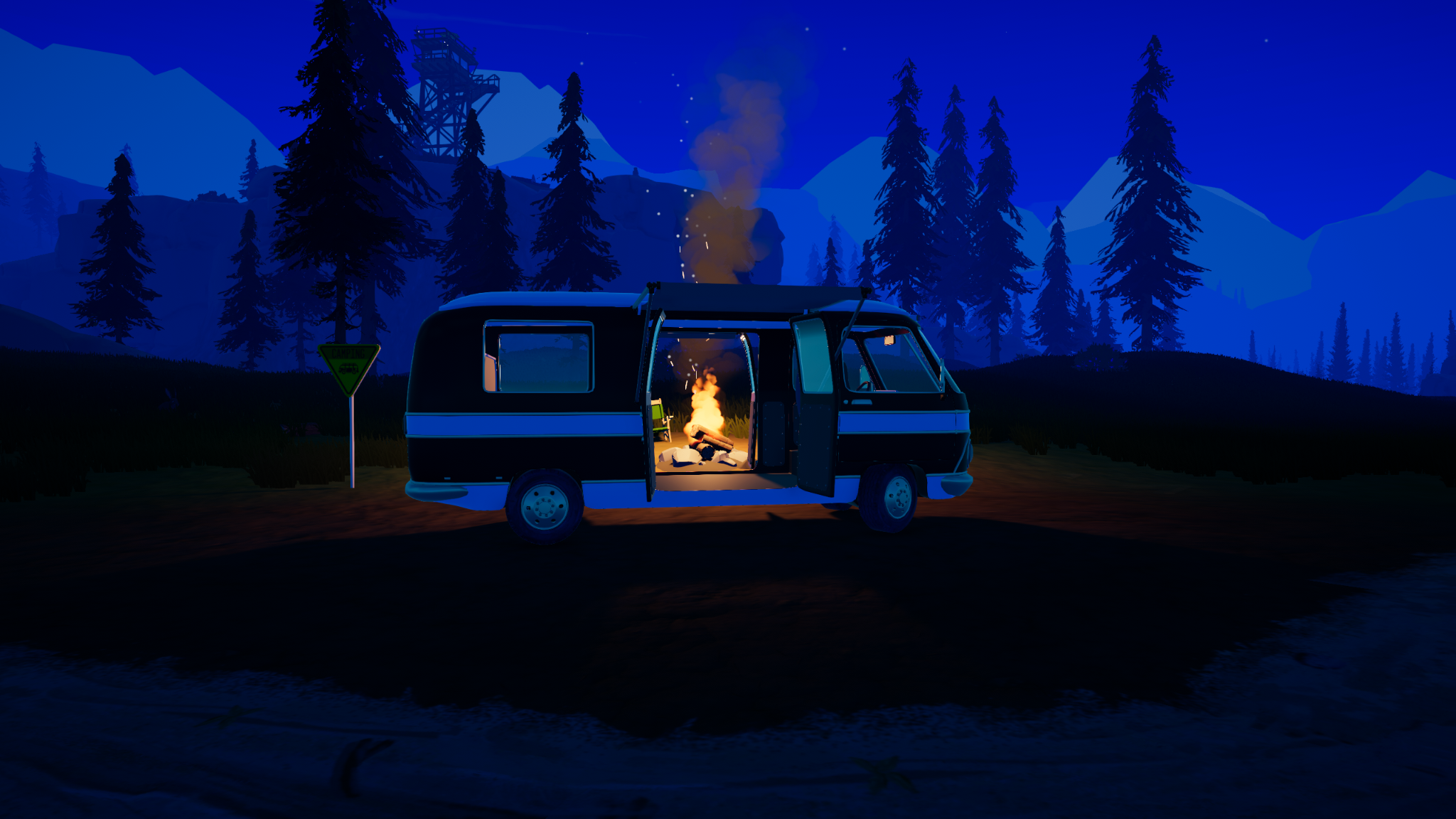
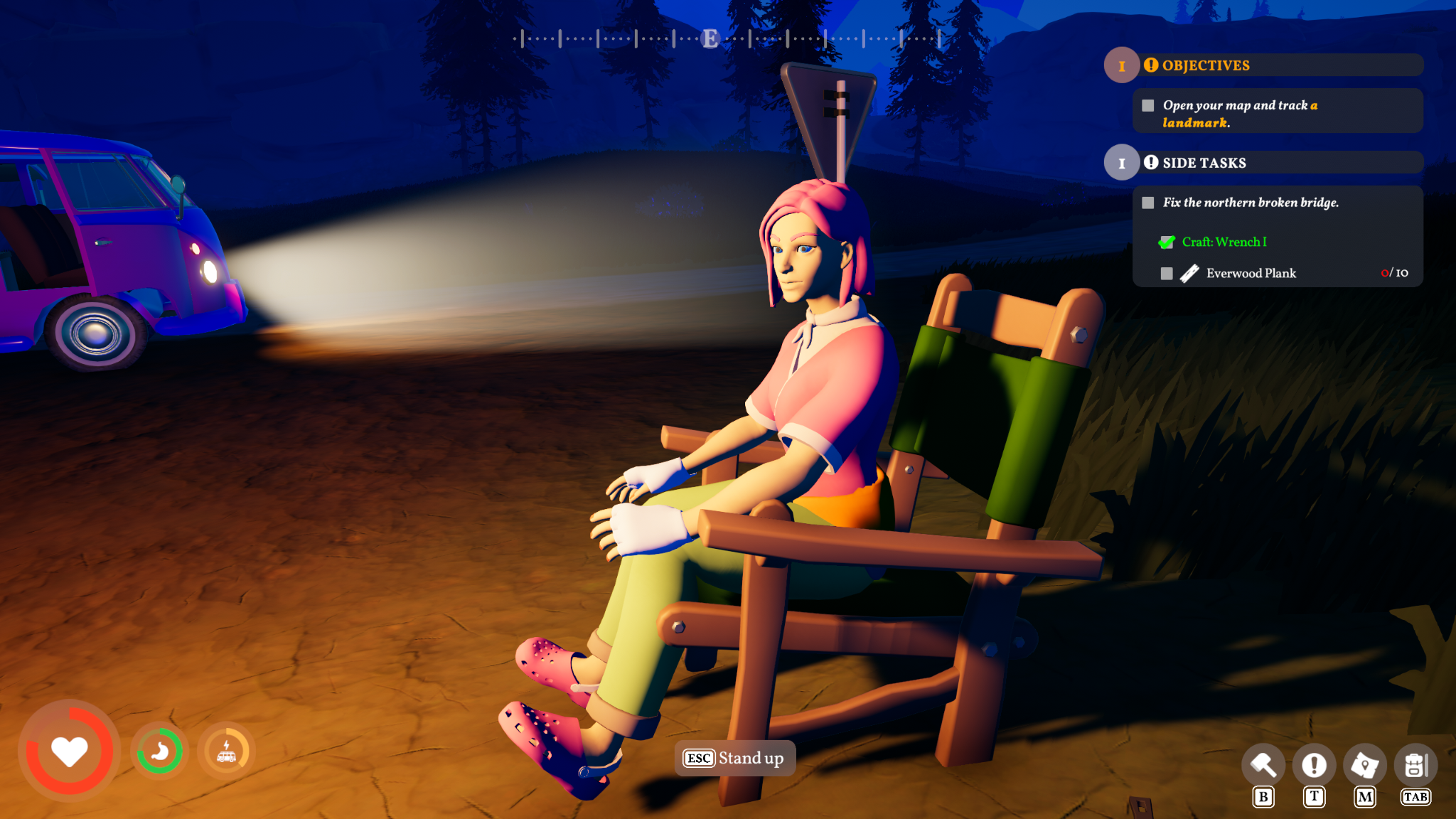
You can also go around the map lighting campfires, although I failed to see the point of doing so, other than to tick them off your list. They offer no special benefits or features, other than letting you sit down in a chair and gaze into the flames.
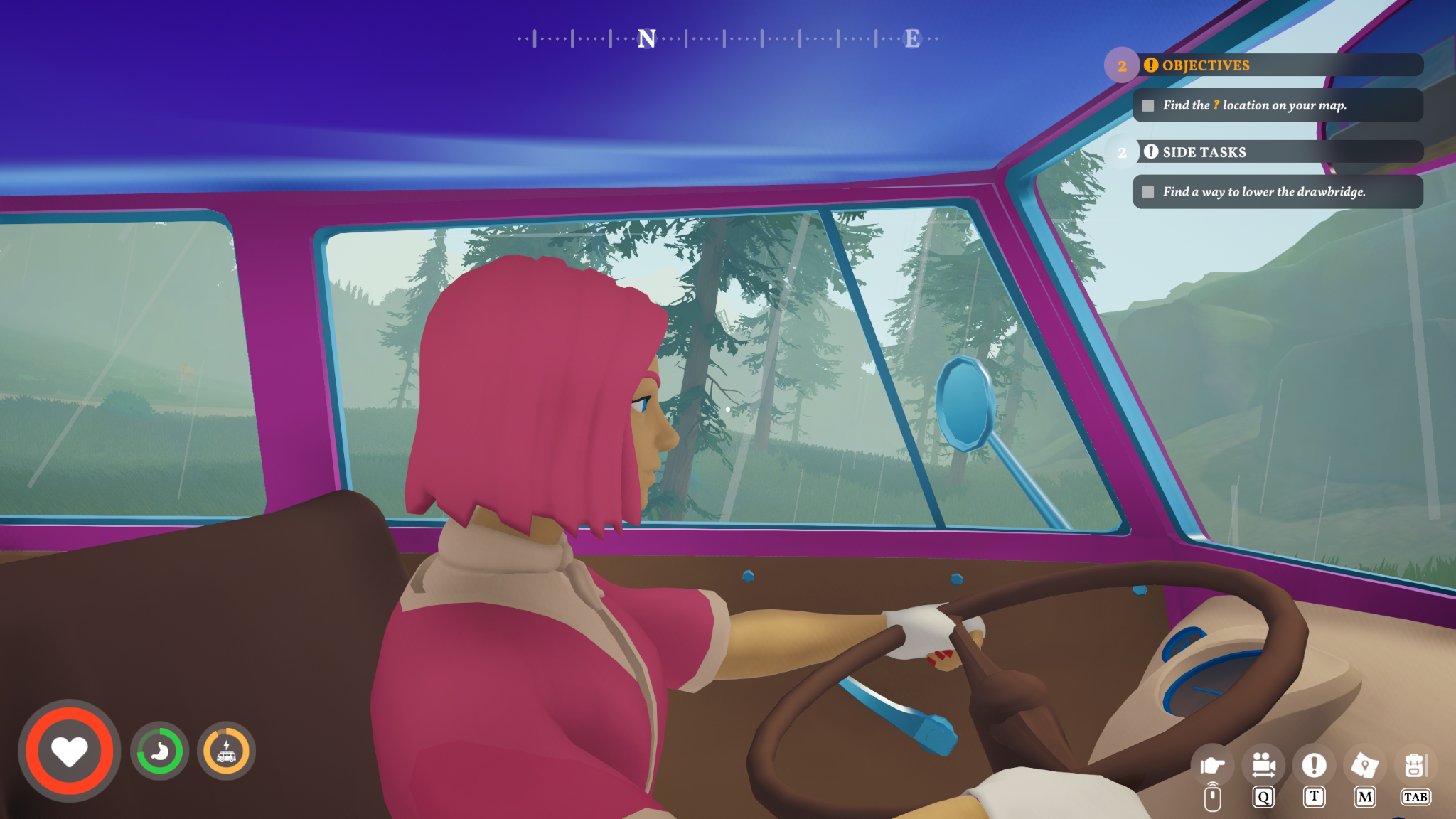
Driving is fun and fluid. Your vehicle is easy to control, yet feels weighty enough to feel realistic, and provides a soft challenge to make it feel satisfying. You can also change to a third-person camera angle while driving, which helps when manoeuvring in tight spots.
One annoying aspect of driving, though, is getting in and out. It’s a two-stage process requiring you to first open the door, then sit on the seat. This soon becomes a nuisance as you frequently hop in and out to gather resources on the roadside.
To gather certain resources, you’ll need various tools. Once you’ve acquired their blueprint, you can craft them in your van’s workshop. You’ll have to complete a simple minigame where you click in time with on-screen prompts, but there’s no punishment for getting this wrong. Tools can then be upgraded to tackle different types of rocks, logs, and shrubs.
The hammer tool gives you access to the base building menu. There are a fair number of options here, letting you build cabinets, shelves, and extensions on top of and outside your van. Cosmetically, many of these assets are quite basic, but they have their own simple charm.
You can also build various bits of machinery in your van to craft more materials. You feed them resources, and they work on churning out their outputs in the background, freeing you up to go about other tasks.
Naturally, these machines — along with the drivechain — require your van’s battery to be sufficiently powered. As you expand your van’s capabilities, you’ll require more and more power, and it’s this aspect that you perhaps need to be most mindful of in Outbound, as you can quickly find yourself out of charge.
Thankfully, you can feed your battery wood and fibre, both of which are fairly easy to come by. You can also build solar panels and other power-giving equipment to keep your van topped up.
There are multiple upgrade trees for your van, too. For example, you can increase the power of its motor so you can climb steeper inclines and increase building space.
Riding shotgun
Once you’ve got the gist of its central loop, Outbound doesn’t do much beyond it. There are some more interesting things to be found as you explore further afield, but they offer little in the way of interactivity. For all its splendor, the world is just a bit too empty.
I do like Outbound’s pacing, though. Like any good survival game, it holds back on giving you all the toys, requiring some effort to attain them all, which only makes it more rewarding once you do. It takes a while to get a dog, for instance, which is strange given that one features prominently in the game’s promotional material.
There are a few annoyances that spoil the fun slightly. There can be a lot of backtracking to signal towers as new blueprints appear, and while you can look at your map while driving, you can’t move around it or adjust the zoom. You’ll need to be a passenger or on foot to do those.
I can’t complain about the game’s performance, though. I didn’t encounter any visual bugs or drops in framerate. Online multiplayer was solid, too. Again, there was no lag or other glitches, save for a few instances of misaligned character placements. For example, there were times when I was in the back of the van while my partner drove, but on her screen, I was in the passenger seat.
The bigger issue with multiplayer is the absence of shared saves. This means that if you’re the guest in someone else’s game, you can’t carry on the adventure by yourself.
I’m hoping more content will be added in the future to expand the game’s potential, since there’s a good foundation here for more exploration and van-building opportunities to be added on top. For now, though, Outbound is a fun and good-natured way to while away a few hours, either alone or in good company.
Should you play Outbound?
Play it if…
You want peaceful exploration
This is a no-stakes cozy game, where you can go at your own pace and follow your own path without risk.
You want to see a wholesome and positive representation of vanlife
With its beautiful environments and stress-free gameplay, you won’t find many depictions of the nomadic lifestyle as rosy as this.
Don’t play it if…
You want plenty of gameplay variation
The repetitive nature of collecting and crafting may start to grate after an hour or too.
You want a challenge
Outbound always goes easy on you, and lack of any real stakes can make those small victories feel a little hollow.
Accessibility
There aren’t many accessibility features in Outbound, although there are some I haven’t seen before. For instance, you can disable consumption sounds, which I presume is designed to aid people with misophonia.
You can also disable the mini games and disable the flashing effects from storms. The size of the UI is adjustable, too, although the range isn’t particularly wide. Thankfully, the maximum size should prove large enough for most gamers to see clearly.
You can toggle subtitles for the narration of player characters, but unfortunately there's no option for audio descriptions.
How I reviewed Outbound
I played Outbound for several hours, which is enough time to see most of what the game has to offer. There’s already a DLC (downloadable content) pack, entitled School Bus Adventures, but I’ve yet to play this.
Most of that time was spent playing cooperatively with my partner, although I also played it solo. We both played on PC: she used an Acer Nitro 14 gaming laptop, which features a AMD Ryzen 7 CPU, an Nvidia GeForce RTX 4060 GPU, and 16GB of RAM, and I used a desktop with an AMD Ryzen 7, an RTX 5070, and 32GB of RAM. My partner played with the GameSir G7 Pro, which is one of the best PC controllers around, while I used the MSI Versa 300 Wireless 8K gaming mouse and the Corsair Vanguard Air 99 Wireless gaming keyboard.
I’ve been gaming for decades, and I’m a fan of titles with similar mechanics and pacing to Outbound, such as walking sims and adventure games. I’m also experienced in the survival and cozy genres, with Hozy and Subnautica 2 being two of my recent favorites.
First reviewed: May 2026








 English (US) ·