
 18 hours ago
2
18 hours ago
2
Archive Spelunker

Archive Spelunker
Wes Fenlon
From the archives: This review was originally published in PC Gamer magazine #197 (UK, February 2009). The review appears as originally written, with only minor changes in formatting and presentation.
I'm pretty sure it was at E3 2015 that I played a preview of Mirror's Edge Catalyst; I eyed the demo station for a mouse & keyboard but was told I had to use a controller. The sequel seemed then a long time coming, long enough that we kinda never thought it would happen at all... but really there were only about six years between Mirror's Edge releasing and a sequel being announced. That's practically how long we have to wait for a new season of a damn TV show these days!
While Catalyst was ultimately a bit of a disappointment, my memory's been very kind t Mirror's Edge. Time has washed away whatever frustrations I had with the combat and the hand-holdy Runner's Vision; it's hard not to just feel good looking at screenshots of that sun-bleached city. (Thank god Nvidia decided to prolong PhysX support so those vital cloth physics keep on working.)
Graham's review cuts through the nostalgic haze to the reality of Mirror's Edge: a game that looked great, and felt great, but got in its own way a little too often to get all the way there. That's my take, at least—but if you've played Mirror's Edge recently, what's yours?
Mirror's Edge review - PC Gamer issue #197 (UK, February 2009)
By Graham Smith
The early levels of Mirror's Edge are the ones that best communicate the joys of the game, because they're the ones that best deliver the free-running dream.
That is: you, in an urban environment, gracefully inventing your own path from point Here to point Over There. You hop over fences, slide under pipes, run along walls, rebound off buildings and vault from ledges—all of it ideally without breaking stride and all of it from a first-person perspective. It's smooth, fast, exhilarating, and its creators do it wrong, all wrong.
Article continues below
The main character is Faith, a Runner. Runners are acrobatic postmen, travelling via rooftops to illegally deliver messages the sender doesn't want intercepted by the spying government regime.
Faith's sister is on the other side, a police officer who's framed for murder. That prompts Faith to investigate. Cue lots of running.
While that's all fine, the real star is the unnamed city in which all this takes place. It's the playground you'll be bounding across, its insides a mixture of primary colours and modernist furniture, its outsides sparkling like a glitterball. Most dystopian futures in computer games are bleak, ruined worlds, but there's a tangible reason why more of this city's residents haven't rebelled: because it's a really, really nice place. Who wouldn't want to live here? Even the rooftops are swept clean.
Running men
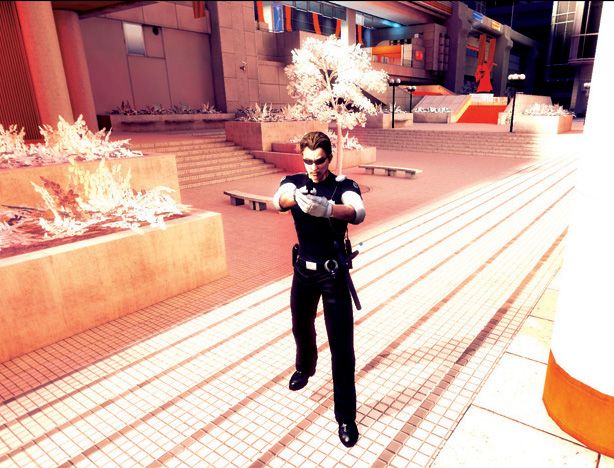
The regular police officer, who only carries a pistol and can be easily escaped from without any combat whatsoever.
Image credit: EA
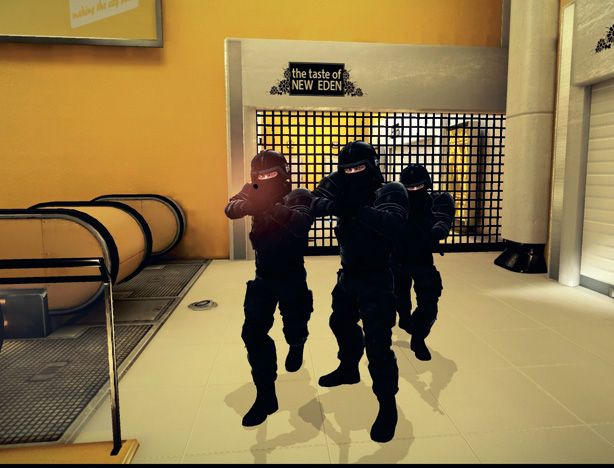
The inevitable SWAT teams, who travel in packs, carry shotguns or assault rifles and can do some serious damage.
Image credit: EA
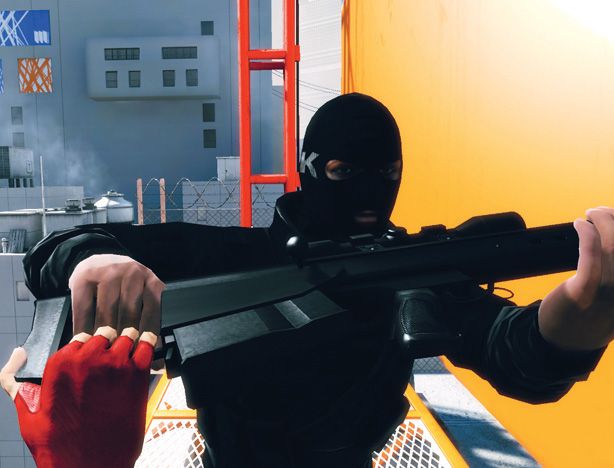
The pesky snipers, who give themselves away with red lasers but often stand between you and your escape.
Image credit: EA
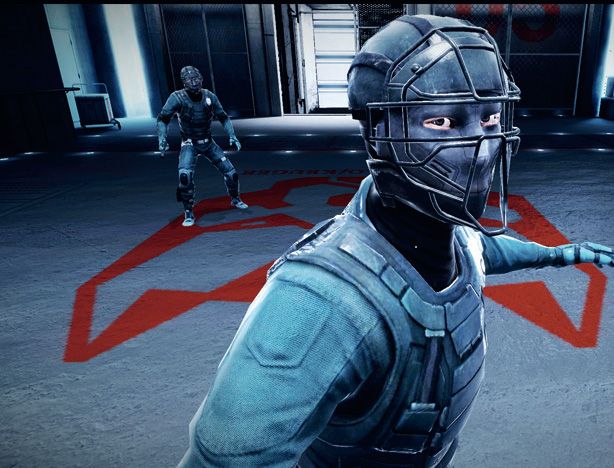
The police Runners who, like you, can leap and climb and tumble. They’re fast and genuinely terrifying.
Image credit: EA
You're assisted by something called Runner Vision, which highlights certain items of scenery in red. A ropeline that can be slid down, a pipe that can be climbed, a handily placed chair that can be used as a springboard. Runner Vision makes snap decision-making easier, but the levels still encourage a thoughtful mode of play. You want to stop, look around, work out how to get up there and then implement your solution. You want to play it like you might play Portal, as a series of environment-based puzzles.
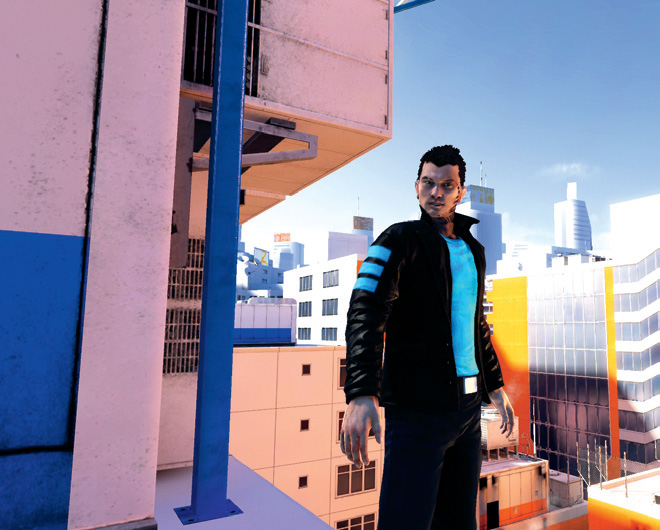
Instead, the game becomes infested by cops and snipers and SWAT teams and helicopters, all serving to hurry you along. The initial levels are direct enough that you can work out where to go while sprinting, but as the environments become more complicated, the red objects also become less overt. You want to stop more, but the enemies never let you.
Imagine you were playing arcade racer TrackMania and while arcing from one ramp to another, police started shooting you. More directly, imagine you were having fun and then people came along and started shooting you while you were having fun. Running is great, being constantly pressured into running away is not so much. Yet it proves unavoidable. Each chapter is structured in basically the same way, with you bounding to the top of a building and then having to flee when the cops—or 'blues'—burst in to bust you. This frequently involves them coming through your only exit point, meaning you either have to run past them or go through them.
Going through them means punching and kicking them to the ground, or performing a disarm move. Disarming is essentially a quicktime event, accomplished by hitting the right-mouse button when their weapon turns red mid-attack. The addition of Reaction Time, better known as bullet time, slows their movement and makes this much easier.
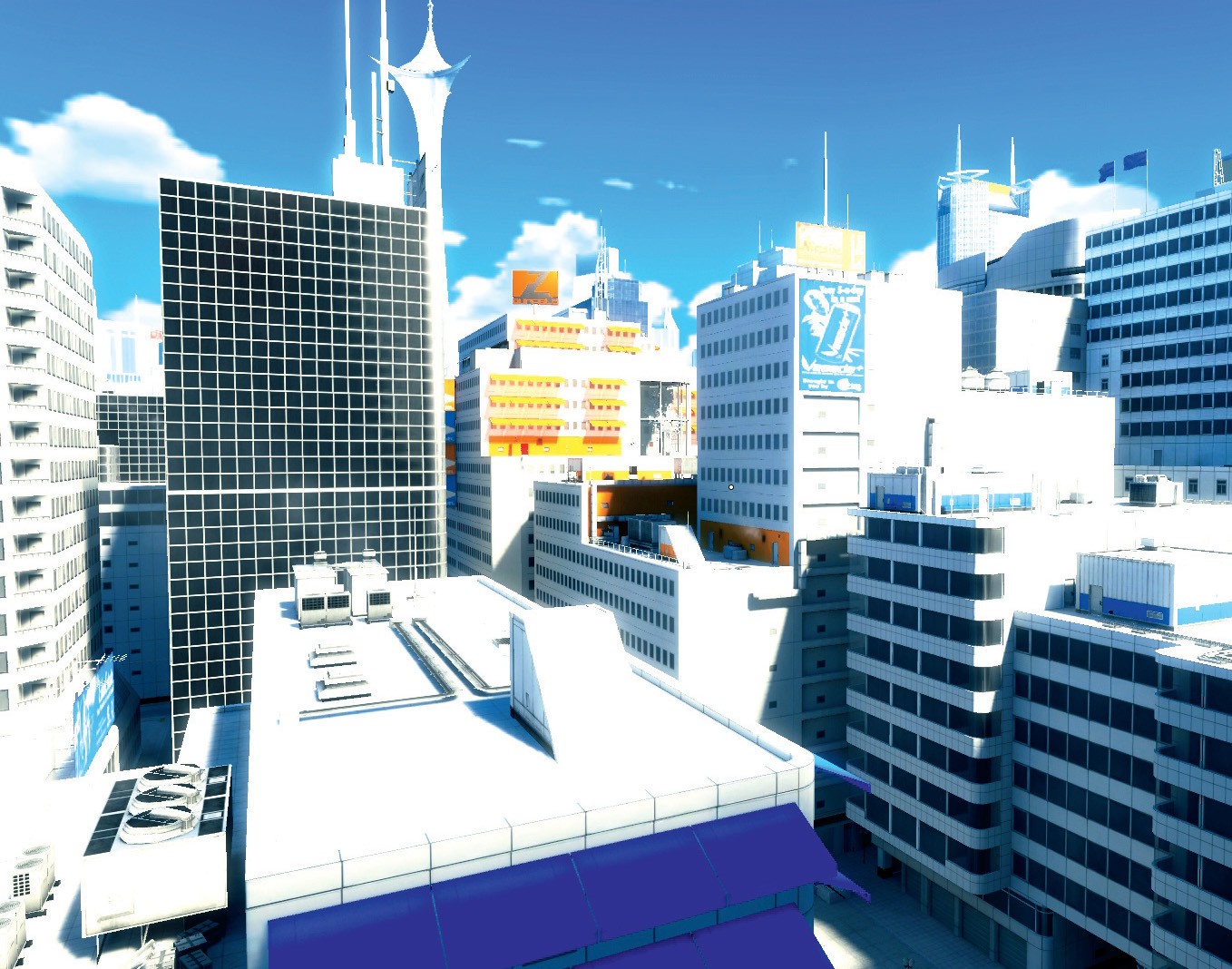
Regardless, it's satisfying to watch your leg appear from the bottom of the screen and slam your opponent's head into the ground. You can then either use your newly acquired gun to dispatch the other enemies or toss it to one side immediately. The weapons are forgettable, but discarding them lets you affect the same awesome, nonchalance of characters in The Matrix.
From the archives
This review was originally published in PC Gamer #197 (UK, February 2009).
You can still subscribe to PC Gamer to get new issues of the magazine (in print!) every month.
Note that I'm saying nothing bad about the implementation of combat. It's clear that the developers don't want this to be thought of as a traditional shooter: there's no way to reload your gun and carrying it slows you down, hindering your ability to perform jumps. Yet although you're armed with the perfect skills for evasion, this also isn't a stealth game where you can avoid alerting enemies. While it's possible to complete the game without firing a single shot, for pure reasons of convenience you'll likely turn to aggressive solutions before too long.
The issue is that the combat hinders rather than enhances the core pleasure of the game. It's precisely because the rendering of free running is sublime that its constant, violent interruption is so frustrating.
The world feels physically solid in a way other games don't. Walk close to a surface and your hands will raise and press against it. Fall slightly short on a jump and your arms will reach out and scrabble at the surface to pull you up, while falling slightly shorter still has you gripping the ledge with just your fingertips. Try to wall-run on an uneven surface and you'll slip and end up on your backside. Not hurt if the ground was close, simply embarrassed by your clumsiness. The quickening screen bob as you gather speed, the sound of trainers slapping on concrete, even the way your screen tilts and turns: there's an attention to detail here that places you firmly within this beautiful city. And it gives you the means to perform stunning acrobatic feats.
Recently, when walking past a nearby building site, PC Gamer's Production Editor Tony Ellis remarked about how cool it would be to run along the tops of the cranes, like in Casino Royale. Mirror's Edge has a level where you do exactly that. That made us all very, very happy.
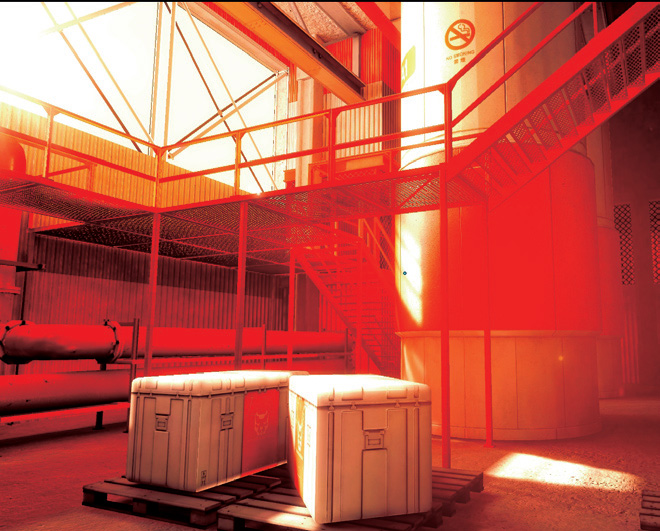
I just want to make it clear, though: at no point did Tony suggest that it might also be cool to use those same physical talents to run away from a bunch of snipers. That would be rubbish.
Let's also make it clear that when attempting that moment of crane leapery, I fell to my death half a dozen times. You're not always going to time those jumps correctly. You're going to fall and die sometimes, forcing a retry, and there's no quicksave. This proved occasionally frustrating, particularly when a death happened after a scripted ambush I was then forced to walk into a dozen times, but mostly checkpoints are well placed, quickly re-loading and sending you back to just before your failed leap.
That scripted ambush is one of the situations where the game takes control of your viewpoint for the sake of a brief cutscene.
Jumping puzzles
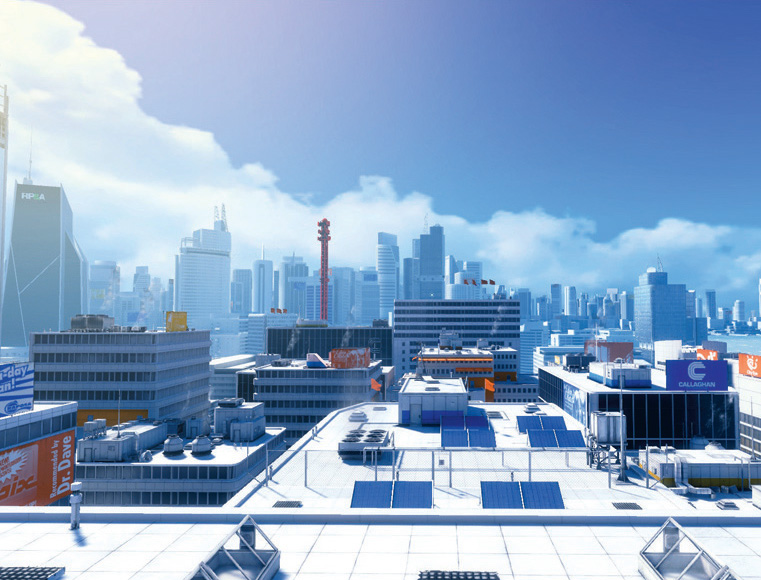
Each new chapter tends to begin with you travelling across the city via the top of its high-rises, with conveniently placed boxes and planks painting your way.
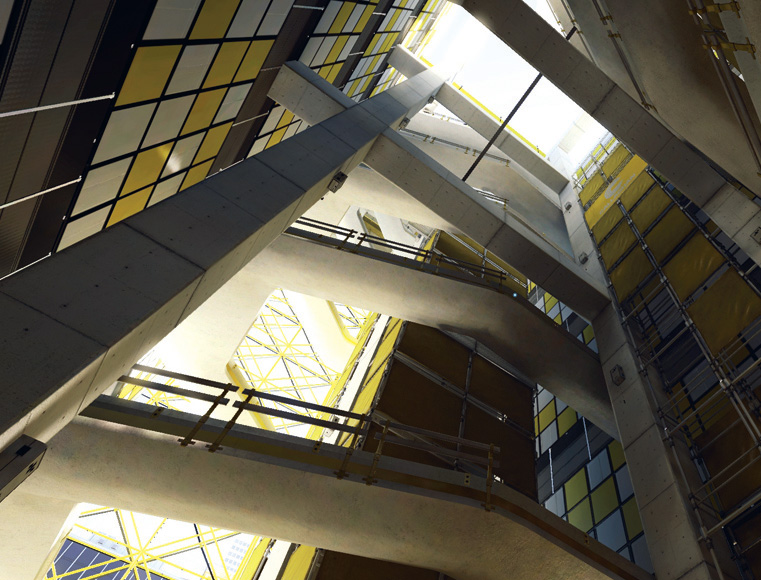
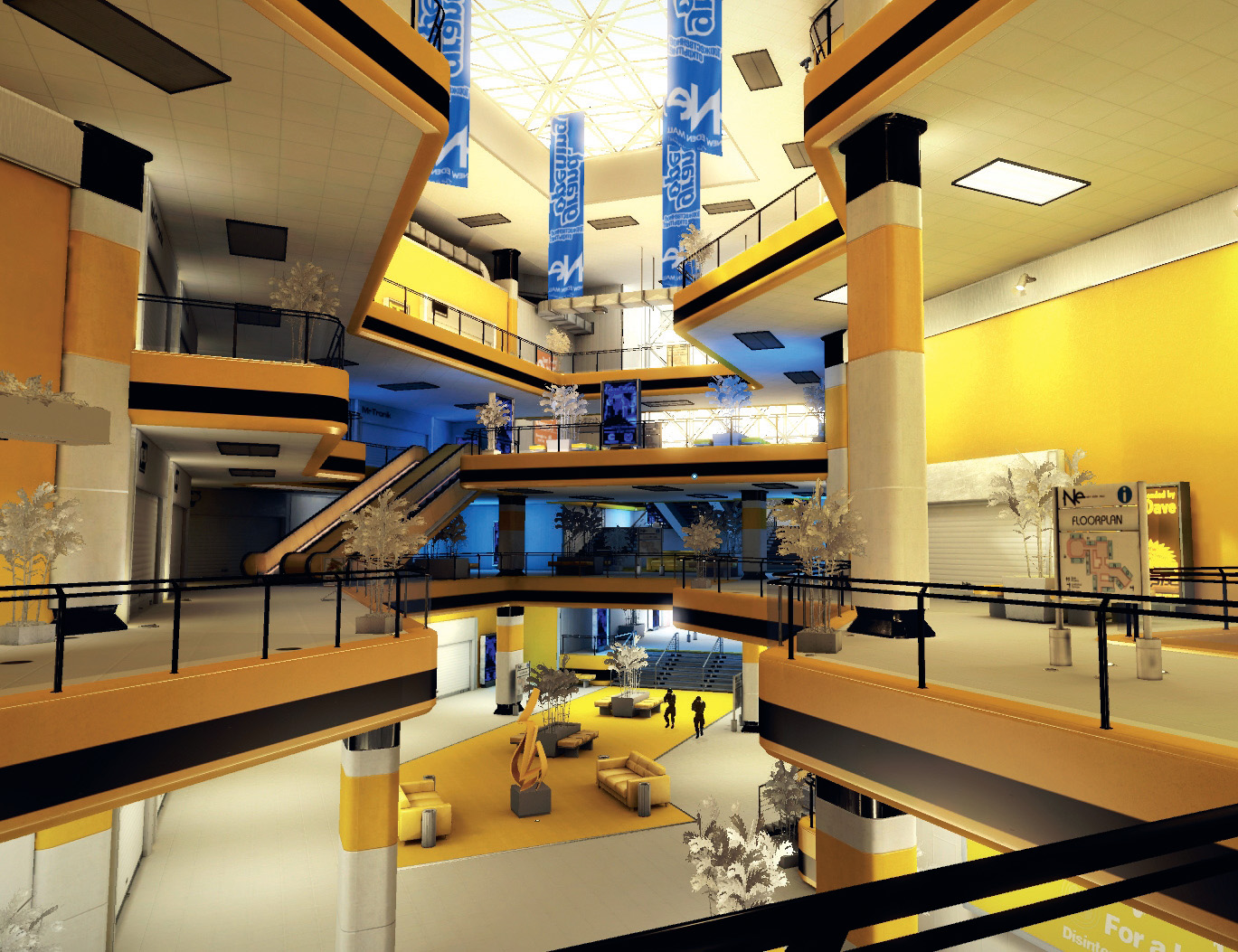
Inside areas are more constrained, but frequently open up into giant atria where you patiently make your way between levels. These are the game’s most fun puzzles.
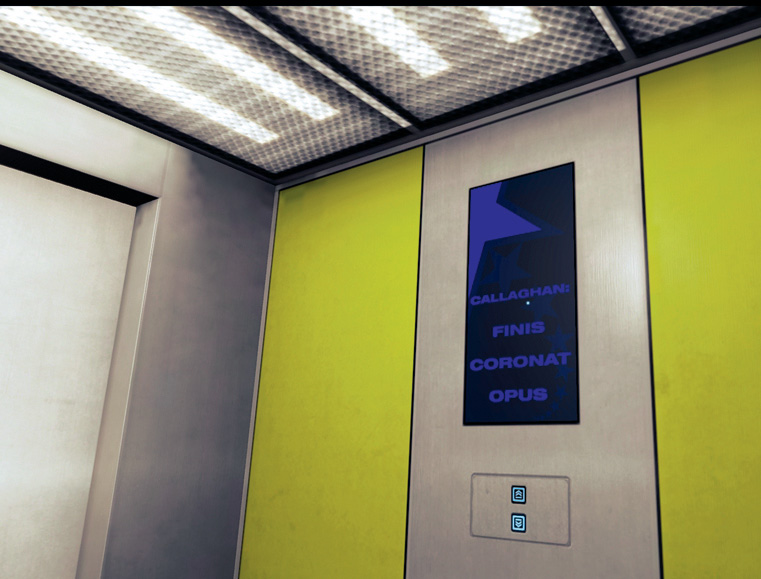
The insides of an elevator provide some mid-chase respite, giving you time to figuratively catch your breath and calm down after a burst of action. No musak, sadly.
Although the loss of control is abrupt, it's preferable to the game's occasional and jarring leaps into 2D animation. Faith is likeable, a rare humble protagonist who's willing to express something other than detached sarcasm. There's even some thematic nuance, though much of it is derivative of other work. But when the game is beautiful and steadfast in its commitment to the first-person perspective, suddenly jumping to 2D is bizarre and ugly.
It's ambitious in a multitude of ways
What will annoy some of you far more is the length. The story mode is short—I completed it in around six hours. But this is only slightly less than it took me to complete Call of Duty 4 and it doesn't feel unfairly truncated, despite the room left for the inevitable sequel. I must say that I appreciated it for not padding the experience needlessly.
Also similar to CoD4, it's improved on the PC, being easier to make jumps using a mouse and keyboard and with PhysX support, it makes fist-smashing through glass even more satisfying. But then, this is a world wiped so clean that I frequently walked into glass walls without realising they were there.
Despite the lack of multiplayer, there are two other modes that extend the life of the game: Speed Run and Time Trial. Speed Run is the story mode levels with an added timer. This forces you to complete each level flawlessly in order to reach the end within the time limit. Time Trial, meanwhile, is set in specific areas of those same levels and is entirely devoid of enemies.
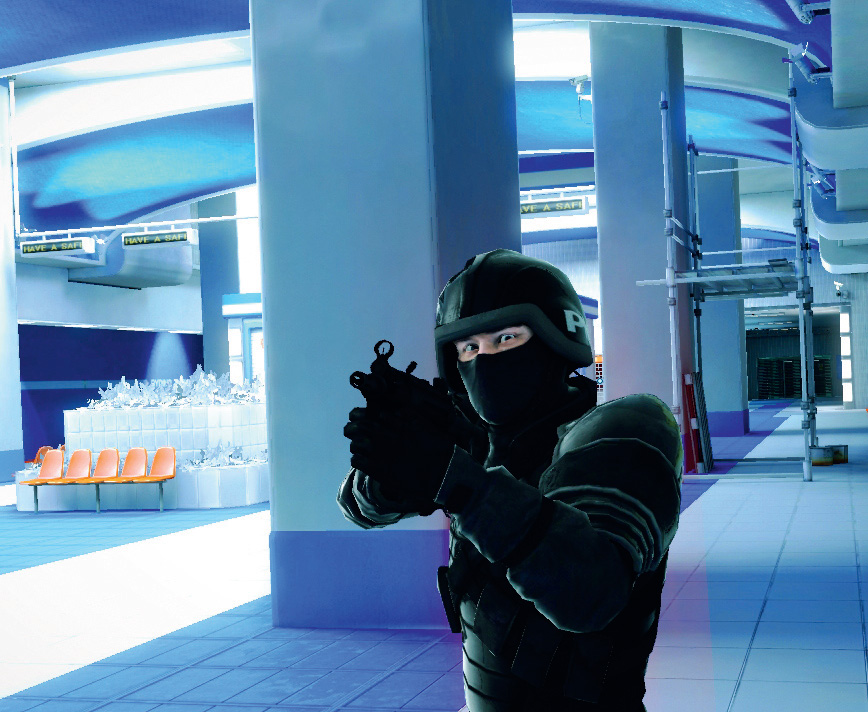
Hey, wait a minute, devoid of enemies? Time Trial essentially turns the game into the aforementioned TrackMania, placing a series of checkpoints on a level that must be hit in order and giving you times to beat to earn either one, two or three stars.
Did I say devoid of enemies? Reach the end once and the next time through you'll be racing against a ghost of yourself. NO ENEMIES?
No enemies at all! The Time Trial mode removes the game's one major irritation, turning it into a game purely about movement and iteratively improving your performance. Playing the story mode is worthwhile, and you'll need to complete it to unlock all the Time Trial levels anyway, but there's an argument to be made for this mode being Mirror's Edge distilled into its pure form.
Which only serves to underline the key frustrations of the game. It's ambitious in a multitude of ways, both in making a platformer from a first-person perspective and in its implementation of free running.
It succeeds in both these things, creating an essential experience in the process. But it's stymied by its attempts to combine those new ideas with the traditional first-person shooter model. It's as if someone told them that people were scared of new things and that they should instead take something familiar and put a clock in it instead. In other words, it's really, really good and you should play it, but damn, it could have been superb.



 English (US) ·