
 3 hours ago
10
3 hours ago
10
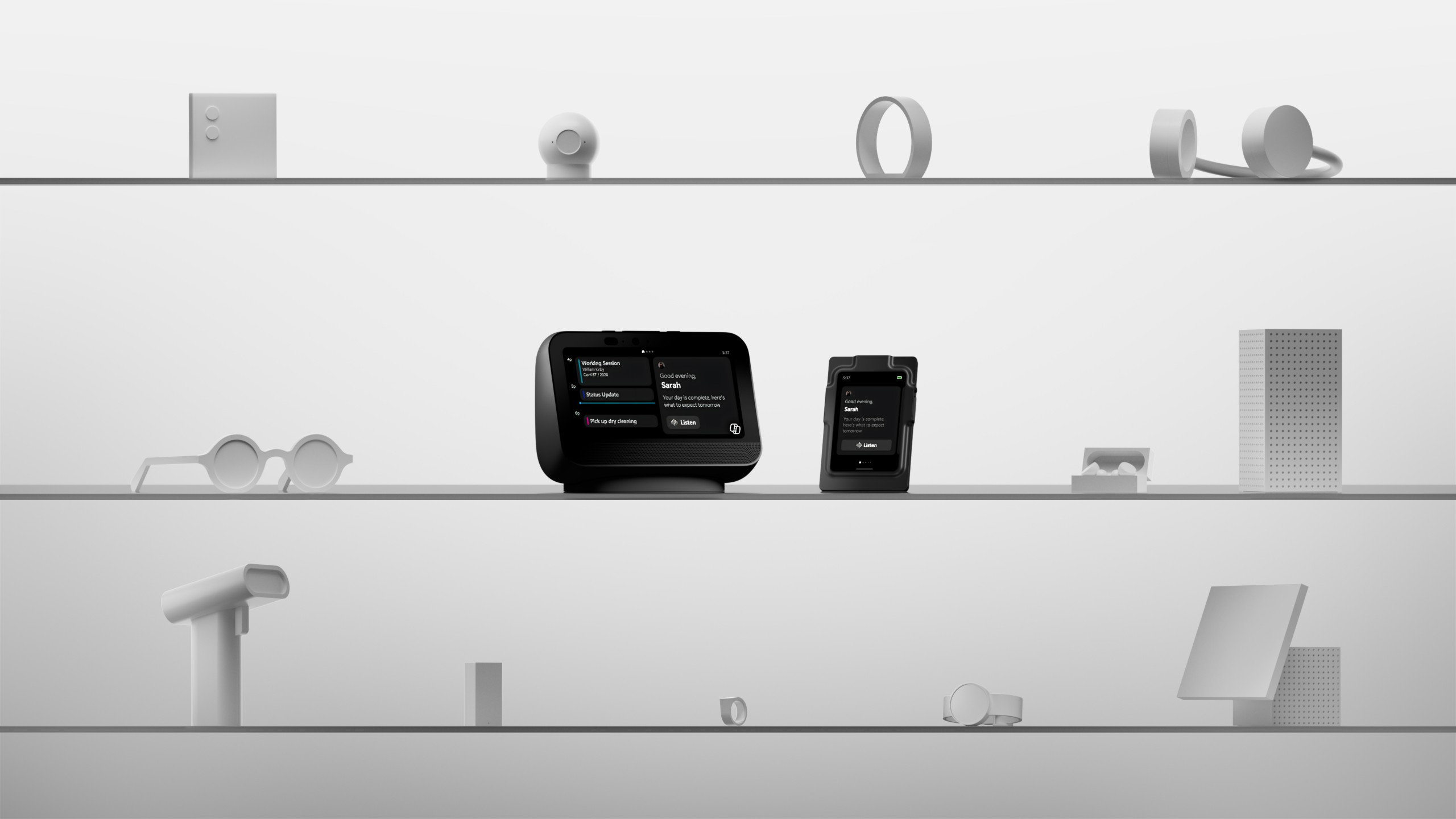
Microsoft has unveiled Project Solara, a chip-to-cloud platform designed to power a new generation of "agent-first" enterprise devices — hardware designed to run AI agents instead of traditional apps. Announced at the Microsoft Build 2026 Developer Conference on the 2nd of June, the platform, developed by Microsoft's Applied Sciences Group, features a lightweight edge OS called the Microsoft Device Ecosystem Platform (MDEP). Interestingly, the OS is built on the Android Open Source Project (AOSP) rather than Windows.
MDEP is paired with Azure-hosted agent services and persistent cloud-based state, meaning devices act as interfaces to AI agents running across Microsoft's cloud infrastructure rather than as fully self-contained computers. Together, the software stack forms what Microsoft describes as a chip-to-cloud architecture for enterprise AI devices, combining cloud-hosted agents with centralized security, management, and orchestration capabilities.
"The 'operating system' is liminal, transcending the device and the cloud. The system brings a lightweight window to the edge, where the agent manifests and where the state, via Azure, can encompass a constellation of specialized devices,” explained Steven Bathiche, Microsoft's Corporate Vice President and Technical Fellow in the Applied Sciences Group.
To populate that ecosystem with hardware, Microsoft has partnered with Qualcomm and MediaTek as its first silicon partners — Qualcomm for portable and wearable form factors and MediaTek for stationary devices. The company has no plans to manufacture end products itself. Instead, the company is releasing reference designs for OEMs to build from, alongside an "approved chipsets" requirement that gives Microsoft certification-level control over which hardware qualifies for the platform, similar to Google's GMS certification model for Android.
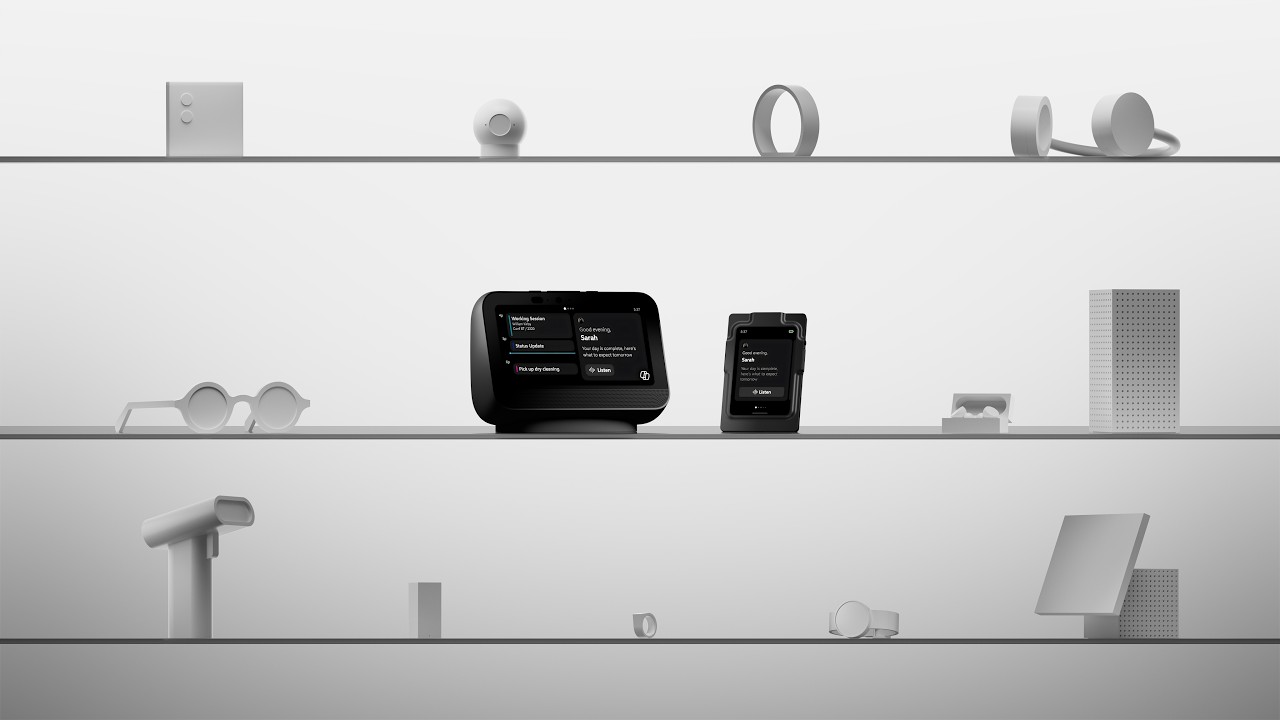
To demonstrate Solara, Microsoft unveiled two concept reference designs built on the platform. A stationary desk-mounted AI hub built around MediaTek IoT silicon and a wearable AI badge powered by Qualcomm hardware. The desktop companion features a display, a camera, a UWB (ultra-wideband) presence sensor that handles automatic login and lock, dual far-field mics, and two USB-C ports. Connected to an external display, the device can double as a Windows 365 cloud PC client.
Meanwhile, the wearable badge is equipped with a touchscreen, Hello for Business fingerprint sensor, far-field high-SNR microphone array, side-facing camera, and 5G, WiFi, Bluetooth, and GNSS connectivity — targeting front-line workers such as nurses, retail staff, and field workers. Microsoft confirmed that both devices are intended as reference designs for OEM partners rather than retail products.
Project Solara: A new vision for agent-first computing - YouTube
Central to the platform is what Microsoft calls just-in-time UI — an adaptive interface layer that allows a single agent to render appropriately across different screen sizes and input modalities without requiring developers to rebuild the experience for each device. Microsoft positions this on a spectrum between conventional responsive design and fully generative UI, where AI constructs interfaces dynamically with no predefined structure; Solara currently targets the middle ground, prioritizing consistency while avoiding per-device redesign overhead.
“The same agent can render a custom experience on multiple screen sizes and modalities with little or no additional work from the developer. For us, that is the first proof point: a path to specialized devices without requiring developers to rebuild the experience from scratch each time,” said Bathiche.
Another notable aspect of Solara is Microsoft's decision to build MDEP on Android rather than Windows. AOSP scales naturally to the lightweight, constrained hardware that wearables and embedded devices run on — something Windows, with its memory and processing overhead, was never designed to do. It also sidesteps the application compatibility expectations that come with Windows. Because Solara devices are built around cloud-hosted agents rather than traditional software, Microsoft can optimize the platform for dedicated AI hardware without carrying decades of legacy PC baggage.
To manage multiple agents running simultaneously, Microsoft is also working on an agent dispatcher and agent task manager — components that automatically surface or activate the right agent based on context, rather than requiring users to launch each one manually. Neither component is shipping yet. Early agent integrations include Dragon Copilot for healthcare workflows and GitHub Copilot for developer task tracking — both exploring how persistent, context-aware agents behave differently on dedicated hardware than they do inside a browser or IDE.
The platform appears to be aimed at enterprise buyers in retail, healthcare, and field service sectors, where dedicated agent hardware makes more sense than repurposing a smartphone. Microsoft has already lined up pilots with Best Buy, CVS Health, Levi's, Target, and AccuWeather, with broader OEM deployment targeted across healthcare, hospitality, financial services, legal, and industrial verticals.
Follow Tom's Hardware on Google News, or add us as a preferred source, to get our latest news, analysis, & reviews in your feeds.


 English (US) ·