
If your business depends on reliable, high-quality voice communication for customer calls and team collaboration, a robust phone solution is essential.
As organizations across industries continue transitioning from traditional PBX setups to modern voice-over-Internet-protocol (VoIP) systems, Microsoft Teams Phone has emerged as one of the most natural options—especially for companies already embedded in the Microsoft 365 ecosystem.
Microsoft Teams Phone extends the familiar Teams interface into a full-fledged business phone system, streamlining internal and external communication.
But while its integration and scalability make it attractive, the platform isn’t without trade-offs. In this review, we cover everything from plans and pricing to usability, features, support, and how it compares against rivals like RingCentral, GoTo Connect, and Zoom Phone.
Microsoft Teams Phone: Plans and pricing
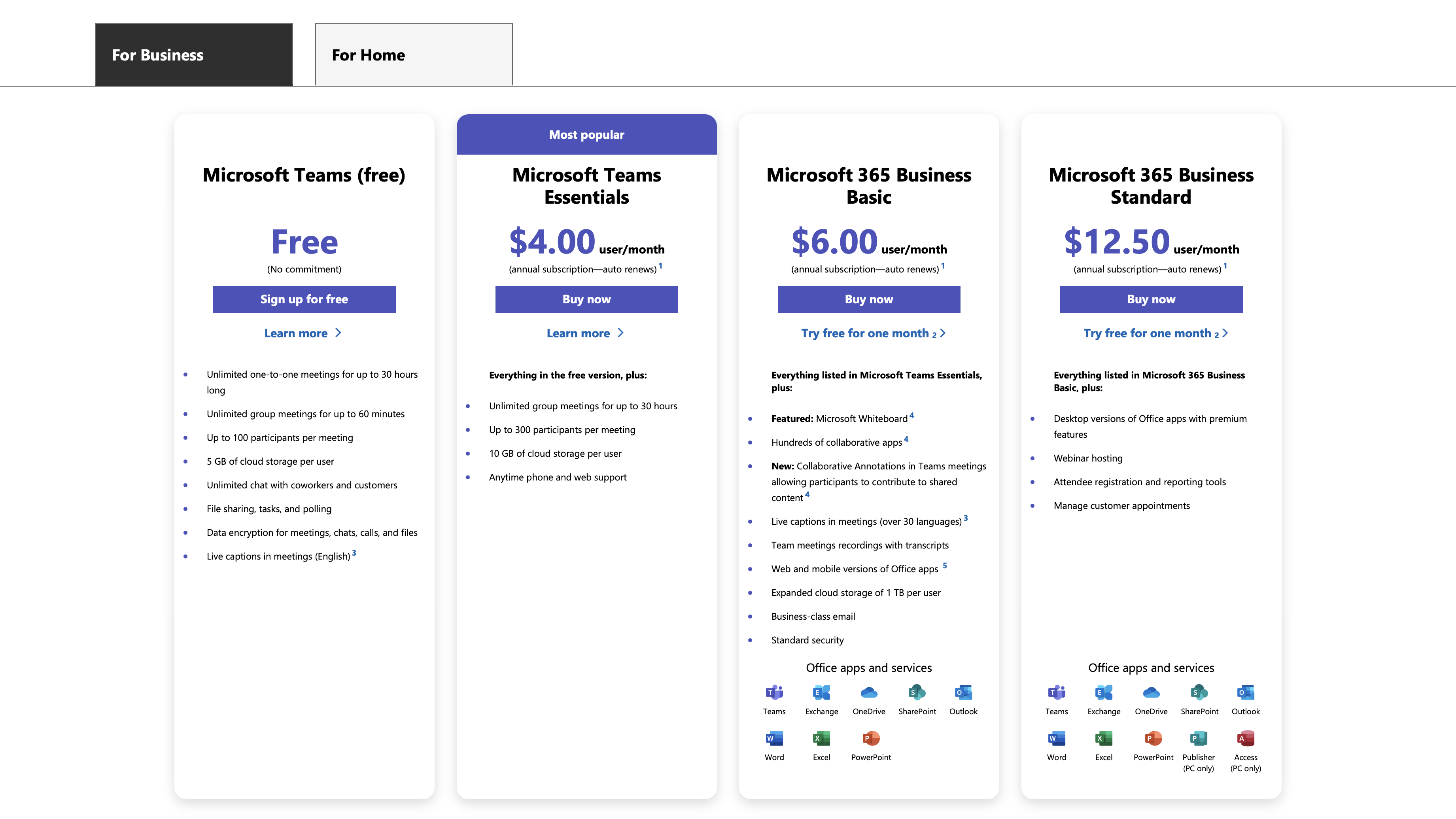
To use Microsoft Teams as your business phone system, your company must subscribe to one of three Microsoft 365 enterprise plans—E1, E3, or E5. The Microsoft 365 E1 plan costs $10 per user per month and includes web access to Microsoft apps, but it requires an additional Teams Phone license of about $8–$10. The E3 plan, at $23 per user per month (rising to $26 on July 1, 2026), includes desktop apps and the same requirement for an additional Teams Phone license.
The Microsoft 365 E5 plan, currently priced at $57 per user per month (rising to $60 on July 1, 2026), explicitly includes Teams Phone functionality. Businesses can enhance their setup through additional calling plans, such as a domestic calling plan priced at $12 per user per month that provides 3,000 minutes, or a combined domestic and international plan at $24 per user per month that includes 3,000 domestic minutes and 600 international minutes.
Conference rooms and shared devices require separate licenses at around $8–$15 per month, or $40 for Teams Rooms Pro. While these prices may seem high—especially with the upcoming 2026 increases—the value extends beyond telephony to include Microsoft’s core productivity apps, cloud storage, and email, making the total package appealing to organizations already using Microsoft 365 as their digital backbone.
Microsoft Teams Phone: Features
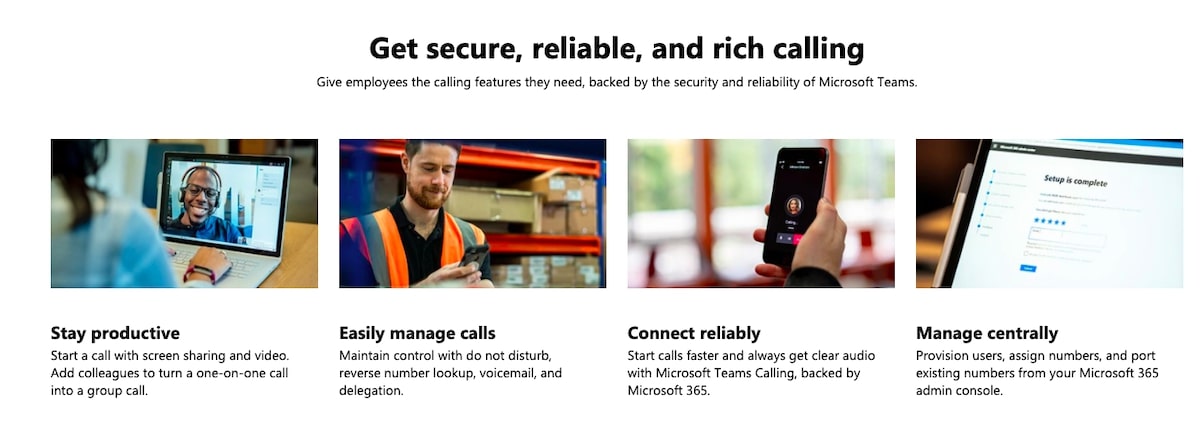
Microsoft Teams Phone includes most of the core features expected in a premium VoIP solution.
Businesses can set up call queues, forwarding, voicemail, auto-attendants, and customized call routing based on business hours or holidays. Other tools, such as call parking, delegation, transfer functions, and real-time presence indicators, make day-to-day communication more efficient.
However, Teams Phone is less suitable for organizations that require complex call center functionality.
Advanced routing options and detailed ring group configurations are limited, and there is no native support for call recording. Despite Microsoft’s broader software ecosystem, there is still no direct CRM integration with Microsoft Dynamics or other leading CRM platforms, preventing automatic logging of call data.
Reporting tools exist, but they focus mainly on network and call quality rather than on performance indicators such as response times or call-handling efficiency. Because of these limitations, Teams Phone serves smaller and mid-sized businesses more effectively than large-scale call centers that demand higher customization.
Microsoft Teams Phone: Set up
Setting up Microsoft Teams Phone is relatively intuitive, particularly for companies that already use Teams.
Administrators can plan user roles and call routing in the Teams admin center, and provisioning new accounts takes only a few minutes. The system integrates with existing Microsoft services such as Azure Active Directory, making it easy to sync users and permissions. Businesses migrating from older phone systems can port numbers directly, though this process may take extra time depending on the complexity of their network.
The key to a smooth setup lies in preparation. By auditing teams, departments, and workflows before launch, administrators can efficiently configure user groups and call distribution methods. Teams Phone is also highly scalable, allowing organizations to add new users or branch offices with minimal disruption as they grow.
Microsoft Teams Phone: Ease of use
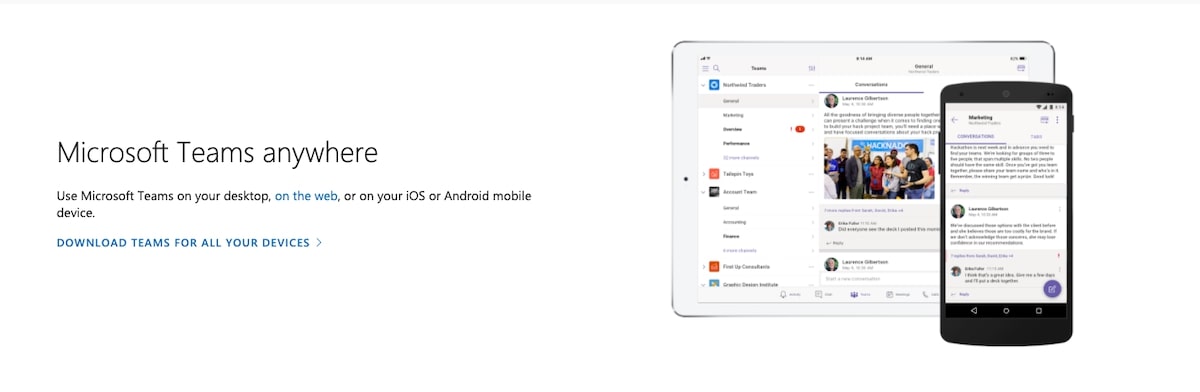
The user experience is one of Teams Phone’s strongest aspects.
The interface mirrors the Microsoft Teams environment, making it instantly recognizable for employees who already rely on Teams for chat and meetings. For new users, the layout is intuitive and consistent across devices, including Windows, macOS, iOS, and Android.
Microsoft also supports device flexibility, allowing calls to be transferred seamlessly between desktop and mobile devices. Integration with Apple CarPlay makes it easier for mobile workers to manage calls safely while traveling.
Importantly, users do not necessarily need to install the Teams mobile app to receive forwarded calls, which can simplify deployment for organizations that prefer minimal device management. Nonetheless, new adopters should plan training sessions to help staff get comfortable with call routing, queue management, and group settings.
Microsoft Teams Phone: Support
Microsoft offers an extensive library of help resources, including tutorials, troubleshooting guides, and community forums within the Microsoft 365 support portal.
Unfortunately, not all service tiers receive access to live 24/7 technical support. Most users must log tickets through the online portal and then wait for a response, which can vary from a few hours to longer, depending on the issue. The inconsistency in response time and quality is one of the platform’s weakest points, especially for businesses that depend on uninterrupted communication.
For faster help, companies can subscribe to Microsoft’s premium support tiers or work with certified partners that provide managed services and real-time assistance. While these options add cost, they can significantly reduce downtime.
Microsoft Teams Phone: Security and privacy
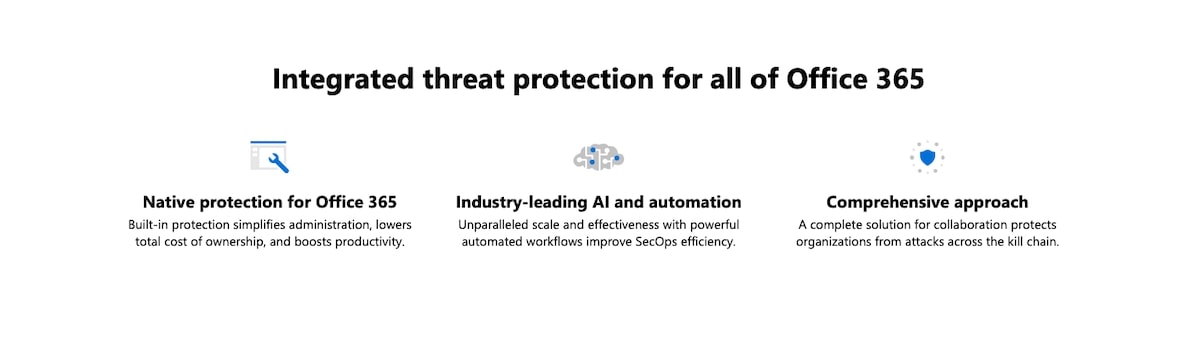
Security has long been a strength of Microsoft’s enterprise offerings, and Teams Phone benefits from the same protections.
All data is encrypted with SSL both in transit and at rest, while audio and video traffic use SRTP protocols to safeguard media streams. Businesses that subscribe to E3 or E5 plans also gain access to Microsoft Advanced Threat Analytics, which includes behavioral monitoring and compliance enforcement tools.
Although Microsoft has experienced several security vulnerabilities in the past, the company has maintained a consistent record of addressing them quickly. Teams Phone’s security infrastructure evolves with regular patches and updates.
However, some industries may find Microsoft’s layered licensing model challenging when aiming for full compliance with specific regulations such as HIPAA or GDPR, since additional add-ons may be required.
Microsoft Teams Phone: The competition
The VoIP space is full of strong competitors, and several alternatives offer capabilities that Microsoft Teams Phone lacks.
RingCentral MVP provides a robust feature set, including built-in call recording, CRM integrations with platforms such as Salesforce and Zendesk, and reliable 24/7 customer support. It also integrates directly with Microsoft Teams, offering the best of both ecosystems.
GoTo Connect stands out for its straightforward pricing model and comprehensive feature suite, which includes SMS messaging, fax capabilities, and geolocation-based call routing. Zoom Phone has become increasingly popular among small and medium-sized businesses for its simplicity, pay-as-you-go pricing, and seamless integration with the broader Zoom platform. Other noteworthy options include 8x8 and Vonage Business Communications, both of which deliver advanced analytics, broad global coverage, and a variety of third-party integrations.
While these competitors outperform Microsoft in some areas, none match the native integration that Teams Phone delivers within the Microsoft 365 environment.
Microsoft Teams Phone: Final verdict
For those who already use Microsoft Teams, the ease of moving over to the VoIP offering is a big plus, and it’s also ideal for businesses that are looking to scale up in the future, as purchasing additional user licenses can be completed in minutes.
The system does come with its flaws, though, and is not a good fit for businesses that require more complex phone configurations. In addition, the cost of purchasing the licenses and call plans can quickly add up if your business has heavy telephone usage, or if you want to use different solutions for other aspects of your business operations which means paying for multiple subscriptions.
The lack of 24/7 support from Microsoft is also a concern when it comes to troubleshooting and potential downtime. Businesses that want 24/7 support with the system can however get this through a third-party supplier.
Finally, unlike some of its rivals, Microsoft is an incredibly well-established company, and so if you go to the effort of setting up Teams Phone – and buying into the Microsoft ecosystem more generally – the service won't disappear one fine day.







 English (US) ·