
 3 weeks ago
49
3 weeks ago
49

At its GTC 2026 keynote, Microsoft took the wraps off Project Helix, announcing the first hardware details for the next-gen Xbox. The company reiterated how Helix will run both console and PC games, while confirming a partnership with AMD for its custom silicon, as expected. The biggest new info from the presentation was a surprise reveal for AMD's next-gen FSR "Diamond" stack that will be deeply integrated within Project Helix. The new "Xbox Mode" that debuted on Asus' Xbox Rog Ally devices will also be heading to Windows 11 this April.
First, let's go over the list of now-confirmed building blocks for the upcoming Xbox console-PC hybrid. It will feature a custom SoC developed by the Red Team — likely featuring an RDNA 5 GPU — with a focus on next-gen raytracing performance. Microsoft namedrops next-gen DirectX, too, but it could be referring to a newer iteration of DirectX 12 that only ships on PC for now.
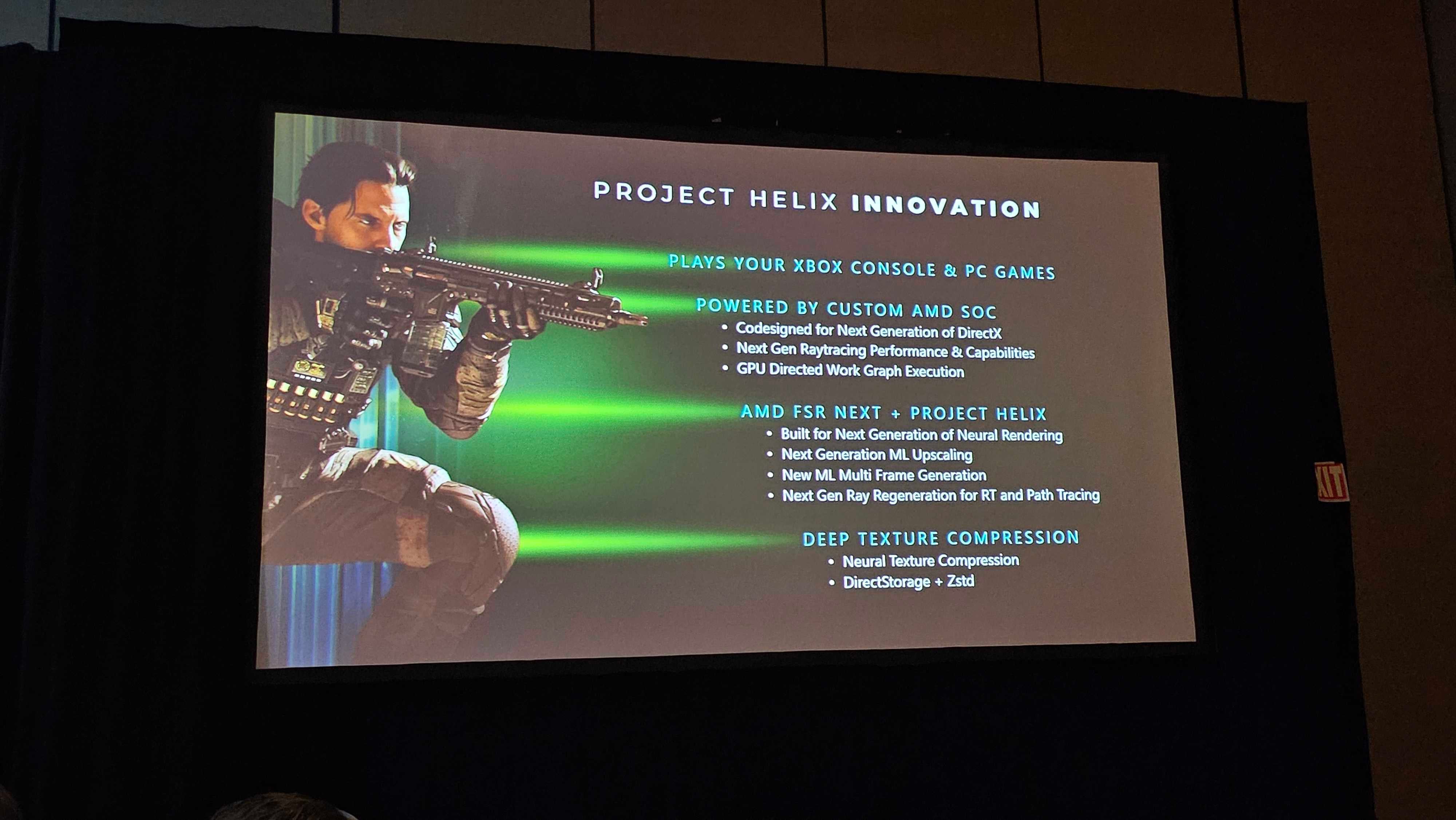
Current-gen Xbox Series consoles already run a version of DirectX 12, but they don't support a lot of the latest features, namely "work graphs" that let the GPU itself drive code execution instead of relying on the CPU. The custom AMD silicon in Project Helix would support this, alongside neural texture compression. Microsoft is also combining DirectStorage and Zstd to accelerate SSD-to-GPU communication in the console.
Article continues below
Now we come to the juiciest bit, "FSR Next." It seems like Project Helix is being built around neural rendering, and the next-gen FSR stack will play a big part in achieving this. In the slide, Microsoft mentions next-gen ML-based upscaling and ray regeneration for both ray tracing and path tracing, which will be a first for consoles. The company even says Helix will support multi-frame-gen thanks to FSR Next.
After the show, AMD graphics lead Jack Huynh revealed that FSR Next will be called FSR "Diamond" in a separate tweet. He also described Project Helix as a multi-year engineering collaboration between AMD and Microsoft. That certainly makes it sound like an evolving process, something that's more indefinite and supposed to get better over time.
🚀 Big moment for the future of gaming.Thrilled to partner with @Xbox and @asha_shar on Project Helix, a multi-year deep co-engineering partnership driving next-gen performance, breakthrough graphics, and compatibility with your existing Xbox game library.Powering the… pic.twitter.com/twGyonqgQSMarch 11, 2026
On the other hand, we could infer the above multi-year comment as simply a reference to the development time for the hardware. Huynh also mentions that FSR Diamond will be "natively optimized" for Helix and be a core tenet of the Xbox SDK. Upscaling has always been a key part of how some machines operate and how they're able to hit advertised performance numbers, but never quite so publicly before.
Since the debut of current-gen Xbox and PlayStation devices, AI-based upscaling has taken over the industry with every new game shipping with some version of the tech. It's become a default part of the system requirements, so it makes sense that, years later, consoles — which are basically locked-down x86 computers, too — will also hop on the trend. After all, Project Helix is a PC-console hybrid.
Speaking of consoles that are also just PCs, the new "Xbox Mode" that debuted on Asus' Xbox Rog Ally devices will be heading to Windows 11 this April. To jog your memory: in this console-like mode, Windows limits background processes and telemetry to reduce overhead and squeeze as much out of the hardware as possible. Xbox Mode has already been available as part of the Insider program for months.
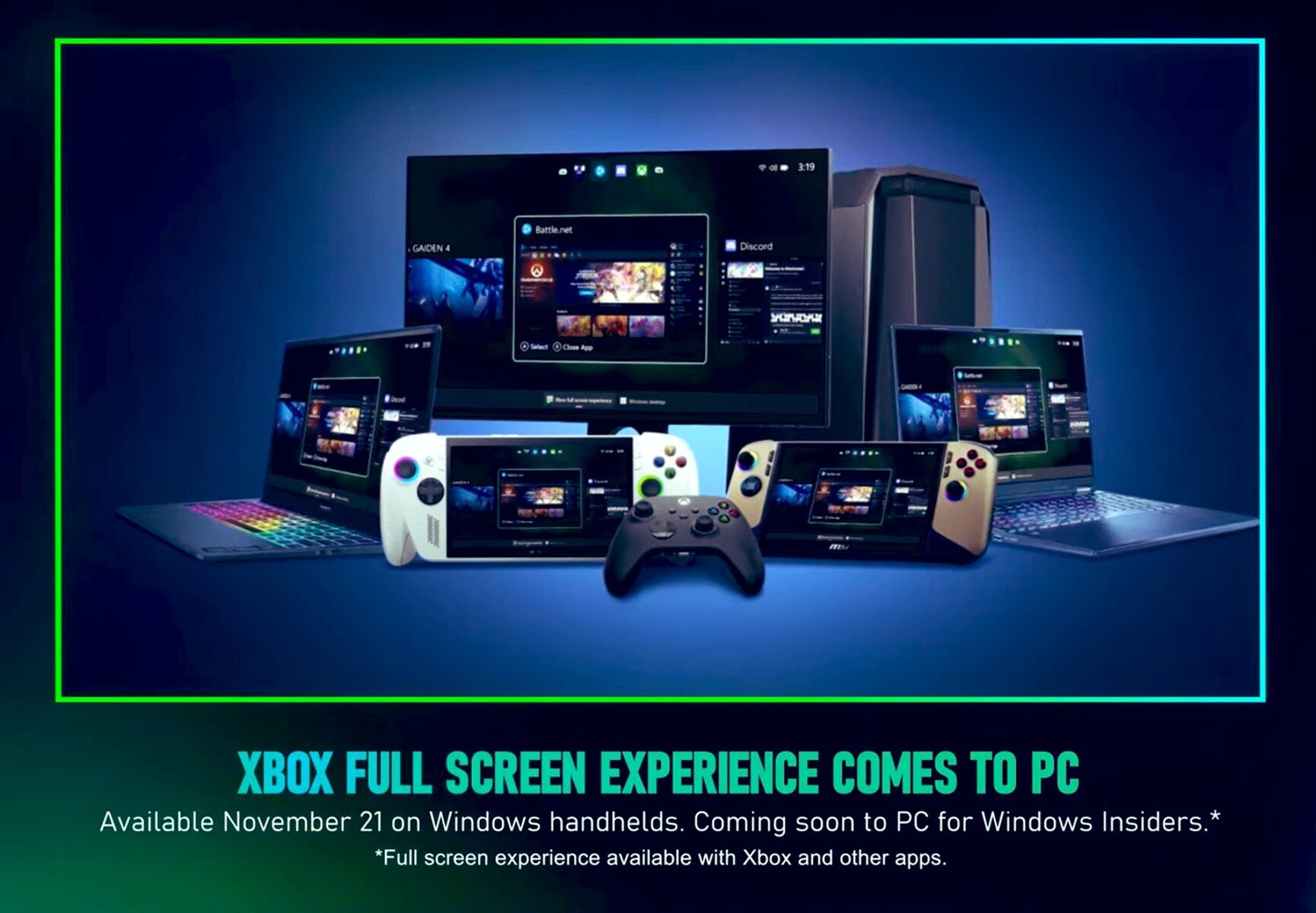
It was previously known as Xbox Full Screen Experience (FSE), but the name has been updated since. Xbox Mode will roll out to "select markets" first and likely represents the first step in the PC-console unification Microsoft hopes to achieve by the time Project Helix's launches. The Xbox Play Anywhere program, which allows for cross-progression between platforms, was mentioned at the show as another sign of this future.
Speaking of which, "alpha" kits for Project Helix will begin heading out to relevant parties in 2027, which implies a late 2027 launch at best, but component shortages could push that back. A 2027 release would be in line with the typical seven-year cycle that consoles follow, as the Xbox Series S|X debuted in Q4 2020. The only thing left now is to wait and see what kind of response Sony is preparing with its PS6.
Even though the base hardware and neural rendering-first approach would likely be similar between Sony and Microsoft, the former has no interest in appealing to PC anymore. In contrast, Microsoft is almost forcing PC and console together to eliminate the need for even picking a platform. It even told developers at GDC to "build for PC" going forward, further implying that Project Helix is just moonlighting as a console.

Follow Tom's Hardware on Google News, or add us as a preferred source, to get our latest news, analysis, & reviews in your feeds.






 English (US) ·