
 4 weeks ago
37
4 weeks ago
37
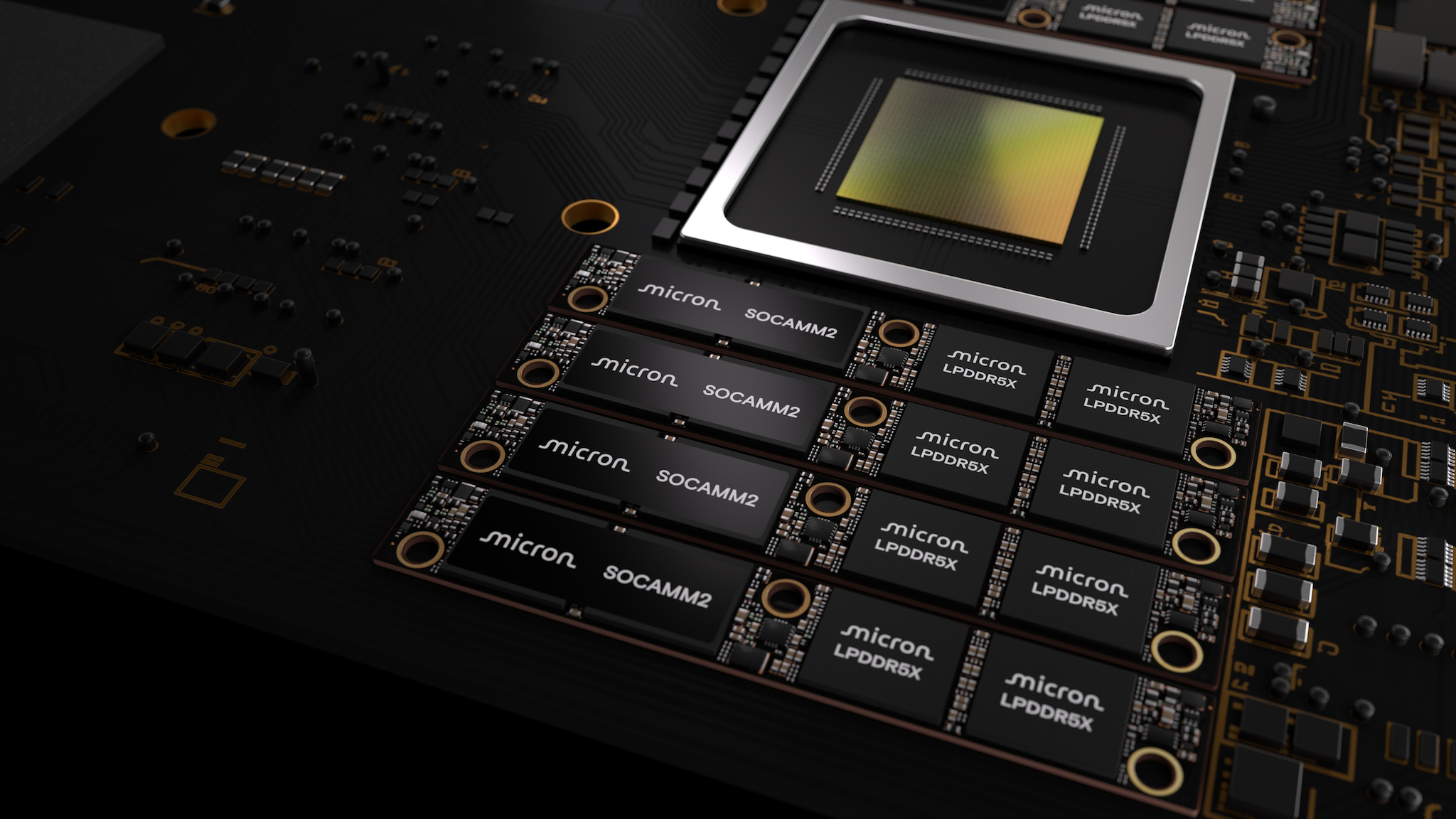
Most of the conversation about speed in AI datacenters revolves around the accelerators themselves, discussing tokens per second and the like. However, the battle for AI performance is fought on multiple fronts, and one of them is in memory capacity and power efficiency. Today, Micron unveiled what look to be the industry's first 256 GB SOCAMM2 units, a sizable step up from the last-best 192 GB modules released just six months ago.
Go deeper with TH Premium: Memory
The 33% improved density over previous-generation SOCAMM2 is excellent news on its own, but that's not the only advantage of this form factor. The new modules ought to offer 66% better power efficiency compared to bog-standard RDIMMs, and they're compatible with increasingly popular (and necessary) liquid cooling for AI servers.
According to Micron, the new sticks are the first to employ its 32 Gb (4 GB) LPDDR5X monolithic dies, where "monolithic" means all the memory and relevant circuitry are part of a single die.
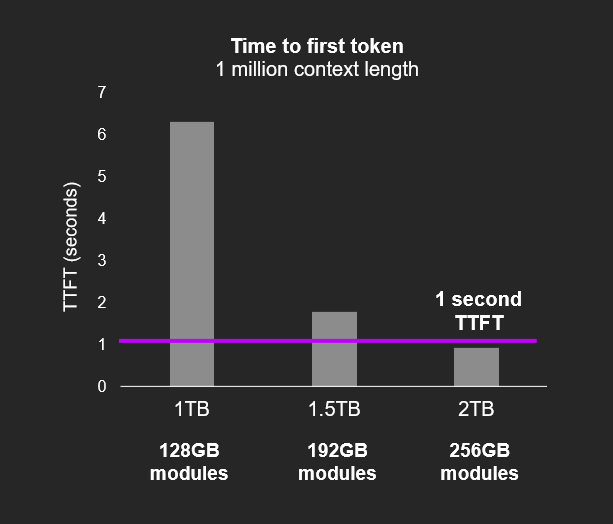
Given the target market for these large SOCAMM2s, the firm touts the real-world performance improvements beyond just density and power efficiency. Having this much RAM available to a single processor lets AI models use much larger context windows. Consequently, it helps reduce the all-important TTFT (Time To First Token), meaning bots start answering your questions quicker.
In an AI future where context is literally everything, every gigabyte of memory closer to the xPUs in a system matters, and Micron's advancement today will doubtless be found in massive AI server installations worldwide as companies allocate hundreds of billions of dollars of capex in the race toward AI supremacy.
The SOCAMM2 form factor is the result of a partnership between Nvidia and memory makers Micron, Samsung, and SK hynix. The SOCAMM standard was originally designed by Nvidia, but the accelerator mogul reportedly had trouble getting the modules to operate without overheating on high-density servers. CEO Jensen Huang wisely teamed up with the folks who make computer memory for a living, resulting in SOCAMM2s with growing density and lower power consumption.

Follow Tom's Hardware on Google News, or add us as a preferred source, to get our latest news, analysis, & reviews in your feeds.





 English (US) ·