
 4 days ago
12
4 days ago
12
The American Society of Cinematographers hosted its 40th annual ASC Awards last night, celebrating the best achievements in cinematography over the past year. Oscar-winning cinematographer Michael Bauman took home the most coveted prize of all, the Theatrical Feature Film award, for “One Battle After Another.”
It was Bauman’s first ASC Award and nomination for a Theatrical Feature Film. After an extensive career in camera and electrical department work, the cinematographer has primarily worked behind the camera on television series, including “American Horror Stories,” “Feud,” and “Monster.” Alongside Paul Thomas Anderson’s “One Battle After Another,” Bauman also served as cinematographer on Anderson’s 2021 film, “Licorice Pizza.” It is worth noting Bauman was also nominated this year in the Limited/Anthology/Motion Picture Made for TV category for his work on “Monster,” a category Pete Konczal won for “Black Rabbit.”
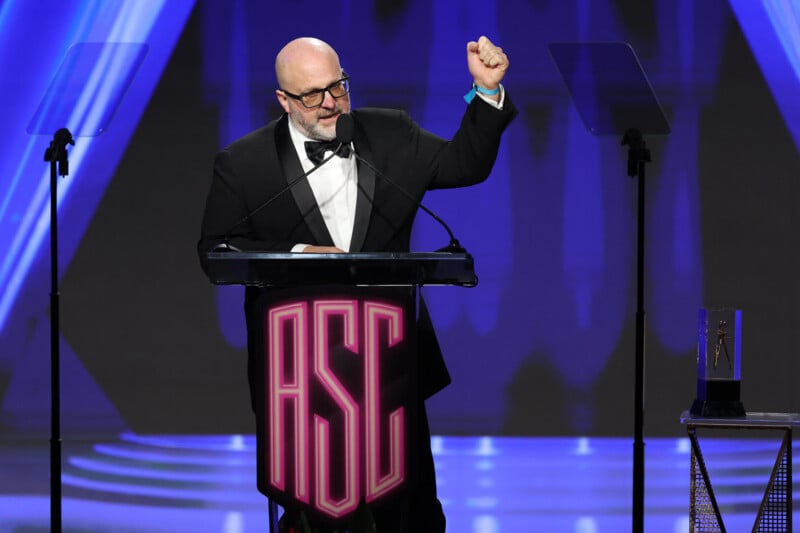 Michael Bauman accepting his award at the 40th ASC Awards. | Image by Danny Moloshok
“One Battle After Another” is distinct not only for Bauman’s superb, award-winning cinematography, but how Bauman shot the film. Anderson and Bauman opted to film on VistaVision, a specialized, high-resolution, widescreen variant of traditional 35mm motion picture film developed by Paramount engineers back in 1954.
VistaVision is having something of a resurgence in Hollywood these days, thanks in no small part to Brady Corbet’s 2024 film, “The Brutalist,” which won three Oscars in 2025, including one for Best Picture. Oscar-winning cinematographer Lol Crawley was nominated for the 2025 ASC Award for Outstanding Achievement in Cinematography in a Theatrical Feature Film for his work.
“The format (created by Paramount in the ’50s and the forerunner of IMAX) was perfectly suited to the scope and energy of ‘One Battle’ (which was inspired by Thomas Pynchon’s novel ‘Vineland’). The epic landscapes and thrilling car chases definitely benefited from the larger negative area, higher resolution, sharper depth of field, and reduced grain. These became indelible and immersive images in the 1.50:1 frame,” Kodak explains.
“I think this movie is such a big canvas [for VistaVision],” Bauman told Kodak. Bauman first worked with Anderson as a gaffer, and then as a lighting cameraman, and then as co-director of photography for “Licorice Pizza” a few years ago.

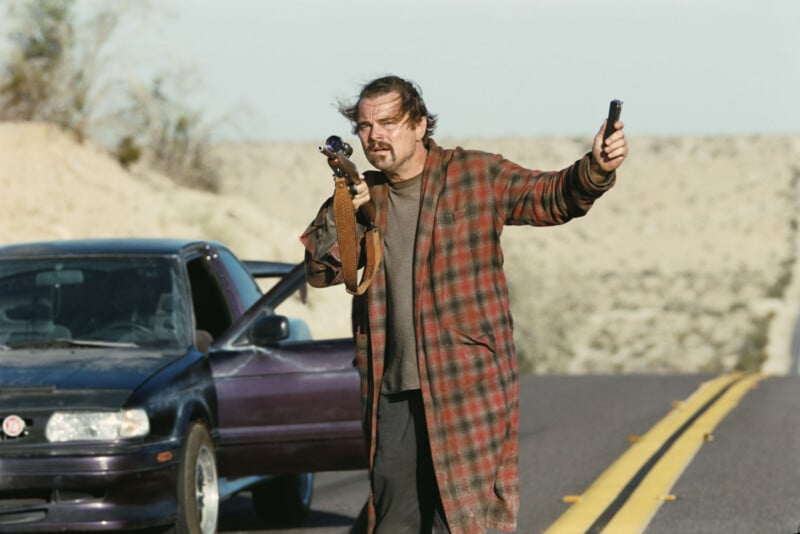
“We’ve had this aesthetic conversation since ‘Phantom Thread’ that it has to have texture to it, it’s got to look like a movie, and so he was pretty adamant about it,” Bauman says of Anderson’s insistence on using VistaVision for “One Battle After Another.”
The duo got their hands on a vintage Beaumont VistaVision camera from their peer, actor-turned-cinematographer Giovanni Ribisi (“Strange Darling”).
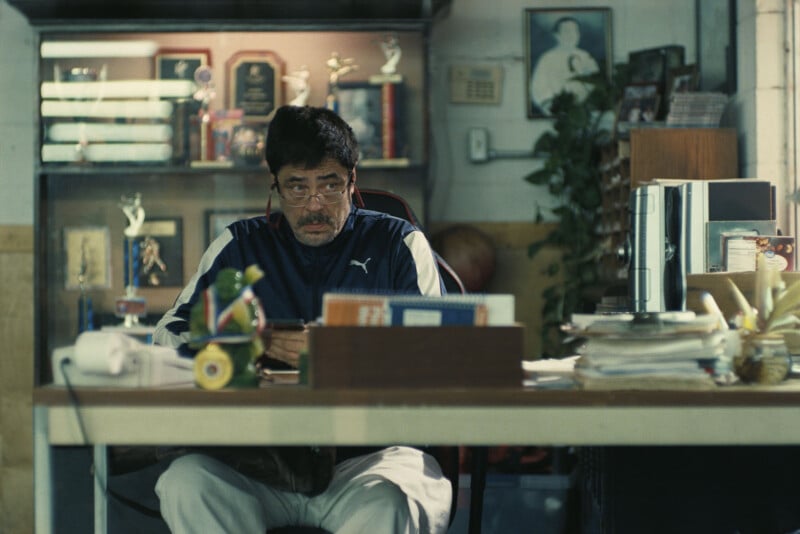


“He’s a collector of all sorts of stuff and he had this one that was in great condition,” Bauman explains. “And I remember we brought it to a test at Panavision, and Paul was like, ‘I don’t know, this would be like taking your beautifully restored 1957 Chevy out and running it around through the mud.’ And Giovanni was like, ‘This is not a precious artifact, this is for making movies. So please take it and go make a great movie.'”
They gathered a team at Panavision to make some upgrades to the camera, including adding new parts and building a handheld, stabilized head using components from an aerial photography camera.
Beyond Bauman’s victory, the 40th annual ASC Awards, sponsored by RED, honored many other talented cinematographers across the industry. The complete list of all winners and nominees is available on the ASC’s website.
Image credits: Still frames courtesy of Warner Bros. Pictures. Award photo of Bauman from the American Society of Cinematographers.








 English (US) ·