
 3 hours ago
9
3 hours ago
9
Terry Matalas is surrounded by science fiction. The showrunner best known for SYFY’s “12 Monkeys,” the third season of Paramount+’s “Star Trek: Picard,” and the upcoming Marvel Cinematic Universe series “VisionQuest” has been steeped in the genre since childhood, going to see “E.T.” on opening day “when I was way too young to see it,” getting raised on “Close Encounters,” even kicking off a side career restoring the DeLorean from “Back to the Future.”
And when IndieWire caught up with the showrunner over Zoom, his office contained everything from a life-size Audrey II puppet from “Little Shop of Horrors” to one of the “real aliens” from “Close Encounters.” “It’s just part of my DNA, how I was raised,” Matalas told IndieWire. “I consumed way too much.”


Raised in New Jersey, long before the Emerson College graduate was concluding the MCU trilogy that began with “WandaVision” and continued with “Agatha All Along,” he was working his dream job as an intern on the Paramount lot. Obsessed with “Star Trek: The Next Generation,” Matalas found himself working on the three soundstages occupied by “Star Trek: Voyager,” while “Deep Space Nine” was across the street on another three soundstages.
“Going from a fan to suddenly being in it and walking around those sets with creatives who I had admired, it was really an incredible place to learn, sit in [with] those writing staffs and the art department, and be on set and see how television was made. It was the best education I could possibly have,” Matalas recalled.
And as you might expect from someone who has spent the subsequent decades delving further into science fiction, rather than being inside the dream factory turning him off from the genre, it thrilled the young Matalas. “Making television and making movies is really hard, but there’s nothing quite like getting that final product and watching it turn into this other thing, this other entity that has nothing to do with what was going on, on set that day,” he said.
From bringing scripts to actors, Matalas moved up to writing on “Star Trek: Enterprise,” which he called “like a free admission to Harvard.” It was also a very different time for television, making 26 to 28 episodes a year, instead of the streaming pace we see now (“VisionQuest,” by comparison, has eight episodes rolling out weekly on Disney+). “It was very fast. It was an intense education as to how to make television,” he said.
Matalas then graduated TV Harvard to work as a writer on shows like FOX’s dinosaur drama “Terra Nova” and two seasons of The CW’s “Nikita.” But it wasn’t until SYFY’s “12 Monkeys” that he came into his own as a showrunner, guiding the beloved series based on a combination of the classic Terry Gilliam movie and his own spec script “Splinter” for four seasons. While the show was never a ratings hit, it was a critical favorite, and has been lauded for delivering what is generally considered one of the more satisfying finales in TV history.
“Oh, God, you learn so much,” Matalas said when asked about his takeaways from guiding four seasons of the series. “You learn what battles are important. When you first come on, it feels like you have to fight for everything, whereas a lot of times, the cards fall where they fall. It teaches you to learn to be more patient and open to different kinds of storytelling. That’s from interaction with amazing creatives, amazing writers who have different perspectives. To this day it’s still my baby and we often reference it in these shows. There’s a couple ‘12 Monkeys’ references scattered everywhere, here and there, for those who know. Because for the very small audience that knows, it was an incredible experience, especially nowadays, where you can tell a four season serialized story to completion. That’s just exceedingly rare.”
 ’12 Monkeys’Ben Mark Holzberg/Syfy
While “12 Monkeys” is Matalas’ baby, he moved on to nursing other’s babies for a while with SYFY’s “Blood Drive” and “Nightflyers,” followed by a season on “MacGyver.” But then, it was right back to “Star Trek,” joining the second season of the “Next Generation” legacy series “Picard.”
Despite having worked in various capacities on the franchise previously, helping showrunners Akiva Goldsmith and Michael Chabon shape the second season of the Paramount+ series was a learning curve. “I was still learning the ropes of what New Star Trek meant,” Matalas said.
It wasn’t until the third season, when he took over as sole showrunner, that Matalas really felt like he was “coming home.” Part of that was reuniting with actress Jeri Ryan, who played the reformed Borg (an alien cyborg race, usually villains) on “Voyager.” “We were both the new kids on the show,” Matalas explained. “She came in late into ‘Voyager,’ and that’s when I came in as a PA, so we didn’t know anybody at the same time. We’ve remained friends ever since.”
Even with his reunion with Ryan, it still stunned Matalas that he could go from delivering scripts to her to writing scripts for her. Or that he went from helping out on the “Star Trek” feature films driving “Patrick Stewart around on a golf cart, and now here I am telling the last story of his character. It was pretty extraordinary.”
And that extraordinary experience led, in part, to “VisionQuest.” While it’s been reported Marvel Studios boss Kevin Feige sought out Matalas based on “Picard” Season 3, from the showrunner’s perspective, it was a little more complicated. Though they did meet because of their “shared love of Star Trek, and became friends that way,” Matalas made clear to Feige that he had the same sort of “fandom and enthusiasm for Marvel, and was desperate to be a part of it.”
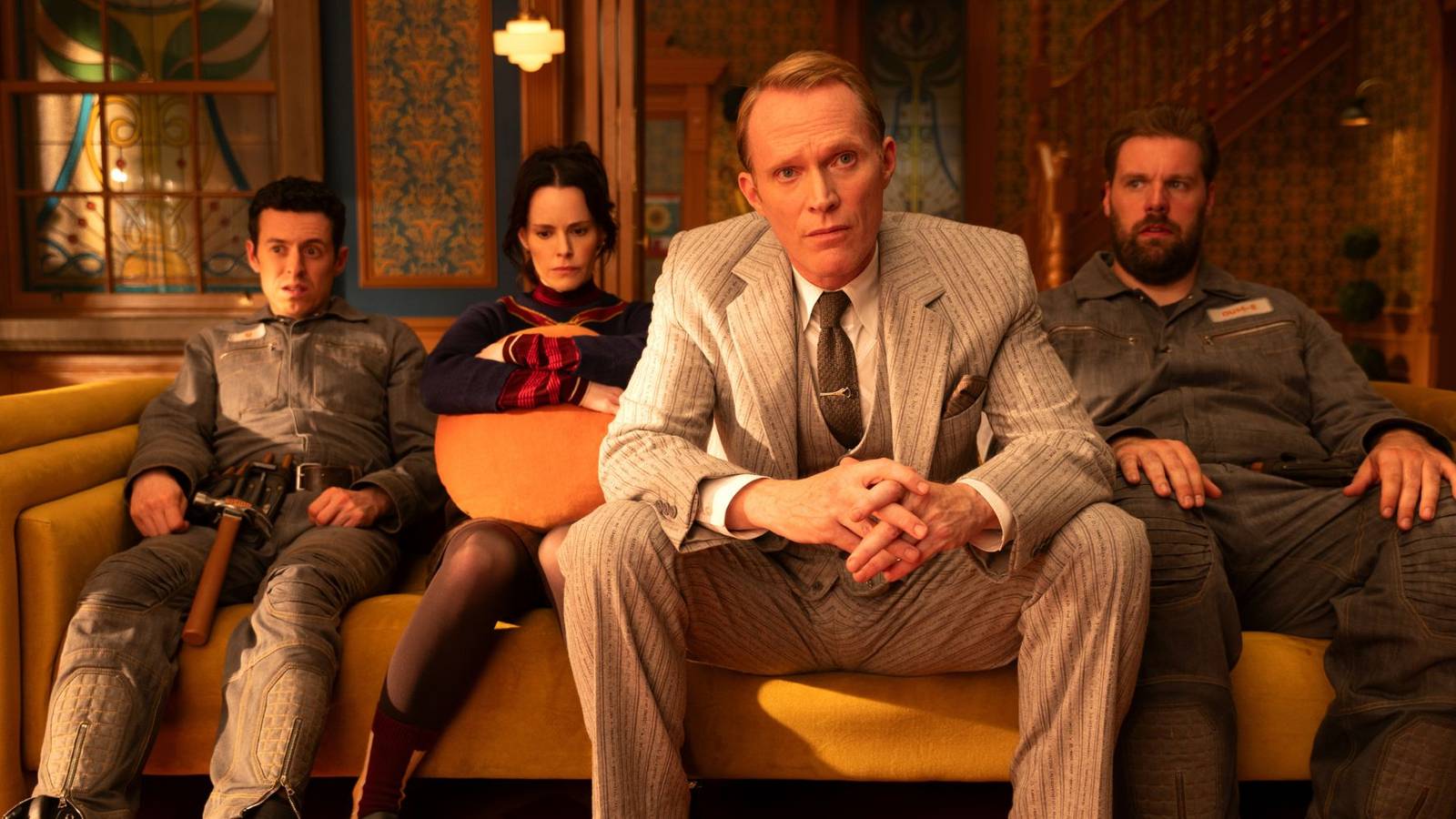
After meeting a few times, Feige called Matalas and pitched him the broad strokes of “VisionQuest.” At that point, all they knew was they would be returning to the White Vision (Paul Bettany) from the end of 2021’s “WandaVision,” a version of the character who has the body and abilities of the android previously seen on screen, but none of his memories and experiences. And they would also be including Wanda (Elizabeth Olsen) and Vision’s son, Tommy (Ruaridh Mollica), who was previously part of a spell from the Scarlet Witch (that would be Wanda), but was revealed to be alive and real — somehow — in the closing moments of 2024’s “Agatha All Along.”
 ‘VisionQuest’Courtesy of Marvel
Perhaps not coincidentally, “Picard” found the title character in a new android body, discovering he has a son he never knew about before. The twist Matalas threw into the Marvel series was to have an intergenerational story. Not just Vision and Tommy, but also Vision’s “father” Ultron (James Spader) from 2015’s “Avengers: Age of Ultron.” “I could suddenly see this generational story of these three characters,” Matalas explained.
Naturally, there’s a lot of continuity to deal with, given “VisionQuest” follows up on multiple movies and TV shows. One person integral to making it all work? Mary Livanos, a co-EP on “WandaVision,” and EP on Marvel’s “The Marvels,” “Agatha All Along,” and “VisionQuest,” who helped “keep us on the right guidelines” given that “Agatha” wasn’t yet released while “VisionQuest” was in development — specifically as things relate to Tommy and his brother, Billy (Joe Locke).
But the other aspect of keeping it all straight comes down to instinct. “There’s a lot of trying to put yourself in the shoes of an audience that may or may not have seen the rest of it,” Matalas said on diving into continuity-heavy productions like “Picard” and “VisionQuest.”
The goal is to “tell a clear, entertaining story for a newcomer, so that someone could just jump into ‘VisionQuest’ without having seen anything before. At the same time, making sure the fans feel seen; because I’m a fan, and I want to be seen. So, what are the touchstones that are important for that? Where do you want to ground them emotionally? And it was pretty easy for ‘Vision’ because ‘WandaVision’ was so emotional and was such an amazing kickoff for this new Vision.”
Matalas explained that he loves a big swing and, “I love to assume the audience is smart and that they’re going to catch on, but you always get a little terrified sometimes that maybe you’re not being clear.” How does he tackle this? You vet the script with executives, with studio heads, “and then you shoot it and you’re vetting it with the actors.”
By that point, the hope is you have a good sense of whether things work or not, but it really does come down to post-production. Matalas recalled a moment in the pilot that he thought was the right way to start the new series, but “when we got it on its feet, we couldn’t figure out why it wasn’t working.” Ultimately, they took that beginning moment in the edit and switched it to later, and lo and behold, the opening worked.
 ‘VisionQuest’Marvel
Beyond the “12 Monkeys” Easter eggs, another aspect of his beloved series Matalas brings with him is his cast. Specifically with “VisionQuest,” former “12 Monkeys” cast members Todd Stashwick, Emily Hampshire, and Faran Tahir all turn up in the new series (Stashwick was also featured in “Picard”).
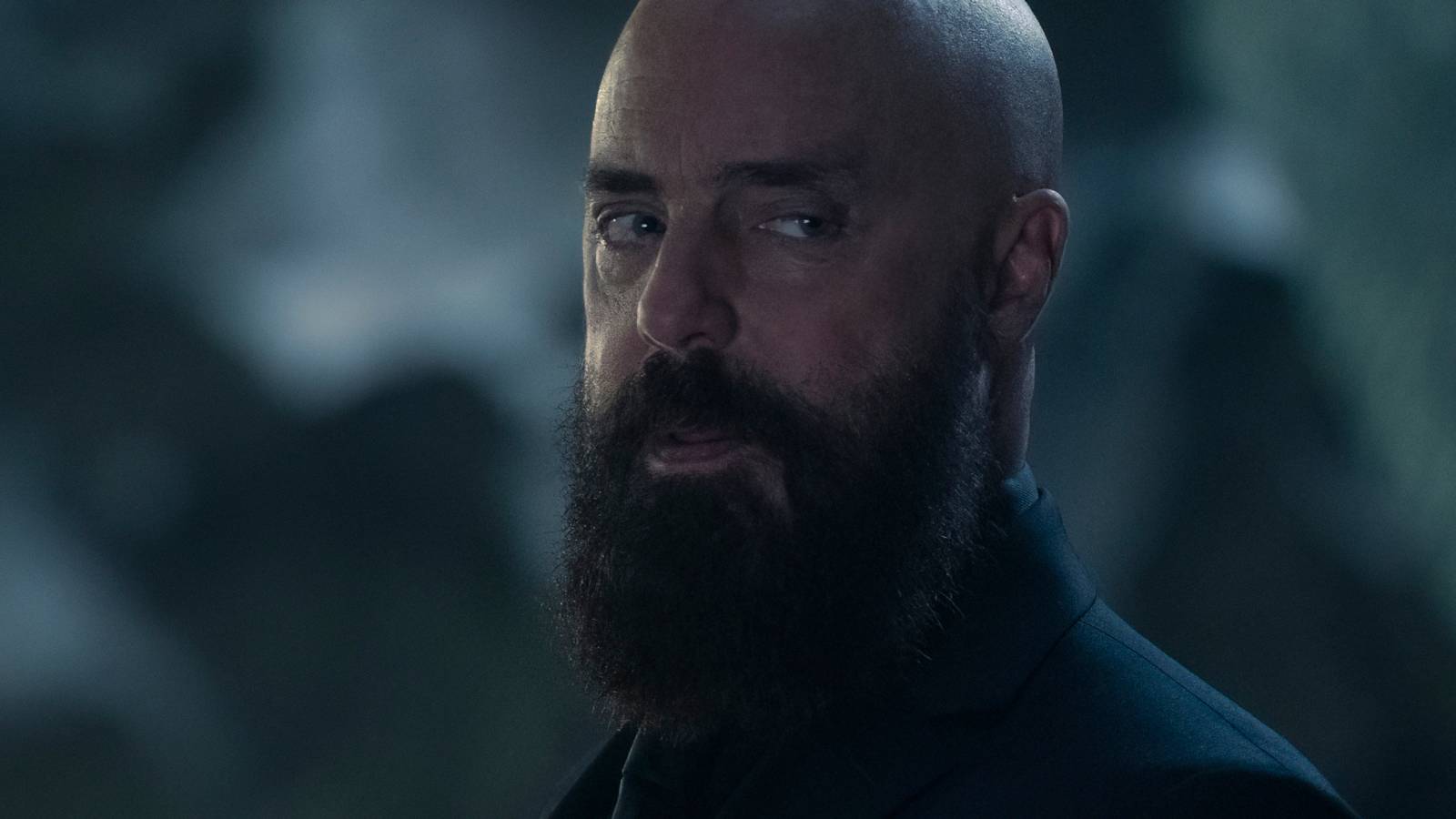
For Matalas, it’s less about forcing his faves into a new show, than feeling how it can organically happen. Stashwick, for example, plays a ruthless bounty hunter named Paladin, and as the show cuts to his point of view frequently, as Matalas was developing the voice of the character, “You’re like, ‘Hey, I know who could pull this off.’”
Schitt’s Creek” fave Hampshire jumps in as an AI named E.D.I.T.H., which MCU fans may remember as the AI in Spider-Man’s glasses from “Spider-Man: Far from Home.” Knowing they wanted E.D.I.T.H. to be the “fun-loving agent of chaos within the mind-space, who brought this youthful energy,” Matalas immediately recalled Hampshire’s performance as the off-kilter Jennifer Goines on “12 Monkeys,” adding that “any time to work with Emily Hampshire is a good thing.”
And he may have made two more lifetime employees/friends in the stars of “VisionQuest.” “I want to work with Paul Bettany and James Spader forever,” Matalas said. “If I only did duos with the two of them, two-handers for the rest of my life, I would be incredibly satisfied with my career.”
But perhaps the trickiest aspect of “VisionQuest” is providing a satisfying ending to a beloved TV trilogy; luckily, Matalas has practice doing just that with “12 Monkeys” and “Picard.” “You definitely have to have a vision, so to speak, of the ending in mind,” Matalas explained on his approach to finales. “That’s not to say it can’t change along the way, but you have to ask yourself, particularly with characters like Vision or Jean Luc-Picard or James Cole [of ‘12 Monkeys’], who are characters that have been on a very long journey: What is the most satisfying and unexpected ending for them that will resonate with the audience?”
Looking to examples like “Avengers: Endgame” (recently given its own additional ending with “Avengers Endgame: Encore”), Matalas explained that you have to take a look at the full journey, from the beginning, to the middle, of the end. “Fortunately, I had a good sense of what that would be, and in talking with the writers’ room, it only got better and better.”
 ‘VisionQuest’Marvel
So if we assume that “VisionQuest” is both accessible to new viewers and rewarding for constant fans, how does Matalas straddle the divide between “science” and “fiction”? It’s a genre that can get extremely heady and alienate casual viewers; or extremely broad and alienate those who crave the info-dumps Star Trek is famous for.
“If it’s emotionally satisfying to the audience, the audience will go along with it,” Matalas stated simply. “Big, high-concept scientific ideas are great, but in the case of ‘12 Monkeys,’ we were offering an entirely different perspective on how time travel might work. It was like, do we really jump into quantum theory? We would mention things here and there, but it really wouldn’t hold up with a lot of science. So it becomes something else. … Emotionally, what it meant for those characters to change time and to change their lives, the audience would connect to that. It’s the same thing in ‘Picard’ or in ‘VisionQuest,’ we’re so invested, hopefully, in this character’s journey, that [the audience] will go along with some of the big buys. The ‘hey, we’re spending time inside the mind of a quantum computer.’ What does that look like, and how does that juxtapose from what is outside of his mind?”
Mostly that looks like a house Vision lives in with all of his AI’s, which leads to another question, given that AI is very much a constant of the news cycle: How do you address a hot button topic while not wading into the debate? This was very much top of mind for the showrunner, as earlier that week as we talked, he had made headlines by declaring they did not use Generative AI for “VisionQuest.” Marvel had previously suffered backlash for using AI in the opening credits for “Secret Invasion,” while denying its use in a poster for “Fantastic Four: First Steps.” But Matalas wading (or not) into the AI debate is less about taking a stand than a matter of necessity.
“We started this two-and-a-half years ago, right?,” Matalas said. “So anything you put on paper about what AI is, is no longer going to be relevant. … Everything changes. We’re living in a world that’s just changing so rapidly. How would you really comment on what exactly is happening now?”
While Matalas isn’t necessarily done with Marvel after “VisionQuest” — “the Marvel universe is so massive that you could spend an entire career inside it, telling different kinds of stories and focusing on different kinds of characters that you would never get bored” — he is thinking ahead to what’s next. First up is a change from sci-fi to fantasy for “Magic: The Gathering”, an animated series Matalas has been working on for Netflix since 2023, though the idea has been bubbling around for decades (at one point, “Avengers: Doomsday” directors Joe and Anthony Russo were slated to do a take after “Avengers: Endgame”).
“What’s interesting about ‘Magic’ is that, like Star Trek, the universe is so rich with so many different ideas and worlds,” Matalas said. “It’s your way into telling many different kinds of stories, in the way that ‘Star Trek: The Next Generation’ could tell a story about trauma, religion, sociopaths, big swing, high concepts, time-travel, ‘Magic’ also offers that opportunity.”
 ‘VisionQuest’Marvel
But what about going beyond IP? Having played in Star Trek, the MCU, and even adapting “12 Monkeys” (sort of) and now “Magic,” does Matalas ever get the itch to do something original like his script for “Splinter”?
“I do,” Matalas said. “There’s a couple of things that I have noodling and brewing right now. But an IP that is open to slight changes, but still honoring the core of what it is, is always really exciting for me. I mean, I can think of 10 properties right now that, if they were like, ‘It’s yours,’ I would be jumping at the chance because of that sandbox you get to play in. I would love to do a great supernatural horror thing at some point. But I also could not be happier living in sci-fi or even slight sci-fi.”
So if he had a chance, would Matalas jump in the DeLorean and change anything? “Nothing,” Matalas said. “I wouldn’t want to risk screwing this up and not being able to do ‘VisionQuest.’ ‘VisionQuest’ was one of the most creatively satisfying things that I’ve ever done, and no small part to that collaboration with Paul Bettany and James Spader. It’s very rare to have what has become a friendship on set and to really thrill each other while creating it. I was lucky enough to direct the last two [episodes], and it was the best five weeks of my life, being able to pull that off. I’m excited to see what people think of what we did.”
The first two episodes of “VisionQuest” premiere Wednesday, October 14 on Disney+, with weekly episodes to follow.





 English (US) ·