
 Image via Columbia Pictures

Published Feb 4, 2026, 10:00 AM EST
Ryan O'Rourke is a Senior News Writer at Collider with a specific interest in all things adult animation, video game adaptations, and the work of Mike Flanagan. He is also an experienced baseball writer with over six years of articles between multiple outlets, most notably FanSided's CubbiesCrib. Whether it's taking in a baseball game, a new season of Futurama or Castlevania: Nocturne, or playing the latest From Software title, he is always finding ways to show his fandom. When it comes to gaming and anything that takes inspiration from it, he is deeply opinionated on what's going on. Outside of entertainment, he's a graduate of Eureka College with a Bachelor's in Communication where he honed his craft as a writer. Between The IV Leader at Illinois Valley Community College and The Pegasus at Eureka, he spent the majority of his college career publishing articles on everything from politics to campus happenings and, of course, entertainment for the student body. Those principles he learned covering the 2020 election, Palestine, and so much more are brought here to Collider, where he has gleefully written on everything from the SAG-AFTRA and WGA strikes to Nathan Lane baby-birding sewer boys.
Sign in to your Collider account
This coming Sunday will mark 50 years exactly since Martin Scorsese released Taxi Driver. To this day, it's still viewed as the legendary director's first true masterpiece, immersing viewers in the world of detached Vietnam veteran turned taxi cab driver, Travis Bickle, as his increasingly deteriorating mental state spurs real violence in the name of "cleaning up" New York City. While the neo-noir classic boasts one of the finest Robert De Niro performances ever put to film, themes both complex and disturbing, and a lot of violence, the story behind its creation is arguably even more fascinating. The American Film Institute is now planning to take viewers behind the curtain to experience parts of that story like never before to celebrate the milestone anniversary.
A collection of exclusive materials documenting the making of Taxi Driver and other details around it is available from the AFI Archive and the AFI Catalog this week as part of the AFI's larger highlight of the 50th anniversary. Collider can give an exclusive preview of the items within, including audio clips from conversations with Scorsese and producer Julia Phillips, notes from the director after the first screening, a pair of letters, and a breakdown of the film's infamous, climactic shootout capping off Travis's descent. All serve to provide insights into how the film was initially planned, how it evolved all the way until the final cut, and how the key players involved thought of the project and were accounted for in its disturbing story. The release is all part of AFI's mission to preserve film history, the organization's heritage, and the full story of Hollywood down to the smallest details.
Phillips' involvement in Taxi Driver came even before Scorsese's, as she and her husband, Michael Phillips, optioned the literary rights to Paul Schrader's screenplay in 1973. Their previous work on the Best Picture-winning caper The Sting that same year gave them the recognition in the industry to tackle the project. However, they still had to wait for the director and his star, De Niro, to make a name for themselves. In a seminar at the AFI Conservatory, featured in the archive, she explained how the success of Scorsese's breakout film, Mean Streets, ultimately paved the way for the legendary team-up that would create the classic film as we know it today.
"We finally committed to Marty and Bobby on the basis of a rough cut of Mean Streets. Then we had to wait until Marty and Bobby got to be known by the people who were gonna buy Mean Streets and eventually distribute it, and, on the day that Mean Streets opened the New York Film Festival and got all those raves, John Calley called me from Warner Bros. and offered me $650,000 to make the picture. We went from $900,000 to $1.1 million, to $1.25 million, and I think we were finally approved $1.35 million. Long story short, we ended up at $2 million, which, in this day and age and, I think, with that quality of pictures, is a miracle."
'Taxi Driver' Was a Result of Timing and Painstaking Attention to Detail
As for Scorsese, the journey to Taxi Driver actually began with another legendary director in the 1970s — Brian De Palma. The Carrie filmmaker famously brought Schrader's script to his attention, setting him on a collision course with the husband-and-wife production duo. He recounted his side of the story in another conversation from the AFI Archive, recalling where both he and Schrader were in the industry at the time and how everything timed up well with Mean Streets:
"While I was editing Mean Streets, Brian De Palma handed me Paul Schrader, who was the writer of Taxi Driver. He had written Yakuza at the time, which was just being sold to Warner Bros. for a major production. And he said, 'Well, you're interested in Paul's writing, you should read Taxi Driver. It's a script he wrote a few years ago.' And I read it and liked it very much, and about the same time, Mean Streets was a rough cut, Bobby De Niro was being recognized, and I was being able to do other films, get deals and... other things were coming in. Michael and Julia Phillips, the producers of The Sting, owned Taxi Driver, the script, and we sort of got together on that. In other words, we committed ourselves to the project."
Both recordings are just snippets of conversations within the archive, but they only tell of how Taxi Driver got started. That's where the other files come in. In making the final shootout, which sees Travis visit the workplace of child prostitute Iris (Jodie Foster) and gun down everyone, Scorsese carefully planned out each moment in his breakdown from the instant Travis tells Sport (Harvey Keitel) to "suck on this," to the bloody aftermath. Next to each described moment are questions to answer, such as how the blood of each character would realistically splatter across the environment, when their weapons are visible in the background, and how objects are supposed to move. Coupled with Scorsese's feedback on the first screening, which is full of little suggested cuts to dialogue, walking scenes, and more, it's a demonstration of the painstaking effort that went into every detail of one of his best films.
AFI Archive Letters Give a Peek Behind the Curtain of 'Taxi Driver'
Despite everything, the bloody crime thriller wasn't immediately beloved. Its violence earned boos at Cannes and nearly kept Columbia Pictures from releasing it as Scorsese envisioned. The then-12-year-old Foster's inclusion in the grim role of a child prostitute was also cause for concern, though measures were taken to ensure the young actress was given a safe filming environment. Her inclusion is addressed in an archived letter from entertainment attorney E. Barry Haldeman to the Division of Labor Law Enforcement, noting how changes were made, and a double was used, including in the final shootout, where Iris witnesses Travis's rampage, to ensure her experience went as smoothly as possible.
Last but not least among the archived items is a letter of thanks to Scorsese from Cybill Shepherd, who played the campaign intern and Travis's love interest, Betsy. She reached out to the director to express her gratitude for legitimizing her and Hollywood and encouraging her throughout the production, in addition to making an all-time great movie. It's an illustration of the impact Taxi Driver, and specifically Scorsese and Julia Phillips, had not just on cinema, but on the people involved in crafting the masterpiece.
Taxi Driver is currently available to rent or purchase on Apple TV, Amazon Prime, and other digital platforms. Visit the AFI's official website to see the full collection of archived files, audio, photos, and more as part of its 50th anniversary showcase of Scorsese's classic.
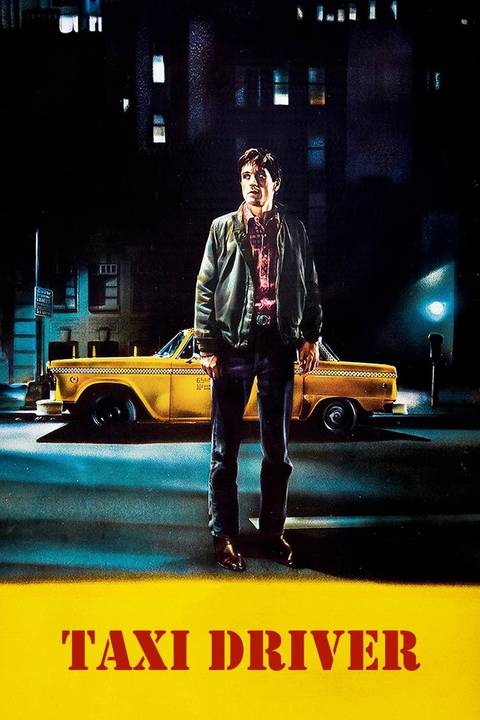
Release Date February 9, 1976
Runtime 114 minutes
Writers Paul Schrader
Producers Julia Phillips, Michael Phillips






 English (US) ·