The Bride Repurposes Mary Shelley's Novel As a Feminist Clarion Call
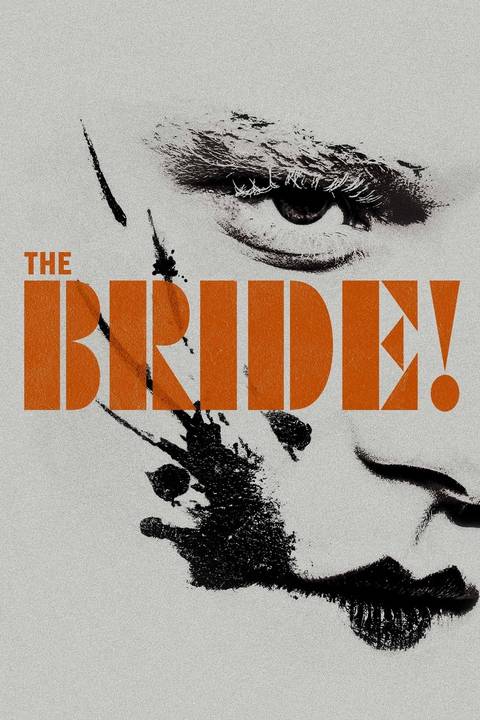
Who better to heed the call of that vision than Jessie Buckley, whose carefully controlled histrionics in Hamnet had already solidified her as one of Hollywood's most emotionally available performers? Effectively pulling triple duty in the same body as Shelley, Ida and someone wildly in-between the two, Buckley alternately contorts and softens her body in unpredictable outbursts. With a face and body tattooed by the Rorschach-like splatter of black liquid used to reanimate her body by Dr. Euphronius (Annette Bening), The Bride rattles the world by her mere existence.
Her kindred spirit, Frankenstein's monster, aka Frank (Christian Bale), is less her soulmate than the soft-hearted man whose loneliness may literally be killing him, and who happens to pluck her body from a pauper's grave. At 111 years old, Frank longs for a companion, and, despite some early protestations, Euphronius quickly becomes the collaborator on the mission to give him a mate. Like so many women's existences before her, The Bride lives and dies (or is it dies and then lives?) based on the whims of the men in her sphere.
Upon waking, however, The Bride remembers very little. How she got there for one, and what her name is, though Mary Shelley's voice is loud within her compromised brain. Frank obscures most of the truth, and Euphronius is only happy to oblige, as they both convince her they were betrothed before an accident. And, seemingly content with this knowledge yet eager to experience the world, she bursts into the underground nightlife of prohibition Chicago, filmed with noir-like chiaroscuro by Lawrence Sher. She writhes arrhythmically at a queer dance club as Frank watches from afar, seemingly happy to watch as she explores her new, re-animated body, in the purple haze of an illicit space.
But, things go haywire fast, and let's just say that Frank's quiet anger is unleashed in a large way. Soon, the romantic heroes are on a dangerous mission to outrun the police, led by a very different duo: John and Myrna (Peter Sarsgaard and Penélope Cruz, respectively), presenting a very different kind of vision of male-female relations in an extremely gendered time. Yet another such duo graces the screen-within-the-screen, Frank's celebrity obsession, the Fred Astaire-like Ronnie Reed (Jake Gyllenhaal) and his Ginger Rogers-esque partner (Julianne Hough).
Through these catastrophically different souls, Gyllenhaal seems to be exploring the ways that our understandings of each other and of ourselves emanate through the texts we consume. Frank's understanding of romance and masculinity comes from the movies; Ida's understanding of political power, perhaps, from the books inside her brain; an entire police force siloed by preconceptions of femininity. All of the film's main characters are in a constant battle to take stock of their own participation — or lack thereof — in a cravenly corrupt world.
Gyllenhaal is tackling much too much in this cranked adaptation of The Bride of Frankenstein. The film is sometimes pulled between its thematic revelations and its obligations to plot, and there's a lot to cover and a lot of characters to service. But that's okay; she's angry at a society that continues to berate the othered masses for the conservatism of the rest.
In using her source material as effectively as she has, she pointedly questions the instincts of a society that refuses to acknowledge it will die, and in so doing, maliciously hunts for a scapegoat upon whom to place its misplaced anger. In the film's most startling scene, a direct reference to Mel Brooks' Young Frankenstein, Frank and Ida crash Ronnie Reed's party and violently burst the bubble of the nouveau riche. It's a remarkable moment of insubordination.
In this way, Bartleby feels like the more prominent source text than even Frankenstein. Herman Melville's short story tells of a Wall Street clerk who suddenly, simply, decides to stop working. "I would prefer not to," his oft-repeated refrain, a cogent defiance of the expectation of complicity. Perhaps the biggest revolution of all is the one that begins with a refusal to participate. Find your own way, find out what being human means to you. Find your own monster.
The Bride! releases theatrically on March 6th, 2026.
Release Date
March 6, 2026
Runtime
126 Minutes
Director
Maggie Gyllenhaal
Writers
Maggie Gyllenhaal
Producers
Emma Tillinger Koskoff, Osnat Handelsman-Keren, Talia Kleinhendler, Maggie Gyllenhaal








 English (US) ·