
 1 day ago
16
1 day ago
16
One of cinema’s most influential and consequential careers began 30 years ago, but — even with a debut’s cultish embrace and Criterion canonization — you’re likely less aware of its start than what followed.
On October 4, 1996, a small-scale, low-budget thriller titled “Bound” entered a limited release and generated strong business despite having come, seemingly, out of nowhere: As nobody was likely to recognize the name of its familial filmmaking duo, even fewer would anticipate them rewriting much of modern culture in their image only two-and-a-half years hence.
Though perpetually overshadowed by “The Matrix,” Lana and Lilly Wachowski‘s first feature seems all the more remarkable with each passing day for not bearing prescience. Watching their metronomic thriller does more to suggest the arrival of a hyper-sexualized answer to the Coen brothers than the progeny of William Gibson or the progenitors of multiplex psychedelia. Much as one may love the decades of cinema, television, video games, and comics “Bound” would inhibit, their careers started in such spectacular fashion that this film can’t help make one wonder about the roads not taken.


The Tribeca Festival is granting the rare opportunity to see “Bound” in big-screen fashion on June 7, their 30th-anniversary event, followed by a Q&A with Lilly Wachowski and stars Gina Gershon, Jennifer Tilly, Joe Pantoliano, and Christopher Meloni. In the decade since her public coming-out as a trans woman — after years spent as a reclusive auteur around whom basic physical evidence barely existed — Wachowski has done a bit more to put herself in a public spotlight. But while “Bound” has, with time, revealed itself as a rich entry in the duo’s grappling with trans identity, considerations remain fewer and further between. (Need I reemphasize how massive a cultural imprint “The Matrix” has retained for 27 years?)
What follows is a candid discussion oscillating between the core components of Wachowski’s filmmaking philosophies and her experiences in gender transition, with aspirations towards a prolific future all the while.
The following interview has been edited and condensed for clarity and length.
IndieWire: “Bound” is a film I’ve always really liked, but the next movie you made is a bit more popular, and this may have set a bit of a narrative for your career. Now that we’re 30 years out, how much of a solid, core memory do you have about making “Bound”? How much do you still feel connected to that filmmaker from decades past? Or is there something about it, after all this time, that’s a bit more spectral and removed?
Lilly Wachowski: I get a lot of [these kinds of questions] these days as I am older and people rediscover mine and Lana’s films, and they ask me what it’s like to look back. And it’s a strange precipice to look back on your work. Especially for me: a closeted trans woman looking back at a closeted trans woman who had made the films along with my sister. I recently was at the Lambda Literary Festival, and I was talking about it, and I had this sense of my early work: They are like these notes written on a piece of paper slipped through the crack of a door, in some regards. I feel like I can see my subconscious struggling to add their two cents to the things that we are both making. When you had the clarity to look back from that precipice, you can see things, you know, [laughs] pretty 20/20. Like, the opening shot of “Bound” is a closet; you look at “The Matrix” and themes of identity, themes of liberation. We’re working in a different palette in “Matrix,” where we’re seeing a lot of sympathetic and empathetic parallels between other modes of liberation — Black and brown liberation, class liberation — and for ourselves, our trans liberation is a big part of that.
 Lilly Wachowski in 2020Getty Images
So we’re following these similar trajectories and trying to wrap all those things together. With “Bound,” it’s… it’s funny. I have a lot of fondness for that film … differently than “Matrix,” if only when you talk about popularity. “Bound” came out, and we had some critical success, and we had a lot of other [laughs] critical failure with that film, but I think some of it is people confused about these “two dudes” making a film about lesbians. Other people, their criticism is veiled in misogyny as far as I’m concerned, and so they end up trashing the film. But the audience that movie landed for was queer audiences. We premiered in Sundance; there was a screening at Deauville and a screening in Venice; and then the last screening we had before the film was released was in the Castro Theatre in San Francisco. The Castro was packed with 700 queer women, lesbians, and from the very first reel, they were roaring.
I have never, to this day, seen one of our films get that kind of reaction in front of an audience. So the folks who we made that film for embraced it entirely, and even though there may have been some raised eyebrows at the filmmakers who made it, I really can… I mean, I remember sitting in that audience, and my whole body was just, like, my adrenal gland had emptied into my body, and I was, like, shivering at the thought that I was able to be a part of giving this gift to this audience who were so starved, had never seen queer women run off into the sunset together. And it stuck with me. I mean, I still have it. It’s in my heart; it keeps me going. I think that that experience is one of the things that fuels my heart today when I start thinking about making queer art and trans art and representation and how much it matters. I see all of that — the parallels of representation — not just in my work, but I want to see it for other folks. I want to see more representation in front of the camera and behind the camera and on set.
There’s long been this narrative of you and Lana as famously, notoriously reclusive. And I was surprised to discover that you’d both actually done a number of interviews for “Bound” upon release — the way any debut filmmaker with a distributed movie would. What, if anything, was the decision between “Bound and “The Matrix” to kind of recede into the distance and not be so public-facing?
For “Bound,” we were first-time filmmakers, so we had to follow those sort of channels that are set up for first-time filmmakers. Even “The Matrix,” I think that we were probably a little more hands-off in terms of doing interviews. But it was definitely something that we weren’t interested in doing. Partially, I would say… I mean, the easy answer for me — which is what I always go to — is that because we’re closeted trans women, we don’t want to talk about our art because we are afraid of exposing ourselves within those interviews, you know? I don’t want to answer questions about identity and that kind of liberation. With “Bound,” we had similar types of scrutiny against us… that’s probably it. That’s the reason.
Our experiences with media and critics … weren’t ever great experiences. “Bound.” I remember the first screening that we had [at Sundance] was hugely tempered because the day of our screening — that morning — a review came out in Variety by Todd McCarthy, and he just trashed the film. And so we sat in this screening of it, and you could tell [with the] audience, there was some trepidation [laughs] about what they were about to watch. The film played well, it won over the crowd, but since then, I was always skeptical of critique and came to understand, much later, the motivation, and why do people write what they write. Sometimes that stuff is seeped-in misogyny; sometimes it’s seeped-in homophobia; sometimes — a lot of the times — it is seeped-in, sort of, anti-socialist tendencies. And so you end up with these reviews, or critique, that has nothing to do with your film, but has to do with ideological differences.
Coming out of the closet — especially for trans people — you can’t hide, 90 percent, 80 percent of the time, that you’re trans. I walk into a room, and I’m trans; I’m the giant trans woman walking into the room. So there is this moment of courage that has to be mustered from the moment you leave your house and cross that threshold out into the world. For me, that moment occurred much later in my life, but once it happened… I want to see my shadow on the ground. I want to see myself reflected in the world around me. I want to embody who I am and be out in the world. And so I don’t give a fuck as much about what people think of me, and so I’m happy to talk about all of my shit now. [Laughs] So that’s what I do: I talk about my shit, and I talk about my motivation, why I do the things I do, and what my art means. Because I think that me talking about that is going to help other trans people be out in the world and have the courage to jump over that threshold.
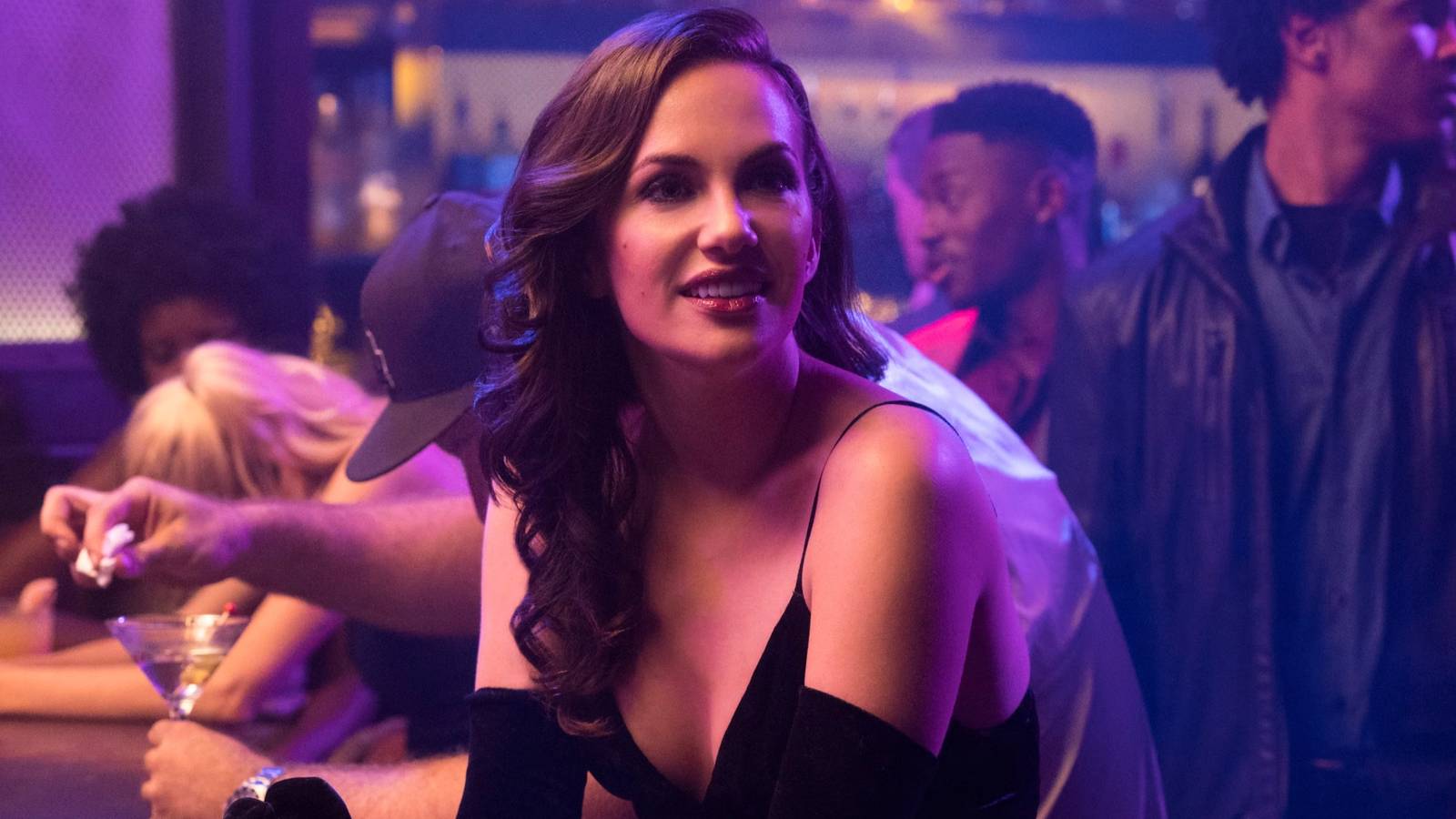
 Jennifer Tilly in ‘Bound’©GramercyPictures/Courtesy Everett Collection
For “Cloud Atlas,” you, Lana, and Tom Tykwer introduced a long trailer that, I believe, was Lana’s public coming-out. I wonder how your relationship to the work and thinking about it may have changed from “Cloud Atlas” onward — from “Jupiter Ascending” to at least the first season of “Sense8” — when you’re doing press for things. Did you start considering your work or role as an artist differently?
Yeah. I think that the sort of re-engagement with the press that you’re talking about, a lot of that comes from her relationship with Tom [Tykwer]. Tom was an amazing friendship that we fostered after “V for Vendetta,” I think. In between “The Matrix” and the sequels, Lana started chatting with Tom, and we brought Tom in. He did some music on the sequels and just contributed, like, a song. We were always looking to try and find something to do together. Being closeted not only kept us cloistered from the press; I think it also kept us cloistered from our peers. I think there’s other contributing factors to that — like, I think that the studio system fosters an unhealthy sense of capitalist competition between movies, and you’re supposed to dominate the box office. You’re supposed to crush that other film. I think that that is a bad environment for artists to thrive in. So we found our way into this friendship, and Tom taught us a lot about the way he does stuff, and there was a lot of information-sharing that was going back and forth, and I think we probably relaxed a little bit in terms of how we would engage with the media.
But also, it’s a consequence of Lana coming out of the closet. You know, it’s a consequence of Lana being in the world and not giving a fuck as much. Those were hard, hard times for a trans woman to come out. Lana was actually out of the closet much earlier than that, but to the public, it seemed like she was coming out during “Cloud Atlas,” but in fact, it was happening after the “Matrix” sequels. Like, she was out on set for “V for Vendetta.” She was out on set for “Speed Racer.” I never took all of that relaxation to heart because I was still struggling myself, in the closet. So anytime you see me in public… also, there’s a part of me that is coming out in these interviews because I want to protect my sister; I want to show solidarity to her. I remember I said, at some point when we were starting our first foray into that press junket for “Cloud Atlas,” that I said, “If anybody has anything to say about my sister, I’m going to break a bottle over their head.” I wanted to, you know, stand in solidarity, shoulder to shoulder, with my sister, who was very vulnerable at the time. There was a part of me that was saying that for myself as well — my future self.
This was my first time seeing “Bound” since you’ve publicly come out. I wasn’t watching it looking for hints or clues about personal identity, but certain things seemed relevant. You’ve mentioned here how the first shot of the film is a woman in a closet. And do you remember what the first line of the film is?
Yeah… it’s the voiceover, um…
It’s “I had this image of you inside of me like a part of me.”
Yes. Yes.
Which seems a suggestive concept. I was also amazed to discover there’s a moment in the original script where Caesar “delicately applies a coat of clear polish to a nail.” It’s amazing to understand them retrospectively.
Yeah.
“Bound” also anticipates your work on a more formal level. Eve Cauley’s production design resembles much that’s seen in “The Matrix.” Corkie putting the snake into the tub looks like the sentinels or the wire going into people’s pods. The camera quickly pivoting around Joe Pantoliano as he’s shooting his gun even resembles some “Matrix” slow-motion sequences. Do you think that is a kind of cosmic, unconscious thing, those forebears being in the film?
That’s just the palette of what we were interested in as filmmakers. That’s the language of the filmmaking that we were interested in. There’s a moment where Jean Borkman shoots at Caesar and misses, and we physically shot a steel ball — like, with an air rifle — past Joey’s head into this map on the wall. And there’s, like, one frame where you briefly see it traveling through; you can see this motion-blur object moving through the film frame. And that was something that we were just interested in seeing. Those were the early, early stages of, “What if you could shoot this object and see the bullet travel?”
A lot of that comes from our love of comic books. Comic books create these crystallized moments in an action sequence where it would be impossible to photograph otherwise, because you can draw anything. You can find these incredible, like, the perfect framing, the way a body can move frozen in time. I don’t know, the idea of Gino falling was, similarly, where we wanted to see a body, without any cuts, fall from an upright position to a horizontal position. It’s just something that we were always wanting to capture — something that we didn’t particularly see in cinema at the time.
 ‘Bound’©GramercyPictures/Courtesy Everett Collection
I’m imagining the clichéd Hollywood biopic of you both that has a moment on the set of “Bound” where you’re talking. “What if you could show a bullet moving…?”
[Laughs]
The poster for “Bound” is kind of iconic: Jennifer Tilly and Gina Gershon are literally bound, staring out at the camera. A very powerful image. As a kid who loved “The Matrix” and knew you both made just one other movie, I’d see it in the video store and always ask myself what the fuck that even is. The poster for “The Matrix,” you don’t need me to describe it — that’s definitely iconic. But this one is so stark and intense. Do you remember conceptualizing a poster for the film, how you wanted to represent it? Did you have an involvement in the creation of that one?
We did not. You go through these marketing meetings, and you’re at the mercy of your distributors, the companies, your financiers, and you just try to move them a little bit towards your idea. There were a bunch of foreign posters that we really liked. The Italian one was particularly good, where it was just Caesar’s eyeballs above the two women in this sort of embrace — like, really film noir-y. The UK version was pretty cool, where it was the horizontal framing, and it was sort of Jennifer in the foreground, and Gina was doing stuff in the background; that one was pretty cool, too. And then the one with the money. I think that was probably our favorite for the US, where the money is strung up all around the room, and Jennifer is just kind of sitting there. It was more of a still from the movie.
The women with the rope … I have this sense that we were maybe feeling along the same lines as the young version of yourself, where there was something that was a little triggering for us in terms of a slight untoward titillation aspect of it. It’s suggestive of more of a bondage-type thing, and that felt disingenuous and a little creepy. All of our ideas for posters are never, never used. Like, “Matrix” we wanted just the baby in the stalk — that was our poster. We were emphatic that that was what the poster should be. And the poster turned out great; they made, like, five of them, and it was the poster that hung in our office.
The guns were… I don’t know. We didn’t like them. Those kinds of composites are always frustrating, because the composites never make any sense. They’re like early versions of AI slop, where I look at that poster, and all I see is Morpheus behind Neo; his shoulder is above Neo, but his hand is actually longer than Neo’s hand. So either Morpheus has really long arms or Neo has really short arms. [Laughs] That’s all I see. And the guns! They’re just not interesting. It’s not evocative of anything. That poster doesn’t mean anything. I think we’re always looking for the poster to, you know, be an ambassador for the film — to try and tick a box in terms of what it means, what the movie is about. So, eh. You know. Everybody likes the poster! What do I know?
I love that I have this on record. I never would have guessed.
Oh, by the way: I think the “Bound” DVD re-release from Criterion is excellent.
It is a good cover. I will hold a place in my heart for both: that specialty approach and the untoward titillation video stores foisted upon me as a kid.
Yes.
I’d love to know where you are creatively. I know you’ve been doing some painting. I even see two paintings in the background.
Yes.
 ‘Bound’©GramercyPictures/Courtesy Everett Collection
I know that you were executive-producing work; you were working in television for a bit. But where do you see yourself in a future-filmmaking realm, in a television realm, or working with Lana again?
I started painting after the first season of “Sense8,” and I had transitioned; I was exhausted. We had back-to-back-to-back projects — posting one while prepping the other. So we went from “Cloud Atlas” to “Jupiter” to “Sense8” and there was zero rest in between. I got to the end of “Jupiter,” and we started prepping “Sense8,” and my carefully constructed world was falling apart. I was separating from my partner for 20-plus years and getting on hormones, medically transitioning, during the prep of “Sense8.” I had this fantasy that I would start my transition at the beginning of the “Sense8” shoot, come out to everybody in post, finish my exit of the closet, and get ready to jump into Season 2! And I got to the end of that project, and Season 2 was rushing up, and I was trying to lobby for a bigger break, and that was not in the cards. So I said, “You know what? I think I’m done.”
I left, went, started taking my mom to her art class, and she encouraged me to join, and I started painting with her. This is happening while her health is failing, my dad’s health is failing — my mom has borderline dementia, she’s losing her memory — and I decided that I was going to leave the business and just, like, paint. I went back to school for a couple of semesters. Hilarious trying to find your high school records and my college records, because I had dropped out and I needed to bring my credits over — I went to the School of the Art Institute of Chicago — and also hilarious to write my essay of, “What have you been doing in between the time when you left school?” [Laughs] So that was kind of funny. My mom and dad died — horrible — and my manager kept sending me stuff. He sent me this project called “Work in Progress” that was by a friend of mine [Abby McEnany] who lives, like, 10 minutes from my house — this amazing comedian who is this legend in improv circles here in Chicago, but because she’s a self-described “fat, queer dyke,” she’s never booked anything. And I was like, “Oh, you know what? This is kind of worthwhile. I’ve never seen anyone like Abby on screen. I’d be glad to help get this made, help produce this.”
Then I came on the project, and it was a little bit more work than I thought it was going to be — they needed me on set a lot — and I was … trying to reintegrate into collaborative methods with these two people who I’d never collaborated with before. We ended up writing a lot of the show together; they wrote a big chunk of it, and I kind of helped them plot and structure and came in and wrote some stuff for the beginning part and some of the stuff for the end part. And then something happened in that making: When you are deliberate in the structure of a production, when you’re deliberate in your hiring practice — that we were able to cast as many trans people, as many queer people — our crew looked like Chicago. So it was extremely diverse. Our sound crew was women and non-binary people. I had this epiphany at this moment: There is something left to do in this work that is not about me. I got to do this show for two seasons; I would have loved if it would have kept going, but it didn’t, and it made me want to try and do it some more.
I felt like the industry was changing, I felt like opportunities were dwindling, and so I started this company with my manager. We brought in this third — this amazing woman, Sarah Marie Flores — so it’s me, Sarah, and Lawrence Mattis. We started this company called Anarchists United; our mission is to uplift underrepresented voices. We are a company that’s focus is equity, diversity, and inclusion. It’s a studio that is owned by a foundation. The foundation gives out grants to artists — hopefully just giving artists money. Hopefully, those artists can make something, bring it over to the studio, the studio can produce it, make money, and fund the foundation. So you create this evergreen operation that can exist outside of the studio system. So I’ve been doing that for three years. Within the sort of studio structure, I am trying to produce stuff, I am co-writing stuff, I am putting my name on things as a potential director in film and television.
I’ve written two features: one with my current partner [Mickey Mahoney], a gonzo political thriller about a sort of trans weather underground called “The Hunted”; and I’ve written an adaptation to a comic book called “Cosmonauts.” So I’ve been busy. We have not been able to get things made. I feel like the industry is a microcosm of what is happening all around the world: the consolidation of wealth, the corporate consolidation that you’re seeing. It’s creating an ecosphere where fascism can thrive, and so within that ecosphere, queer stories, trans stories, Black and brown stories are all on the chopping block. That, I think, is what you’re seeing a lot of in the industry. So I keep trying to throw my shoulder against the doors that have been closed, and I will continue to do so. But I think a lot of what has to happen is: We need to start creating new forms and basic infrastructure to exhibit queer work, trans work, Black and brown work. Because we’re not going to be able to use the old modes and methods.
 ‘Bound’©GramercyPictures/Courtesy Everett Collection
It’s amazing that you and Lana continue to do that. You had this experience of stepping back while she went on to make “The Matrix Resurrections” without you. She’s said that was a very important story for her, given your parents’ situation. I wonder how the experience was seeing that film. You weren’t involved in it, but it’s still your sister; it’s still these people and worlds that you created.
Yeah, it was funny; it was a weird experience. But I think it was necessary. Warner Bros., they’re going to do this a lot. Because the industry is about regurgitation, you can expect to see more “Matrix” films come out. For me, seeing somebody else make it — even though it’s my sister — I was able to tear that Band-Aid off. I mean, we went through our… what’s the terminology? What’s the phrase? We exhibited our grief in our different ways. A lot of my grief is in “Work in Progress.” In the second season, where I’m a bit more involved because Abby lost her mom as well, there are these conversations that we’re both having with our mom. The character Abby is sitting with her mom, who is a box of ashes on this couch; the protests around the murder of George Floyd are happening around her, the character, and she’s feeling alone and lost, and she conjures her mom to come and sit with her and take her to bed. While that scene is happening, there’s a painting that is my mom’s painting that is behind the character Abby. So we’re both, like, having these cathartic moments in our art that is giving us exactly the same feeling that the character is getting in the show.
You know, Lana’s doing similar stuff, genre-wise, with “The Matrix,” and this idea of holding on and resurrection — all of that’s about my mom and dad. So she needed to go make that film, and I did not. So we kind of just diverged; I said, “Go and do it.” You know, it was hard and weird to watch and… yeah. I mean, it’s all good. Everybody got what they needed. [Laughs]
The “Bound” reunion screening takes place at Tribeca Festival on Sunday, June 7.
 English (US) ·