Before Doctor Who’s second-season finale debuted on May 31, 2025, a leak about Billie Piper's return as Rose Tyler surfaced online. It spread like wildfire on media platforms like TikTok and YouTube, with content creators eagerly discussing and dissecting everything they could about the leaks, regardless of whether they took the information with a pinch of salt or not. Within days, the discussion around Doctor Who shifted from the leaked ending to how the new direction had ruined the sci-fi family show forever by making it a “casualty of the culture war.”
In an excerpt from his book, The Queerest of Folk: A Life in Television, former Doctor Who showrunner Russell T. Davies argues that leaks, and the small element of science fiction fandom that uses them to spread hate through monetized YouTube content, are “affecting the whole genre” of science fiction.
It isn’t just Doctor Who, either.
“Doctor Who, Star Trek, Star Wars, they’re all being brought down by contempt,” Davies writes.
He's right, and Star Wars just might be the biggest victim of an industrialized online hate economy that encourages fan divides, terrorizes actors and creatives, and pressures corporate behemoths like Disney into running away from anything bold or ambitious.
Star Wars: The Rise of Hatred
There’s an ongoing joke that, if you look hard enough, almost every fan in any fandom repeats: “Nobody hates X more than X fans.” I’ve heard it used several times in fandom, from niche anime and video games to HBO Max’s The Pitt.
Yet the phrase seems to come from one fandom in particular: Star Wars. A quick Google search will show hundreds of threads asking whether it’s true: Is there anyone who hates Star Wars more than Star Wars fans? The answer seems to be a resounding no; the biggest Star Wars fan you know will also be the quickest to bash whatever part of the franchise they dislike. While George Lucas’s original trilogy, focused on Luke, Leia, and Han, changed sci-fi forever, it also inspired a fanbase so devoted to that era that any departure from Lucas’s vision was seen as disrespectful to the source material. The irony was that this volatility extended even to Lucas himself.
Image: Lucasfilm/Everett Collection
After years of waiting for a trilogy that would explain Darth Vader's rise, Lucas’s prequel trilogy felt like a slap in the face to older fans of the franchise. Now that years have passed, hindsight has softened fans' view of the prequel’s shortcomings. Even so, it doesn’t negate the years of toxicity and abuse from the fandom that led to the deterioration in the mental health of actors such as Ahmed Best, who played Jar Jar Binks. Even Hayden Christensen, now a well-loved name among Star Wars fans, faced intense hatred for his portrayal of Anakin Skywalker.
You would think Star Wars fans would have learned their lesson, but the reaction to the sequel trilogy under Disney ownership (especially to The Last Jedi) shows that the Dark Side of this fandom has only grown stronger over the years.
Star Wars hate continues to grow
You’d have to live deep underground with zero internet access to miss the wave of hatred following Disney’s Star Wars sequel trilogy. Even before The Force Awakens debuted on the silver screen in 2015, loud, egregious hate surrounded it — seemingly kickstarted by Finn's presence, played by John Boyega. Why? Because Finn was a Black stormtrooper. In a franchise with a talking frog alien, that seemed like a step too far for some fans.
Boyega wouldn’t be the last to face mistreatment from fandom. Fans who, under the guise of being "concerned" about what their involvement meant for Star Wars, would eventually drive Boyega's fellow castmates, Kelly Marie Tran and Daisy Ridley, off social media.
Even in more recent years, online abuse has plagued Star Wars beyond people sharing criticism on social media. Who can forget when Ewan McGregor went online to defend his fellow Obi-Wan Kenobi co-star, Moses Ingram, from racist trolls? Or how Amandla Stenberg, star of The Acolyte, said she wasn’t surprised by the show’s cancellation, given the overwhelming bigotry it faced before it was more than a concept? Even Andor, a universally beloved Star Wars show, isn’t immune to prejudice from fans who believe the Star Wars franchise doesn’t need an in-depth exploration of political rebellion.
This level of hatred has only grown as technology has evolved. The rise of generative AI has given some of the more outspoken fans the tools to create their own Star Wars through AI movies and shows shared on YouTube. And while this fan-created media is undeniably the sloppiest thing we’ve ever seen, it has fueled the belief that this is the real Star Wars that Disney and Lucasfilm have denied fans since the beginning. Meanwhile, a subset of angry YouTubers and social media influencers publish an endless stream of hate-fueled "criticism" to drive clicks and profit off angry fans.
Prejudice is making Star Wars stale
Yet the worst thing about the rampant fanaticism around Star Wars is how much it seems to shape what Lucasfilm and Disney focus on. As Whovians found out when Disney chickened out over how “woke” the newest Doctor Who was, the easy move is to go back to something “safe.” For Doctor Who, it was Billie Piper and David Tennant. For Star Wars, it’s the Skywalkers.
Andor was Star Wars' biggest leap in years. It depicted the early days of the Rebel Alliance and didn’t treat its audience like nostalgia-laden idiots. The same goes for The Acolyte, which took fans to an unexplored era, The High Republic, and said genuinely interesting things about the Jedi as militant space cops and the non-binary nature of the Force.
Image: Lucasfilm
Even though fans treated The Acolyte much worse than Andor, they're arguably equals in showingwhat happens when Star Wars projects are allowed creativity. Moreover, Lucas himself swears by change. The filmmaker is an innovator who loves it when projects adapt and add their own twist on things —which is why he wasn’t so thrilled with The Force Awakens.
It’s important to recognize that criticizing Star Wars is fine. I have several long-held disagreements with the direction the franchise has taken, is taking, and will probably continue to take. However, criticism is different from blatant bigotry. It’s the latter, in overwhelming measure, that's striking fear into the hearts of those in charge.
If Disney and Lucasfilm keep on allowing narrow-mindedness to dictate the path of Star Wars, not only will they fall to the Dark Side of giving in to discrimination and intolerance, but they risk failing to see Lucas’s original vision for themselves, and that, more than any one "bad" project, is unforgivable.

 4 hours ago
6
4 hours ago
6

 Image: Lucasfilm
 Image: Lucasfilm/Everett Collection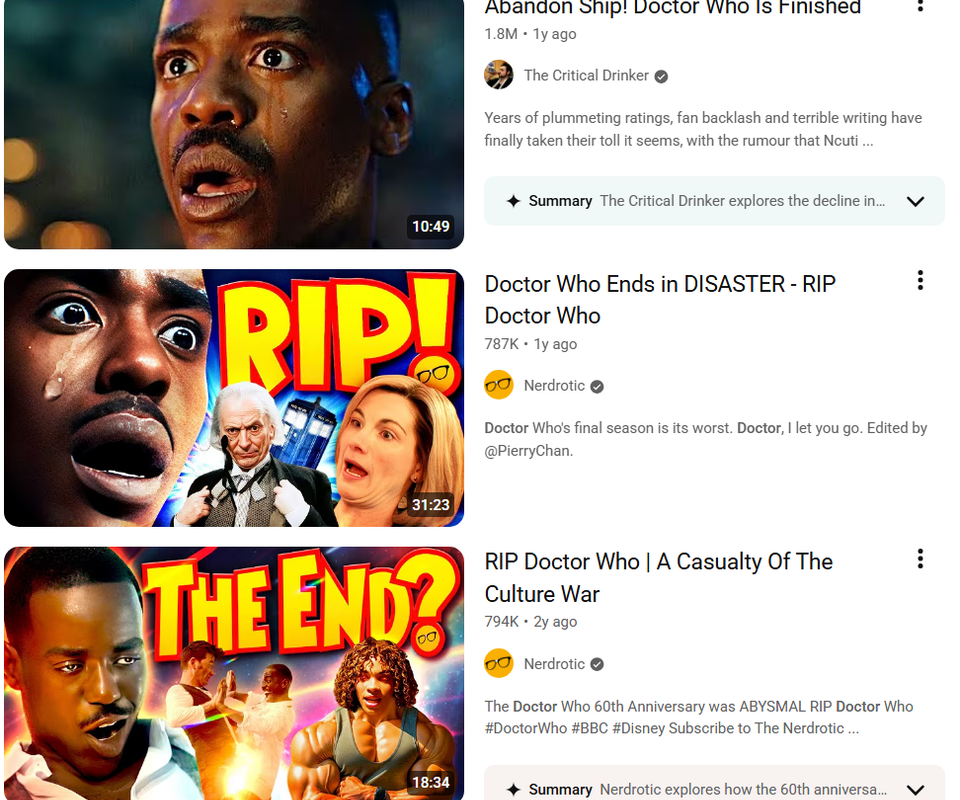
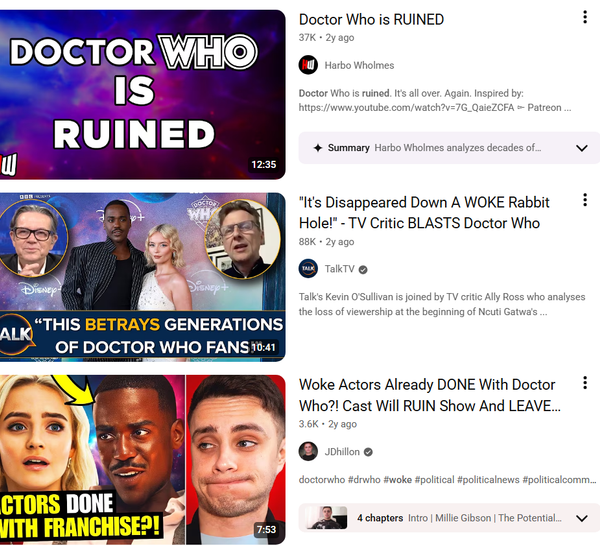
 Image: Lucasfilm



 English (US) ·