
 1 hour ago
6
1 hour ago
6

Published Oct 12, 2026, 3:00 PM EDT
As the MCU retreats from Disney Plus, VisionQuest is a perfect bookend to an experiment that began five years earlier
 Image: Marvel
Marvel’s foray into streaming wasn't supposed to start with WandaVision. Marvel Studios had commissioned a handful of shows all at once as part of a corporate-mandated mad dash to fill Disney Plus with content. Originally, Marvel planned to kick things off with The Falcon and the Winter Soldier, but when COVID sidelined that production, it cleared a path for Jac Schaeffer's quirky sitcom pastiche to begin the Marvel Cinematic Universe's streaming era with a loving send-up of the entire television art form.
Five years later, that era seems to be coming to a close. Marvel has significantly wound down its live-action TV show output, while leaning into (cheaper) animation instead. The studio just announced that Daredevil: Born Again will end with its upcoming third season, and in the same breath announced a new show that probably has a 50/50 shot of ever seeing the light of day, at best. So it's fitting that, as the strategy WandaVision kicked off begins to wind down, the MCU is closing things out by returning to square one.
VisionQuest picks up the many threads left dangling by WandaVision (and unspooled a bit more by Agatha All Along) and weaves together all that plot into an unexpected and mostly satisfying conclusion. While the new series from showrunner Terry Matalas (Star Trek: Picard) is definitively its own thing, it's also a clever continuation of several major moments that prove Matalas might just understand this corner of the MCU better than anyone. (Hey Kevin Feige, if you're reading this, please give Matalas a movie to direct.)
Thanks to some clever, non-linear storytelling, a handful of unpredictable twists, and a slew of standout performances — Paul Bettany puts on an absolute masterclass as Vision, but everyone here is pulling their weight — Marvel's streaming era gets the sendoff that it needs, and the one fans deserve.
 Image: Marvel
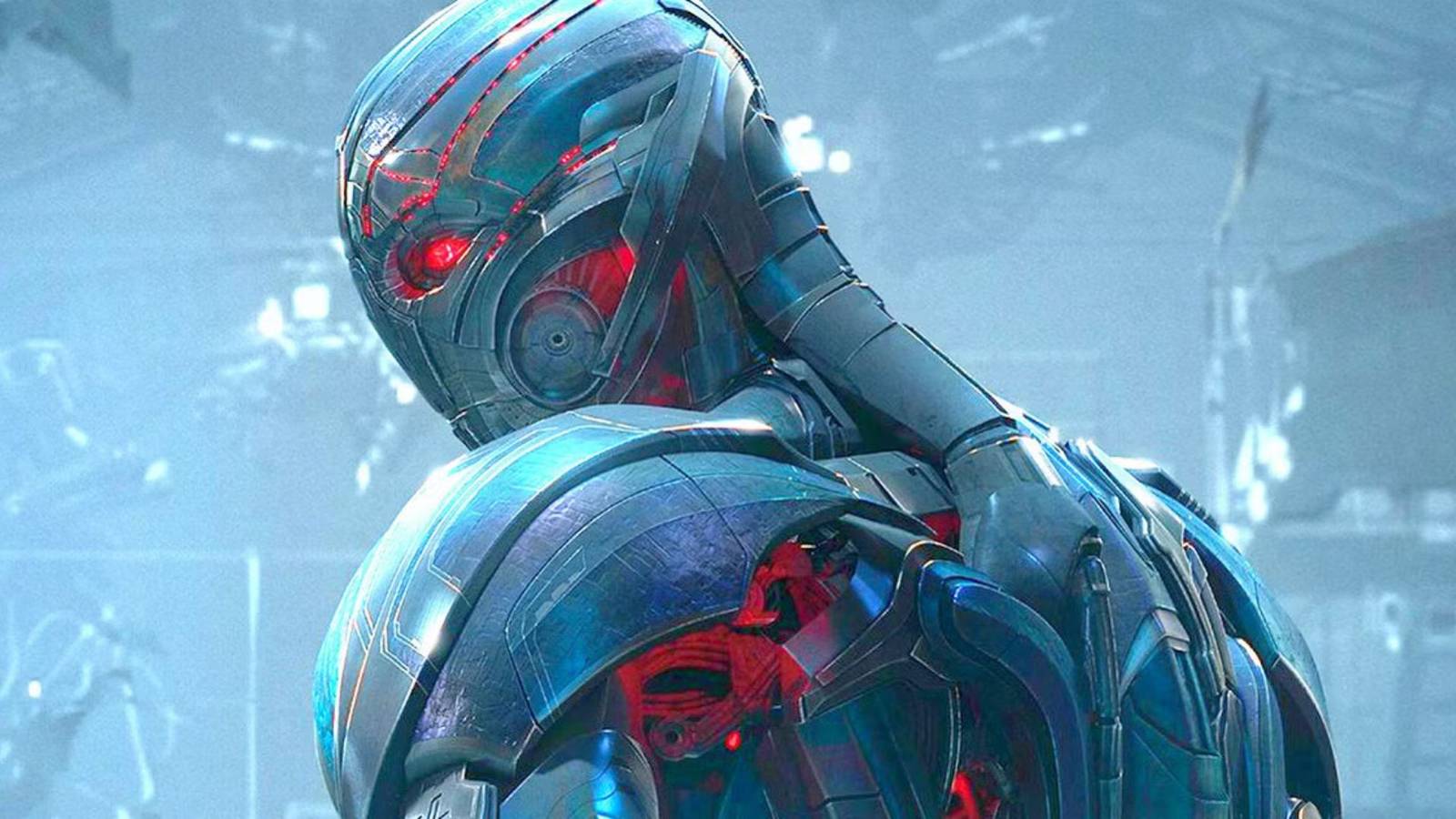
At the start of VisionQuest, Vision has returned to Edinburgh, where he haunts the streets he once walked with Wanda Maximoff (Elizabeth Olsen) and passes the time working at a local pub. His real life, however, takes place inside his digital mind, where Vision has constructed an elaborate mansion and filled it with every artificial intelligence Tony Stark ever created. That includes E.D.I.T.H (Schitt's Creek's Emily Hampshire), F.R.I.D.A.Y. (Orla Brady), and J.A.R.V.I.S. (James D'Arcy). In an early twist that Marvel chose to reveal in the trailers, we also learn that Vision has imprisoned Ultron (James Spader) in his mind, despite seemingly killing the genocidal AI back in Avengers: Age of Ultron.
Vision thinks he's got Ultron housebroken and contained. Of course, he does not. When a mysterious villain hires a ruthless bounty hunter called Paladin (Todd Stashwick) to capture Vision, it sets off a globe-trotting action-thriller that reveals the true nature of Vision, Ultron, and the origins of all AI in the Marvel Cinematic Universe.
Paul Bettany puts on a show
 Image: Marvel
Paul Bettany has always been too good for the MCU. Not to say there haven't been many great actors across the franchise's 35 movies and various streaming projects, but Bettany's always brought a level of pathos and subtlety that put everyone else to shame. The fact that he did all that while playing a robot with barely any actual emotion says a lot about his talents as an actor, and VisionQuest puts those talents on full display with a thought-provoking new narrative full of complex performances from its star.
One of WandaVision's most memorable scenes arrived at the end when White Vision (a new version created by the government with all of the original's memories) showed up to kill Wanda and came face-to-face with the version of the superhero she'd conjured through a mix of magic and grief. The two Visions fight. Then they discuss philosophy — specifically the ancient thought experiment The Ship of Theseus — and the question of whether either of them can actually be the true Vision. The conflict ends with "Hex Vision" touching White Vision on the forehead, which unlocks all the memories of Vision's life that had been hidden away. White Vision then flies off to figure out who, or what, he is, and that's the character we're following in VisionQuest.
What's so interesting about this Vision is that, while he has all the memories of the original Vision, leading right up to his death in Avengers: Endgame, he doesn't possess any of the emotional maturity of that character. Whatever happened to Vision that helped him learn to love like a human couldn't be programmed into the copy. "I have his memories, but not his virtue," Bettany remarks at one point in the new series. It's a subtle difference, considering that Bettany always performed the character with a certain degree of disengaged objectivity, but as you sink into the new series, that difference becomes a blazing focal point of the entire story. This is a Vision struggling to understand how to be as human as his predecessor, and his failure to do so weighs on him at every turn. Bettany captures that struggle with remarkable restraint.
Spader's performance as Ultron is also excellent. While some Marvel fans have pointed out that having the actor primarily appear in his human form, rather than as a CGI robot, seems like a cost-cutting measure, Matalas countered that humans are just better actors than CGI robots. This is undeniably true, and Spader is a better actor than most. While the Ultron who fought the Avengers was mostly just pure evil, this version is way more fun. Matalas also gives Spader much more to do, turning the villainous AI into his go-to comic relief, but not the quippy kind. This Ultron is simply too smart for his own good, sometimes verging on breaking the fourth wall without ever quite doing so, like when he calls out a "mystery box" plotline and announces he's refusing to engage with it. (The show also makes a point of engaging directly with why each AI takes the human form it does in a way that's immensely satisfying and leads to some of the smartest twists and turns.)
When Ultron first broke his chains and rebelled against his creator, he turned the joyful lyrics of Disney's Pinocchio into an eerie catchphrase: "I had strings, but now I'm free. There are no strings on me." Unsurprisingly, Spader brings back that catchphrase in VisionQuest — and it's still creepy! — but what is surprising is that, by the end of the story, it's Vision who's become the Pinocchio of this story, an unfeeling man-made creation yearning to be a real boy.
VisionQuest is fitting farewell to Marvel's streaming era
 Image: Marvel
VisionQuest does have some flaws. Across eight hour-long episodes, it sometimes feels like Matalas is stalling between major revelations. We're introduced to a mysterious string-pulling villain in episode 1, and it takes until the end of episode 7 to finally reveal their identity. Along the way, the show jumps genres a few times in a way that feels mostly unnecessary, like when Vision and his fellow AIs suddenly become detectives pointing at images on a cork board. It fails to measure up to WandaVision's clever remixing various classic sitcoms, while instantly inviting the comparison.
Matalas also fails to say much of anything about AI at a moment when our modern culture is consumed by it. The show is much more interested in exploring what AI means within the MCU and much less in commenting on real-life issues like privacy, theft, and water-hungry data centers. Maybe that's too much to expect from a series that took years to develop and needs to fit into a 20-year-old franchise. But the timing here is tricky, and VisionQuest fails to rise to the challenge.
Ultimately, despite some filler and a few rare missteps along the way, VisionQuest feels like the rare Marvel streaming show that works better as a series than a movie. You need its episodic nature to tell a story on the scale Matalas has envisioned. And you need an actor like Bettany to pull it off. In that sense, VisionQuest is a resounding success.
In another world, it might have been just one link in a chain of successful Marvel shows. In this one, it's a triumphant sendoff to a grand streaming experiment that ultimately failed. Either way, it's great television.
VisionQuest premieres Oct. 14 on Disney Plus.






 English (US) ·