Kurt Russell's 85% RT Sci-Fi Horror Classic Came Close to Being a Disaster
1 week ago
9
Image via Universal Pictures
Published Apr 14, 2026, 7:31 AM EDT
Shawn Van Horn is a Senior Author for Collider. He's watched way too many slasher movies over the decades, which makes him an aficionado on all things Halloween and Friday the 13th. Don't ask him to choose between Michael Myers and Jason Voorhees because he can't do it. He grew up in the 90s, when Seinfeld, Everybody Loves Raymond, and TGIF were his life, and still watches them religiously to this day. Larry David is his spirit animal. His love for entertainment spreads to the written word as well. He has written two novels and is neck deep in the querying trenches. He is also a short story maker upper and poet with a dozen publishing credits to his name. He lives in small town Ohio, where he likes to watch professional wrestling and movies.
John Carpenter is one of horror's greatest directors, a visionary who has given us genre classics like Halloween, Escape from New York, In the Mouth of Madness, and what many consider his best movie, The Thing. The 1982 film, starring Kurt Russell, is a reimagining of 1951's The Thing from Another World, which is itself adapted from the novella Who Goes There? by John Campbell.
'The Texas Chain Saw Massacre' Changed Horror
Image via Bryanston Distributing Company
John Carpenter often gets credited for the invention of the modern slasher and final girl thanks to 1978'sHalloween, even though TobeHooper'sThe Texas Chain Saw Massacrewas released four years earlier.That wasn't the first slasher film either, but before there was the masked Michael Myers, there was the masked Leatherface. Before there wasJamie Lee Curtis' Laurie Strode, there wasMarilyn Burns' Sally Hardesty.
The Texas Chain Saw Massacre is one of the most unsettling films you'll ever see, despite there being very little gore. Instead, the film gets under the skin due to the combination of Henkel's script and Hooper's directing. Hooper gave us hot, sticky, dirty horror visuals as Henkel wrote a film that's so much more than a stalk-and-slash. Instead, it's about the death of the American dream and how one family goes to extremes to survive. Who wouldn't want that team on their next project?
Tobe Hooper and Kim Henkel Didn't Understand 'The Thing'
Image via Universal Pictures
In 2012,for his blog The Original Fan, producerStuart Cohenwrote about howThe Thingreboot came to be. Cohen said he had been a fan ofWho Goes There?since he was a kid, so, in 1975, he approached producerDavid Fosterabout adapting it and exploring the alien's shape-shifting abilities exhibited in the book (but not in the original movie).Cohen's first choice was the relatively unknown Carpenter, but Universal Pictures passed on a filmmaker who had yet to really prove himself.
Hooper and Henkel entered the picture due to their work on The Texas Chain Saw Massacre and their desire to make a major studio film. It made sense to everyone to have the duo take on The Thing, yet what seemed like a perfect scenario ended up being a major disappointment. Cohen explained that Hooper and Henkel weren't excited about the novella's themes, adding, "They also worried about their ability to dramatize the mechanics of assimilation and didn't want to be constrained by its use."
The Texas Chain Saw Massacre worked because its horror felt so raw and real, which was achieved by the low-budget restraints. It seems like a big-budget studio film that would require so many special effects was outside their abilities. Because of this, they took a different approach when writing their version of The Thing. Cohen described it as "a sort of Antarctica Moby Dick with an Ahab-like character (I believe his name was The Captain) battling a large, but decidedly non-shape shifting creature." The producer was so disappointed by what they wrote that he called it "akin to a disaster," and Hooper and Henkel were let go.
Take away the holiday cheer, and you're left with a frozen nightmare.
John Carpenter Did Everything Bigger and Better Than the Original
Image via Universal Pictures
When John Carpenter was eventually hired after his career took off with Halloween, he was shown the Hooper and Henkel script, but he called it "incomprehensible." Can you imagine if their vision had actually made it on screen? The Thing would have been nothing more than a basic creature feature in the cold, with a nameless man hunting down a run-of-the-mill monster with no shape-shifting abilities. Strip away the important themes about paranoia and not being able to trust those close to you, and what would have been the point?
Bill Lancaster eventually wrote Carpenter's version of The Thing. It was a smart story built on a compelling cast of characters, led by the badass yet imperfect R.J. MacReady (Russell). The reboot thrived on the unknown because the shapeshifting aspect was at the core. No one could be trusted. Anyone, even our hero, could be the monster. That message was crucial during the last days of the Cold War. And instead of running away from the complexity of the effects needed to make this possible, Carpenter leaned into it. Like The Texas Chain Saw Massacre, Halloween was scary because of its low-budget realism. No worries, though. The director turned to Rob Bottin, who invented the most shocking practical effects ever shown in a horror movie for The Thing.
The whole story goes to show that just because a filmmaker might create one timeless masterpiece, it doesn't mean they're automatically the right fit for whatever comes after. Hooper would be just fine, despite the rejection. The same year The Thing came out, he (and not Steven Spielberg) directed Poltergeist, which is a classic in its own right. But for The Thing, it took Carpenter's understanding of the past — while also wanting to push something bolder and more shocking — to make horror's most inventive film.

 Image via Universal Pictures
 Image via Bryanston Distributing Company
 Image via Universal Pictures
 Image via Universal Pictures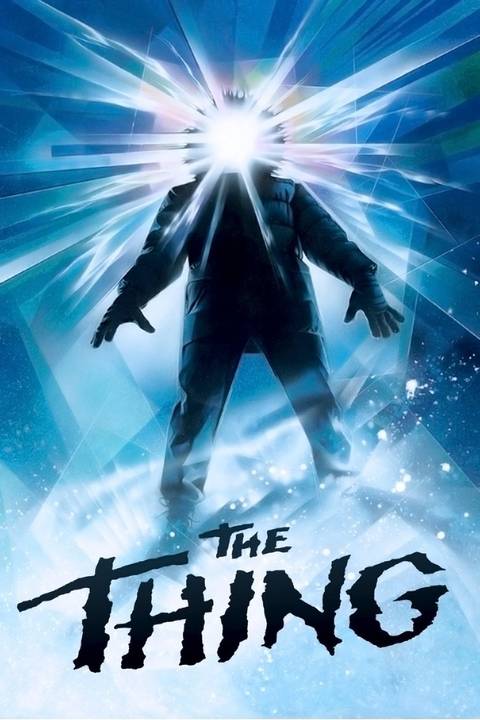





 English (US) ·